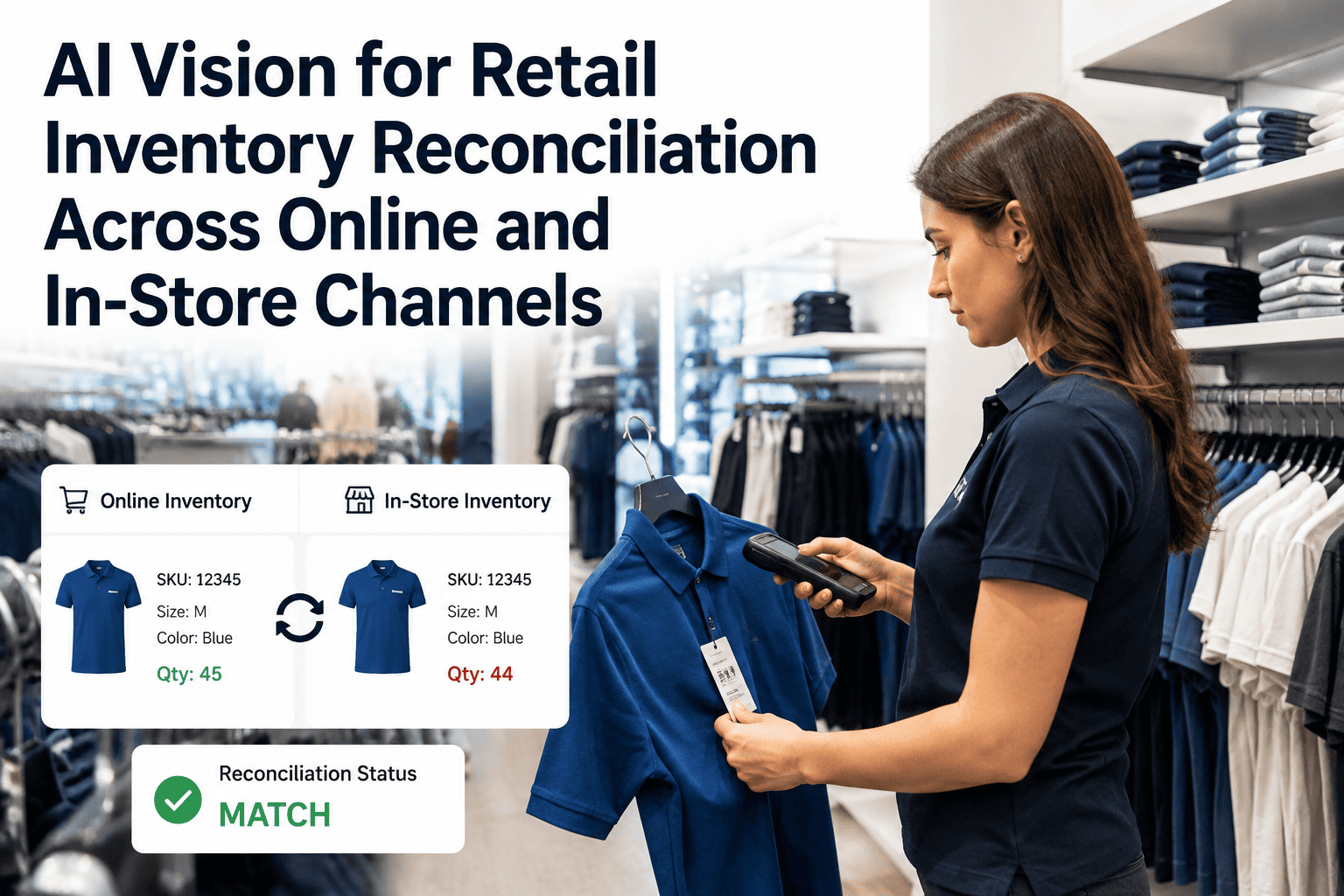
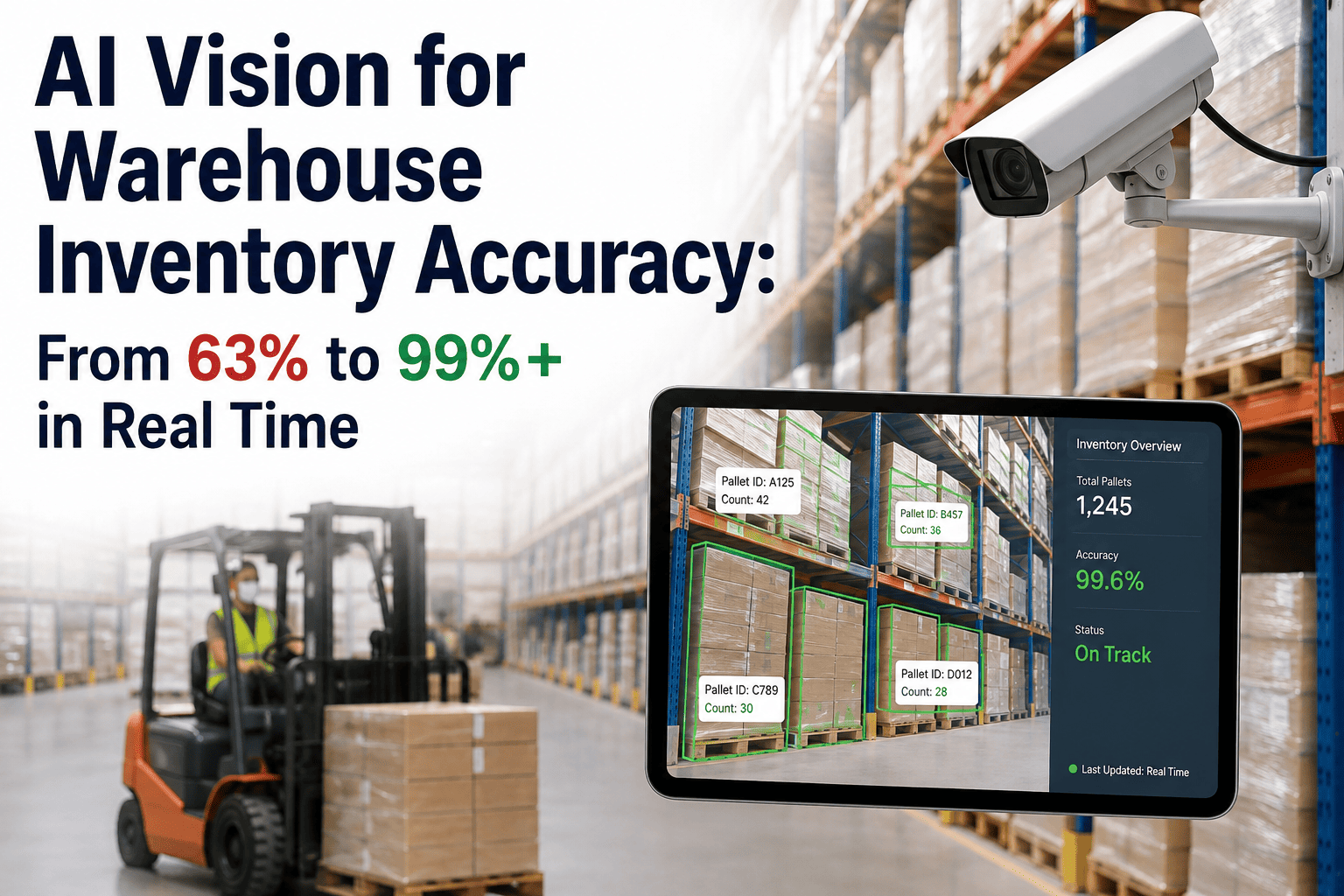
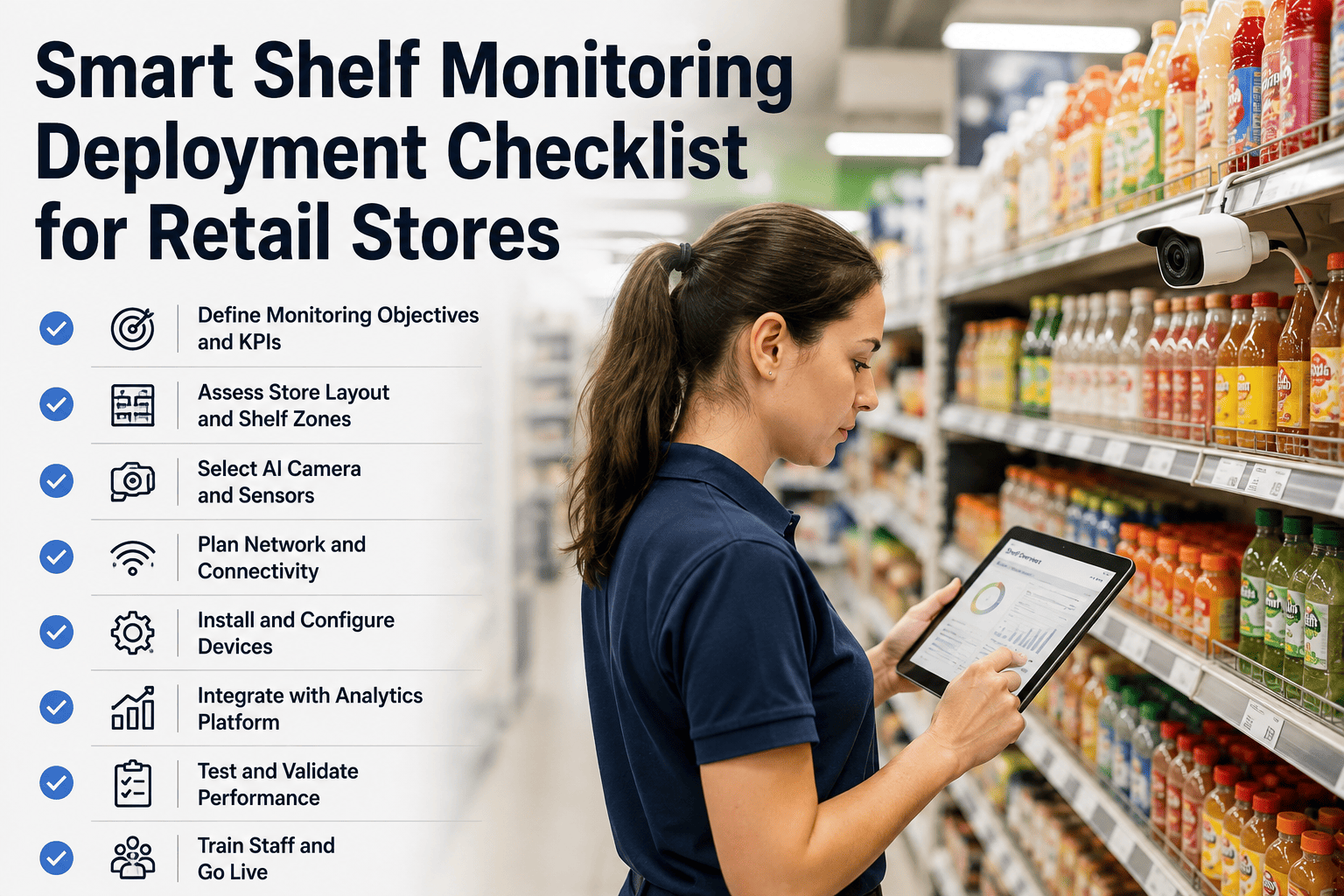
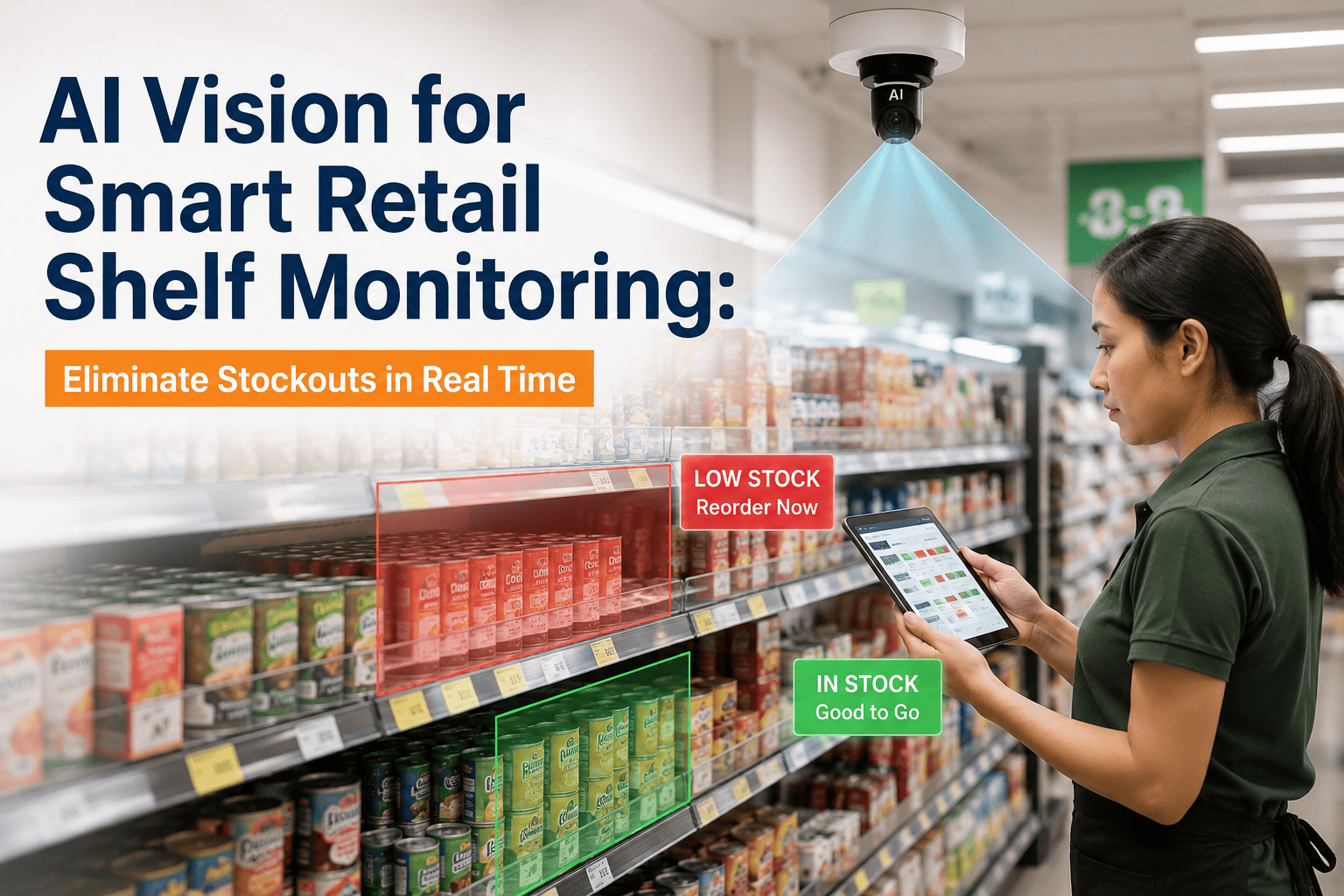
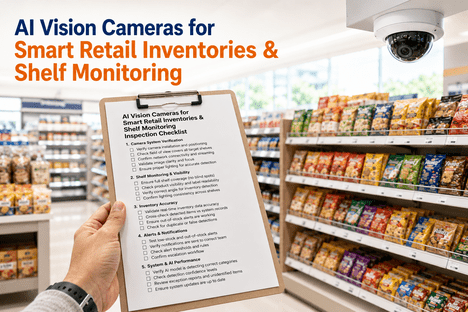
A customer adds an item to their cart, checks out, gets a confirmation email. Forty minutes later, a cancellation arrives instead: the item wasn't on the shelf. Nothing about checkout was wrong, the number the site trusted was wrong, because the system count and the shelf had quietly stopped matching hours earlier. Industry data puts 10 to 25 percent of omnichannel cancellations down to exactly this gap. A shelf camera that reconciles what's there against what's promised closes it. Book a demo to see it against your own store data.
SMART RETAIL · OMNICHANNEL INVENTORY · SHELF RECONCILIATION
Stop Selling Stock That Isn't On the Shelf
iFactory's AI shelf cameras continuously reconcile physical shelf availability against your e-commerce promised inventory, catching the mismatch before it becomes a cancelled order and a lost customer.
THE GAP BETWEEN THE SCREEN AND THE SHELF
Why "In Stock" Online Doesn't Mean In Stock In-Store
Most retail inventory systems update on a cadence, not continuously. A sale gets rung up, a shrinkage event happens, a shelf gets picked clean by BOPIS pickers, and none of that reaches the e-commerce platform's promised-inventory number until the next scheduled sync. In the window between the physical change and the system catching up, the website keeps confidently selling stock that's already gone.
65-70%
Industry-average store-level inventory accuracy, well below what omnichannel fulfillment actually needs
95%
Store-level accuracy threshold generally recommended before enabling BOPIS at all
That gap between 65-70% and 95% isn't a rounding error, it's the difference between a fulfillment promise a customer can trust and one that fails roughly a third of the time it's tested. Retailers running below the threshold and offering BOPIS anyway are effectively gambling on every order that the shelf still matches the screen.
WHAT THE MISMATCH ACTUALLY COSTS
Cancellations Are the Visible Cost, Not the Only One
A cancelled order is the most obvious symptom of a shelf-to-system mismatch, but it's not where the cost stops. Every cancellation is also a moment where trust in the brand's ability to fulfill its own promises takes a hit, and that damage compounds across the relationship.
10-25%
Of omnichannel orders cancelled due to inventory unavailability or an item that can't be located at fulfillment time
89% vs 33%
Customer retention rate for strong omnichannel strategies versus weak ones, a 56-point gap
65%
More SKUs become sellable online once in-store inventory is connected and visible to e-commerce, unlocking existing stock
4-10%
Higher average order value from omnichannel shoppers versus single-channel, plus meaningfully higher conversion
That third statistic is worth sitting with as much as the cancellation rate. The reconciliation problem isn't only costing sales through cancellations, it's also hiding sellable inventory that's sitting on a shelf but never gets surfaced online because the system doesn't trust what it can't verify in real time.
HOW THE RECONCILIATION LOOP WORKS
From Shelf to System, Continuously
Shelf cameras don't replace the inventory management system, they feed it a source of truth that doesn't depend on a cashier's scan, a manual cycle count, or a sync job running on a fixed schedule.
01
Camera Scans the Shelf
Shelf-mounted or overhead cameras capture the aisle on a set cadence, commonly hourly, identifying product presence, gaps, and low-stock conditions across every SKU in frame.
02
Vision Model Reads the State
A trained model classifies each shelf position as in-stock, low, or out-of-stock, distinguishing a genuinely empty facing from a product that's simply been pushed back or turned the wrong way.
03
Physical State Reconciled Against Promise
The detected shelf state is compared against what the e-commerce platform is currently promising for that SKU at that location, flagging any mismatch in either direction.
04
Promise Updates Before the Next Order
Where the shelf shows out-of-stock but the system still shows available, the promised inventory updates immediately, before another customer can check out on stock that isn't there.
SCHEDULED SYNC VS CONTINUOUS RECONCILIATION
What Changes When the Gap Between Shelf and Screen Closes
The comparison that matters isn't system accuracy in the abstract, it's how long a mismatch is allowed to sit before it gets caught, and how much damage accumulates in that window.
| Factor |
Scheduled System Sync |
Continuous Vision Reconciliation |
| Update Frequency |
Batch cycles, often once or a few times daily |
Hourly or near-continuous shelf scans |
| Source of Truth |
POS transaction counts, prone to shrinkage and count drift |
Direct visual confirmation of what's actually on the shelf |
| Ghost Stock Detection |
Invisible until a cycle count or a cancelled order surfaces it |
Flagged the same scan cycle the shelf goes empty |
| Hidden Sellable Stock |
Understated online out of caution, since the system can't verify it |
Verified and surfaced online as soon as it's confirmed present |
| Cancellation Exposure |
Full window between sync cycles remains exposed |
Exposure window shrinks to the scan interval |
None of this replaces the inventory management system, it feeds that system a verification layer that doesn't rely on every transaction being scanned correctly or every shrinkage event being caught by a cycle count. The system still routes and fulfills, it just does so on a number it can trust.
See what your current reconciliation gap is actually costing
iFactory can run a shelf-accuracy audit against your promised online inventory, showing exactly where the mismatch is happening and what it's costing in cancelled orders and hidden sellable stock.
WHERE THE MISMATCH ACTUALLY HAPPENS
Four Ways the Shelf and the System Drift Apart
Inventory drift isn't one failure mode, it's several different ones that all produce the same symptom: a number on a screen that no longer matches what's physically on the shelf.
SHRINKAGE
Loss That Never Gets Scanned
Theft, damage, and misplacement remove product from the shelf without a corresponding transaction, so the system count stays stale until a physical audit catches the difference.
BOPIS PICKING
Store Stock Pulled for Online Orders
An item picked from the shelf to fulfill a buy-online-pickup-in-store order is gone from the floor immediately, but the system may not reflect that removal until the pick is formally closed out.
MISPLACED PRODUCT
Ghost Stock That Isn't Where the System Thinks
A product the system counts as available may actually be sitting in the wrong aisle, the backroom, or a return cart, present in inventory but functionally unavailable to a shopper.
SYNC LATENCY
The Update That Hasn't Arrived Yet
Even a well-integrated POS and e-commerce platform have a propagation delay between a transaction and the number updating everywhere it's promised, and that window is exactly where oversells happen.
TURNKEY DELIVERY
How iFactory Deploys Shelf Reconciliation
iFactory installs a shelf camera array across your priority aisles, trains the detection model on your own planogram and product catalog, and connects the reconciliation feed directly to your e-commerce platform's inventory promise.
What Gets Built
Shelf camera array covering priority aisles and highest-velocity SKUs
Detection model trained on your planogram, packaging, and product catalog
Real-time reconciliation feed comparing shelf state to promised online inventory
Automatic flagging and correction routing for any detected mismatch
24×7 remote monitoring with store-level accuracy trend reporting
Deployment Timeline
Weeks 1-4: Store audit, camera placement, catalog and planogram data intake
Weeks 5-8: Model training and calibration, e-commerce platform integration
Weeks 9-12: Dashboard go-live, threshold tuning, store team training
FREQUENTLY ASKED QUESTIONS
What Retail Teams Ask About Shelf Reconciliation
Does this replace our existing inventory management or POS system?
No, it feeds those systems a verification layer they don't currently have. Your POS and inventory management system remain the system of record for transactions, routing, and fulfillment logic, the shelf camera feed simply gives that system a continuously updated, visually verified picture of what's actually on the shelf rather than relying entirely on transaction counts that can drift from reality.
Contact our support team to scope how the reconciliation feed integrates with your specific platform.
How does the camera tell the difference between an empty shelf and a product that's just been pushed back?
This is one of the harder problems in shelf vision and it's exactly why a generic object-detection setup underperforms on this task. The model is trained specifically to distinguish a genuinely empty facing from a product that's turned, pushed to the back of the shelf, or partially obscured, using the same shelf position and packaging cues a trained merchandiser would look for. Published research on this exact detection task has shown that a model built and tuned for this distinction meaningfully outperforms a generic approach at telling the two apart.
Book a demo to see the detection accuracy against your own planogram.
How often do the cameras actually scan the shelves?
Most deployments run on an hourly scan cadence, which is frequent enough to catch a shelf going empty well before the next scheduled system sync would have surfaced it, while keeping data volume and processing load manageable at store scale. Higher-velocity sections or promotional displays can run on a tighter cadence where the sales rate justifies it. The goal isn't continuous video monitoring, it's frequent enough sampling that the gap between a shelf emptying and the system knowing about it shrinks from hours to well under an hour.
Contact our support team to discuss the right cadence for your store's SKU velocity.
Can this actually help us sell more, not just cancel fewer orders?
Yes, and this is often the larger financial impact once a program is running. A meaningful share of in-store inventory never gets offered online at all because the system can't verify it's actually there, and understating availability out of caution keeps sellable stock invisible to online shoppers. Once shelf state is continuously verified, that inventory can be confidently surfaced online, expanding what's sellable across channels without buying a single additional unit.
Book a demo to see how much of your current in-store stock isn't currently visible online.
How long does it take to roll this out across multiple store locations?
A single store typically reaches full go-live within twelve weeks, with model calibration against your actual planogram and product catalog running through the middle weeks once cameras are installed and the e-commerce integration is in place. Because the detection model is trained on your own catalog and packaging rather than a generic product database, it recognizes your specific SKUs accurately from early in the pilot. Rolling out to additional locations after the first store is proven is a substantially lighter task than the initial build, since the model and integration work largely transfer.
Book a demo to scope a realistic rollout timeline across your store count.
EVERY SHELF, EVERY HOUR, ONE VERIFIED NUMBER
Make the Screen and the Shelf Agree, Before the Order Ships
iFactory's AI shelf cameras continuously reconcile physical inventory against your e-commerce promised stock, cutting cancellations from oversold items while surfacing sellable inventory that was sitting on the shelf the whole time.