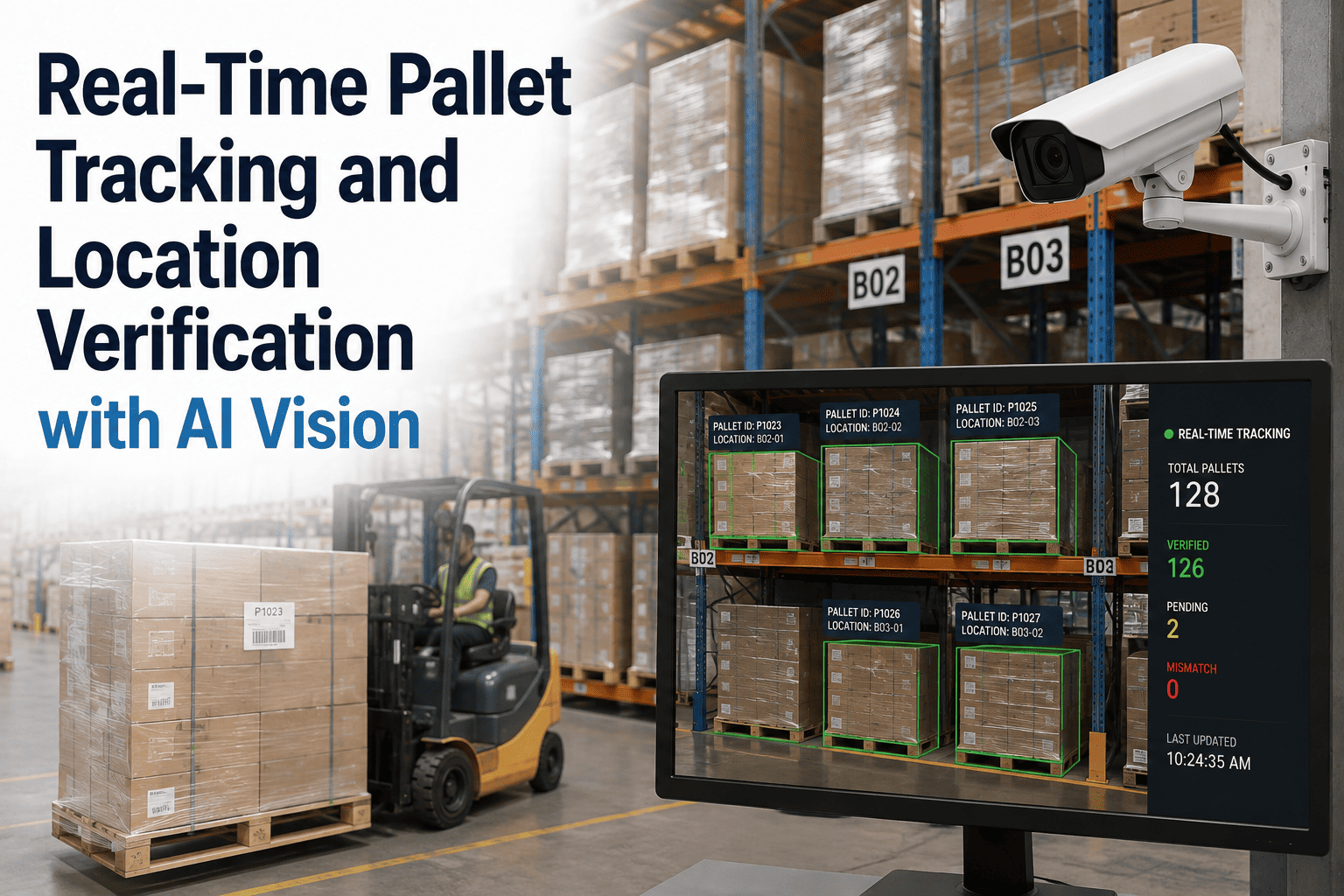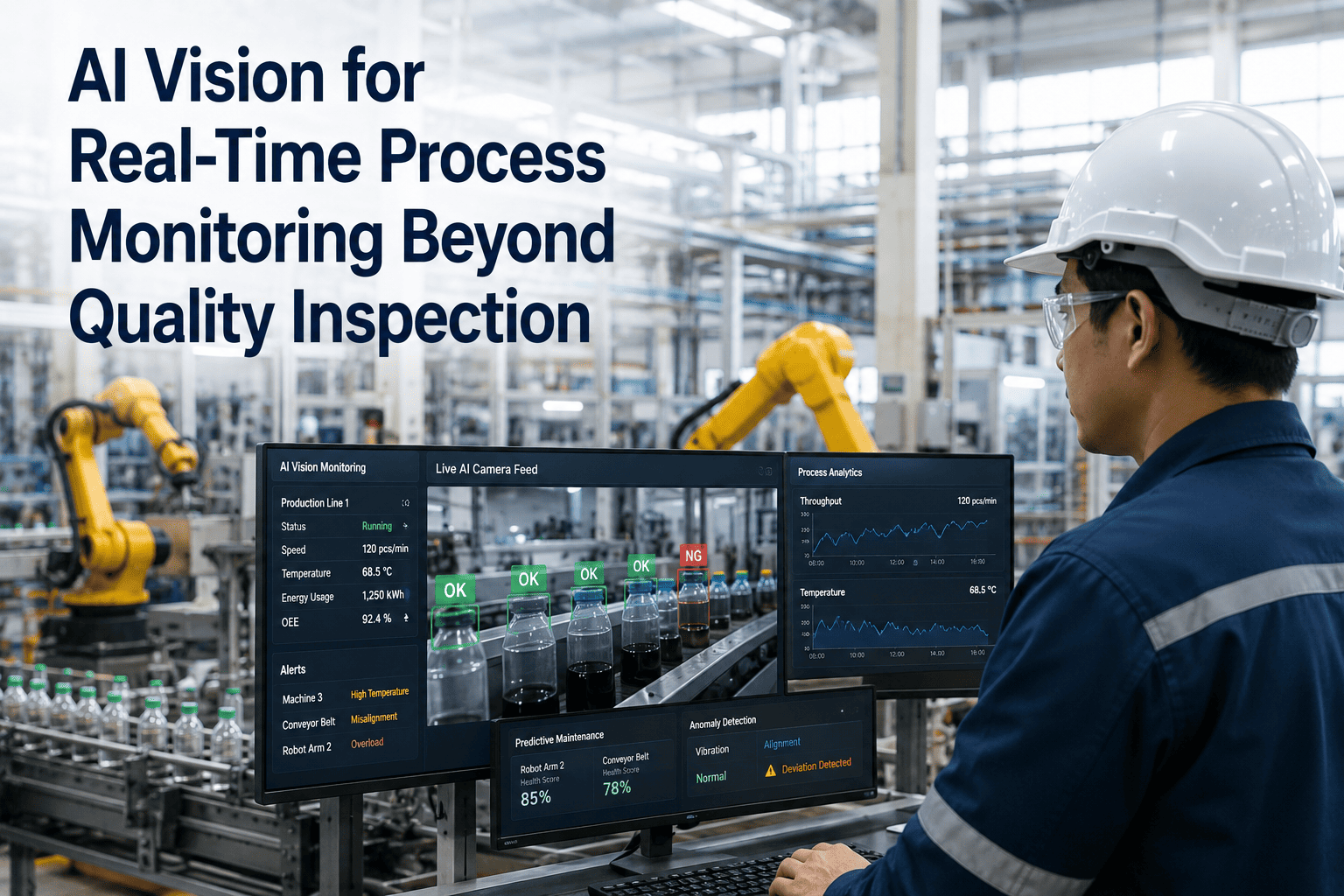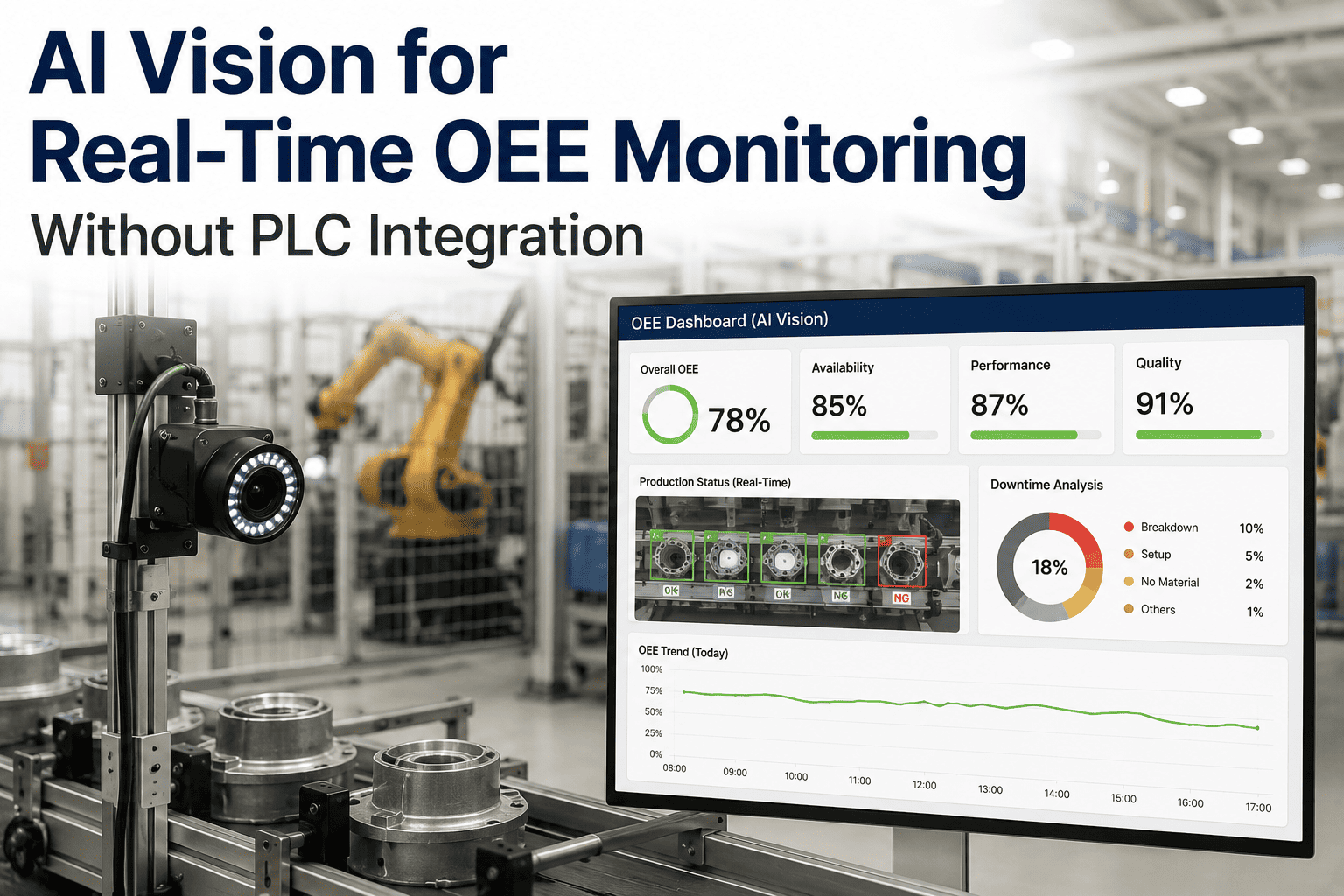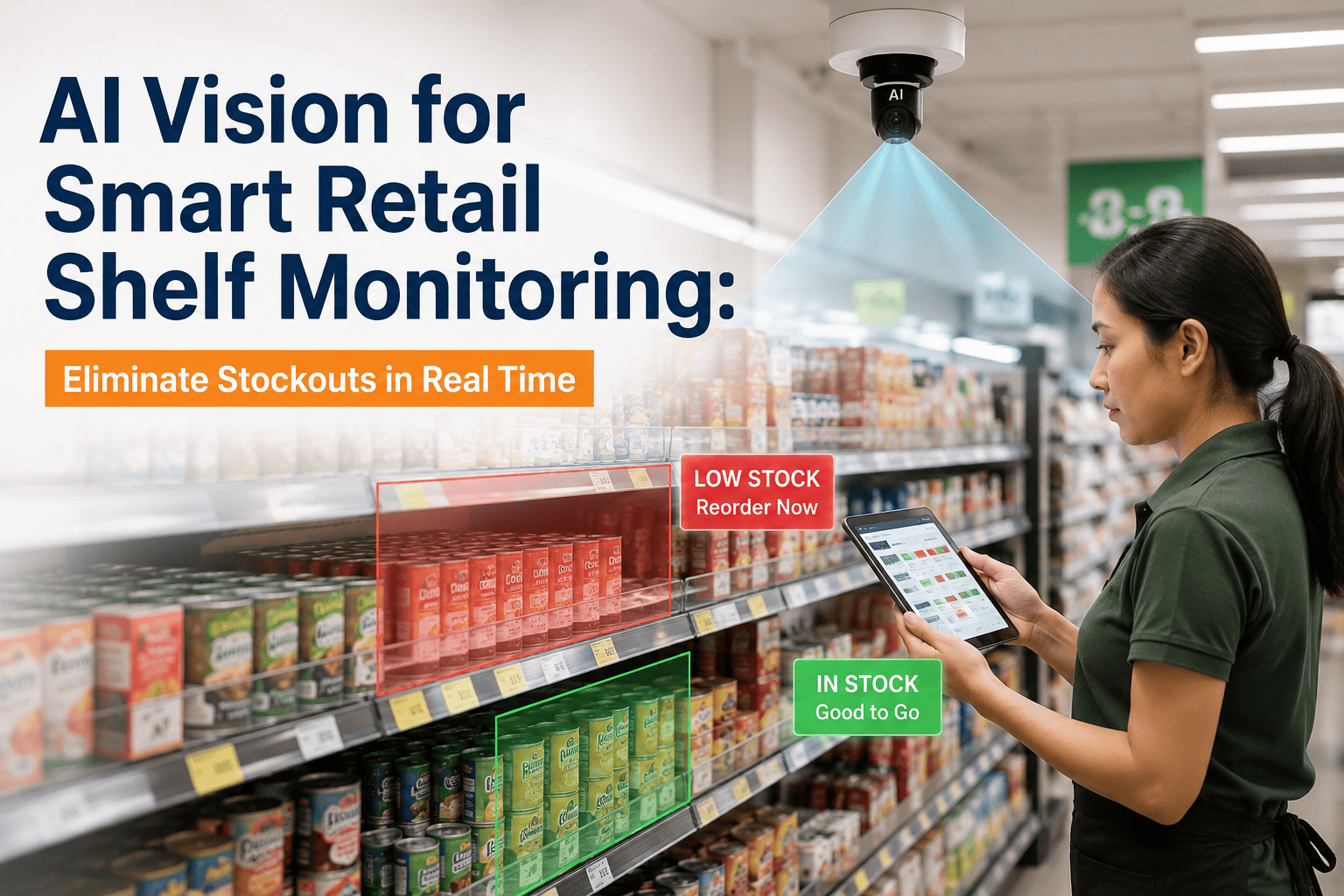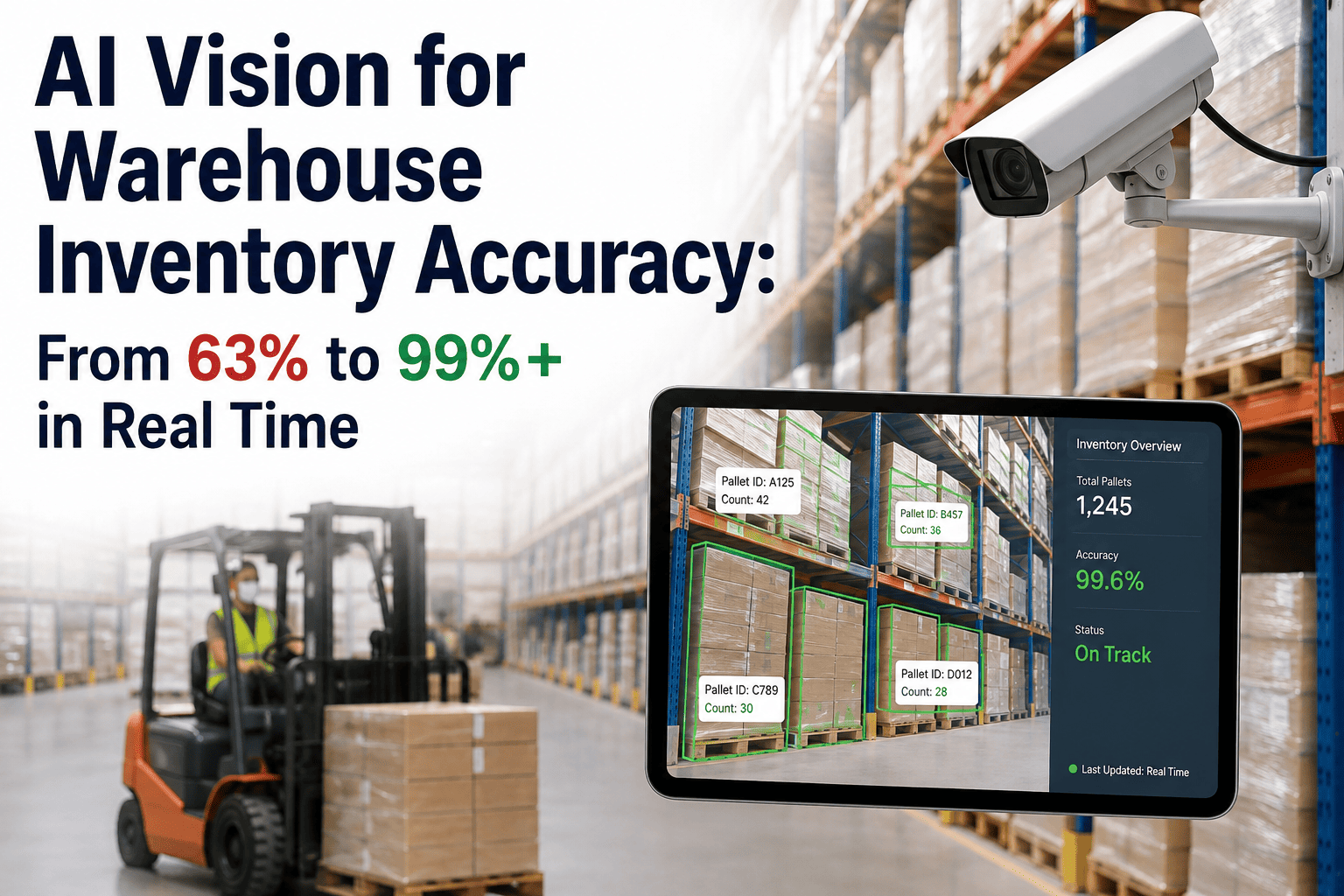
Most distribution centers run their entire operation on a number nobody trusts. Cycle counts say one thing, the WMS says another, and the forklift driver who moved a pallet three aisles over an hour ago never logged it anywhere. Industry benchmarks put average warehouse inventory accuracy at just 63 percent, which means more than a third of on-hand records are wrong the moment someone actually checks a location. Continuous AI vision monitoring closes that gap by watching every pallet move in real time, and you can see how the iFactory support team rolls it out below.
From 63% to 99%+ Inventory Accuracy Without a Single Manual Recount
Overhead and rack-level cameras identify, count, and track every pallet continuously, replacing scheduled cycle counts with a live, always-correct inventory ledger.
Why Inventory Records Drift Away From Reality
Inventory accuracy does not fail all at once. It erodes through dozens of small, unrecorded events that happen every shift: a pallet moved to make room for a forklift turn, a partial case picked without a scan, a return placed in the nearest open slot instead of its system location. Each event is small, but they compound daily, and by the time a scheduled cycle count catches the drift, the WMS has been feeding wrong data to replenishment, allocation, and customer promise dates for weeks.
Unscanned Location Moves
Pallets relocated for space, FIFO rotation, or damage without a corresponding transaction in the WMS.
Partial Pick Miscounts
Case or each-level picks where the remaining quantity on the pallet is estimated rather than verified.
Receiving Put-Away Errors
Incoming pallets stored in an open slot different from the one confirmed in the receiving transaction.
Damaged or Mixed Pallets
Broken pallets combined or split during handling, creating two physical units for one system record.
Delayed Cycle Count Coverage
Most facilities can only physically count 2 to 5 percent of locations per week, leaving the rest unverified for a month or more.
How Continuous AI Vision Rebuilds the Inventory Ledger
Rather than relying on periodic, manual sampling, an AI vision deployment installs fixed and mobile cameras across racking, staging, and dock areas so the entire facility is under continuous observation. The system does not replace your WMS; it feeds it a live, verified count that corrects itself every time a pallet moves.
Baseline Capture
Cameras scan every rack bay and record current pallet identity, label data, and physical location to establish a verified starting inventory.
Continuous Movement Tracking
Every time a pallet crosses a camera zone, the system re-identifies it and updates its location, without requiring a scan or manual entry.
Discrepancy Detection
When a physical count deviates from the WMS record, the system flags the exact location and pallet ID within minutes rather than weeks.
Automatic WMS Reconciliation
Verified counts sync back to the warehouse management system, keeping allocation, replenishment, and order promising accurate at all times.
Manual Cycle Counting Versus Continuous AI Vision
The table below compares the two approaches to inventory accuracy across the dimensions that matter most to operations leaders: coverage, cost, and how quickly errors are caught.
| Dimension | Manual Cycle Counting | Continuous AI Vision |
|---|---|---|
| Location coverage per week | 2 to 5 percent of slots | 100 percent, continuously |
| Time to detect a discrepancy | Up to 21 to 30 days | Under 10 minutes |
| Labor required | 2 to 3 dedicated counters per shift | None, fully automated |
| Typical resulting accuracy | 63 to 78 percent | 99 percent or higher |
| Impact on operations during counting | Aisle closures, pick delays | None, passive monitoring |
Where Accuracy Gains Show Up on the P&L
Better inventory accuracy is not an operational nicety, it is a direct financial lever. Every percentage point of inaccuracy translates into safety stock padding, missed sales from phantom stockouts, expedited freight to cover shortfalls, and write-offs from inventory that was never where the system said it was.
Reduced Safety Stock
Trustworthy counts let planners lower buffer inventory carried purely to hedge against record errors, freeing working capital.
Fewer Phantom Stockouts
Orders no longer get held or cancelled for items that were physically present but recorded in the wrong location.
Lower Expedite Spend
Fewer emergency replenishment orders triggered by inventory records that did not match the warehouse floor.
Faster Month-End Close
Finance teams reconcile against a verified count instead of adjusting for shrinkage estimates every cycle.
Stop waiting three weeks to find out your inventory is wrong. iFactory AI vision counts, locates, and verifies every pallet continuously, every shift, without adding a single manual task for your team.
The Technology Stack Behind Continuous Pallet Recognition
Reliable inventory verification depends on more than just a camera pointed at a rack. It requires a layered technology stack that can identify a pallet with confidence even under variable lighting, partial occlusion from other pallets, and the visual similarity that exists between cartons of the same product line.
High-Resolution Rack Cameras
Fixed cameras mounted at rack ends and aisle intersections capture continuous coverage of every storage bay without relying on a mobile scan pass.
Label and OCR Recognition
Optical character recognition reads license plate labels, lot codes, and SKU markings directly from the image feed to confirm pallet identity.
Visual Signature Matching
When labels are obscured, the system falls back on load shape, wrap pattern, and stack height to maintain a confident match as a pallet moves.
Confidence-Scored Alerts
Every identification carries a confidence score, and low-confidence matches are routed for a quick human confirmation rather than silently accepted.
Rolling Out Vision-Based Accuracy Without Disrupting Operations
A common concern among operations leaders is that any new inventory system will require a disruptive rip-and-replace of existing processes. In practice, a phased rollout lets the vision system prove itself in one zone before expanding, while the WMS and existing scanning workflow continue operating throughout the transition.
Pilot Zone Selection
Start with the zone showing the worst current accuracy, typically high-velocity racking or overflow storage, to demonstrate impact fastest.
Parallel Verification Period
Run vision-based counts alongside existing cycle counts for two to three weeks to validate accuracy before cutting over fully.
Staged Facility Expansion
Extend coverage zone by zone based on pilot results, reallocating cycle count labor to other tasks as each zone goes live.
Full Cutover and Retirement of Manual Counts
Once full coverage is validated, scheduled cycle counts are retired in favor of continuous, always-on verification.
How Inventory Accuracy Is Actually Measured
Not every facility calculates inventory accuracy the same way, which makes benchmarking confusing. Some count a location as accurate only if both SKU and quantity match exactly, while others allow a tolerance band. Understanding the measurement standard matters because it changes what a 99 percent accuracy claim actually means in practice.
Location-Level Accuracy
Measures whether the SKU recorded at a slot matches what is physically stored there, regardless of quantity precision.
Quantity-Level Accuracy
The stricter standard, requiring both SKU and exact unit count to match between the system and the physical count.
Serial and Lot Accuracy
Required in regulated industries, verifying that specific lot or serial numbers are tracked to the correct physical location.
Real-Time Versus Point-in-Time
Cycle counts capture a single moment, while continuous vision monitoring reports accuracy as a constantly updated figure.
Industry Benchmarks by Facility Type
Baseline accuracy before automation varies significantly by facility type and SKU complexity. High-SKU-count e-commerce fulfillment centers typically start from a lower baseline than simpler distribution operations, which affects how much improvement and financial return a given facility can expect.
| Facility Type | Typical Baseline Accuracy | Post-Deployment Accuracy |
|---|---|---|
| E-commerce fulfillment, high SKU count | 55 to 65% | 98 to 99.5% |
| Retail distribution center | 68 to 76% | 99%+ |
| Manufacturing raw material warehouse | 72 to 82% | 99%+ |
| 3PL multi-client facility | 60 to 70% | 98 to 99% |
Frequently Asked Questions
Does AI vision replace our WMS or barcode scanning entirely?
No, the vision system works alongside your existing WMS rather than replacing it. Barcode and RFID scanning remain useful at receiving and shipping checkpoints, but continuous camera monitoring covers everything that happens between those two points, which is where most inventory drift occurs. The system pushes verified location and count data back into your WMS through a standard integration, so planners and pickers keep using the same interface they already know, just with numbers they can finally trust. Most facilities see the biggest accuracy gains in the racking and staging areas that scanning alone never fully covers. You can review integration options with the iFactory support team.
How long does it take to reach 99 percent inventory accuracy after installation?
Most facilities reach 99 percent verified accuracy within four to eight weeks of go-live. The first two weeks are spent building the baseline inventory map and tuning pallet identification against your specific labeling and racking layout. After that, accuracy improves quickly because every discrepancy is caught and corrected within minutes instead of accumulating for weeks between cycle counts. Facilities with cleaner labeling standards and consistent pallet configurations tend to reach full accuracy faster, while mixed-SKU pallets and damaged labels can extend tuning by a couple of weeks.
What happens when a pallet is moved to a location the cameras cannot see?
Camera placement is planned to eliminate blind spots across active storage, staging, and dock areas before installation begins, using a facility walkthrough and rack layout review. In the rare case a pallet passes through an uncovered zone, the system flags it as unverified rather than guessing at a location, prompting a quick confirmation instead of silently recording bad data. This is a meaningful difference from manual counting, where an uncertain location is often recorded as correct simply because nobody checked it. Coverage gaps identified after go-live are typically closed with additional camera placement within the same engagement.
Can the system handle high pallet velocity zones like cross-dock and fast-pick areas?
Yes, high-velocity zones are exactly where continuous monitoring provides the most value, since these areas see the most movement and the most opportunity for unrecorded transactions. The cameras track pallets and cases as they move through cross-dock lanes and fast-pick faces without slowing throughput, since detection happens passively rather than requiring a stop-and-scan step. Facilities running high-velocity e-commerce fulfillment typically see the fastest return on investment because the volume of unrecorded moves in those zones was previously the largest source of inaccuracy.
What is the typical return on investment timeline for warehouse AI vision?
Most mid-size distribution centers see a full return on investment within six to twelve months, driven primarily by reduced safety stock requirements, elimination of dedicated cycle counting labor, and fewer expedited freight charges triggered by phantom stockouts. Facilities with larger footprints, higher SKU counts, or existing accuracy problems below 70 percent typically see faster payback because the gap being closed is larger. To see projected savings specific to your facility size and current accuracy rate, book a demo with the iFactory team.
Trustworthy inventory data starts with continuous visibility, not periodic sampling. Talk to iFactory about deploying AI vision across your storage, staging, and dock areas.