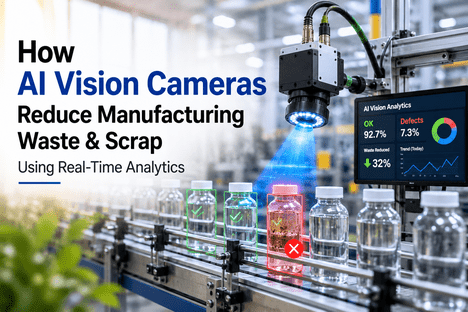
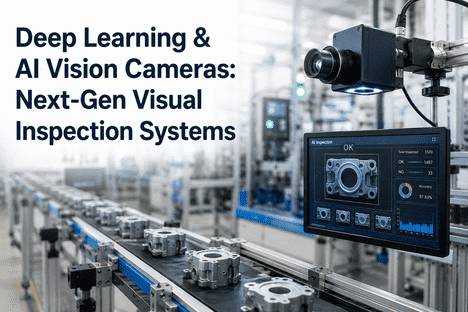
The global AI camera market is projected to grow from $15.98 billion in 2026 to over $82 billion by 2034 — a 20%+ annual growth rate that's reshaping how industries see, analyze, and act. From catching micro-defects on factory lines to guiding autonomous forklifts through warehouses, AI vision cameras are no longer futuristic. They're the new baseline for operational intelligence. Here's how six major industries are deploying them — and what it means for your operations.
What Makes AI Vision Cameras Different?
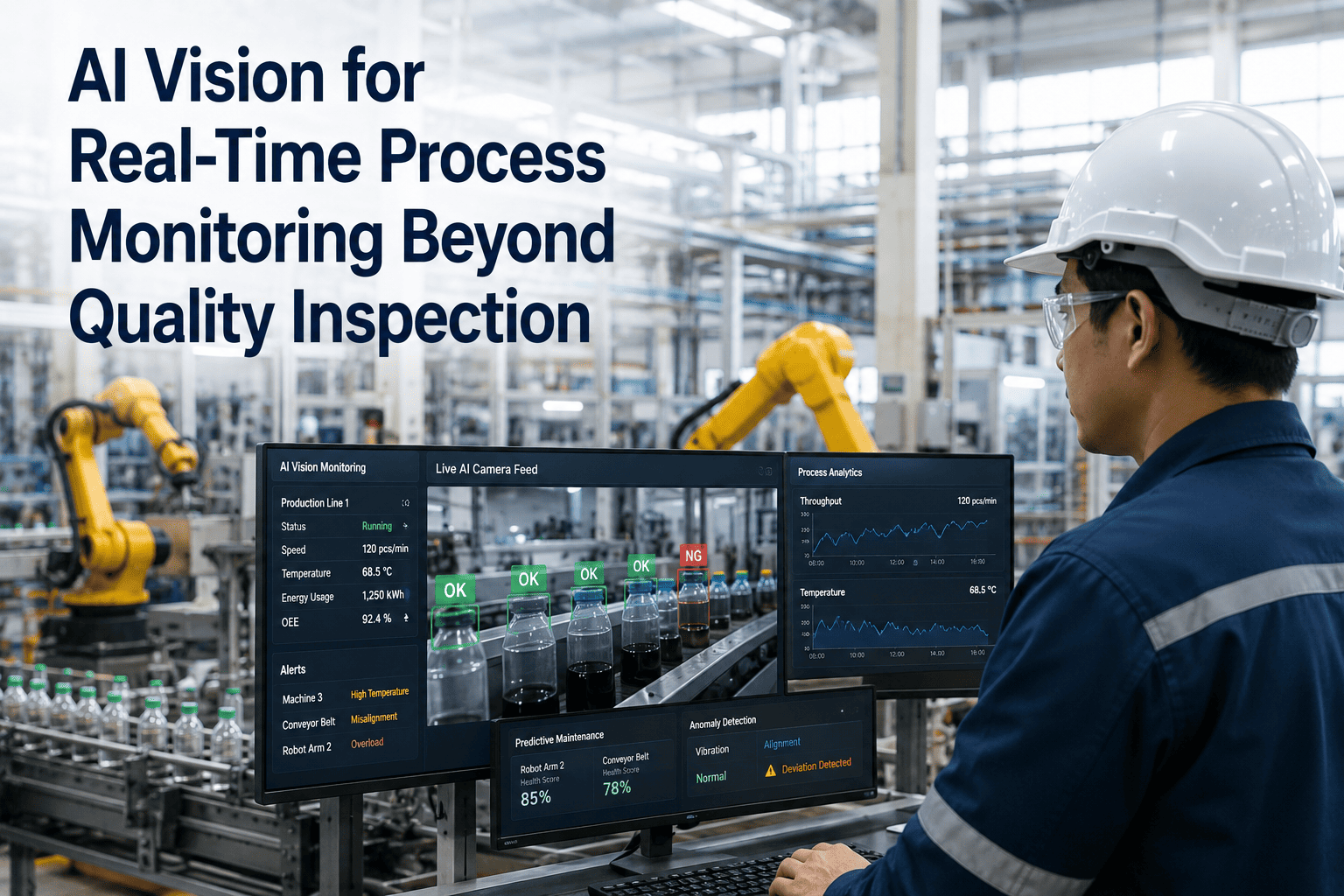
A traditional security camera records. An AI vision camera understands. It runs deep learning models — convolutional neural networks, object detection, anomaly recognition — directly on the device or at the edge. It doesn't just capture pixels; it interprets scenes in real time and triggers actions: flag a cracked weld, count pallets on a truck, detect a worker without a hardhat, or spot a coolant leak before it shuts down a production line.
Industry Use Cases: Where AI Vision Is Delivering Real ROI
AI vision isn't a single-industry tool — it's a horizontal technology with vertical depth. Here are six industries where the impact is already measurable and the adoption curve is accelerating.
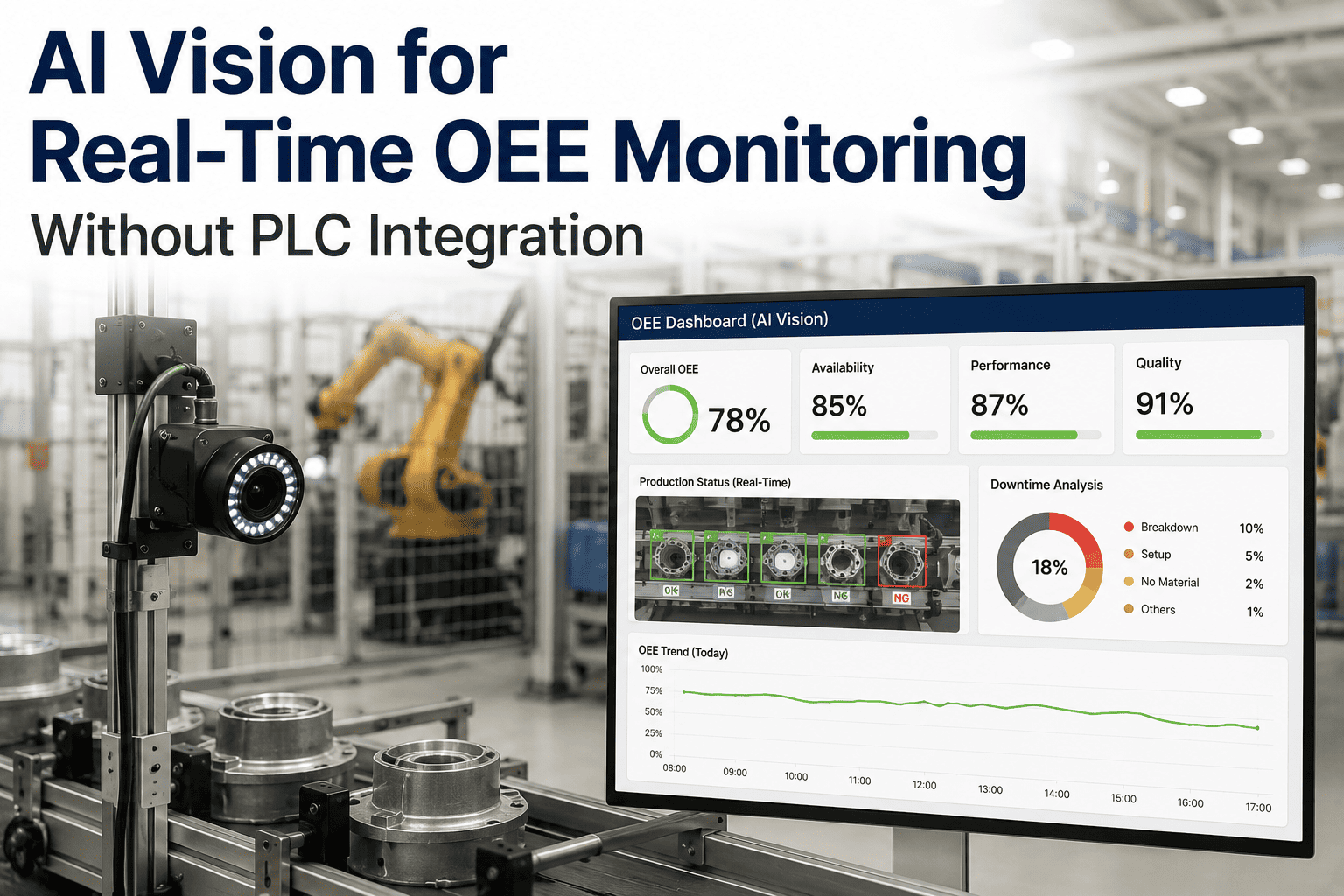
AI vision cameras mounted on production lines detect surface defects, dimensional variations, and assembly errors at speeds impossible for human inspectors. Systems now achieve 98–99% defect detection accuracy while reducing manual inspection costs by up to 90%. In automotive, steel, and electronics manufacturing, these cameras perform real-time quality control on every single unit — not random samples.
Warehouses generate massive volumes of visual data — and most of it goes unwatched. AI vision cameras automate pallet counting, package damage detection, barcode scanning, and loading verification. They guide autonomous mobile robots around obstacles, monitor dock activity, and track inventory positions in real time without manual scanning.
In clinical settings, computer vision assists radiologists by analyzing X-rays, CT scans, and MRIs to flag abnormalities — tumors, fractures, and blood clots — that might be missed in high-volume reads. Beyond diagnostics, AI cameras in hospital facilities monitor patient fall risk, track hand hygiene compliance, manage foot traffic, and ensure sterile zones remain uncompromised.
Cities are deploying AI-powered cameras for adaptive traffic signal control, automatic license plate recognition, pedestrian safety monitoring, and incident detection. These systems analyze traffic flow in real time, reduce congestion at intersections, and identify accidents within seconds — dramatically cutting emergency response times. Over 15 million AI cameras are expected to be installed in the Asia-Pacific region alone by 2025.
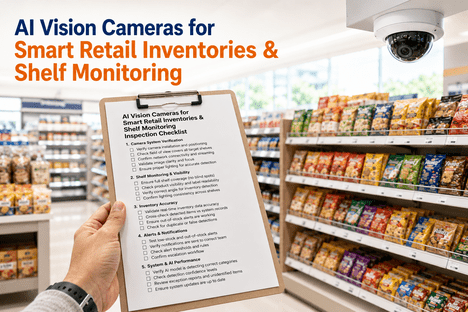
AI vision is transforming retail security cameras into business intelligence tools. Smart shelf monitoring detects empty spots and misplaced products the moment they appear. Customer flow analytics redesign store layouts based on actual movement patterns. Visual search lets shoppers find products by image. Loss prevention AI flags suspicious behavior patterns without generating false alarms that overwhelm security teams.
AI vision cameras mounted on drones, tractors, and fixed stations scan crops for early signs of disease — blight, mildew, rust — by detecting subtle color shifts, leaf texture changes, and pattern abnormalities invisible to the naked eye. This enables targeted intervention before problems spread, reduces chemical usage, and improves yield predictability across large-scale operations.
Which Use Case Fits Your Operations?
Whether you run a factory floor, a warehouse network, or a multi-site facility — iFactory's AI-powered platform connects vision intelligence with automated maintenance workflows, work order generation, and real-time asset monitoring. See how it works for your industry.
The Technology Stack Behind AI Vision Cameras
Understanding what powers these systems helps you evaluate solutions and plan deployments. Modern AI vision camera systems operate across four integrated layers — and the smartest deployments connect all four to your maintenance and operations platform.
Why Most Vision Deployments Fail — and How to Avoid It
The technology is proven. The failures are almost always operational. Here are the three most common traps — and what high-performing teams do differently.
The AI Vision + CMMS Advantage
The real power of AI vision cameras isn't in the camera — it's in what happens after detection. When visual intelligence feeds directly into a maintenance management system, the entire operations loop closes automatically.
Turn Every Camera Into an Intelligent Operations Sensor
iFactory connects AI vision outputs with automated work orders, predictive maintenance scheduling, and compliance documentation — so your cameras don't just see problems, they solve them. Purpose-built for manufacturing, logistics, and facility operations.
Frequently Asked Questions
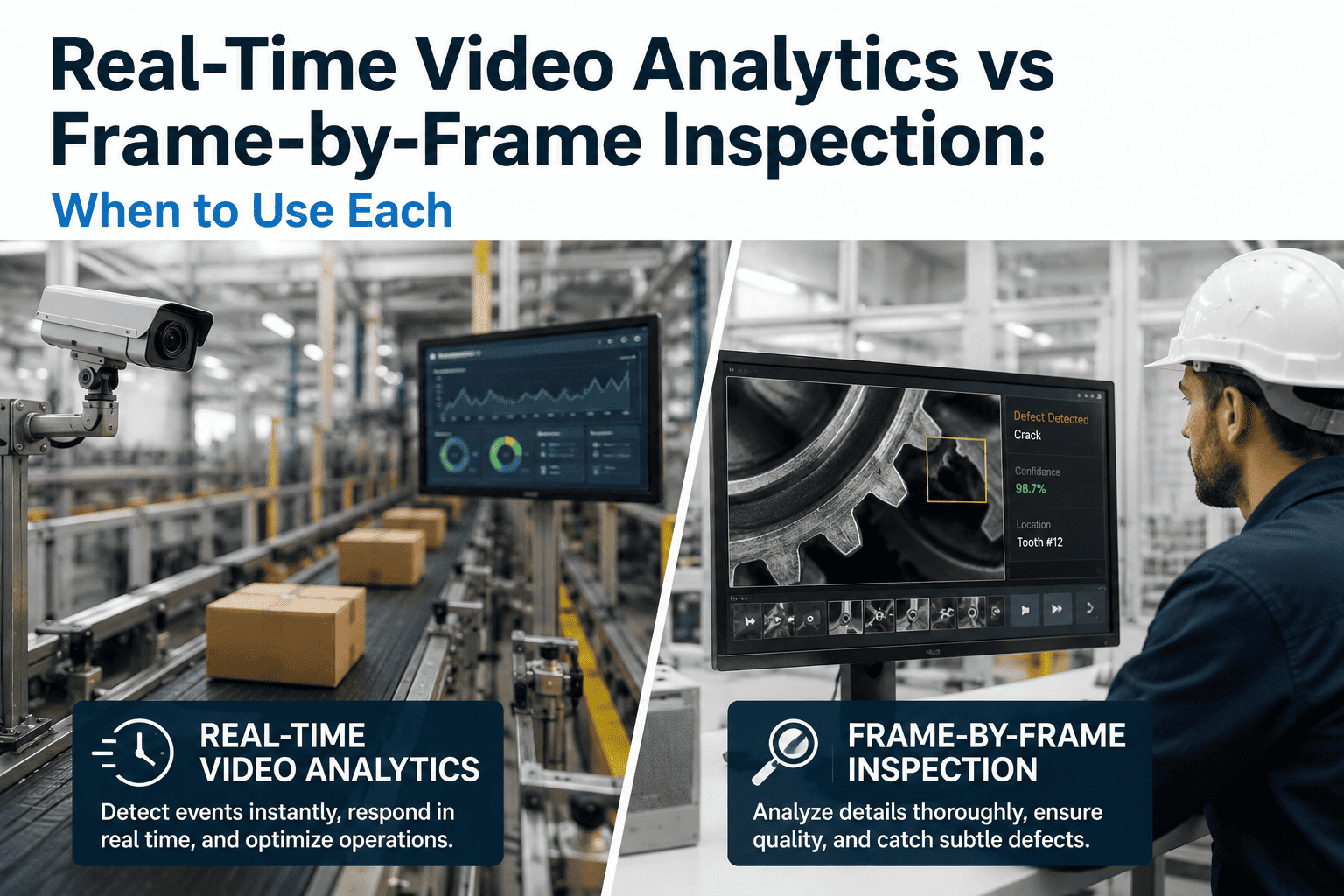
An AI vision camera has built-in or connected artificial intelligence that processes visual data in real time. Unlike traditional cameras that only record video for later review, AI vision cameras run deep learning models — such as object detection, defect classification, and anomaly recognition — directly on the device or at the edge. This means they can trigger automated actions (alerts, work orders, machine stops) instantly, without human review.
Manufacturing, logistics and warehousing, healthcare, smart cities and transportation, retail, and agriculture are leading adoption. Any industry that relies on visual inspection, real-time monitoring, or safety compliance can benefit. The highest ROI is typically seen in environments with high-volume visual tasks, expensive downtime, or strict quality requirements.
A CMMS like iFactory connects to AI vision camera outputs via APIs or middleware. When a camera detects a defect, safety issue, or equipment anomaly, the CMMS automatically generates a prioritized work order, assigns it to the right technician, and documents the entire resolution process. This closes the loop between detection and action — ensuring nothing gets flagged without follow-through.
Edge AI means running artificial intelligence models directly on the camera hardware or a nearby gateway — rather than sending all video to the cloud for processing. This dramatically reduces latency (enabling sub-100ms decisions), keeps sensitive visual data local for privacy compliance, reduces bandwidth costs, and ensures the system works even if internet connectivity is interrupted.
Most organizations see measurable impact within 30–90 days of deployment. In manufacturing, defect catch rates improve immediately. In logistics, automated counting and damage detection reduce labor costs from day one. When integrated with a CMMS, the combination of fewer missed defects, faster response times, and documented compliance typically delivers payback within the first quarter of operation.