In the modern industrial workplace, the convergence of AI Vision Cameras and wearable safety technology is redefining how organizations protect their most valuable asset — their workforce. Traditional safety management relied on periodic audits, manual checklists, and reactive incident reporting, all of which fail to address hazards in the critical moment they emerge. Today, AI Vision Camera systems integrated with wearable devices create a continuous, intelligent safety loop — one that identifies risks before they escalate, triggers real-time alerts across both camera feeds and worker wearables, and generates the compliance evidence required for modern EHS audits. Organizations that Book a Demo with iFactory are discovering that their existing camera infrastructure, when paired with wearable data streams, can reduce incident response times by over 60% and achieve near-perfect PPE compliance without adding a single supervisor to the floor.
Is Your Safety Camera System Talking to Your Wearables?
Unify AI Vision analytics, PPE detection, and wearable health alerts into one intelligent platform purpose-built for industrial worker safety.
Why AI Vision and Wearables Must Work Together in High-Risk Environments
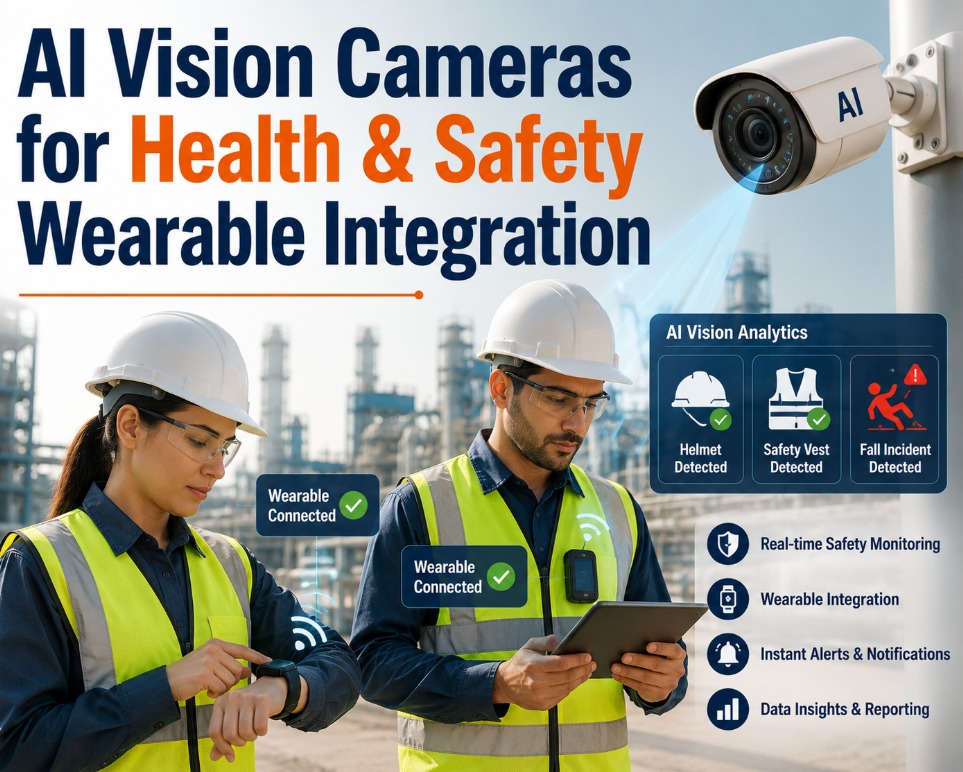
The blind spot in most industrial safety programs is the gap between what a camera sees and what a worker physically experiences. A camera can detect a missing hardhat; a wearable can detect an elevated heart rate from heat stress. Neither system alone tells the full safety story. When iFactory's AI Vision platform integrates with smart helmets, safety wristbands, and biometric vests, these two data streams fuse into a unified risk picture. The camera identifies zone-level hazards — unauthorized entries, absent PPE, unsafe machine proximity — while the wearable layer captures individual physiological signals: fatigue onset, abnormal posture, body temperature spikes, and fall events. Together, they allow supervisors to act on correlated alerts rather than isolated data points, transforming safety management from reactive observation into genuine predictive protection.
Industrial sectors including steel manufacturing, construction, chemical processing, and warehousing now face regulatory environments where camera footage and biometric compliance logs are both required for audit readiness. iFactory's platform captures, timestamps, and archives both streams simultaneously, ensuring that when an OSHA inspector or internal EHS team reviews an incident, the full picture — visual and physiological — is immediately available. Teams that Book a Demo with iFactory consistently report that the integrated audit trail alone justifies the platform investment within the first compliance cycle.
Real-Time PPE Compliance Detection
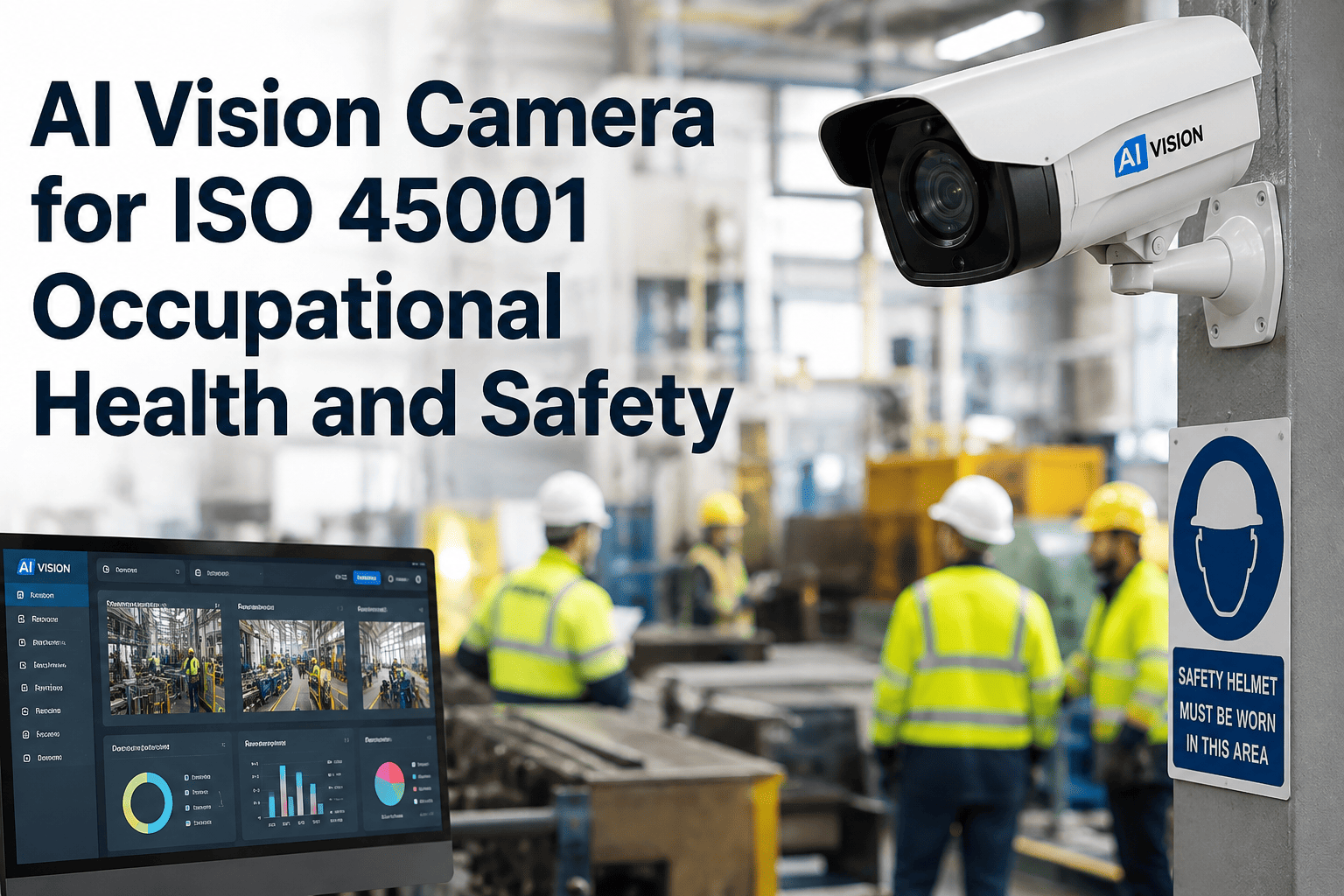
AI Vision cameras continuously scan every worker in frame against zone-specific PPE requirements. Missing hardhats, absent harnesses, or unprotected eyes trigger instant alerts — with visual evidence, timestamp, and worker ID — delivered simultaneously to supervisors and the worker's wearable device.
Wearable Biometric Health Monitoring
Smart wristbands and safety vests stream heart rate, body temperature, and fatigue indicators directly into iFactory's platform. When physiological thresholds are crossed — heat exhaustion risk, elevated stress, or sustained exertion — AI correlates these signals with the camera feed to confirm the worker's environment and escalate response.
Fall Detection & Emergency Response
AI vision systems detect the visual signature of a fall — sudden postural collapse and horizontal body position — while wearable accelerometers confirm the event within milliseconds. The dual-confirmation model dramatically reduces false alarms and ensures emergency response is triggered only when genuinely needed.
Hazard Zone Geofencing & Proximity Alerts
AI Vision cameras enforce virtual boundaries around dangerous machinery, elevated work zones, and restricted areas. When a worker approaches a geofenced hazard perimeter, both the camera system and the worker's wearable trigger simultaneous alerts — giving the worker immediate feedback and the supervisor full situational awareness.
"Before iFactory, our camera system and wearable devices were two completely separate programs that never communicated. We had camera alerts going to a control room and wearable alerts going to a safety officer's phone — with no connection between them. After integrating both into iFactory's platform, we saw our average incident response time drop from over 4 minutes to under 45 seconds. The correlated alert model means we only act on events that are confirmed by both systems, which has virtually eliminated the false-alarm fatigue our supervisors were experiencing."
The Technical Architecture of Integrated Vision-Wearable Safety
Building a true integration between AI Vision cameras and wearable devices requires more than data aggregation — it demands a purpose-built correlation engine that understands the causal relationship between environmental hazards and worker physiological response. iFactory's platform is constructed on three technical pillars that make this possible at industrial scale. Safety leaders ready to benchmark their systems against these pillars regularly Book a Demo to see the architecture live.
Pillar 1 — Computer Vision & Posture Analytics
iFactory's AI models analyze live camera feeds to track worker body posture, movement patterns, and ergonomic compliance in real time. The system identifies repetitive stress positions — sustained bending, overhead reaching, awkward load-carrying — that correlate with musculoskeletal injury risk. When vision-detected posture anomalies coincide with wearable-reported physical strain, the combined alert carries both visual evidence and biometric confirmation for the EHS record.
Pillar 2 — Fatigue & Cognitive Load Detection
Fatigue is the invisible precursor to most industrial accidents. iFactory integrates facial analysis from fixed-position cameras with biometric fatigue signals from wearable devices to build a continuous fatigue index for each worker. Declining blink rates, reduced gait regularity captured on camera, and elevated heart rate variability from the wearable combine into a "Fatigue Score" that supervisors can act on before an impairment event occurs.
Pillar 3 — Autonomous Alert Routing & Escalation Logic
Not every alert requires the same response. iFactory's escalation engine classifies events by severity and routes them to the appropriate responder — from a gentle wearable vibration prompt for a minor posture issue, to an audible alarm and emergency services trigger for a confirmed fall with no recovery movement. Every escalation is logged with full camera footage, wearable telemetry, and response timestamps, creating an unbroken chain of custody for compliance purposes.
Siloed Safety Monitoring vs. iFactory Integrated Intelligence
The operational gap between standalone camera systems and iFactory's unified vision-wearable platform is measurable in both safety outcomes and financial terms. The table below captures the transformation that occurs when both data streams are unified under a single AI intelligence layer. Safety directors building an internal business case often Book a Demo to model these metrics against their own incident history.
| Safety Metric | Siloed Approach | iFactory Integrated Intelligence | Business Impact |
|---|---|---|---|
| PPE Compliance Tracking | Manual spot-checks | Continuous AI Vision Enforcement | Zero compliance gaps in monitored zones |
| Fall Detection | Post-incident review only | Dual Vision + Wearable Confirmation | Sub-45 second emergency response trigger |
| Fatigue Monitoring | Supervisor observation | Biometric + Vision Fatigue Index | Proactive intervention before impairment events |
| Hazard Zone Enforcement | Physical barriers only | AI Geofencing + Wearable Proximity Alert | Eliminates unauthorized zone entry incidents |
| EHS Audit Documentation | Manual report compilation | Autonomous Timestamped Record Generation | Audit-ready 24/7 with zero manual overhead |
| Alert Fatigue Management | High false-positive rate | Dual-Stream Confirmation Logic | –78% reduction in non-actionable alerts |
The 3-Phase Path to Fully Integrated Vision-Wearable Safety
Deploying an integrated AI Vision and wearable safety platform across an active industrial facility requires a structured approach that preserves ongoing operations and builds confidence at each stage. iFactory's implementation roadmap ensures you have validated visibility before activating autonomous safety workflows. If you are ready to close the gap between your camera systems and wearable devices, Book a Demo to begin scoping your facility today.
Sensor Audit & Data Integration
Connect existing camera infrastructure and wearable device APIs to iFactory's Edge platform. Map each camera to its physical zone, establish wearable device profiles per worker, and validate biometric data streams. Deploy additional edge cameras or sensors in identified coverage gaps. Timeline: 4–6 weeks.
AI Model Training & Correlation Engine Activation
Train vision models on site-specific PPE requirements, hazard zone layouts, and worker activity patterns. Activate the biometric correlation engine to establish baseline physiological profiles per worker and role. Configure dual-confirmation alert logic and escalation routing rules. Timeline: 6–10 weeks.
Autonomous Safety Operations & Continuous Learning
Fully activate autonomous PPE enforcement, fatigue management, and emergency response workflows. Enable continuous model retraining from new incident data. Deploy the EHS compliance dashboard with automated audit report generation for regulatory submissions. Timeline: Ongoing.
Measured Safety Gains from iFactory Vision-Wearable Integration
The metrics below represent average performance improvements achieved by iFactory customers within 12 months of deploying the integrated vision-wearable safety platform across industrial facilities. These are outcomes from real deployments — not modeled projections. Safety leaders who Book a Demo today gain access to facility-specific ROI modeling based on their existing incident rates and compliance costs.
AI Vision Cameras & Wearable Safety Integration — Common Questions
Which wearable devices are compatible with iFactory's vision platform?
iFactory integrates with a broad ecosystem of industrial wearables including smart helmets, safety wristbands, biometric vests, and connected insoles via standard API and Bluetooth/LPWAN protocols. During the Phase 1 onboarding, our team performs a full compatibility audit of your existing wearable devices and identifies any integration bridges required.
How does dual-confirmation logic reduce false alerts?
A single-source alert system — whether camera-only or wearable-only — generates a high volume of false positives that erode supervisor trust over time. iFactory's dual-confirmation engine requires corroborating signals from both the camera feed and the wearable data stream before classifying an event as actionable. A camera detecting a fall posture combined with a wearable accelerometer spike generates a confirmed alert; either signal alone triggers a provisional flag that waits for the second confirmation before escalating.
Can the system detect heat stress and environmental hazards?
Yes. iFactory integrates wearable body temperature sensors and heart rate monitors with ambient temperature data from IoT environmental sensors. When a worker's physiological indicators approach heat exhaustion thresholds — cross-referenced against the thermal conditions shown in the camera view of their work zone — the platform issues a pre-emptive heat stress alert to both the worker's wearable and their supervisor.
How is worker privacy managed with continuous biometric monitoring?
iFactory's platform is designed with privacy-by-default architecture. Biometric data is anonymized at the edge before transmission, individual physiological records are access-controlled to EHS personnel only, and all data retention policies are configurable to comply with regional labor and privacy regulations including GDPR. Camera analytics process posture and PPE compliance without storing individually identifiable facial data unless explicitly configured for identity-linked EHS records.
How does the platform handle EHS audit documentation?
Every safety event — PPE violation, fall, hazard zone breach, fatigue alert — is automatically logged with the corresponding camera footage clip, wearable telemetry snapshot, timestamp, zone identifier, and response action taken. The EHS reporting dashboard generates OSHA-aligned incident reports and compliance summaries on demand, eliminating the manual documentation burden that typically follows inspections or incidents.
What is the typical ROI timeframe for integrated deployment?
Most customers achieve full ROI within 9 to 14 months, driven by reductions in workers' compensation claims, decreased compliance penalty exposure, and avoided production downtime from safety-related stoppages. Facilities with high incident rates or pending regulatory actions typically see faster payback periods. Book a Demo to receive a facility-specific ROI model based on your incident history.
Protect Every Worker. Prove Every Compliance Record.
iFactory's integrated AI Vision and wearable safety platform is the only solution that unifies visual hazard detection and biometric health monitoring into a single, audit-ready safety intelligence system — built for the demands of high-risk industrial environments.