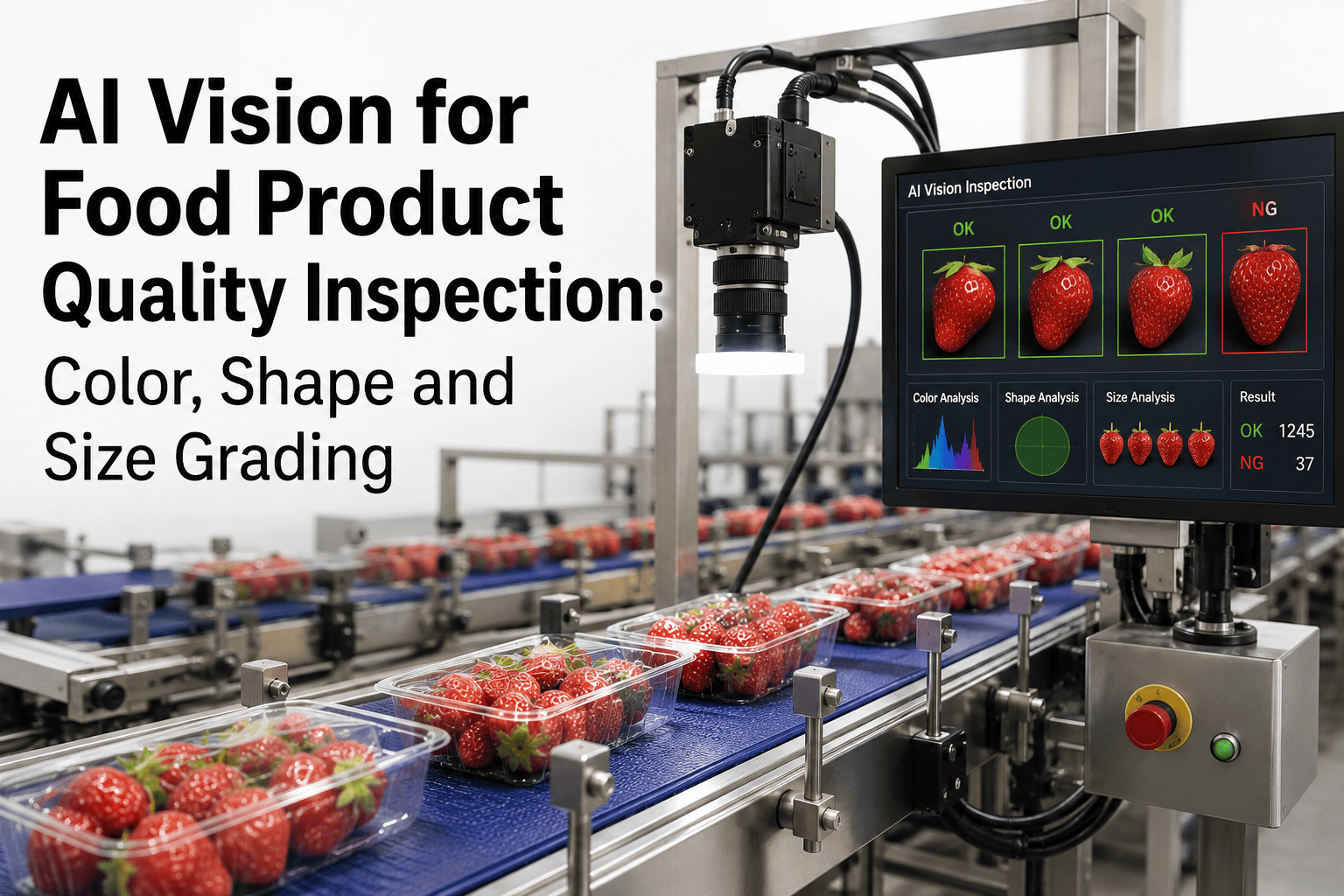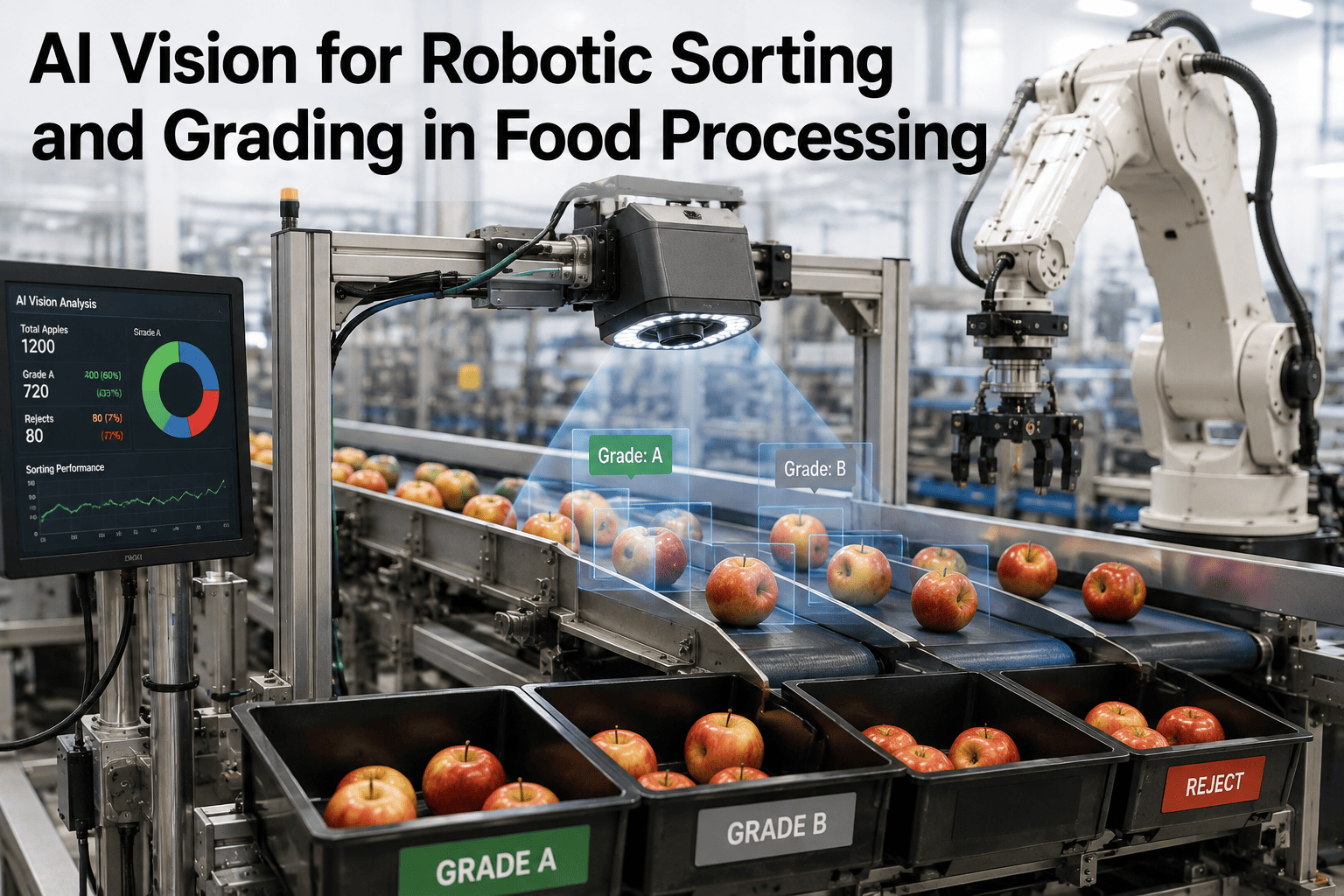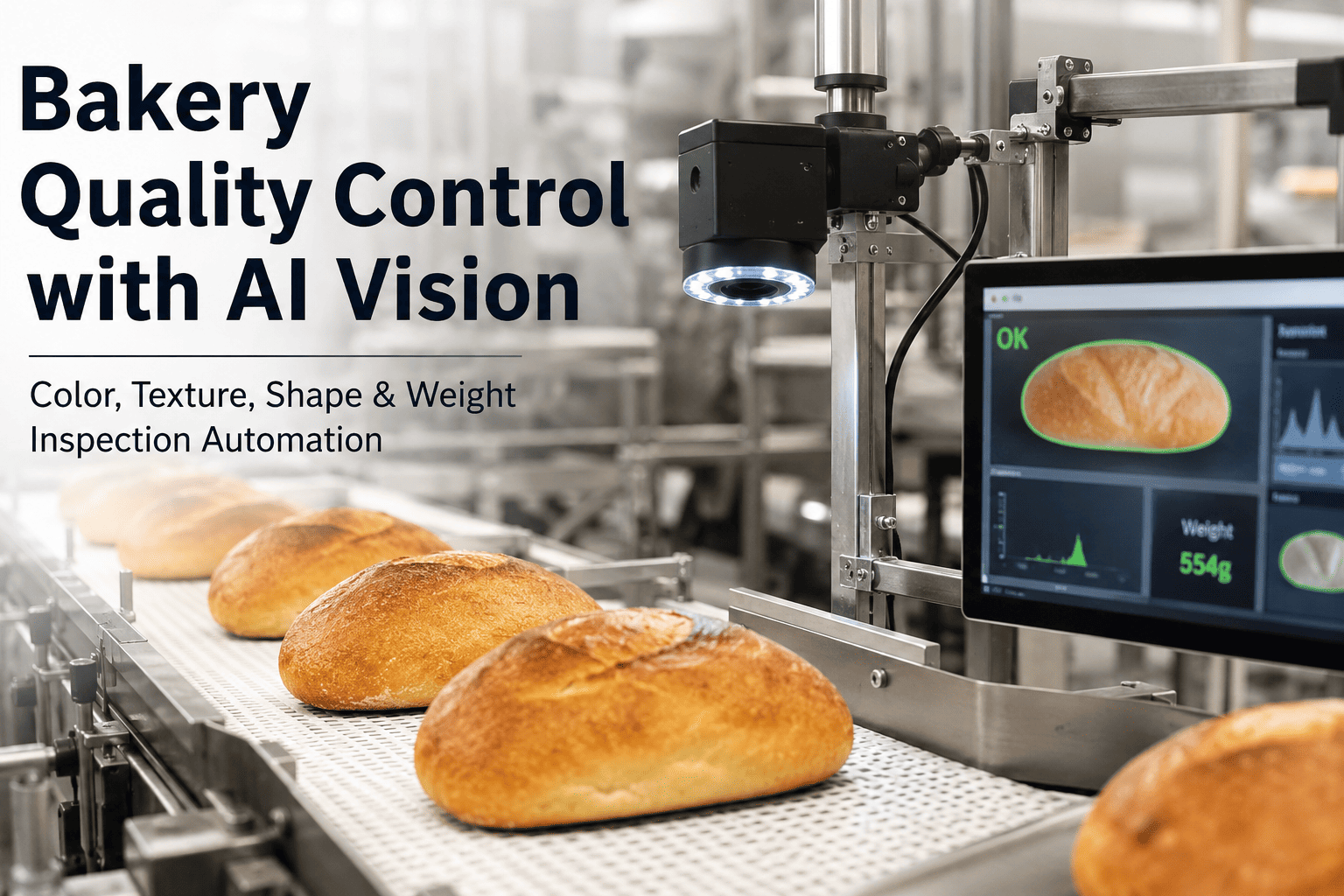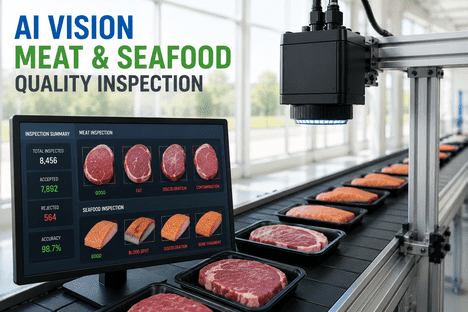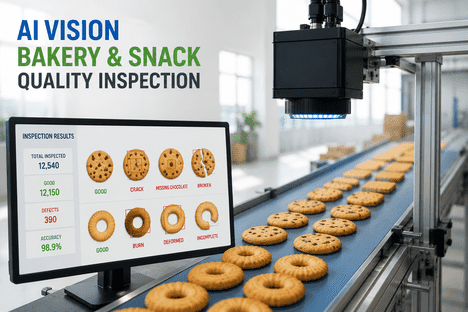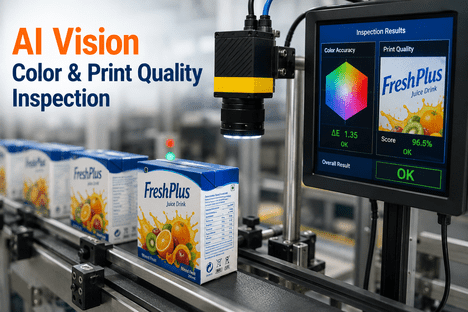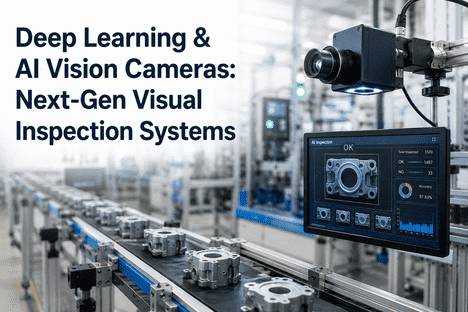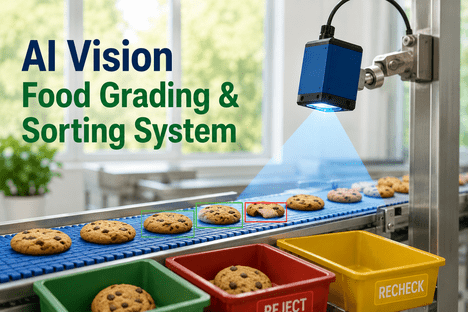
Food grading and sorting lines face a problem that no manual inspection process or rule-based machine vision system can fully solve — organic variability. Every apple, chicken breast, bread loaf, and tomato is physically unique in size, shape, color distribution, and surface condition, and the acceptable range for each attribute shifts by season, supplier, SKU, and retail channel specification. In 2026, AI vision systems built on deep learning classification models have become the only inspection technology capable of grading and sorting food products at commercial line speeds while maintaining the accuracy and consistency that premium markets, retail buyers, and food safety regulations demand. iFactory's Vision Classification module deploys AI vision cameras directly on produce, meat, and bakery sorting lines — grading every unit by size, shape, color, and surface quality against configurable grade specifications, triggering automated divert signals in real time, and generating per-unit grading records without manual review or line speed reduction. The result is measurable reduction in product giveaway, reject rate, and grade mismatch across every food category and packaging format the platform covers. contact support to see iFactory's AI Vision grading and sorting system running live on produce, meat, or bakery line data from your operation.
Grade & Sort Every Unit — By Size, Shape, Color, and Surface Quality at Line Speed
Deep learning grading models on produce, meat, and bakery lines — consistent grade accuracy across organic variability, automated divert control, and full per-unit traceability from a single connected platform.
Why Manual Grading and Rule-Based Vision Systems Cannot Handle Organic Variability
The core challenge in food grading is not measurement — it is consistent judgment under biological variability. A grade-one apple and a grade-two apple can differ by a surface bruise smaller than 8mm, a color patch covering less than 10 percent of the surface, or a shape deviation imperceptible at line speed to a human grader working a four-hour shift. Manual graders apply the correct grade specification at the start of a shift and drift measurably by hour three — not from inattention, but because the human visual system fatigues on repetitive fine discrimination tasks. The result is grade inconsistency within a single shift, across shifts, and between grading stations — generating customer complaints, retail deductions, and USDA or retailer specification failures that cannot be traced to any specific grading event.
Rule-based machine vision systems improved consistency on uniform products but fail precisely where food processing demands are highest — on produce with natural surface variation, meat with marbling and color complexity, and bakery products where acceptable surface browning patterns do not conform to geometric threshold rules. Every season change, new supplier lot, or product variety requires manual rule reconfiguration, and the false reject rates on complex food surfaces typically exceed 15 to 20 percent — generating good product loss that compounds across high-volume lines. iFactory's AI vision classification models address both problems: deep learning adapts to organic variability without reconfiguration, and continuous model learning from line data reduces false rejects further over the first 60 to 90 days of operation.
What iFactory AI Vision Grades and Sorts — Attributes, Categories, and Food Types
iFactory's Vision Classification module grades food products across four primary attribute dimensions — size, shape, color, and surface quality — with category-specific models trained on the visual characteristics of produce, meat, and bakery products. Each attribute is scored on a configurable grade boundary scale that maps directly to USDA grade standards, retailer specifications, or facility-defined internal quality tiers. The grading decision for each unit combines all four attribute scores into a composite grade output that drives the divert signal to the line's sorting mechanism — whether a flap diverter, air ejector, robotic arm, or lane separator. Book a Demo to review iFactory's attribute grading configuration for your specific food category and grade specification requirements.
| Grading Attribute | What AI Vision Measures | Food Categories | Grade Boundary Configuration |
|---|---|---|---|
| Size Classification | Calibrated dimensional measurement — length, width, diameter, cross-sectional area, and weight estimation from 3D vision profiling | Produce (fruit, vegetables), eggs, shellfish, bakery portions | Configurable size tier boundaries per SKU — USDA, retailer, or custom spec |
| Shape and Uniformity | Geometric profile analysis — roundness, elongation, asymmetry, deformity detection, and shape deviation scoring from ideal morphology model | Fruit, root vegetables, bread loaves, meat cuts, portioned products | Per-variety shape model with configurable deviation tolerance per grade tier |
| Color Grading | Multi-spectral color analysis — dominant color, color uniformity, blush coverage percentage, overripe discoloration, maturity index estimation from RGB and NIR imaging | Fruit, tomatoes, peppers, meat marbling and fat color, baked goods browning | Color reference model per variety with configurable acceptable range per grade |
| Surface Quality Inspection | Defect detection and classification — bruises, cuts, scarring, russeting, mold, rot, mechanical damage, skin cracks, and contamination on all exposed surfaces via multi-camera 360-degree coverage | All produce, meat surfaces, bakery crust inspection | Defect type classification with configurable defect area threshold per grade tier |
| Meat Marbling and Yield Grading | Intramuscular fat distribution analysis, lean-to-fat ratio estimation, and USDA beef quality grade scoring from high-resolution surface and cross-section imaging | Beef, lamb, pork — carcass, primals, and portioned cuts | USDA Select/Choice/Prime boundary calibration or facility-defined premium tier config |
| Bakery Surface and Crust Inspection | Crust color uniformity, bake level scoring, surface crack detection, topping distribution verification, and dimensional consistency on portioned bakery products | Bread loaves, rolls, pastries, flatbreads, biscuits, cookies | Per-SKU bake specification with acceptable color and surface deviation bands |
How iFactory AI Vision Grading and Sorting Works — Technical Architecture
iFactory's grading system deploys high-resolution area-scan and line-scan cameras at the inspection station with precision strobed lighting configured for each food product's optical properties — multi-spectral illumination for color analysis on fruit surfaces, structured light for 3D shape profiling on irregular produce, and diffuse lighting for bakery surface inspection. Each unit is imaged from multiple angles simultaneously, providing complete surface coverage that single-camera systems cannot achieve on three-dimensional food products. The captured images pass through iFactory's deep learning inference engine running on edge computing hardware at the inspection station, outputting grade tier, attribute scores, defect classifications, and confidence values in under 50 milliseconds — well within the timing window required for inline divert control on lines running at 10 to 30 items per second.
See iFactory AI Vision Grading Configured for Your Product Category and Grade Specification
iFactory's Vision Classification module is configured to your specific produce variety, meat category, or bakery SKU — with grade boundaries mapped to USDA standards, retailer specifications, or your internal quality tiers. Deployment completes in two to four weeks on existing line infrastructure.
Category-Specific AI Grading — Produce, Meat, and Bakery
iFactory's Vision Classification module deploys category-specific deep learning models trained on the visual characteristics of each food segment — because the grading challenge for a stone fruit packing line is fundamentally different from the grading challenge for a beef primal grading station or a bread baking line. The following section covers the grading application, defect profile, and iFactory platform deployment for each major food category.
Produce Grading — Fruit, Vegetables, and Root Crops
Produce grading represents the most demanding AI vision application in food processing due to the extreme natural variability of fresh agricultural products. Size variation between individual items within a single variety and growing lot can span two to three grade tiers. Color maturity is continuous rather than discrete — requiring a grading model that accurately classifies items at every point along the color development curve, not just at fully ripe or fully unripe endpoints. Surface defect grading on fresh produce must distinguish between cosmetic defects that do not affect eating quality — russeting on apples, minor scarring on citrus, stem punctures on stone fruit — and genuine quality defects that justify downgrade or rejection. iFactory's produce grading models are trained on category-specific defect libraries covering bruising, rot, mold, mechanical damage, sunburn, insect damage, and splitting across all major fresh produce categories. Contact Support to review iFactory's produce grading configuration for your specific crop varieties and buyer specifications.
Meat Grading — Beef, Pork, Poultry, and Processed Cuts
Meat grading with AI vision addresses two distinct grading objectives — quality grading based on marbling, color, and fat distribution, and yield grading based on lean-to-fat ratio and cut consistency. USDA beef quality grading — Select, Choice, Prime — has historically required trained USDA graders working in-plant on a sampling basis, introducing variability and coverage gaps that misclassify both upward and downward. iFactory's beef marbling classification model analyzes intramuscular fat distribution on rib-eye cross-section images to score USDA quality grade equivalents with documented accuracy above 94 percent against USDA grader decisions — providing continuous grading coverage on every carcass or primal rather than sampled grading on a fraction of production. For poultry and pork processing lines, AI vision grades breast portions, wings, and bone-in cuts by weight class, trim quality, and surface condition at speeds that manual grading stations cannot approach.
Bakery Inspection — Bake Level, Crust Quality, and Dimensional Consistency
Bakery grading presents a different visual challenge from produce and meat — the primary quality attributes are bake level uniformity, crust color consistency, surface crack distribution, and dimensional accuracy of portioned products. Underbaked products that pass visual inspection generate consumer complaints at home heating. Overbaked units that fall within a color range acceptable to a shift-fatigued grader generate retail returns on premium bread lines. iFactory's bakery vision module grades every loaf, roll, and portioned product against a per-SKU bake specification — scoring crust color uniformity, surface crack acceptability, dimensional consistency, and topping distribution in real time and diverting out-of-spec units before they reach packaging. The platform's continuous learning capability adapts the bake model to oven performance drift and seasonal humidity variation without manual threshold recalibration.
Cutting Giveaway and Waste — The Direct Financial Case for AI Vision Grading
Giveaway — the systematic over-grading of product into premium tiers when it correctly belongs in standard or processing grade — is one of the highest-value, least-visible loss categories in food production. On a fresh produce packing line, manual graders compensate for grade boundary uncertainty by assigning borderline items to the higher grade, transferring premium revenue value into standard-grade consignments. A conservative giveaway rate of 3 to 5 percent on a line packing 50 tonnes per day represents 1.5 to 2.5 tonnes of daily premium-to-standard misallocation. iFactory's AI grading models eliminate grade boundary uncertainty by applying a consistent, mathematically defined classification threshold to every unit — capturing revenue that currently flows out of the premium tier through human grade leniency.
AI Vision Food Grading and Sorting — Frequently Asked Questions
How does AI vision grading handle seasonal color changes in fruit without manual reconfiguration?
Can iFactory grade beef marbling to USDA quality grade standards accurately enough to replace manual grading?
How does iFactory AI grading integrate with existing sorting equipment?
What is the difference between AI vision grading and traditional machine vision sorting?
Does iFactory's grading system provide traceability records that satisfy retailer and USDA audit requirements?
Deploy AI Vision Grading and Sorting on Your Food Production Line — Live in 2 to 4 Weeks
iFactory Vision Classification connects AI grading cameras to your existing sorting line infrastructure and delivers consistent, 100-percent-coverage grade accuracy across all food categories — with per-unit traceability, real-time quality dashboards, and automated divert control that cuts giveaway, reduces rejects, and satisfies retailer and regulatory documentation requirements from day one.