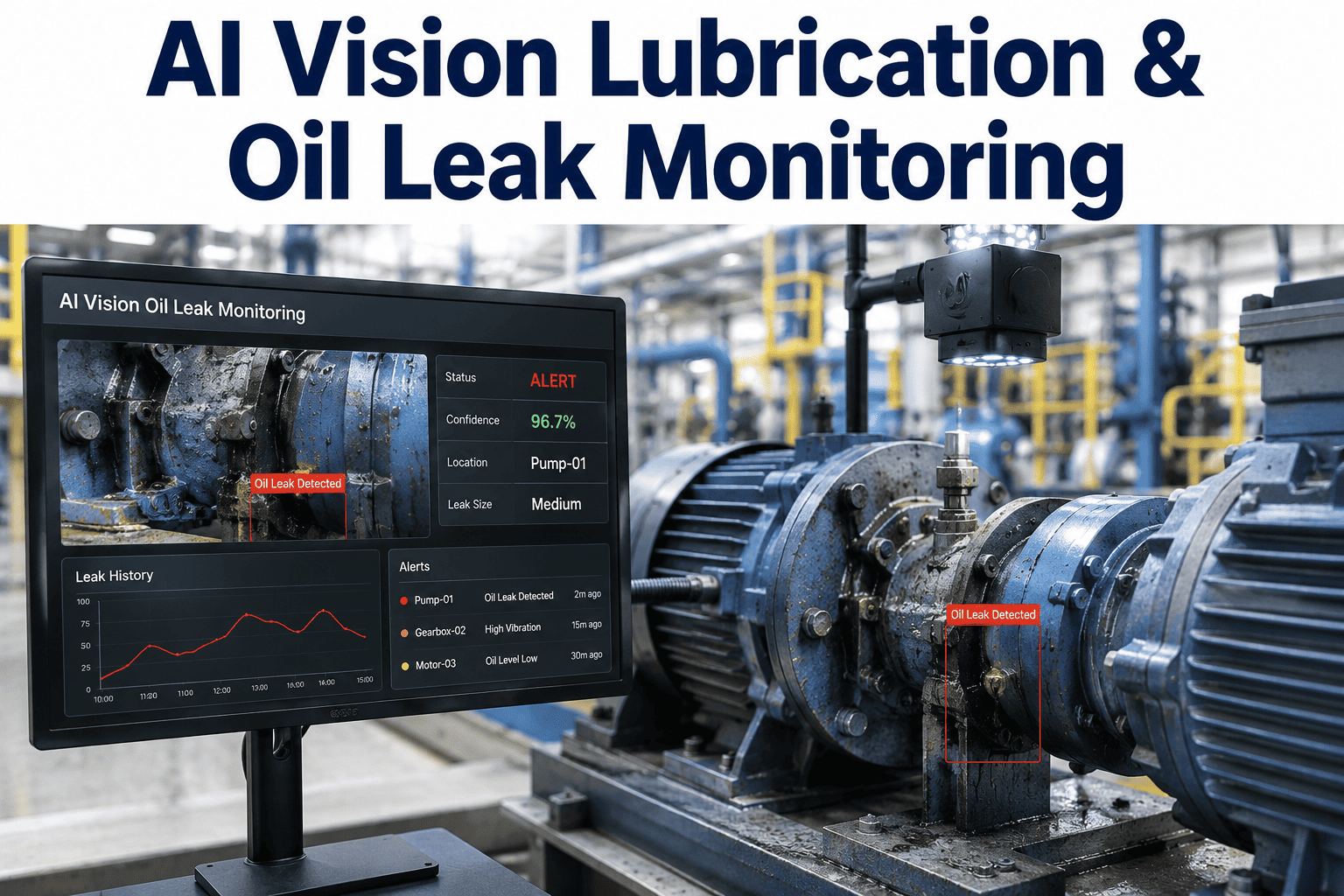
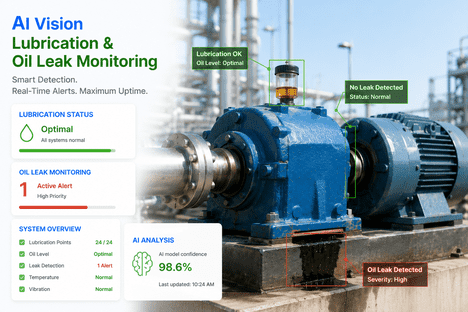
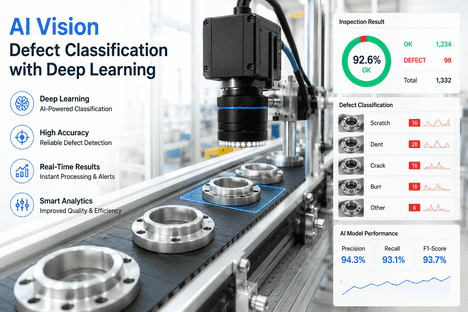
An oil drip forming at the base of a bearing housing will not show up on a vibration sensor, a temperature probe, or a monthly inspection checklist — but it is one of the earliest visible signs that a bearing is heading toward failure. The US Department of Energy attributes up to 80 percent of bearing failures and 43 percent of electric motor failures to poor lubrication, and most of that damage builds silently between scheduled inspection rounds. Human inspectors miss 20 to 30 percent of visible defects under real production conditions, and lubrication issues are especially easy to miss because both too little grease and too much grease look, at first glance, like nothing at all. Book a Demo to see iFactory's AI vision catch a leak or a grease buildup before it becomes a bearing replacement.
80%
Of bearing failures linked to poor lubrication, per US DOE data
94%
Detection accuracy for lubricant leaks using AI vision models
68%
Of slow leaks caught by AI vision that manual rounds miss
24/7
Continuous monitoring vs. periodic manual inspection rounds
Why Lubrication Failure Is a Blind Spot for Every Monitoring Method You Already Have
Vibration sensors, temperature probes, and SCADA historians each monitor a slice of bearing health, but none of them were built to see the physical evidence of a lubrication problem forming on the outside of the housing. That evidence is visual, and it is exactly the gap AI vision closes.
Vibration Monitoring
Detects mechanical looseness and imbalance once wear has already progressed enough to change the vibration signature. It does not see an oil stain or a grease-hardened housing.
Temperature Probes
Confirm a bearing is running hot after friction has already increased. They cannot distinguish a lubrication-caused temperature rise from any other heat source nearby.
Manual Inspection Rounds
Occur on a schedule measured in weeks, not hours, and depend on an inspector's attention holding steady across every asset on a long route.
AI Vision Monitoring
Sees the same physical evidence a trained inspector would look for — oil staining, grease migration, seal weep — continuously, at every asset, without fatigue.
The Two Failure Directions Vision Monitoring Is Built to Catch
Lubrication problems run in two opposite directions, and both are visually identifiable long before they register on a sensor. Talk to our team about which failure pattern is most common across your asset base.
Under-Lubrication
Starved Bearings & Dry Running
Visible oil starvation marks and discoloration on housing surfaces as the lubricant film breaks down
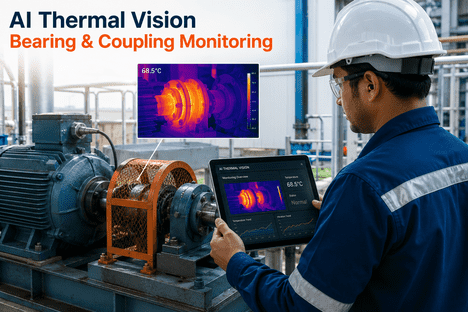
Heat-induced color changes on housings and connections, visible 4 to 8 weeks before thermal failure
A dry bearing grinds, wears, and eventually seizes — with no early visual warning if no one is watching
Over-Lubrication
Grease Buildup & Seal Blowout
Excess grease forces internal pressure up until it pushes past seals, contaminating housings and nearby electrical components
Purged grease visibly accumulates around seal edges — one of the clearest and most commonly missed visual signals in a plant
Once seal blowout and leakage are visible, bearing life expectancy may already be reduced by half
A Grease-Streaked Seal Is a Bearing Asking for Help. Most Plants Only Notice It After the Bearing Is Already Gone.
iFactory's AI vision cameras track pixel-level change frame to frame, distinguishing an active leak forming right now from an old stain that has already been logged — so every alert reflects what is actually happening at that asset today.
How iFactory's Vision Monitoring Sees What a Human Round Misses
A single camera, mounted once, replaces a repeating manual walk-down and never skips a shift, never rushes past an asset, and never loses attention on the fortieth stop of a route.
1
Continuous Visual Capture
Cameras positioned at bearing housings, gearboxes, seals, and hydraulic connections capture images continuously, at the same angle and distance every time — the consistency a manual round can never match.
2
Frame-to-Frame Comparison
The model tracks pixel-level change over time, differentiating an active leak that is spreading right now from a static stain that has already been recorded and addressed.
3
Pattern Classification
Oil staining, grease migration, seal weep, and heat discoloration are each classified separately, since under-lubrication and over-lubrication call for opposite corrective actions.
4
Severity & Trend Scoring
Each detection is scored against the asset's own visual history, so a slow, spreading leak is flagged with urgency while a minor, stable mark stays logged without triggering unnecessary alerts.
5
Work Order Generation
Qualifying detections generate a work order automatically, with the annotated image, asset ID, and recommended corrective action attached — no manual data entry required.
6
Trend History Per Asset
Every image and detection builds a running visual history per bearing or seal, so recurring lubrication issues on the same asset become visible as a pattern, not isolated events.
What Changes Once Lubrication Monitoring Runs Continuously
These are the operational shifts reliability teams consistently report after moving lubrication condition monitoring from a manual, periodic activity to a continuous, camera-based one.
The Cost of Getting Lubrication Wrong, in Either Direction
Lubrication-related bearing failure is rarely a single dramatic event. It is a slow compounding cost across repair labor, energy consumption, and unplanned downtime — and it hits the same way whether the root cause was too little grease or too much.
Increased Maintenance Workload
Cleaning excess grease, replacing damaged seals, and reapplying leaking lubricant all add recurring labor hours that a caught-early fix would have avoided entirely.
Higher Energy Consumption
Over-greased bearings churn instead of gliding, increasing friction and drag — a quiet but continuous drain on energy costs across every hour the asset runs.
Unplanned Downtime
A seized or seal-blown bearing rarely announces itself in advance once the lubrication problem has progressed far enough — the resulting stoppage is sudden and disruptive.
Safety & Environmental Exposure
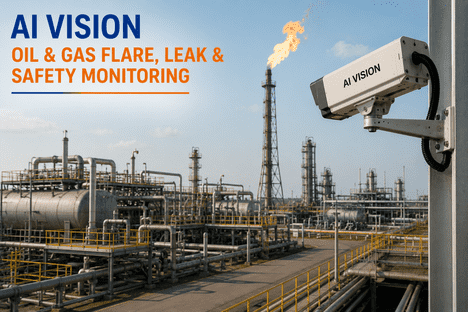
Oil leakage on walking surfaces creates a slip hazard, and uncontained lubricant leakage can trigger environmental cleanup obligations and regulatory reporting.
Deployment: From Pilot Camera to Plant-Wide Lubrication Monitoring
iFactory's rollout starts small and proves itself before it scales, so no plant commits to full coverage before seeing real results on the assets that matter most. Request a scoped deployment plan for your highest-priority rotating assets.
Phase 1
Priority Asset Selection
Identify the bearings, gearboxes, and seals with the highest failure cost or the worst inspection blind spots, and position cameras at those points first.
Phase 2
Baseline Image Capture
Establish a visual baseline for each monitored asset so the model has a reference point for what normal looks like before it starts flagging deviations.
Phase 3
Shadow-Run Validation
Run detection alongside existing manual rounds to compare findings and confirm accuracy before automated alerts and work orders go live.
Phase 4
Scale to Full Coverage
Expand camera coverage to additional rotating assets across the plant as the pilot demonstrates catch rate and reduced unplanned downtime.
Frequently Asked Questions
Can AI vision really tell the difference between too much grease and too little?
Yes. The two conditions produce distinct visual signatures — under-lubrication shows up as dry, discolored surfaces and heat-related color change, while over-lubrication shows up as visible grease migration, purging around seals, and buildup on the housing exterior. The model is trained to classify each separately and attach the appropriate corrective guidance, rather than treating every lubrication anomaly as the same generic alert.
How is this different from just installing more sensors on our bearings?
Vibration and temperature sensors measure mechanical and thermal behavior, but they cannot see the physical evidence sitting on the outside of the housing — an oil stain, a grease-streaked seal, or discoloration around a connection point. AI vision monitoring complements sensor data rather than replacing it, catching the category of lubrication problem that is visible well before it changes a vibration signature or a temperature reading enough to trip a threshold.
Does the system distinguish a new leak from an old stain that was already reported?
Yes, this is one of the core capabilities of the monitoring approach. By comparing images frame to frame over time, the model tracks whether a mark is spreading, static, or shrinking, which means a technician is not sent out repeatedly for the same already-addressed stain, and a genuinely active leak is flagged with appropriate urgency rather than blending into the visual noise of an already-dirty asset.
Book a demo to see this frame comparison running on your own equipment.
What kind of assets benefit most from this type of monitoring?
Rotating equipment with grease or oil lubrication — motors, pumps, gearboxes, and compressor bearings — sees the fastest and clearest value, since these assets fail predictably from lubrication-related causes and the visual evidence is well documented and easy to train a model against. Assets in hard-to-access or hazardous locations benefit especially, since continuous camera monitoring removes the need for a technician to physically approach the point for every check.
How quickly can we expect to see results after deployment?
Most plants see the first meaningful detections within the shadow-run phase, since existing lubrication issues are often already visually present and simply unrecorded before the cameras go live. Full confidence in automated alerting and work order generation typically builds over the following weeks, as the model's baseline and severity thresholds are refined against real conditions at each monitored asset.
Stop Losing Bearings to a Problem You Could Have Seen Coming
iFactory's AI vision monitoring watches every lubricated asset continuously, catching the oil stain, the grease buildup, and the seal weep long before they turn into a seized bearing and an unplanned shutdown.
94% detection accuracy on lubricant leaks and grease buildup
Catches roughly 68% of slow leaks manual rounds miss
Separates under-lubrication from over-lubrication automatically
Continuous 24/7 coverage, not a scheduled walk-down