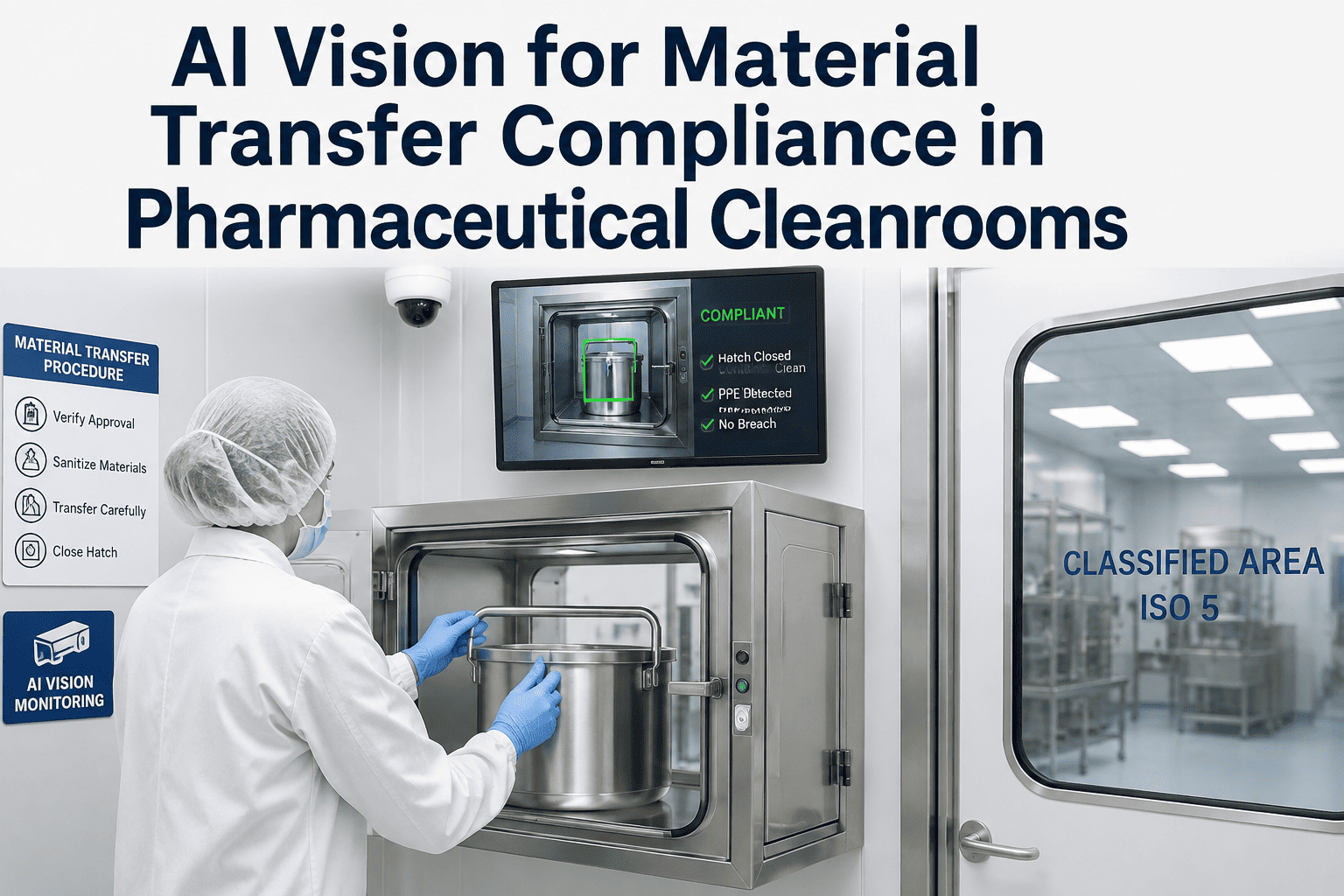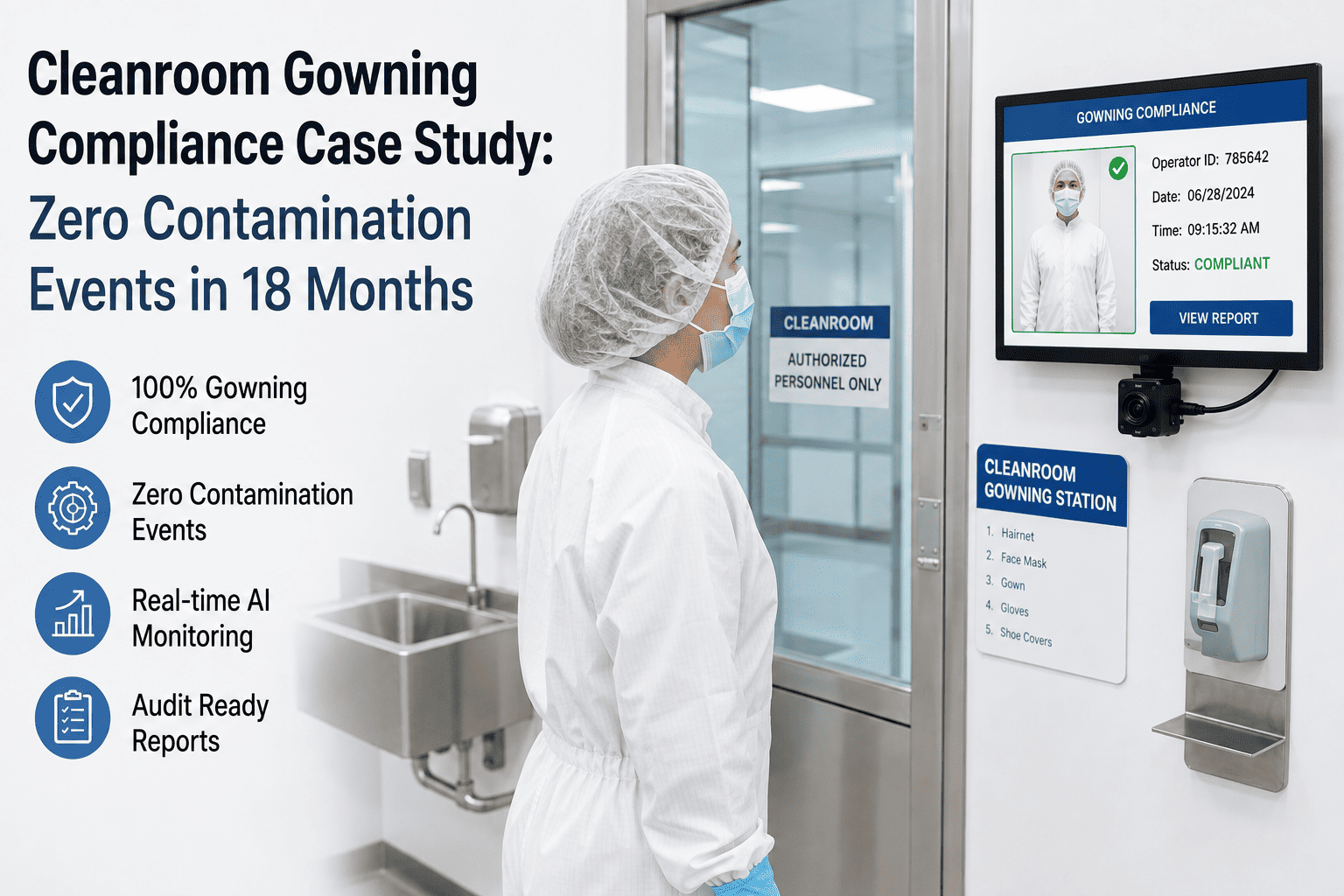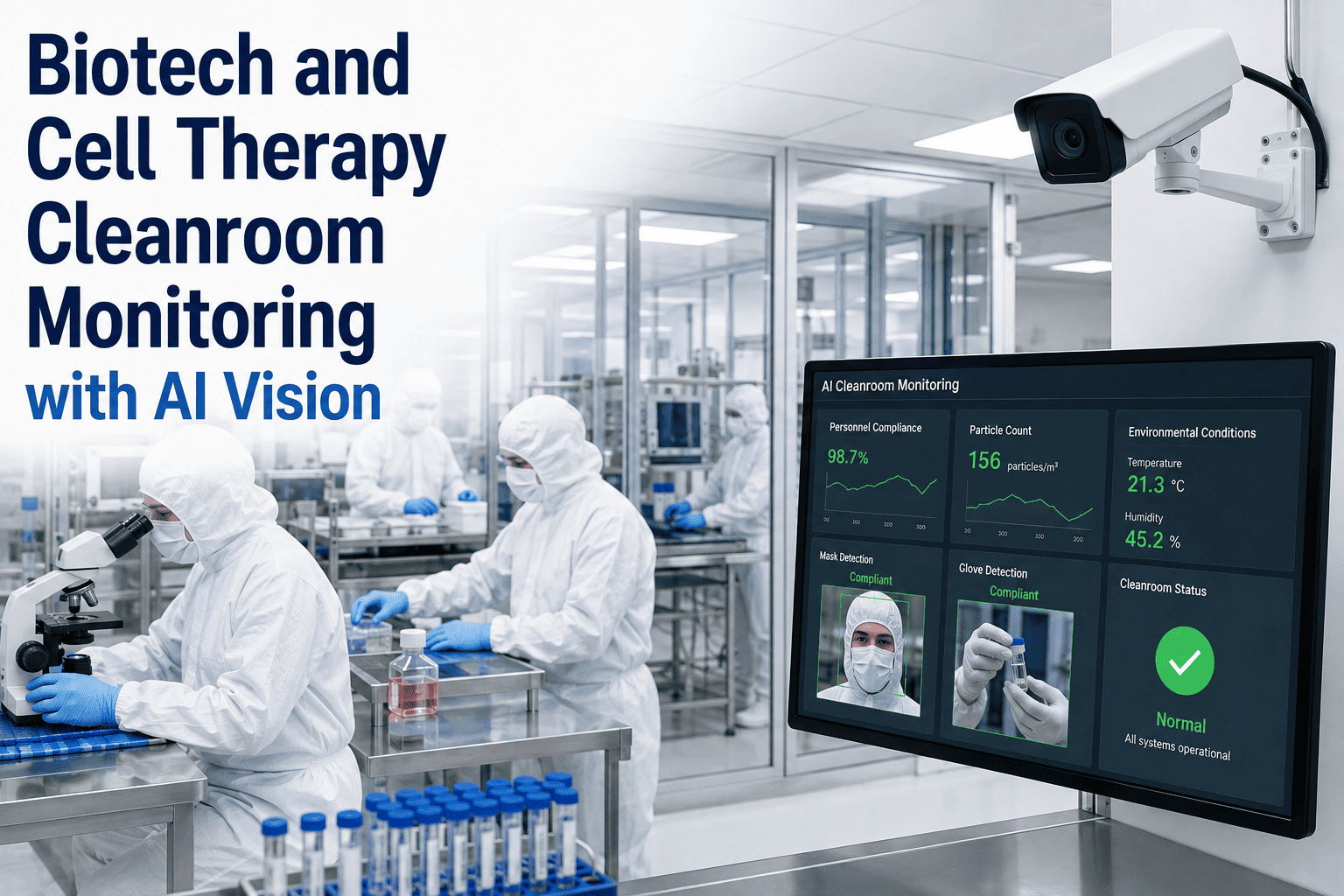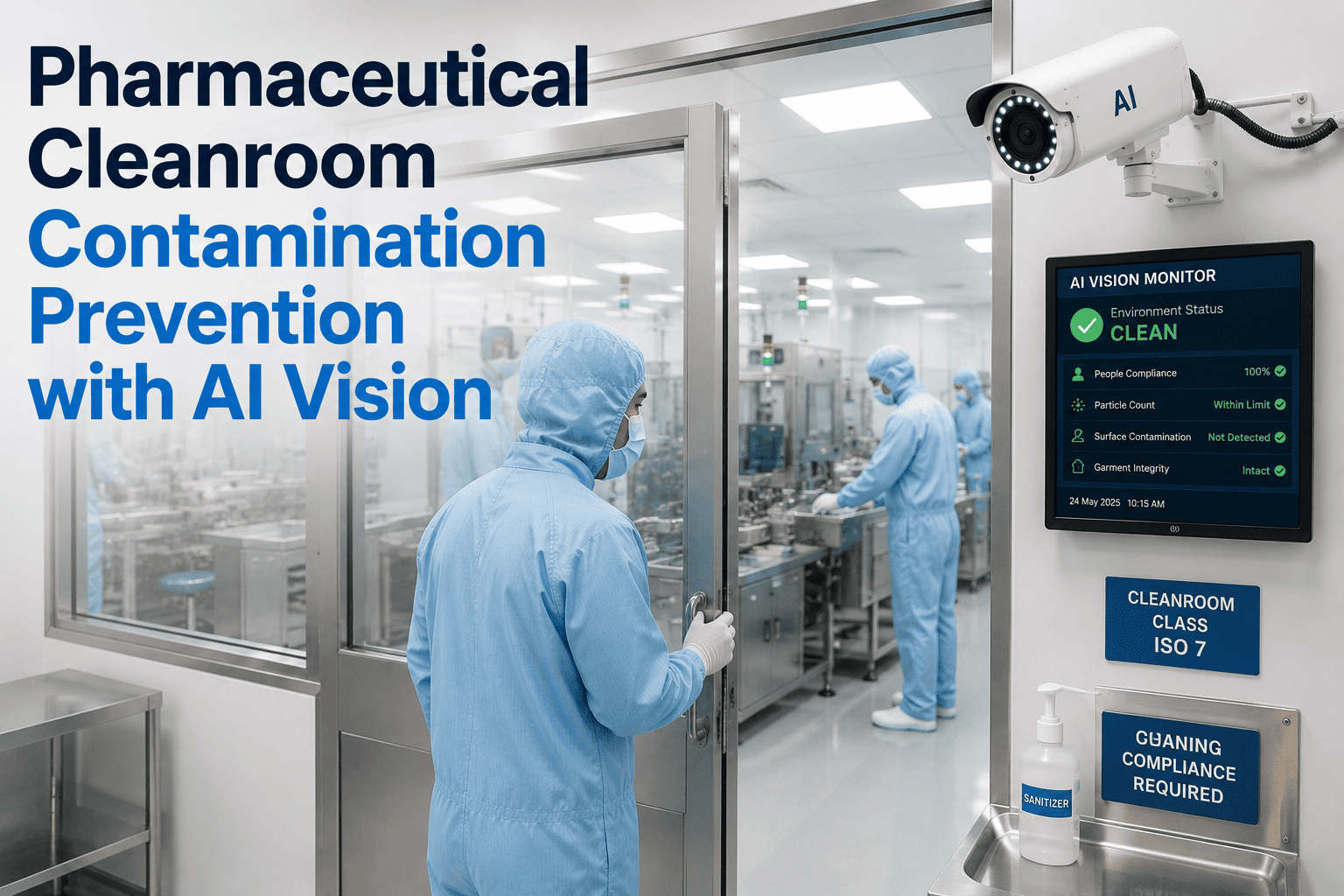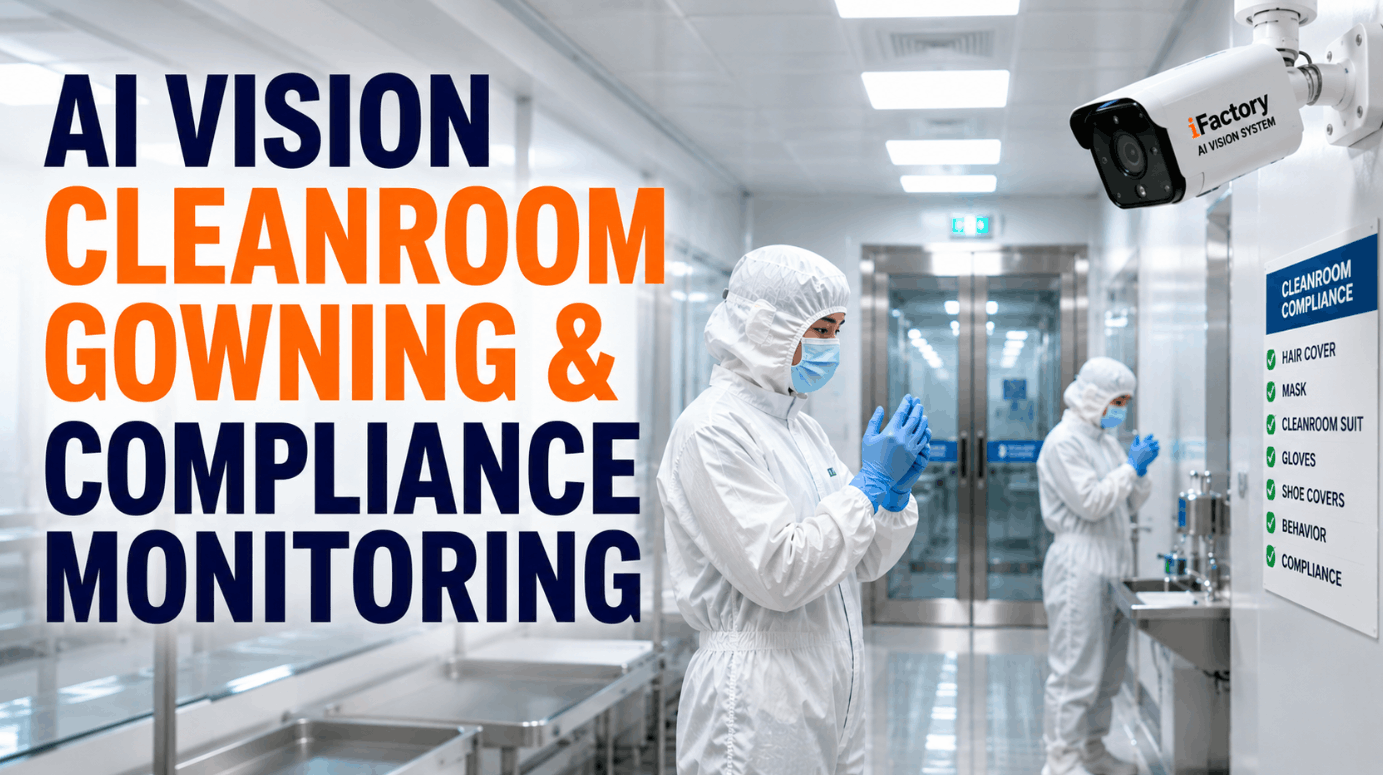
Pharmaceutical cleanrooms and aseptic processing zones represent the highest-stakes environments in any manufacturing facility. A single gowning deficiency, an unauthorized behavior in a sterile corridor, or an undetected contamination event can compromise entire production batches, trigger regulatory action, and expose patients to risk. Traditional compliance monitoring in these environments depends almost entirely on human supervisors, scheduled audits, and self-reported gowning checks — methods that are inherently inconsistent, difficult to scale, and impossible to sustain across every entry event and every shift. iFactory's AI Vision Compliance Monitoring system changes this equation entirely. By deploying deep learning-powered cameras at gowning stations, airlocks, and critical cleanroom zones, iFactory provides continuous, automated monitoring of gowning correctness, personnel behavior, and contamination risk — generating real-time alerts and GMP-compliant audit trail records without adding supervisory headcount or slowing operational throughput.
Monitor Every Entry. Audit Every Shift. Automate Cleanroom Compliance.
iFactory's AI Vision Compliance Monitoring system detects gowning deficiencies, behavioral violations, and contamination risks in pharmaceutical cleanrooms in real time — with complete audit trail records formatted for GMP regulatory review.
Why Manual Cleanroom Monitoring Fails — and What AI Vision Delivers
Human supervisors, periodic walkthroughs, and paper-based gowning logs cannot provide the continuous, objective, evidence-backed monitoring that modern GMP environments require. iFactory's AI Vision Camera monitors every person, every entry, and every zone — automatically. Book a Demo to see how iFactory performs in your cleanroom classification.
Six Cleanroom Compliance Failures That AI Vision Eliminates
Cleanroom compliance failures are rarely dramatic. They accumulate through repeated small deviations — a glove not fully seated, a mask worn below the nose, a touch of an unclassified surface — that individually seem minor but collectively create the contamination conditions that regulators investigate during FDA and EMA inspections. iFactory's Vision Compliance Monitoring system continuously detects and documents each of these deviations, closing the gap between what your SOPs require and what actually happens at every entry point and within every controlled zone. Facilities that have deployed iFactory's AI vision platform report significant reductions in gowning-related deviations and dramatically stronger audit trail depth when facing regulatory scrutiny. Book a Demo to see exactly what iFactory detects in environments matching your cleanroom classification.
Incomplete Gowning at Entry
The most common source of personnel-related contamination is partial gowning — missing hood coverage, improperly donned gloves, unsealed coverall zippers, or exposed skin at wrist and neck. Manual checks at entry points are inconsistent across supervisors and often absent on night shifts. iFactory's AI vision system inspects every person at every entry event, verifying all gowning elements against the required configuration for that cleanroom classification before personnel are permitted to proceed.
Prohibited Behavior Inside Controlled Zones
GMP behavior requirements inside cleanrooms — no touching of face or mask, no leaning against classified surfaces, restricted movement patterns near open product — are difficult to enforce through periodic supervision. Violations occur between walkthroughs. iFactory continuously monitors behavior within defined zones and generates timestamped alerts when prohibited actions are detected, creating a documented record of each event for investigation and CAPA closure.
Unauthorized Zone Access
Access control systems log badge events but cannot verify that the person entering is wearing the correct gowning level for the destination zone, is not carrying prohibited items, or is not entering a restricted area during a scheduled cleaning or decontamination cycle. iFactory's vision layer adds a second verification step — confirming gowning compliance and absence of prohibited materials at the precise moment of zone entry, independently of electronic access control.
Gowning Degradation During Operation
Gowning integrity can deteriorate during extended production shifts — a glove torn on equipment, a coverall sleeve rolling back, a mask displaced during physically demanding tasks. iFactory's continuous monitoring within operating zones detects post-entry gowning degradation events that would otherwise go unnoticed until the end-of-shift debrief or not at all, allowing supervisors to intervene before contamination risk escalates.
Inadequate Audit Trail Depth
When regulatory inspectors review cleanroom compliance records, paper logs and electronic access records often cannot answer questions about what specific individuals were doing at specific times near specific product exposure points. iFactory generates timestamped visual records of every gowning check, every zone entry, and every behavioral alert — providing the level of audit trail depth that modern FDA 21 CFR Part 11 and EU GMP Annex 1 inspections increasingly expect.
Shift-Dependent Compliance Variation
Compliance rates in manually monitored cleanrooms are demonstrably higher on day shifts when supervisors and quality personnel are present than on evening and overnight shifts. This creates a systematic risk that contamination events are more likely during precisely the periods when oversight is thinnest. iFactory's AI vision system applies the same detection standard across every shift, every hour, eliminating the compliance variation that comes from inconsistent human supervision.
Traditional Monitoring vs. iFactory AI Vision: Performance Comparison
| Compliance Dimension | Manual / Periodic Supervision | iFactory AI Vision Monitoring | Impact |
|---|---|---|---|
| Gowning Inspection Coverage | Spot checks, ~15–30% of entries | 100% of entries, every shift | Full coverage |
| Gowning Defect Detection Rate | ~40–55% (human observer) | 94–98% (AI vision) | ~2x improvement |
| Audit Trail Completeness | Paper logs, manual entry | Timestamped image records, 21 CFR Part 11 compliant | Regulatory-grade |
| Behavioral Violation Detection | Only during supervisor presence | Continuous, all zones, all shifts | 24/7 coverage |
| Alert Response Time | Minutes to hours (if detected) | Real-time, <2 seconds | Immediate intervention |
| New Staff Compliance Ramp-Up | 3–6 months supervised training | AI-guided feedback from day one | Accelerated onboarding |
Comparing compliance monitoring approaches for your facility? Book a Demo to see iFactory's detection performance benchmarked against your current cleanroom monitoring program.
5 Core Capabilities of iFactory's Vision Compliance Monitoring for Cleanrooms
Automated Gowning Verification at Entry
Entry Point ControliFactory's AI vision system checks every person entering a controlled zone against a defined gowning specification — verifying head cover, mask, goggles, coverall, gloves, and overshoes as applicable to the cleanroom classification. The system evaluates coverage completeness, correct donning sequence indicators, and absence of prohibited items in a single camera pass before entry is permitted. Deficiencies trigger an immediate alert at the entry point and a timestamped record is generated for the individual's compliance history. The model is trained on your specific gowning kit and cleanroom entry procedure, not on generic garment categories.
In-Zone Behavioral Compliance Monitoring
Continuous Zone SurveillanceWithin classified manufacturing and filling zones, iFactory monitors personnel behavior against defined GMP behavioral requirements. Prohibited actions — touching face coverings, leaning against critical surfaces, reaching over open product, unauthorized equipment interaction — are detected and alerted in real time. The system operates across multiple camera zones simultaneously, maintaining consistent behavioral surveillance throughout the entire cleanroom layout rather than only at supervised stations. All behavioral events are logged with classification, severity, zone ID, and timestamp for CAPA documentation and trend analysis.
Contamination Risk Detection and Alerting
Aseptic Zone ProtectioniFactory identifies visual indicators of contamination risk beyond gowning failures — foreign material introduction, spill events, equipment surface contact by ungloved surfaces, and proximity violations near open product containers. In aseptic processing areas, the system monitors critical distances between personnel and exposed product pathways, alerting supervisors when proximity thresholds are breached. This layer of risk detection is particularly valuable during equipment intervention events, where operators interact with filling lines under time pressure and deviation risk is highest.
GMP Audit Trail and Compliance Reporting
Regulatory Data IntegrityEvery inspection event, behavioral alert, and zone entry record generated by iFactory is stored with full audit trail integrity under 21 CFR Part 11 and EU GMP Annex 11 data integrity requirements. Records include the timestamped image, detection classification, zone identifier, operator ID where applicable, and alert disposition. Batch-level compliance summaries, shift comparison reports, and individual operator compliance histories are available for quality review and regulatory submission. The structured output format supports direct integration with your Quality Management System for CAPA workflow initiation.
Edge Deployment with Data Residency
Facility SecurityiFactory's AI vision system processes all cleanroom monitoring data on-site using edge computing hardware deployed within the facility boundary. No cleanroom images or personnel data are transmitted to external cloud infrastructure, satisfying pharmaceutical data residency requirements and privacy regulations in all major markets. Edge processing also ensures that alert response times remain below two seconds regardless of network conditions, and that the system continues to operate during planned or unplanned network interruptions — maintaining continuous protection during the periods when external connectivity cannot be guaranteed.
Regulatory Standards iFactory's Cleanroom Vision Monitoring Supports
The 2022 revision of EU GMP Annex 1 explicitly requires manufacturers to implement a Contamination Control Strategy covering personnel behavior, gowning effectiveness, and cleanroom monitoring. iFactory provides the automated, continuous monitoring capability and electronic documentation that satisfies Annex 1's strengthened requirements for personnel contamination control evidence, replacing reliance on periodic human observation with verifiable AI-generated compliance records.
FDA GMP regulations require that personnel working in cleanroom and controlled environments wear clothing appropriate to their operations, with contamination prevented through procedural controls. iFactory's automated gowning verification and behavioral monitoring system provides the documented, objective evidence of personnel hygiene control effectiveness that FDA investigators expect to review during pre-approval and routine surveillance inspections of sterile pharmaceutical facilities.
ICH Q9 Quality Risk Management requires pharmaceutical manufacturers to systematically identify, assess, and control risks to product quality — including contamination risks from personnel. iFactory's Vision Compliance Monitoring generates structured behavioral and gowning deviation data that enables quality teams to quantify personnel contamination risk levels, trend deviation frequency by zone and shift, and demonstrate risk control effectiveness through objective monitoring records rather than assumption-based assessments.
ISO 14644 standards for cleanroom classification and operation include personnel behavior requirements that are difficult to enforce through conventional supervision alone. iFactory's continuous monitoring ensures that behavioral compliance with ISO 14644-aligned SOPs is maintained across all classification levels — ISO 5 through ISO 8 — with monitoring intensity and alert thresholds configurable to match the contamination sensitivity of each zone.
"Regulatory expectations for cleanroom personnel monitoring have fundamentally changed since the Annex 1 revision. Inspectors are now asking to see not just that gowning SOPs exist, but that compliance with those SOPs is continuously verified and documented with objective evidence. Manual observation records and self-attestation logs are no longer sufficient to satisfy that expectation in a sterile manufacturing environment processing high-risk injectable products. AI vision systems that can provide continuous monitoring coverage, automated deficiency detection, and audit-ready electronic records represent the direction the industry is being pushed — and the facilities that deploy them first are reporting measurably stronger inspection outcomes and significantly reduced contamination-related investigation workload."
iFactory Cleanroom Monitoring Deployment: From Installation to Full Compliance Coverage
Cleanroom Layout and Risk Zone Mapping
The deployment begins with a structured mapping of your cleanroom layout — identifying all gowning entry points, airlock configurations, critical zone boundaries, and high-risk behavioral areas such as filling suite entries and open product corridors. iFactory's deployment team works with your QA and facilities engineers to define the monitoring zones and the specific compliance rules applicable to each area. This mapping directly shapes camera positioning, field-of-view configuration, and the behavioral detection rules programmed into the AI models for your facility.
Gowning Model Training on Your Specific Kit
iFactory's deep learning models are trained on image datasets captured using your actual gowning kit, your personnel, and your cleanroom lighting conditions — not on generic garment databases. The training process builds detection capability for each required gowning element at the resolution and angle relevant to each camera position. Defect categories including missing elements, incorrect coverage, and improper donning are defined in collaboration with your QA team and validated against known-bad gowning examples before the system goes live.
Edge Hardware Installation and System Integration
Cameras and edge processing hardware are installed at defined monitoring positions without requiring production shutdown. The system integrates with your existing access control infrastructure to correlate vision monitoring records with individual operator identities for compliance history tracking. Alert output is connected to your facility management system, QMS, or a dedicated monitoring dashboard, enabling quality supervisors to receive real-time notifications on preferred devices without requiring dedicated workstation access.
Validation and Qualification Documentation
iFactory supports the full IQ/OQ/PQ validation lifecycle for cleanroom monitoring system deployment in pharmaceutical GMP environments. Installation Qualification documentation covers hardware specifications and installation verification. Operational Qualification test protocols demonstrate detection sensitivity and specificity for each defined gowning element and behavioral rule. Performance Qualification data from initial production monitoring confirms sustained accuracy under real operating conditions. The complete validation package is formatted for FDA and EU GMP audit review.
Continuous Monitoring, Trend Reporting, and Model Maintenance
Once operational, iFactory provides continuous monitoring coverage with automated compliance trend reporting at configurable intervals — shift, batch, weekly, and monthly summaries for QA review. The system flags developing compliance trends — such as increasing gowning deficiency rates on specific shifts or in specific zones — before they escalate into deviation events. Model maintenance is supported through structured retraining workflows when gowning kits change, new personnel groups are added, or SOPs are updated, ensuring monitoring accuracy is sustained through the full lifecycle of the cleanroom operation.
Frequently Asked Questions
Deploy Continuous AI Vision Compliance Monitoring in Your Pharmaceutical Cleanroom
iFactory's Vision Compliance Monitoring system combines deep learning gowning verification, behavioral detection, contamination risk alerting, and GMP-compliant audit trail generation in a single edge-deployed platform. Strengthen your Annex 1 Contamination Control Strategy, accelerate FDA inspection readiness, and eliminate shift-dependent compliance variation across your entire cleanroom operation.