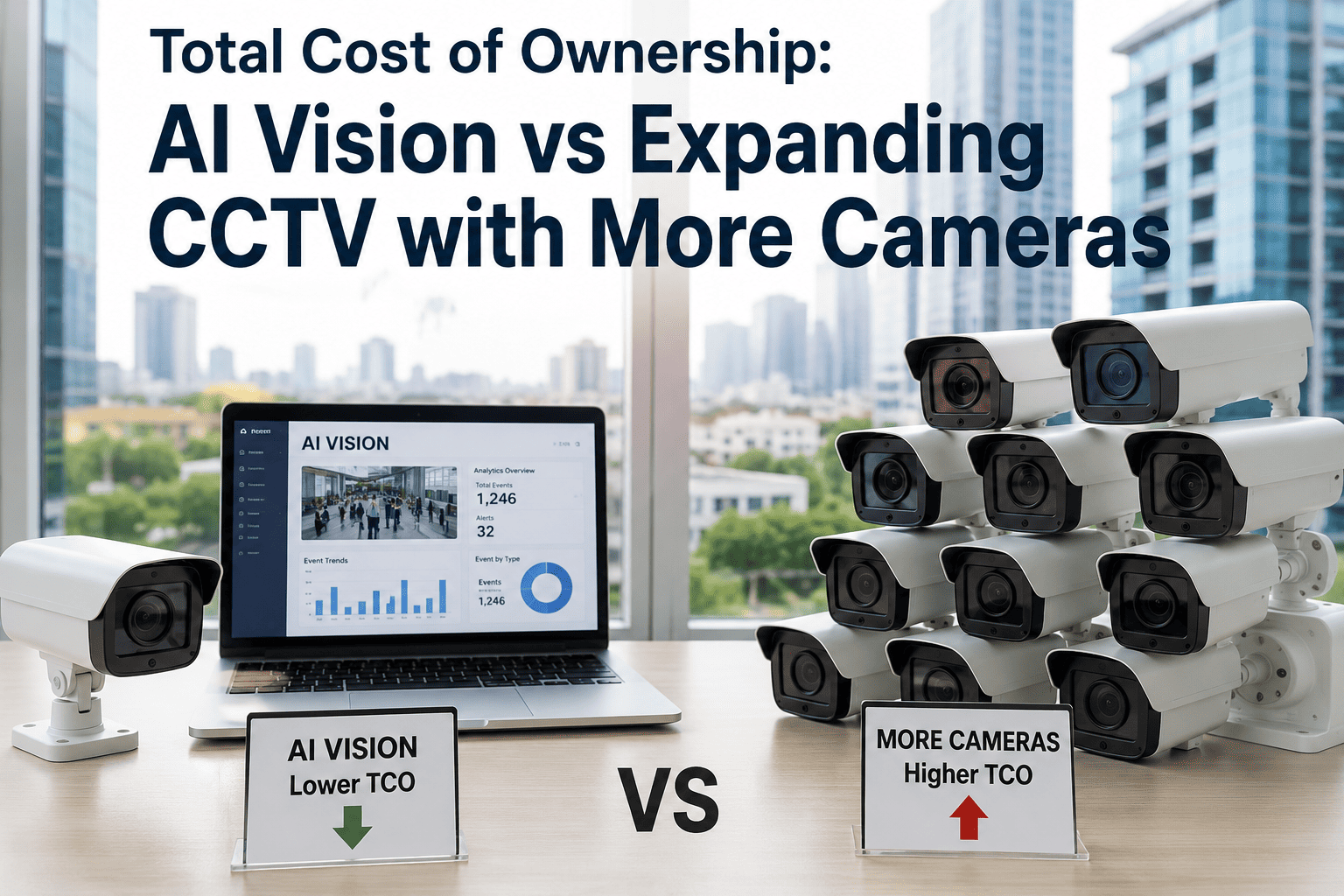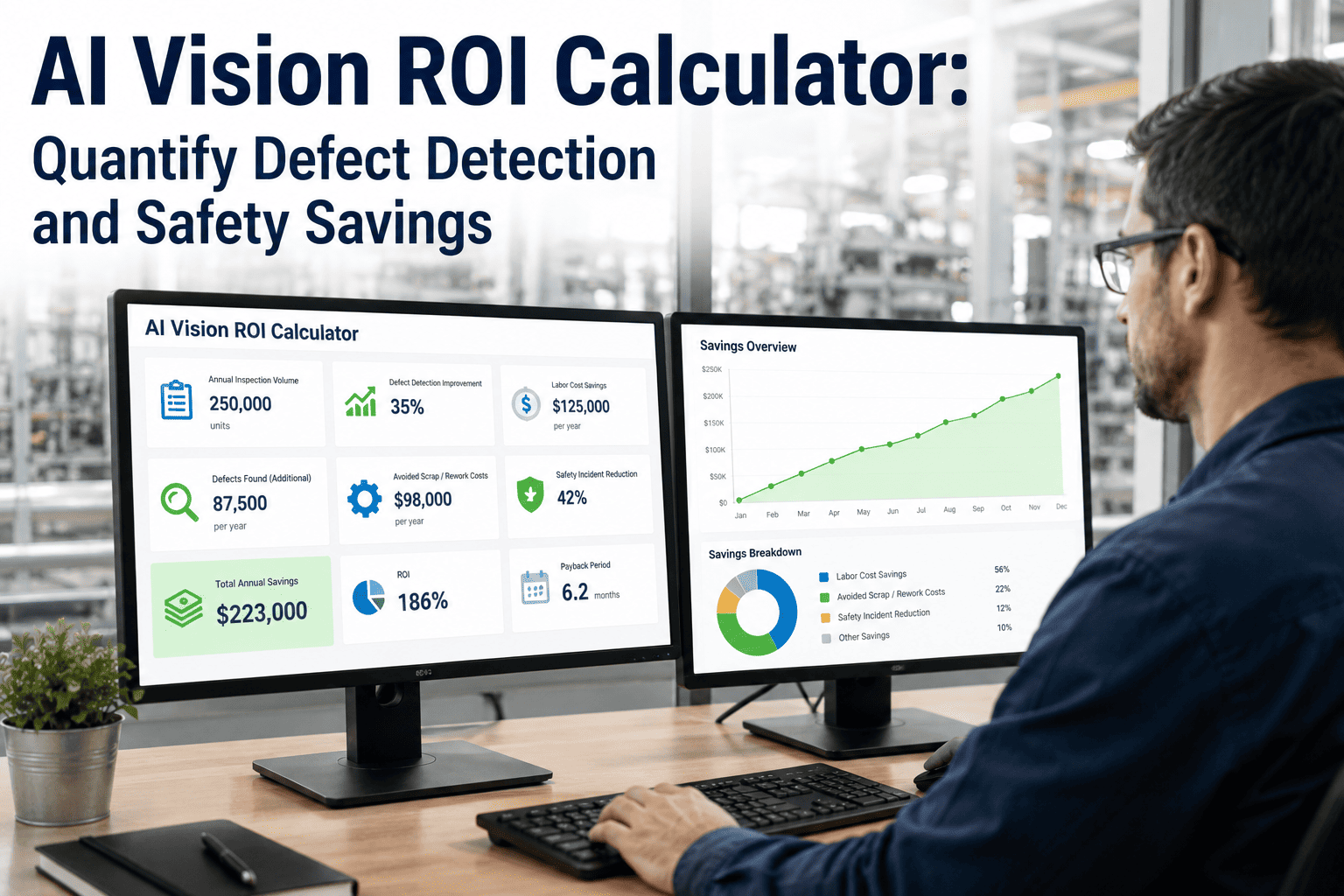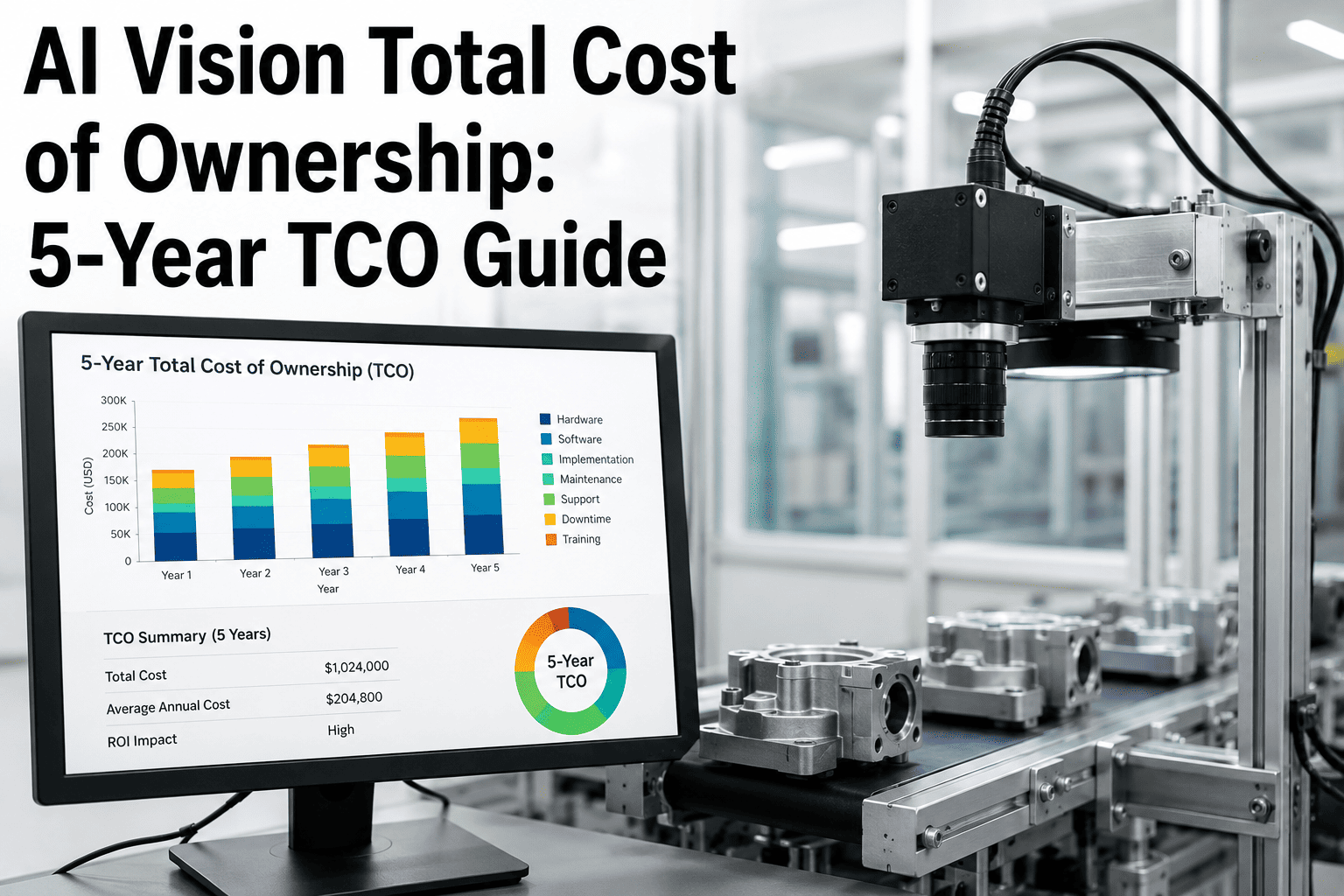
The number on a vision system quote is almost never the number a plant actually ends up paying. Camera hardware, a software license, and an integration fee look like the whole picture at the proposal stage, but network upgrades, data labeling, cloud fees, retraining, and unplanned downtime all show up later, quietly stacked on top of the price that won budget approval. Procurement research consistently finds that buyers who compare only sticker price end up spending 40 to 60 percent more over an asset's lifetime than those who model the full cost from the start. A five-year total cost of ownership view is the only honest way to compare vision systems, and it usually reshapes which option actually looks cheapest. See where your own numbers land when you book a demo with iFactory.
What an AI Vision System Actually Costs Over Five Years, Not Five Weeks
Hardware is one line on the invoice. Labeling, integration, cloud fees, retraining, and downtime are the rest — and they're the line items that decide whether a vision investment pays for itself or quietly overruns.
Six Cost Categories Every Vision TCO Model Has to Include
A complete TCO calculation covers far more than the equipment purchase order. Leave any one of these categories out and the comparison between vendors, or between building versus buying, stops being reliable.
The categories below aren't equally weighted, and that's exactly why skipping any one of them distorts the comparison. Acquisition and licensing tend to dominate conversations because they're the numbers on the original quote, but data and labeling, infrastructure, and downtime routinely add up to more than half the true five-year cost once a deployment scales past a single pilot station. Treating those three as an afterthought is the single most common reason a vision project's real cost ends up diverging from what finance approved at kickoff.
Acquisition
Camera hardware, lighting, edge compute, and the one-time installation and integration labor to get the station physically running.
Licensing
Perpetual per-camera licenses or an annual SaaS subscription, plus the maintenance fee most vendors charge as a percentage of license cost every year.
Data and Labeling
The cost of capturing and labeling training images per SKU or defect class, which recurs every time a new part or defect type is introduced.
Infrastructure
Network switches, storage, and additional compute capacity needed to handle the data volume a multi-camera deployment generates.
Cloud and Egress
Recurring fees for off-premise inference or model retraining pipelines, which scale directly with inspection volume and data retention policy.
Downtime and Rework
The cost of every hour a station is down for recalibration, retraining, or troubleshooting, plus the labor spent reworking parts a slow or brittle system missed.
A useful gut check when reviewing any vendor proposal is to ask which of these six categories the quoted number actually represents, out loud, before signing anything. If a vendor can only speak confidently to acquisition and licensing, that's a signal the other four categories still need to be modeled independently before the comparison means anything.
Why Year One Almost Never Looks Like Year Two Through Five
Vision system economics follow a predictable shape once you track them across a full five-year horizon. The first year is dominated by one-time costs, and every year after that is dramatically cheaper per camera, per hour, once the upfront investment is behind you.
Those figures represent cost per camera, per operating hour, on a mid-sized six-camera deployment running roughly 6,000 hours a year. The steep drop after Year 1 reflects the acquisition and integration costs being fully absorbed, leaving only licensing, occasional retraining, and routine maintenance to carry forward. This is precisely why comparing vendors on Year 1 price alone is misleading: a system with a lower upfront cost but a recurring per-inspection or cloud-inference fee can easily cost more by Year 3 than a system with a higher sticker price but a flat, predictable licensing model.
The shape of this curve also explains why the length of your evaluation window changes which vendor wins on paper. A buyer comparing quotes on a twelve-month basis will almost always favor the option with the lowest Year 1 number, since that's the only data point in front of them. Stretch the same comparison to five years and the picture frequently reverses, because the vendor with steeper recurring costs, whether from per-inspection charges, cloud egress, or a SaaS license that never stops accruing, ends up costing more in total even though it looked cheaper at signing. Insisting on a multi-year model before comparing vendors is the single easiest way to avoid this trap.
The Line Items Most Quotes Leave Off Entirely
Comparing two vendor quotes side by side rarely means comparing the same set of costs. This is where a five-year TCO model earns its keep, surfacing the categories that a proposal's headline number quietly omits.
Notice how the categories most often left off a quote, network infrastructure and cloud egress, are also the two with the widest cost ranges. That variance isn't random: both scale directly with how much image data your deployment actually generates, which depends on camera resolution, frame rate, and how many stations you're running, none of which a generic vendor quote can price accurately without knowing your specific setup. A single high-resolution camera capturing at full frame rate can produce several hundred megabytes of data per minute, and that volume compounds fast once you're running it across a full production line rather than one demo station.
The rightmost column in the table above is worth sitting with for a moment, because it's really asking a procurement question rather than a technical one: which of these numbers is the vendor prepared to commit to in writing, and which is left as an assumption you're expected to discover later. A vendor willing to itemize infrastructure and cloud costs up front, even as a range, is telling you something different than one who leaves those categories out entirely and lets the topic surface only after a purchase order is signed.
| Cost Line Item | Typical Range | Usually Missing From Quotes? |
|---|---|---|
| Deployment per inspection station | $30,000-$200,000 | Included, but scope varies widely |
| Perpetual license per camera | $4,000-$18,000 | Included |
| SaaS license per camera, per year | $500-$2,500 | Included, but recurs every year |
| Data labeling per model | $1,500-$6,000 | Often omitted |
| Network infrastructure, 5-20 cameras | $12,000-$40,000 | Almost always omitted |
| Cloud storage and egress, annual | $3,000-$18,000 | Almost always omitted |
| Annual maintenance | 15-22% of license cost | Often buried in fine print |
Get a Five-Year TCO Model Built Around Your Own Line
iFactory will map every one of these cost categories against your actual station count, camera mix, and volume, so you're comparing real numbers instead of a headline quote.
Five Hidden Costs That Erode ROI After the Contract Is Signed
These aren't obscure edge cases. They're the specific categories that procurement teams flag most often as the reason a vision system's real cost diverged from what was budgeted at approval.
What connects all five is timing. Every one of these costs is easy to underestimate at the proposal stage precisely because it doesn't arrive until months or years into the deployment, well after the initial purchase order has been signed off and the team has moved on to the next project. Building a line item for each of them into the original TCO model, even as an estimated range rather than a precise figure, is what keeps a five-year budget from drifting quietly off course.
Why Vendor Count Is a TCO Variable, Not Just a Convenience Factor
Many vision deployments end up assembled from separate contracts: one vendor for cameras, another for lighting, another for the AI platform, and an integrator to tie it all together. Each seam between vendors is also a seam where costs hide and accountability gets diffuse.
The financial risk of a stitched-together stack rarely shows up as a single bad line item. It shows up as a pattern: a support ticket that bounces between the camera vendor and the software vendor while a station sits idle, an integrator invoice for a change nobody scoped in the original contract, or a licensing renewal that arrives disconnected from the hardware refresh cycle it's supposed to align with. None of these individually breaks a budget, but across a five-year horizon they add friction cost that never appears on any single vendor's invoice, which is exactly the kind of expense a proper TCO model is built to catch.
Costs Spread Across Contracts
Hardware, software, and integration billed separately, with no single party accountable for total cost or overall system performance once installed. Support tickets bounce between vendors when something breaks at the seam.
One Investment, One Accountable Partner
Cameras, lighting, edge compute, model training, and CMMS integration delivered as a single package, with one number to evaluate against a five-year horizon instead of reconciling four separate invoices.
The Numbers That Show Up Once the Cost Model Is Right
A properly modeled TCO isn't just an accounting exercise, it's what determines whether the operational gains a vision system promises actually translate into bottom-line results.
These figures matter most when they're read together rather than in isolation. A 75 percent reduction in inspection cost means little if it's offset by rework rates that stay flat, and a fast time-to-value means little if the underlying licensing model erodes the savings by Year 3. The plants that get the most out of an AI vision investment are the ones that track all of these numbers against the same five-year model from the start, rather than celebrating a fast pilot and losing track of the cost curve once the system moves into steady-state operation.
Questions Finance and Operations Ask Before Approving a Vision Budget
Get Your Actual Five-Year Number, Not a Headline Quote
iFactory's turnkey package bundles hardware, software, training, and integration into one investment, so the number you get is the number you can actually plan a budget around. Book a demo and see your own TCO model.