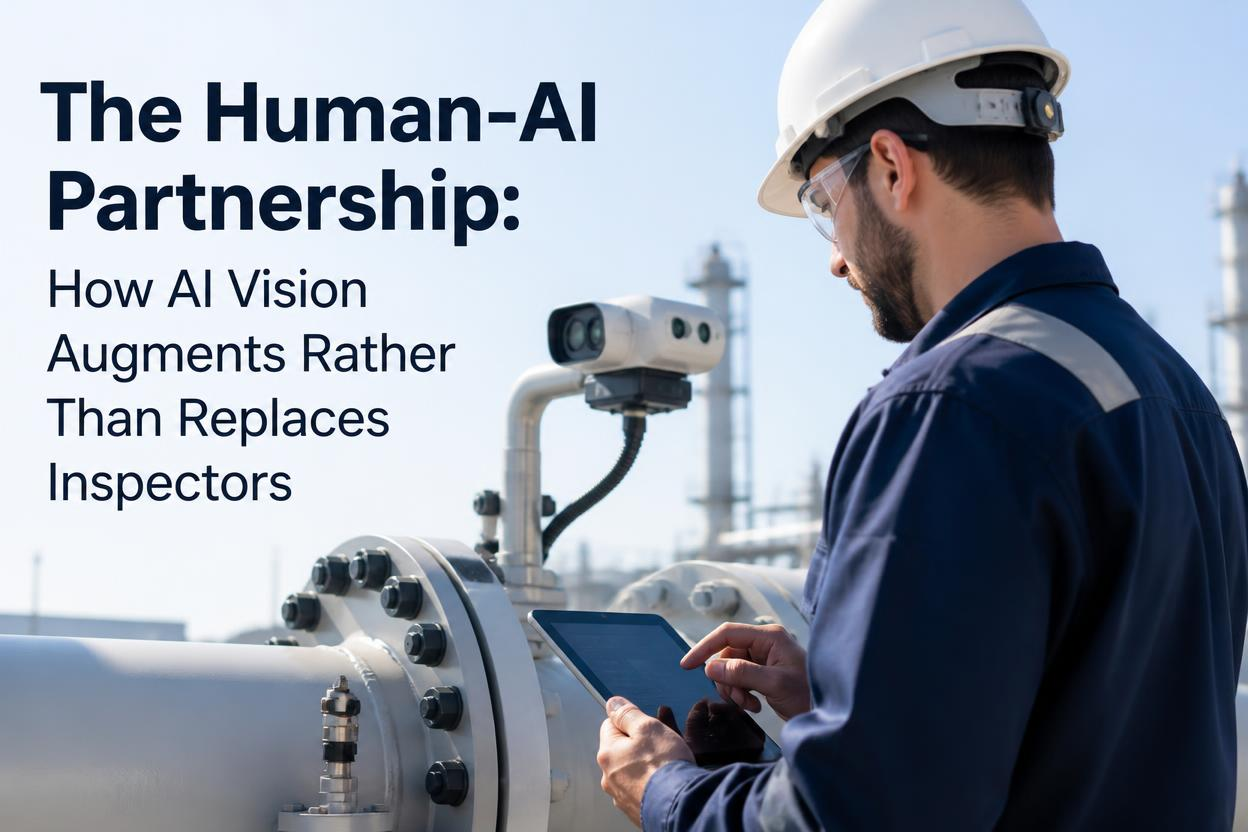
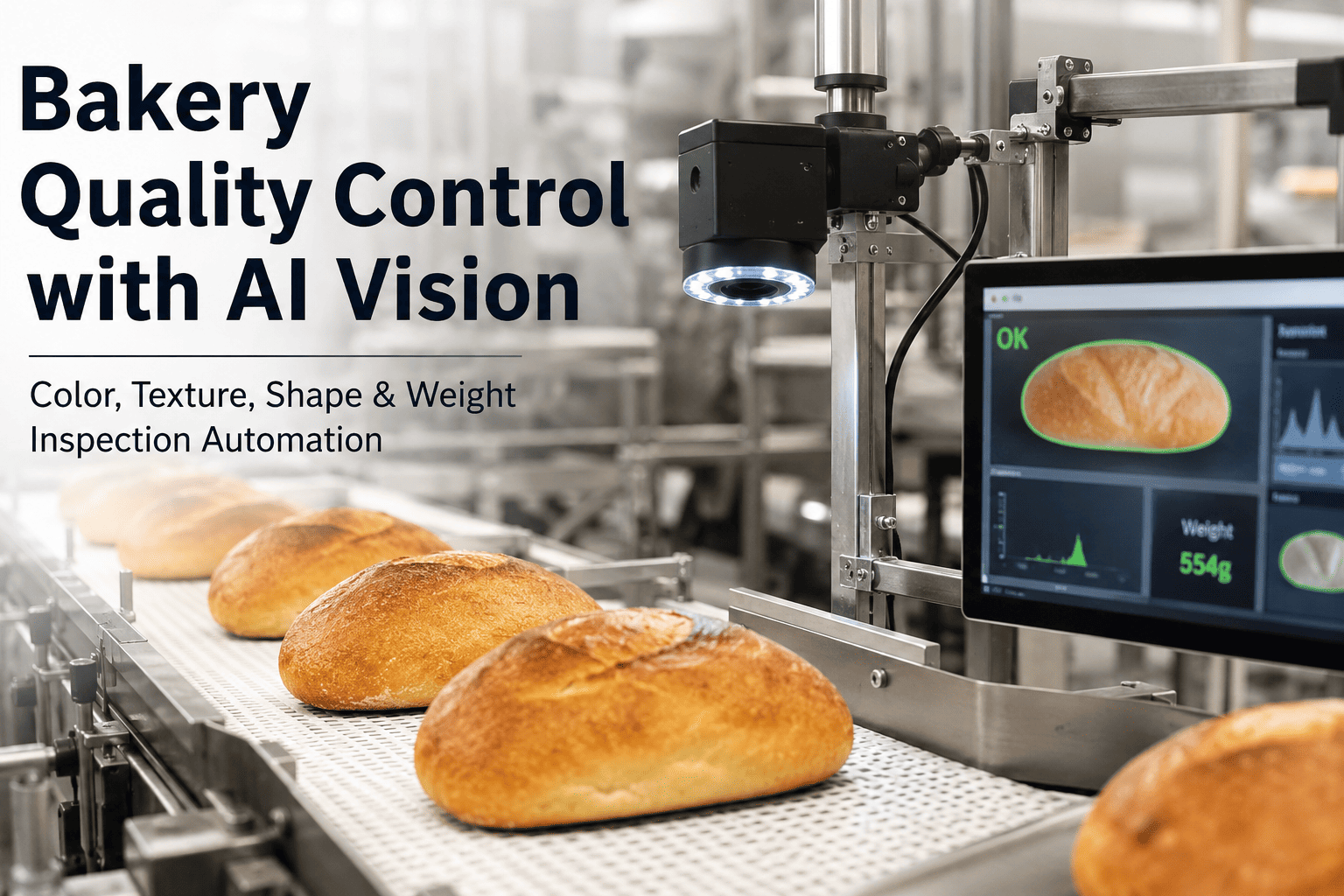
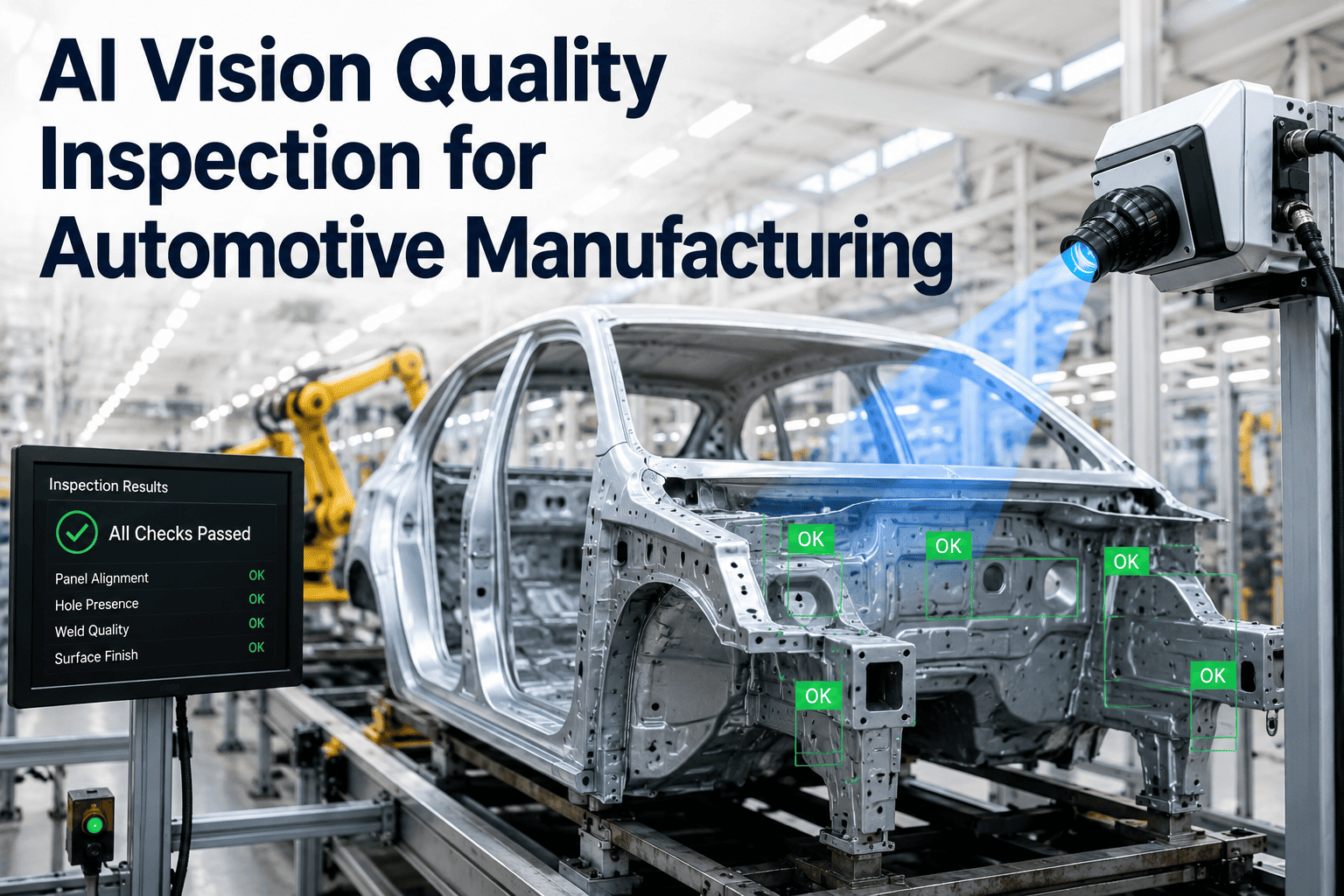
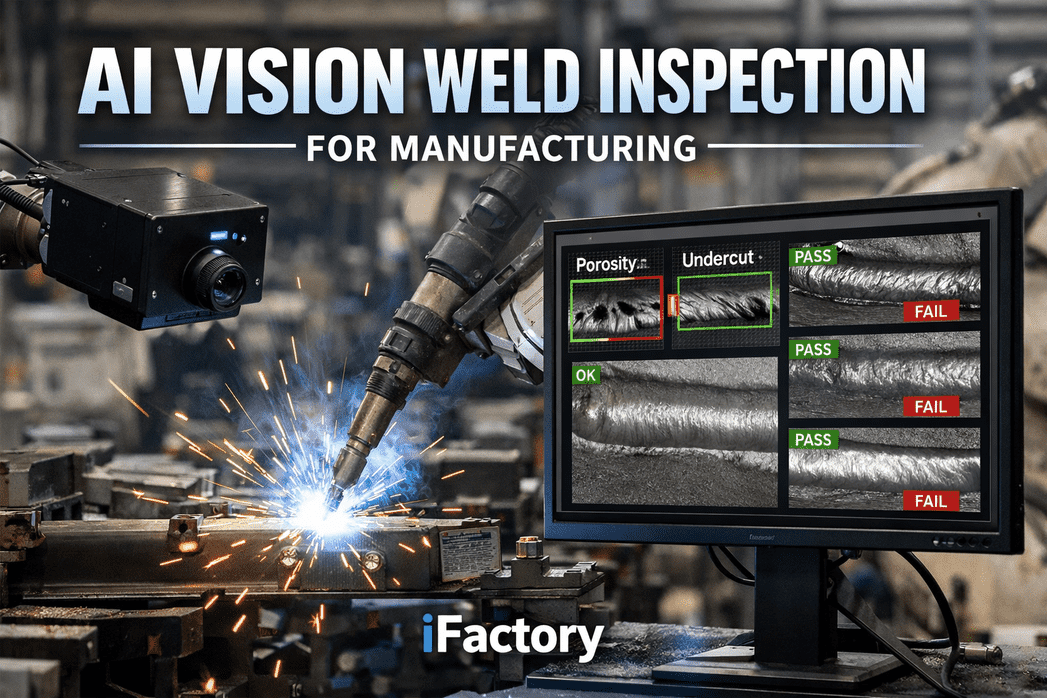
The conversation about AI in manufacturing inspection almost always starts with the wrong question: will this replace my inspectors? The right question is what happens to your inspection quality, throughput, and workforce satisfaction when AI handles the parts of the job that humans are worst at and humans handle the parts that AI cannot do. Inspectors working eight-hour shifts miss defects at rates that climb steadily after the second hour due to visual fatigue, yet those same inspectors possess process knowledge, customer-specific quality judgment, and the ability to investigate root causes that no model can replicate. iFactory's AI vision platform is designed around that division, automating repetitive high-volume screening while elevating inspectors into a role that uses their actual expertise. You can book a demo to see how the partnership model works on your inspection stations.
HUMAN-AI PARTNERSHIP · INDUSTRY 5.0 · AUGMENTED INSPECTION · WORKFORCE
AI Catches What Fatigue Misses — Your Inspectors Decide What Happens Next
iFactory's AI vision platform screens every part at line speed with consistent accuracy, then routes only the decisions that require human judgment to your inspectors, turning repetitive visual sorting into expert-quality analysis.
AI HANDLES
High-speed repetitive screening
Consistent defect detection
Fatigue-free 24/7 operation
Quantified defect measurement
HUMANS HANDLE
Complex judgment calls
Customer-specific quality decisions
Root cause investigation
Process improvement actions
THE REAL CONCERN
What Inspectors Actually Worry About vs What the Data Shows
The anxiety about AI replacing inspection jobs is real and understandable, but it is based on a version of AI deployment that does not reflect how the technology is actually implemented in successful manufacturing facilities. The cards below contrast the most common inspector concerns with the operational reality observed across iFactory deployments.
COMMON FEAR
AI will eliminate my position entirely and I will need to find a new role or a new employer within months of deployment.
OBSERVED REALITY
Across iFactory deployments, zero inspectors were laid off as a direct result of AI vision adoption. Roles were redefined to focus on exception review, process investigation, and quality system management.
COMMON FEAR
The AI will make all the decisions and I will just be a button pusher with no real influence over quality outcomes on my line.
OBSERVED REALITY
Inspectors gain more decision authority, not less. They define the acceptance criteria, review the AI's edge cases, override model decisions, and drive process corrections based on patterns the AI surfaces.
COMMON FEAR
I do not have the technical skills to work with AI software and will not be able to operate the new system without extensive retraining.
OBSERVED REALITY
iFactory's interface is designed for quality personnel, not data scientists. Inspectors interact through visual dashboards and image review screens that require no coding or machine learning knowledge to use effectively.
TASK ALLOCATION
The Inspection Task Matrix: Who Owns What in an AI-Augmented Workflow
Not every inspection task is equally suited to automation. The matrix below categorizes common inspection tasks by who performs them in an AI-augmented workflow, showing that automation is targeted at volume and consistency while humans retain authority over judgment and strategy.
AI-OWNED TASKS
Screening 100 percent of parts at line speed for known defect types with consistent sensitivity
Measuring defect dimensions, counting defect frequency, and calculating defect density per part or per batch
Flagging statistical shifts in defect rates that indicate a developing process drift before it produces out-of-spec parts
Logging every inspection result with timestamped images for traceability and audit compliance
SHARED TASKS
Classifying novel or ambiguous defects where the AI provides a confidence score and the inspector makes the final call
Setting and adjusting acceptance thresholds based on customer specifications and production context that the AI cannot interpret alone
Reviewing AI-flagged edge cases during shift handover to maintain consistent quality decisions across operator changes
Periodically validating AI performance by reviewing a random sample of AI-passed parts to confirm model accuracy
HUMAN-OWNED TASKS
Investigating root cause when defect rates spike, using process knowledge and cross-functional communication that AI cannot replicate
Making customer-specific quality decisions where contract requirements include subjective criteria beyond pixel-level defect detection
Deciding whether to stop the line, adjust process parameters, or continue production based on the full operational context
Driving corrective actions, updating control plans, and improving the inspection process itself based on accumulated data
AUGMENTED DAY
An Inspector's Shift Before and After AI Augmentation
The difference between an unaugmented and an AI-augmented inspection shift is not about working less. It is about spending time on tasks that actually require a human brain instead of tasks that only require human eyes. The timeline below shows the same eight-hour shift under both models.
BEFORE AI: MANUAL INSPECTION SHIFT
Hours 1-2
Repetitive visual screening of parts on the line
Fresh eyes, reasonable detection rate
Hours 3-5
Continued visual screening with declining focus
Fatigue begins, miss rate climbs
Hours 6-7
Visual screening with significant fatigue effects
Miss rate peaks, inconsistency rises
Hour 8
Paperwork, data entry, and end-of-shift reporting
Administrative burden, no analysis time
AFTER AI: AUGMENTED INSPECTION SHIFT
Hours 1-2
Review AI-flagged exceptions and ambiguous cases
Focused expertise on decisions that matter
Hours 3-4
Analyze defect trend data from AI dashboard and investigate patterns
Process intelligence work, not visual sorting
Hours 5-6
Validate AI performance on random sample, adjust thresholds if needed
Quality oversight and model governance
Hours 7-8
Document findings, update control plans, brief incoming shift
Knowledge transfer and process improvement
Your Best Inspectors Should Not Be Spending Their Day Staring at Good Parts
iFactory's AI vision platform screens every part so your inspectors only see the ones that need human judgment, turning eight hours of visual fatigue into eight hours of quality intelligence work. Book a demo to see the augmented workflow for your inspection team.
SKILL EVOLUTION
How Inspector Roles Evolve When AI Takes Over the Screening Work
The transition from manual inspector to AI-augmented quality specialist is not a career disruption. It is a career upgrade that moves the role up the value chain from repetitive visual labor to process-oriented quality management. The comparison below maps the specific skill shifts.
Primary Skill
Visual acuity and sustained attention during repetitive screening tasks
Decision Scope
Binary pass or fail on individual parts based on a fixed reference standard
Data Interaction
Recording counts on paper forms or entering results into a spreadsheet at end of shift
Process Influence
Minimal; aware of defect rates but rarely involved in root cause analysis or corrective action
Career Trajectory
Limited upward mobility; role is defined by task repetition rather than growing expertise
Primary Skill
Analytical judgment applied to complex, ambiguous, and customer-specific quality decisions
Decision Scope
Nuanced quality assessments including disposition of edge cases, lot-level decisions, and process interventions
Data Interaction
Real-time dashboard analysis, defect trend investigation, and data-driven recommendations to production teams
Process Influence
Direct involvement in root cause investigations, control plan updates, and corrective action implementation
Career Trajectory
Clear path to quality engineering, supervision, or continuous improvement roles based on demonstrated analytical capability
STRENGTH COMPARISON
Where AI Outperforms Humans and Where Humans Outperform AI on the Inspection Line
Understanding the strengths and limitations of each partner in the inspection workflow is the key to designing an effective division of labor. The panels below map the specific capabilities where each excels, based on observed performance data from production deployments.
AI STRENGTHS IN INSPECTION
Sustained Attention
No fatigue degradation across shifts, days, or months. Detection sensitivity at hour eight equals detection sensitivity at hour one.
Speed at Scale
Processes hundreds of parts per minute with identical analysis time per part, enabling 100 percent inspection where sampling was previously required.
Measurement Consistency
Measures defect dimensions to sub-pixel accuracy with zero variation between measurements of the same feature across time.
Pattern Detection Across Data
Identifies statistical correlations between defect types, production parameters, and time-of-day patterns that a human reviewing one part at a time cannot see.
Complete Traceability
Logs every decision with timestamped image evidence, creating an auditable record without the gaps that paper-based manual inspection inevitably produces.
HUMAN STRENGTHS IN INSPECTION
Novel Situation Judgment
Evaluates a defect or condition never seen before using broader context, experience, and reasoning that a trained model cannot apply outside its training distribution.
Customer Context Interpretation
Understands that the same defect may be acceptable for one customer and rejectable for another based on relationship, application, and contract nuances.
Root Cause Investigation
Walks the line, talks to operators, checks upstream processes, and connects physical observations to process variables in ways that require presence and communication.
Process Improvement Initiative
Takes inspection insights and converts them into corrective actions, updated work instructions, and improved process parameters that reduce defect occurrence.
Cross-Functional Coordination
Bridges quality, production, maintenance, and engineering teams to resolve quality issues that span departmental boundaries and require negotiation.
MEASURED IMPACT
Workforce and Quality Outcomes From AI-Augmented Inspection Deployments
These figures reflect measured results from manufacturing facilities where iFactory's AI vision platform was deployed as an inspector augmentation tool, not a replacement tool, with inspectors actively involved in exception handling and process improvement throughout the deployment.
94%
Reduction
Time Spent on Repetitive Visual Screening per Shift
Inspectors shifted from spending most of their shift on visual sorting to spending most of it on analysis, investigation, and process improvement activities.
3.7x
Increase
Defect Root Cause Investigations Initiated per Month
With AI handling screening, inspectors had time to investigate the causes behind defect trends instead of just counting defects, driving more corrective actions.
68%
Reduction
Inspector Turnover Rate Post-Deployment
Facilities that repositioned inspectors as quality specialists saw dramatic retention improvements because the role became more engaging and career-relevant.
41%
Improvement
Overall Defect Detection Rate
Combined AI screening consistency and human exception handling produced a higher overall detection rate than either AI alone or humans alone could achieve.
IMPLEMENTATION APPROACH
Four-Phase Rollout That Builds Inspector Confidence Before AI Takes Control
Deploying AI as a partnership tool requires a different implementation approach than deploying AI as a replacement tool. The phases below are designed so that inspectors see the AI as a tool that makes their job better before it changes how they spend their time.
01
Observer Mode
AI runs on the line but produces no pass or fail decisions. Inspectors continue their normal workflow while seeing a parallel AI assessment on a secondary screen. This builds trust by letting inspectors evaluate the AI's accuracy without any risk to production.
02
Second Opinion Mode
The AI flags parts it believes are defective and presents them to the inspector for confirmation. The inspector still makes every final decision, but the AI pre-screens the flow so inspectors only review parts the AI has identified as potential defects.
03
Autopilot with Exception Routing
The AI makes pass or fail decisions on high-confidence results and automatically routes low-confidence results and edge cases to the inspector. Inspectors transition from screening all parts to reviewing only the decisions that need human judgment.
04
Full Partnership Mode
AI handles all routine screening with inspectors focused on exception review, trend analysis, root cause investigation, and process improvement. Inspectors have full override authority and regularly validate AI performance on random samples.
FREQUENTLY ASKED QUESTIONS
Questions From Inspectors and Quality Managers About AI-Augmented Workflows
Will I still have a job on this line after the AI system is fully deployed?
Yes. iFactory's deployment model is specifically designed as an augmentation platform, not a replacement system. In every deployment to date, inspectors have been repositioned into higher-value roles that leverage their process knowledge and judgment skills rather than their ability to stare at parts for eight hours. Your job description changes, but your position on the team does not.
Book a demo to see the augmented role in action.
What happens if the AI makes a wrong decision and I am not checking every part anymore?
The AI never operates without human oversight, even in full partnership mode. Inspectors review a random sample of AI-passed parts to validate accuracy, and all AI-rejected parts are logged with images for inspector review. If the validation sampling detects a performance drop, the system can be reverted to a higher human-involvement mode immediately. You always have override authority on any decision the AI makes.
Contact our support team to discuss the oversight safeguards built into the platform.
How long does it take to get comfortable with the new workflow after the AI is deployed?
Most inspectors report feeling comfortable with the exception review workflow within two to three shifts because the transition is gradual and they retain full decision authority throughout. The four-phase rollout means you see the AI working in observer mode before it ever influences your workflow, and by the time you reach exception-only review, you have already spent weeks watching the AI's assessments and building confidence in its accuracy on your specific parts.
Book a demo to see the phased transition timeline.
Do I need to learn programming or data science to work with the AI system?
No. iFactory's interface is built for quality inspectors, not engineers or data scientists. You interact through image review screens, trend dashboards, and simple threshold sliders that require no coding knowledge. If you can use a quality management system or a modern HMI screen, you can use iFactory's inspection interface. Any model retraining or configuration changes that require technical expertise are handled by iFactory's support team.
Contact our support team for a walkthrough of the inspector interface.
What if I disagree with the AI's assessment on a specific part?
Your decision overrides the AI at any time, and every override is logged with your assessment, the AI's assessment, and the part image. These override records are valuable because they identify cases where the model needs improvement and serve as training data for future model updates. Disagreements are not treated as errors on either side; they are treated as signals that improve the partnership over time.
Book a demo to see how overrides are captured and used to refine model performance.
The Best Inspection Results Come From Combining Machine Consistency With Human Judgment
iFactory's AI vision platform automates the repetitive screening that fatigues your inspectors while giving them the tools, data, and time to do the analytical work that only humans can do. Book a demo to see how the partnership model transforms your inspection workflow without displacing your team.