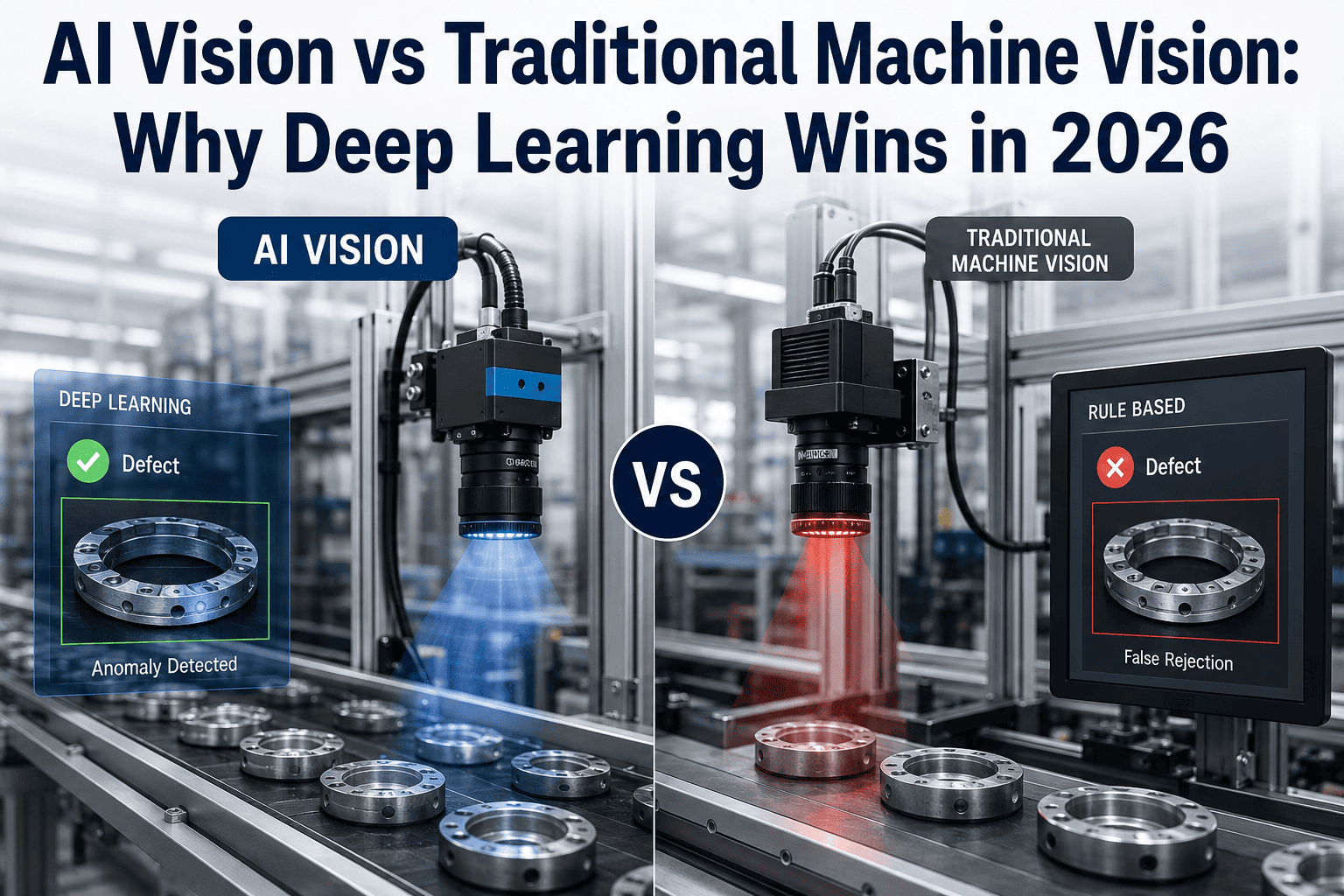
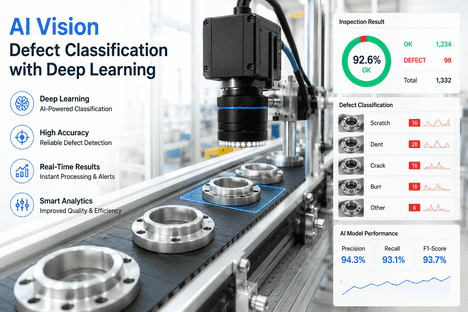
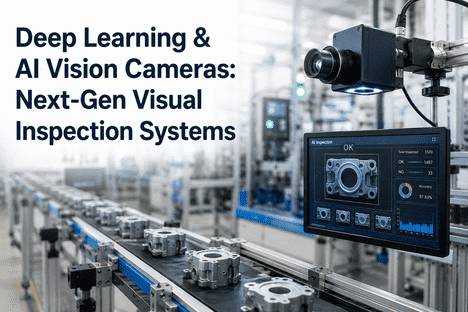
The same part, photographed under morning light streaming through a bay door versus under the plant's overhead fluorescents an hour later, can look like two completely different objects to a poorly built vision system. Reflective metal surfaces bounce light unpredictably, shadows shift as equipment moves, and a system tuned to one lighting condition can start missing real defects or flagging good parts the moment conditions change. This is the single biggest reason early machine vision deployments earned a reputation for being fragile. Book a demo to see inspection that holds accuracy as lighting conditions change around it.
Lighting Was the Reason Rule-Based Vision Systems Kept Failing
Older machine vision approaches relied on fixed thresholds tuned to one specific lighting setup, which meant any shift in ambient light, glare, or shadow broke detection accuracy. iFactory's deep learning models are trained across a wide range of lighting conditions, so accuracy holds steady even as conditions on your floor change hour to hour.
Four Lighting Conditions That Have Historically Defeated Machine Vision
Understanding exactly how lighting variation causes false positives and missed defects makes it much easier to evaluate whether a vision system is actually built to handle your floor, or only built to handle a demo booth with perfect studio lighting.
How Robust Inspection Systems Actually Handle Lighting Variation
There is no single fix for lighting variation, effective systems combine physical setup choices with model training strategy. The table below breaks down where each approach applies and what it solves.
| Approach | Type | What It Solves |
|---|---|---|
| Controlled, consistent lighting rig | Physical setup | Reduces ambient variation at the inspection point itself |
| Polarizing filters and diffusers | Physical setup | Cuts glare and specular reflection off shiny surfaces |
| Multi-condition training data | Model training | Teaches the model to generalize across lighting it will actually see |
| Image normalization preprocessing | Software | Adjusts brightness and contrast before the model evaluates the frame |
| Periodic recalibration checks | Maintenance | Catches gradual fixture degradation before it affects accuracy |
The physical setup layer and the software layer are not competing approaches, they are complementary. A well-designed lighting rig reduces the burden on the model, and a model trained across varied conditions provides a safety margin for the lighting drift that a physical setup cannot fully eliminate on its own.
A Vision System That Only Works in Perfect Light Is Not Ready for Your Floor
iFactory's models are trained across the range of lighting your specific facility actually produces, from morning glare to third-shift fluorescents, so accuracy does not depend on the time of day.
The Difference Between Rule-Based Thresholds and Learned Generalization
A Practical Checklist for Auditing Lighting Before Deployment
Lighting Challenges Look Different Depending on What You Are Inspecting
A lighting strategy tuned for one material or surface finish rarely transfers cleanly to another, which is why an audit needs to account for the specific parts on your line rather than applying a generic lighting template.
Metrics Worth Watching Once a Lighting-Aware System Is Live
Deploying a system that is robust to lighting variation is not a one-time achievement, it is a condition that needs to be monitored the same way any other quality metric is monitored on an ongoing basis.
| Metric | Why It Is Worth Tracking |
|---|---|
| False positive rate by shift | A rise in one shift specifically often points to a lighting condition unique to that time of day |
| Detection confidence distribution | A widening spread of low-confidence detections can signal gradual lighting drift before accuracy visibly drops |
| Ambient light readings at the inspection point | A simple lux sensor log correlates directly against any accuracy trend for fast root cause diagnosis |
| Fixture maintenance history | Bulb replacement dates help distinguish gradual dimming drift from a sudden lighting change |
Common Questions About Lighting and Inspection Accuracy
Do we still need a dedicated lighting rig if the AI model is trained across varied conditions?
A dedicated lighting setup is still worth the investment in most cases, since reducing variation at the source lowers the burden on the model and generally produces higher accuracy than relying on training alone to compensate for extreme conditions. That said, a well-trained model provides meaningful resilience for the variation a physical rig cannot fully control, such as ambient light bleeding in from an adjacent bay or seasonal changes in natural light. Book a demo to get a recommendation specific to your inspection point.
How do you handle highly reflective parts like polished metal or glass?
Reflective surfaces are typically addressed with a combination of polarizing filters or diffused lighting to physically reduce glare, paired with training data that specifically includes reflective conditions so the model learns to distinguish genuine defects from lighting artifacts. Camera angle relative to the light source also matters significantly for reflective parts, and adjusting that angle during setup often solves a large share of the problem before any software adjustment is needed. Contact support for a setup review if reflective surfaces are a concern on your line.
What happens if lighting on the floor changes significantly after the system is already deployed?
This is exactly why periodic recalibration and monitoring matter after go-live, since fixture aging, layout changes, or new equipment nearby can gradually shift lighting conditions well after initial deployment. Accuracy metrics are tracked on an ongoing basis so any gradual drift shows up early, and additional training data from the new conditions can be incorporated to keep the model current rather than waiting for a noticeable accuracy drop. Book a demo to see how ongoing monitoring and retraining work in practice.
Does seasonal daylight change require retraining the model twice a year?
If a facility has significant natural light exposure at the inspection point, seasonal variation is worth accounting for during the initial training data collection rather than treating it as an afterthought, since capturing a full seasonal range up front tends to be more efficient than repeated retraining cycles. For facilities where natural light plays a smaller role relative to controlled fixture lighting, seasonal impact is usually minor enough that routine recalibration checks are sufficient. Contact support to assess how much seasonal variation applies to your specific inspection point.
Inspection Accuracy That Does Not Depend on a Perfect Studio
iFactory builds vision systems trained on the lighting conditions your facility actually produces, so accuracy holds steady from the first shift of the day to the last.