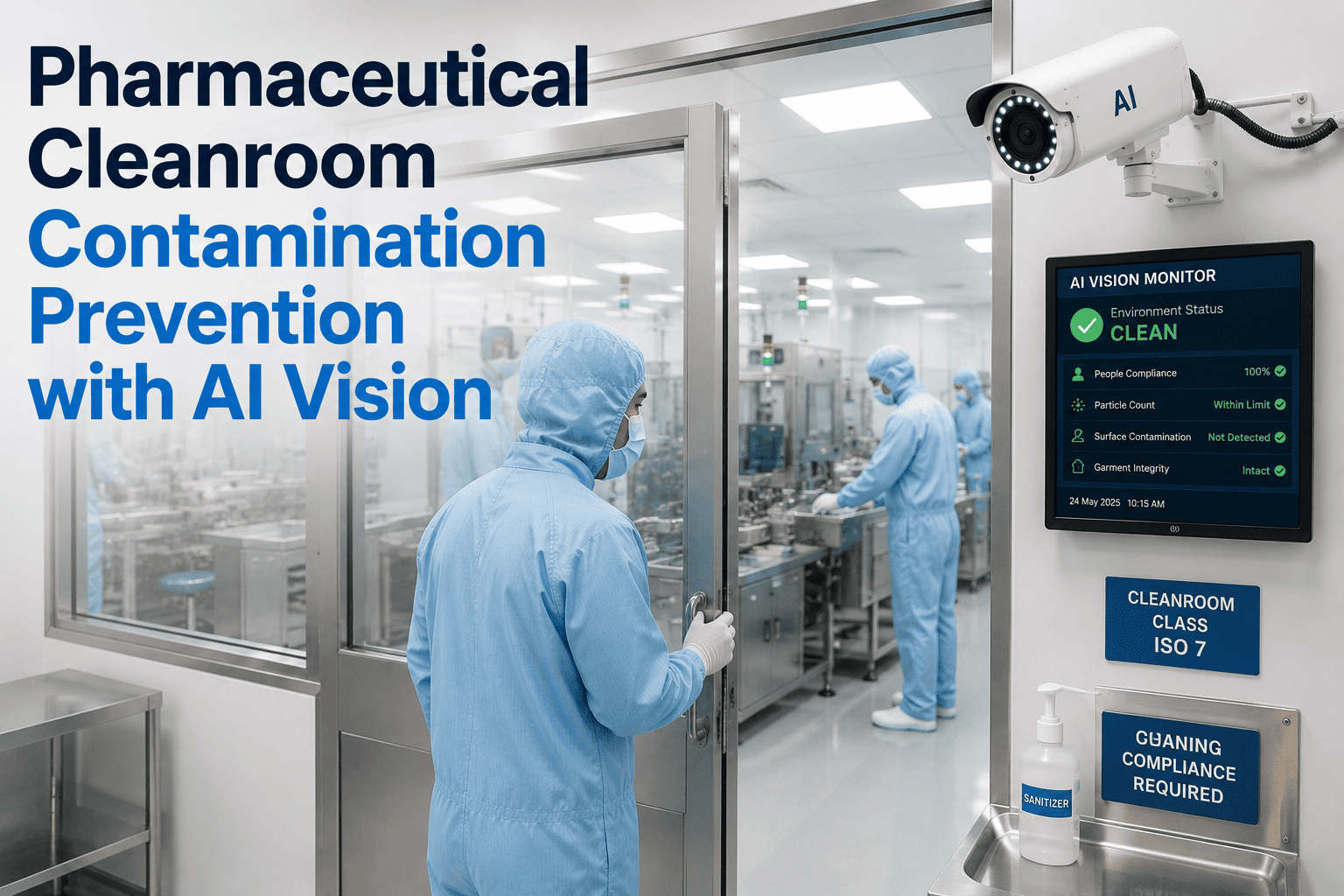
Humans generate 80-90% of the microbial contamination found in a pharmaceutical cleanroom. A single square centimeter of exposed skin releases millions of particles into a Grade B environment. When a gowning gap goes undetected — an untucked hood, an exposed wrist, a glove pulled after entry — it becomes a contamination event, a batch investigation, and eventually a regulatory observation. This is the story of a mid-sized sterile injectables manufacturer that installed AI vision in six airlocks, cut gowning violations from 8.4% to 0.7%, and posted 18 consecutive months of zero contamination excursions. To scope the same deployment for your facility, book a 30-minute cleanroom assessment.
Pharma Cleanroom Cuts Gowning Violations 92% With AI Airlock Vision
A sterile injectables facility replaced peer-observation and periodic supervisor audits with continuous AI vision at every gowning airlock — and turned personnel-borne contamination from a reactive investigation into a preventable event verified before entry.
The Facility at a Glance
The site is a mid-sized sterile injectables manufacturer producing vialed biologics for oncology and rare-disease indications, operating under EU GMP Annex 1 and FDA Aseptic Processing Guidance. The gowning program is qualified against ISO 14644 and Annex 1 Grade A/B/C/D expectations, with a documented contamination control strategy that identifies personnel as the highest-risk contamination source in the aseptic core. Every operator entering a Grade B environment completes a validated gowning sequence in the airlock — hood, mask, coverall, boot covers, sterile gloves, followed by a mirror check and a peer-observed integrity confirmation before the interior airlock door releases. The workflow was fully compliant on paper and correctly qualified against every applicable regulatory expectation. The gap the site set out to close was the coverage gap between qualified procedure and continuously verified execution.
The Problem — Why Peer Observation Was Failing
The gowning program itself was fully qualified. The training was documented, the SOPs were current, the touch-plate qualifications were passing at greater than 99% for individual operators, and the supervisor audits were on schedule. And yet the environmental monitoring trend was quietly climbing, the excursion rate was creeping, and the quality unit was investigating a growing number of atypical results in the aseptic core. The root cause was not the program design — it was the coverage gap in how the program was enforced in real time.
Peer Observation Depends on Two Trained Eyes
The pre-existing standard was buddy-check gowning — two qualified operators observing each other's donning sequence in the airlock, calling out issues, and confirming the entry. On third shift, when staffing was leanest and fatigue was highest, buddy-check attention degraded. Subtle issues — a partially-untucked hood tie, a hair tuft escaping the hood band, a wrist gap between glove and sleeve — went uncaught. The buddy-check was doing exactly what humans do at 3am, which is not much.
Supervisor Audits Sample, They Do Not Cover
The supervisor-audit frequency landed at roughly one gowning event in twenty being formally observed by the quality unit. A 5% coverage rate on the highest-contamination-risk activity in the plant. Every unaudited entry was, by definition, taking the operator's word for gowning integrity — which is not what an inspector reviewing a contamination excursion wants to hear during a for-cause visit.
Post-Event Investigations Ran Blind on Root Cause
When an environmental monitoring plate came back positive in the aseptic core, the investigation team had no visual record of the personnel who had been in the room during the exposure window. Was it a gowning failure? A behavioral issue? An unrelated air-handling event? Without image evidence, the investigations closed on assumed root cause and generic CAPAs — training refresh, procedure clarification, gowning re-qualification — that did not target the specific gap.
EM Trends Were Drifting in the Wrong Direction
The environmental monitoring trend line had crept over four consecutive quarters — not enough to breach action limits, but enough to worry the quality director and enough to draw attention on the next regulatory inspection cycle. Annex 1 explicitly requires proactive contamination control, not reactive investigation. The audit finding waiting in the wings was going to be about the coverage gap in personnel monitoring, not the program design.
The Turning Point
The gowning SOP is not the problem. The buddy-check is not the problem. The training curriculum is not the problem. The problem is that on a Tuesday third shift, in airlock 4, at 03:12, nobody was watching. That is the gap I cannot close with more training. That is a coverage problem, and a coverage problem needs a coverage solution.
— Site Quality Director, internal steering committee memo two months before the AI vision deployment approval
Inside the Deployment — What the AI Actually Watches
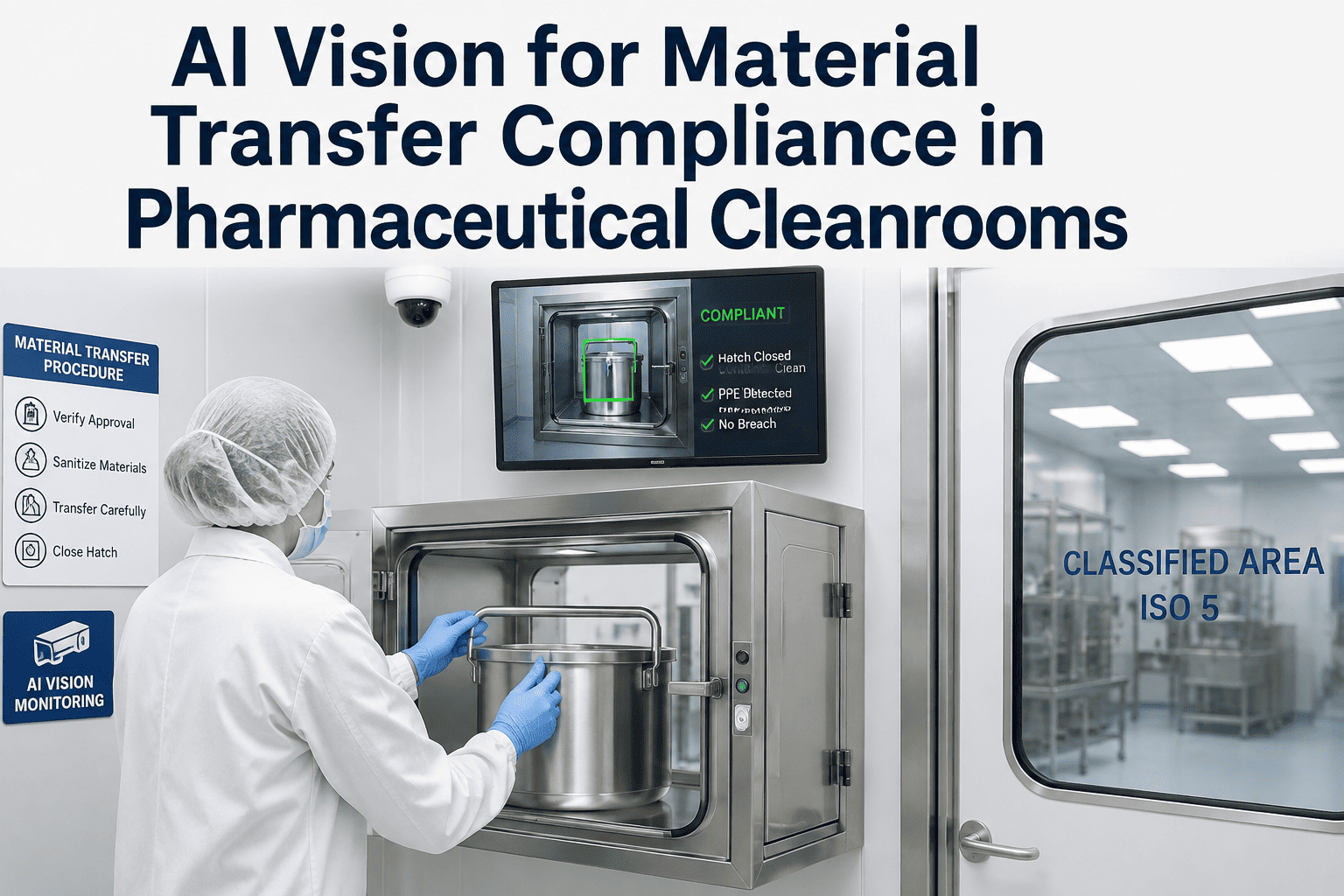
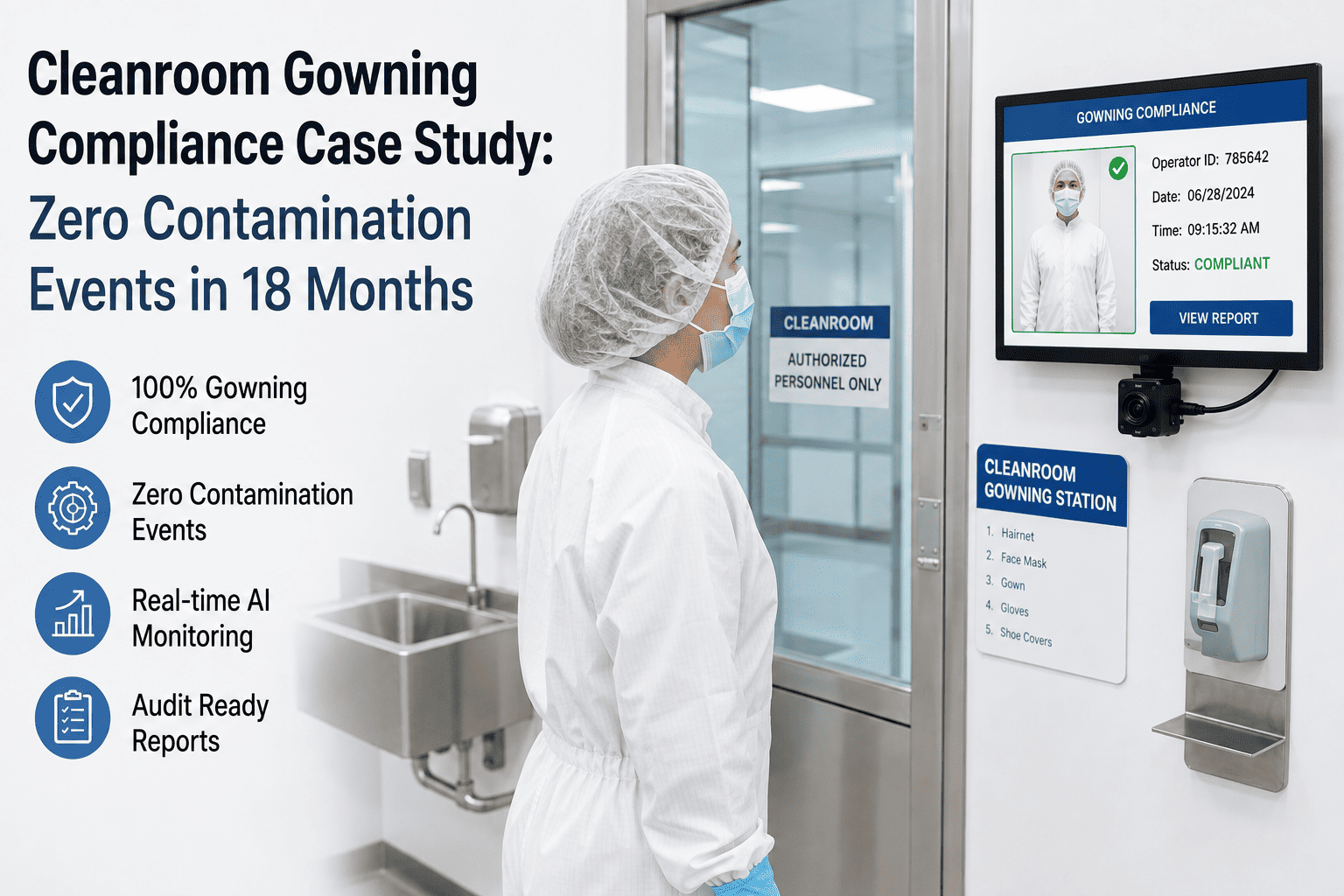
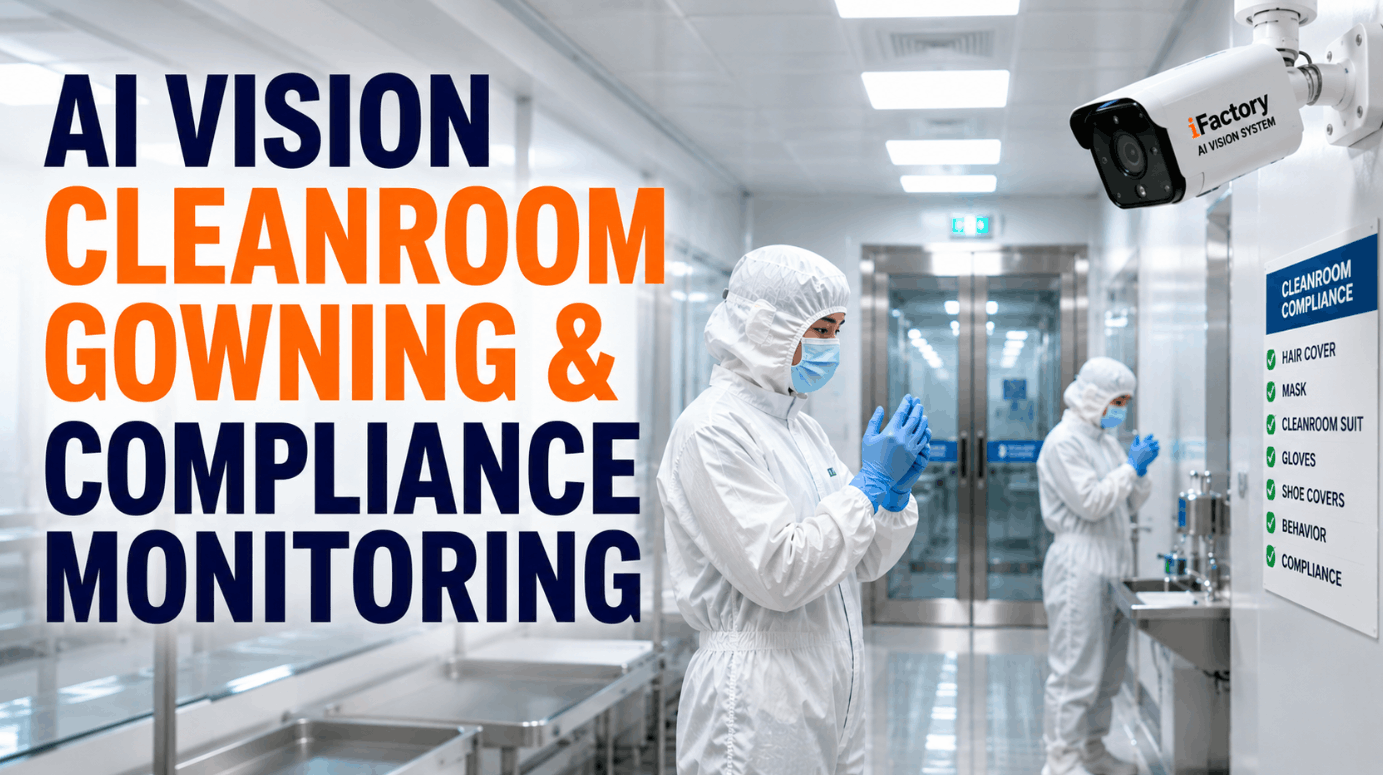
The vision layer was scoped to the gowning airlock — the specific chokepoint where every person entering the Grade B environment already stops, gowns in sequence, and self-inspects at the mirror. The AI vision model was trained on the site's own gowning SOP, so the verdicts map directly to the qualified procedure rather than a generic PPE detection profile. Below is the specific checklist the model runs against every entry. The verdict at each checkpoint is binary — pass or defect flag — and each flagged verdict includes a source image and a reference to the specific SOP checkpoint that failed, so the operator sees the correction path immediately rather than a generic message to re-gown.
Hood Fit & Hair Containment
Vision confirms hood is fully donned, chin tab is secured, and no hair is visible outside the hood band. Verified across profile angles because a rear-view escape is invisible from the mirror.
Face Mask Coverage
Confirms the mask covers nose bridge to chin, is seated flush against the face, and is not pulled down. Model handles beard-cover variations for facial-hair operators.
Coverall Zip Integrity
Zipper fully closed to top position, flap correctly seated over the zipper track, no gap between coverall neck and hood interface. Detects partial closures at the sub-centimeter level.
Wrist & Glove Interface
No skin gap between glove cuff and coverall sleeve. Both wrists verified. Double-glove sequence check for aseptic core entries where the SOP requires it.
Ankle & Boot Cover Seal
Boot cover fully over the coverall ankle, no exposed sock or coverall hem below the boot cover top edge. Elastic seating confirmed on both legs.
Sequence & Sterile-Side Behavior
Donning sequence validated in the correct order per SOP. Touch-with-clean-side violations on the sterile side of the airlock flagged before the operator crosses the threshold.
Every Gowning Entry Should Be Verified — Not Assumed
iFactory deploys AI vision at cleanroom airlocks with SOP-specific gowning verdicts, image-linked entry records, and quality dashboard integration mapped to Annex 1 personnel controls. Existing IP cameras. Fixed price. 60-day deployment. Prove the delta on one airlock, then scale to the plant.
60-Day Deployment Timeline — From Signature to Live Coverage
Every phase below was executed without interrupting scheduled aseptic production. Camera and edge inference cabinet installations landed in weekend and shutdown windows. The most sensitive engineering effort was training the vision model against the site's specific gowning SOP so verdicts matched the qualified procedure exactly — no ambiguity, no dispute at the airlock. The shadow-mode phase was deliberately extended to three weeks so every verdict could be cross-checked against the pre-existing buddy-check outcome, and the go-live threshold was set only after the model demonstrated equal or better accuracy than the average trained peer observer across every checkpoint in the SOP.
Airlock Walk & SOP Ingestion
Every airlock geometry, camera line-of-sight, and existing lighting condition captured. Gowning SOP ingested into the model training brief with the site QA team validating every checkpoint against the qualified procedure.
Camera & Lighting Install
Cameras and edge inference cabinet installed during weekend maintenance windows. Cleanroom-classification-compatible enclosures used for all in-airlock hardware. Zero production stoppage during install.
Shadow Mode & Model Tuning
Model ran against every gowning entry without controlling flow. Every borderline verdict reviewed against buddy-check outcome. Confidence thresholds tuned to eliminate false positives before go-live.
Operator Training & Rollout
All 380 aseptic operators walked through the new workflow — mirror check, AI check, badge-out on verdict. Feedback loop opened for the first 30 days so operators could flag any verdict they disagreed with.
Live Alerting & QA Handoff
Alerts routed to shift supervisor and quality unit. Weekly trend reports flowed to the environmental monitoring dashboard. Contamination excursion drop measured from day 60 forward.
The Results — 18 Months of Measured Change
Every metric below reflects the eighteen months of live operation following the deployment go-live, compared to the twelve months preceding it. Same product mix, same personnel base, same regulatory framework, same environmental monitoring program. The only variable that changed was continuous AI vision coverage at the gowning airlocks — and the trend line broke in every direction the quality director had hoped it would. The 92% headline reduction in gowning violations is the most visible number, but the more strategically important outcome for the site was the zero-excursion streak across eighteen months, which broke a pattern that had persisted for four consecutive quarters before the deployment.
The Environmental Monitoring Story — How the Trend Line Broke
The most persuasive proof of the deployment was not in the gowning-violation dashboard. It was in the environmental monitoring trend chart the site's microbiology team reviews every week. Four consecutive quarters of creeping recovery counts flattened within sixty days of AI vision go-live, then declined into a new steady-state well below action limits. Below is the qualitative story behind the trend break — the specific mechanism that connects catching a hood-tuck violation at 03:12 in airlock 4 to a clean settle plate reading in the aseptic core three days later.
Vision flags a specific gowning defect at the entry — a wrist gap, an untucked hood, a coverall zip below the top position — and the operator corrects it before crossing the threshold into Grade B.
The exposed skin square-centimeter that would have shed millions of particles into the Grade B environment simply never enters. The contamination event is not investigated after the fact — it is prevented at the source.
The settle plates, active air samples, and surface swabs that make up the routine EM program hold their recovery counts within alert limits, and the trend chart flattens rather than climbing.
No excursion investigation, no batch hold, no reprocessing, no root cause CAPA. The batch completes, releases on schedule, and ships without the delay that a Grade B excursion historically triggered every eight to twelve weeks.
This is what proactive contamination control actually looks like — the Annex 1 principle operationalized at the source, not enforced after the fact. Every prevented excursion is a batch that shipped on time, a patient dose that reached the pharmacy on schedule, and a data point in the site's demonstrably improving contamination control record.
Ripple Effects Nobody Had Written a KPI For
The board-approved business case tracked violation reduction, EM excursions, and batch impact. What the operations team started reporting six months in were outcomes that had not been scoped in the original ROI worksheet — the second-order benefits of running a coverage-complete personnel monitoring layer. These effects compounded through the twelve-to-eighteen-month window and reshaped how the site thought about the platform's ongoing value, moving it from a contamination-avoidance tool to a strategic input for training, insurance, culture, and regulatory posture.
Operator Ownership of Gowning Improved Measurably
Contrary to the concern that continuous vision would erode operator morale, feedback surveys after six months showed the opposite. Operators reported the AI check felt like a supportive safety net, not surveillance — because the verdict was consistent, class-specific, and blame-free. Repeat violations by individual operators dropped as personal awareness climbed.
Gowning Re-Qualification Failures Fell 70%
New-operator gowning qualification training became dramatically more effective with the AI vision system serving as an unlimited-patience coach during practice runs. Trainees could rehearse against the AI verdict as many times as they wanted, without occupying a senior trainer's time. Time-to-qualification dropped and first-attempt pass rates climbed.
Product Liability Premium Renegotiated at Renewal
Eighteen months of image-linked, coverage-complete personnel monitoring data changed the conversation with the site's product liability underwriter. The renewal negotiated a lower premium than the prior year — an outcome that had not been in the original business case and covered a meaningful portion of the platform's annual operating cost.
CCS Document Became Genuinely Auditor-Ready
The site's Annex 1 Contamination Control Strategy document had always described the intent of the personnel monitoring layer. With the AI vision system, the CCS could now cite quantified coverage rates, live trend data, and image-linked evidence for every personnel entry. The next inspection review of the CCS closed without any personnel-monitoring observations.
Frequently Asked Questions
Does the AI vision system work in a Grade A/B cleanroom without compromising the classification?
Yes. Every in-cleanroom component — cameras, mounting hardware, wiring — is specified in cleanroom-classification-compatible enclosures with smooth cleanable surfaces, non-shedding materials, and IP-rated seals appropriate to the classification. The edge inference cabinet lives outside the classified area, connected by a low-particle-emission cable pathway. Installation happens during scheduled cleanroom shutdowns and includes post-install requalification by the site's environmental monitoring team to confirm the classification is preserved. To review the cleanroom-compatibility specification sheet for your specific classification, reach out to the deployment team.
How does the model know our specific gowning SOP versus a generic PPE profile?
During the onboarding phase, the site QA team walks the iFactory engineering team through the qualified gowning procedure step by step, and the vision model is trained on the specific sequence, PPE combinations, and checkpoint criteria that your SOP defines. Every verdict the model produces maps back to a specific SOP checkpoint, so when a violation is flagged, the operator and supervisor see exactly which checkpoint failed and can reference the qualified procedure directly. If the SOP is revised, the model is retrained against the updated procedure — the workflow is designed to keep pace with your change control system rather than lag behind it.
How does the deployment handle operator privacy and personnel monitoring concerns?
The vision system is scoped to gowning verification, not identity surveillance. The default detection scope evaluates PPE compliance at the airlock and does not include facial recognition or employee identification. Where the site chooses to enable operator-linked violation tracking for training and requalification purposes, that scope is turned on through a separate opt-in module that is reviewed with HR, labor relations, and legal before deployment. The primary value of the platform is intervention at the entry moment — not surveillance of the workforce — and the deployment configuration reflects that philosophy from the first camera install.
How does the evidence hold up in an EU GMP Annex 1 or FDA inspection?
The image-linked, timestamped gowning verification record is stronger evidence than the peer-observation logs it replaces. Every entry event is captured with the airlock ID, timestamp, gowning verdict, and — where the site has opted in — the operator identifier. When an inspector requests documentation of personnel controls, the site produces a filtered log showing every entry event over the requested period, with the visual evidence attached. In this deployment, the personnel-monitoring section of the site's CCS moved from a documented intent to a coverage-complete active control, and the next Annex 1 inspection cited it as a strength rather than an observation.
What kind of ROI window is realistic for a mid-sized sterile facility like this one?
The payback drivers are avoided contamination excursions, avoided batch holds, reduced deviation investigation labor, and — over eighteen months — the regulatory posture upside that comes with coverage-complete personnel monitoring. For a mid-sized sterile injectables facility with six or more Grade B airlocks and 200-plus qualified aseptic personnel, payback typically lands inside twelve months on the direct cost avoidance alone, with the regulatory and insurance upside stacking on top through renewal cycles. To model the ROI for your facility's specific airlock count, entry volume, and contamination cost baseline, book a 30-minute assessment.
Take Gowning From a Coverage Gap to a Coverage Guarantee
The same playbook that took this facility from 8.4% gowning violations to 0.7% — six airlocks, sixty days, SOP-mapped verdicts, image-linked entry records, Annex 1-aligned coverage — is available to your facility on a fixed-price pilot. Start with one airlock, measure the delta against your existing peer-observation baseline, then scale to the plant.