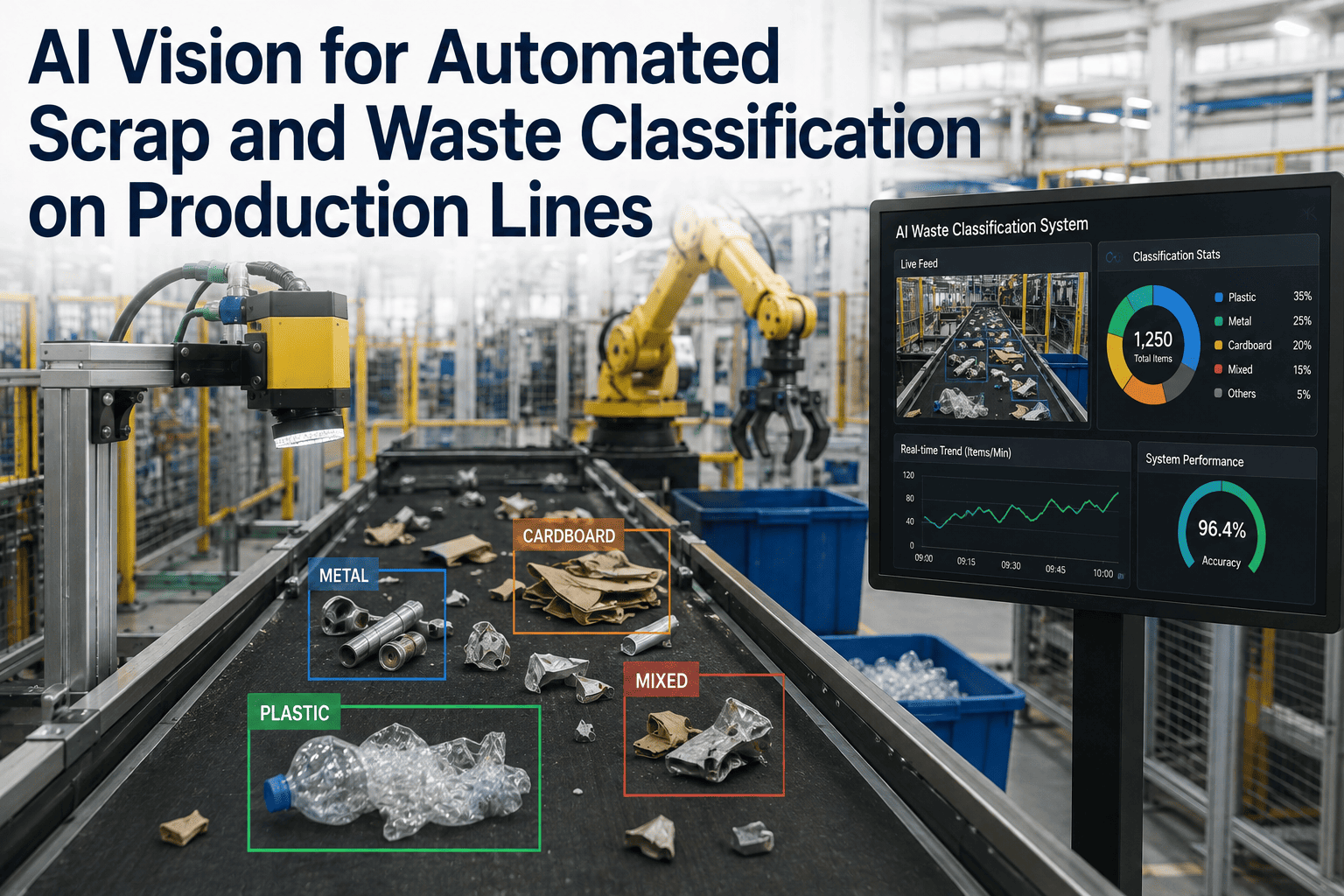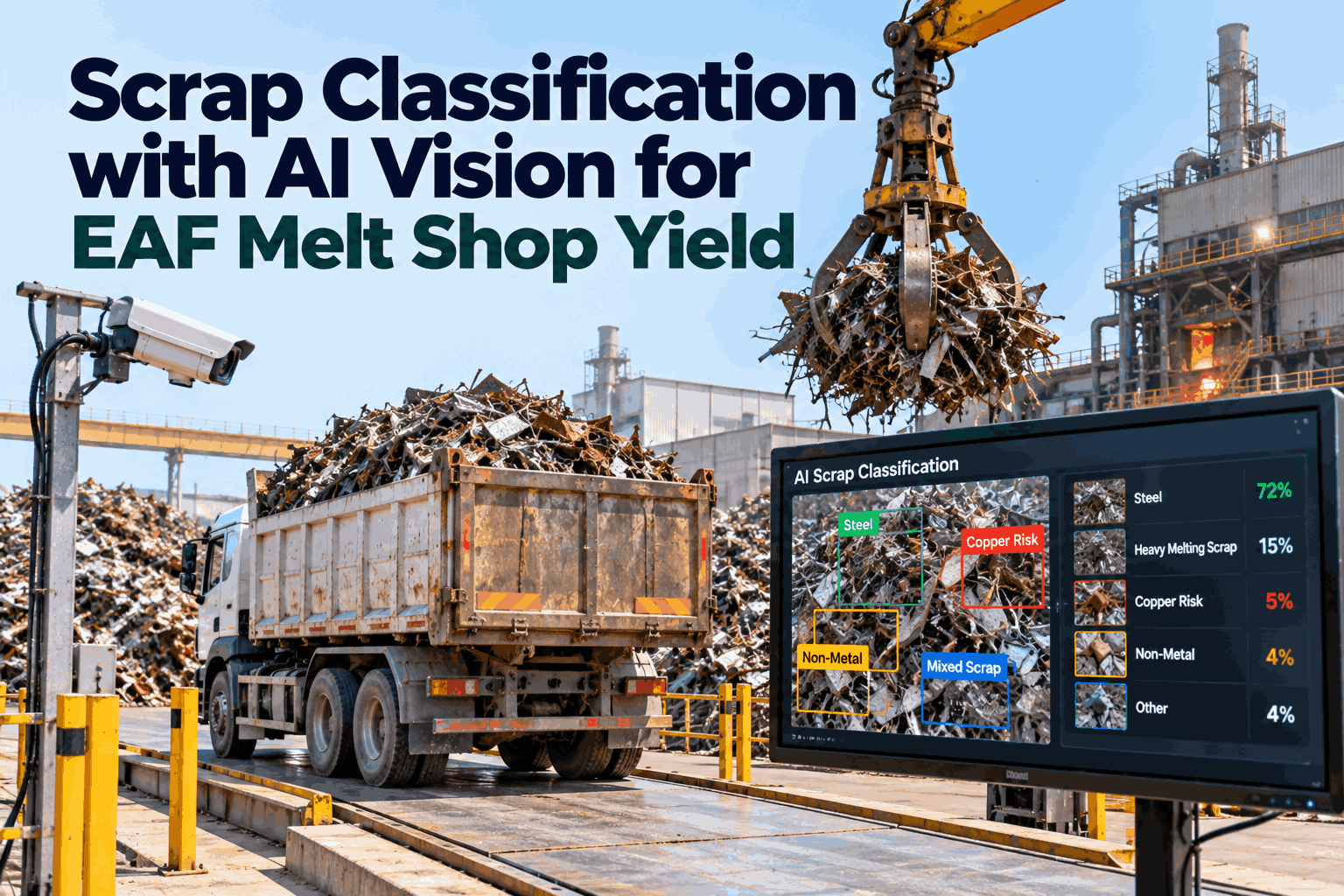
A truck of scrap looks much the same from the gate whether it is clean busheling or shredded material carrying motors, wiring and a layer of dirt. The difference shows up later, as lost yield, a copper reading the grade cannot take, or a charge that will not melt flat. Scrap classification with AI vision grades each load as it arrives, flags contaminants and copper risk before the bucket is built, and tells the charge-mix optimizer and the supplier scorecard what was actually delivered. See it on your own yard footage in a short scrap yard demo.
Know What Is in the Load Before It Reaches the Bucket
iFactory cameras at the gate, tipping floor and crane grade every truck and charge bucket, count copper-bearing items, estimate non-metallics and route the load to the right pile. Grades flow to charge-mix optimization and to each supplier's scorecard.
The Largest Cost Item and the Biggest Chemistry Risk
Scrap and other metallics are the biggest single cost of an EAF heat. Industry estimates put them anywhere from about half to three quarters of the cost of producing a tonne of steel, depending on the market and the grade mix. Yet most shops still grade scrap the way they always have: a declared grade on the ticket, a glance from the gate or the crane cab, and a yield figure assumed per grade from past experience. The gap between what was declared and what was delivered is paid for twice, once in yield and once in chemistry. Our yard team can help you measure that gap on your own receipts.
Six Contaminants, and What Each Does to the Heat
Copper is the one every melt shop fears, because once it is in the bath there is no practical way to remove it. Dilution with cleaner scrap or virgin iron is the only fix used in practice. Above roughly 0.1% copper, steel becomes prone to hot shortness, with surface cracking in hot rolling. Drawing-quality flat products can require less than 0.06%, while rebar tolerates around 0.4%. The other contaminants cost yield, energy, refractory life or safety. Each one has a visual signature that a trained model can learn. Map these to your own grade list in a contamination review.
Six Capture Points, From the Gate to the Spectrometer
AI vision for scrap is a chain of cameras, each with a different job, tied to data the yard already collects. The weighbridge gives weight, the crane gives grab counts, and the melt shop's spectrometer gives the final answer on chemistry. The model links what it saw in a load to what came out of the heats that used it, so its estimates improve with every tap. Check which of these you already have with our support team.
Where Copper Risk Comes From, Grade by Grade
Copper risk is not spread evenly across the grades a yard buys. Clean factory grades such as busheling carry very little. Shredded scrap from end-of-life vehicles and appliances carries the most, because motors and wiring survive the shredder. Dealer bundles are a risk because nobody can see inside them. The pattern below is indicative, and the model learns the real numbers for each of your suppliers. Compare it with your own spectrometer history in a grade review session.
Grades That Reach the Crane Cab, Not a Monthly Report
A grading report at month end cannot change the bucket being built right now. iFactory speaks the result to the yard radio and crane cab, names the pile the load should go to, and lets the supervisor ask why without leaving the floor.
One Truck, One Flag, One Heat Within Spec
Here is an illustrative morning at a two-furnace shop that buys shredded scrap from several dealers. The times and scores are examples, but the sequence is a common one: a load declared cleaner than it is, a grading camera that sees the difference, and a routing decision that keeps copper out of the heats that cannot take it. Ask our support team to replay a day from your own gate footage.
A Load Record Worth Keeping
A grading model learns from the link between what came in and what came out, so a load record that stops at the weighbridge ticket limits what it can learn. The fields below turn each delivery into a record that purchasing, the yard and the melt shop can all use. Start capturing them now, even with a phone camera and a spreadsheet, and the data will be ready when the cameras go in. Get a ready-made version in a setup call.
How to Size the Value of Better Grading
The value of grading has three parts: metallic yield recovered when non-metallics and misgraded loads are caught, off-grade heats avoided when copper is routed correctly, and money recovered from suppliers when downgrades are documented. Yield is usually the largest and the easiest to measure. The example below uses assumed inputs to show the arithmetic. Replace each one with your own figures, and our team can help you complete the case.
Multiply the recovered tonnes by your metallics cost per tonne, then add the value of off-grade heats avoided and supplier claims recovered. Leave the furnace safety benefit of catching closed containers out of the sum, but keep it in the case.
Vision Works Best Alongside Good Yard Practice
Cameras do not replace a well-run yard. They make a good one measurable. These habits cut contamination on their own and give the model cleaner data to learn from, because loads arrive more consistently and piles stay separate. If you want a second opinion on your yard layout, talk to our raw materials specialists.
- Photograph every load from above before tipping
- Keep the declared grade and the seen grade side by side
- Hold any load that trips the radiation portal
- Reject closed containers and cylinders on sight
- Keep one pile per grade with clear boundaries
- Separate copper-sensitive and copper-tolerant piles
- Pick visible copper and stainless before piling
- Keep piles off bare ground to limit dirt pickup
- Build buckets to the optimizer's recipe, not habit
- Match every heat's chemistry back to its buckets
- Review supplier scorecards monthly with purchasing
- Feed off-grade heats back to the yard the same day
Cameras, Models and AI Server in One Package
iFactory delivers scrap classification as a turnkey bundle. Industrial cameras are installed at the gate, tipping floor and crane, and a pre-configured NVIDIA AI server ships racked and ready with the vision models, weighbridge and Level 2 connectors and the voice agent pre-loaded. Images are processed on site, so nothing leaves the plant. You rack it, plug in power and Ethernet, and the AI is live. To scope it for your yard, request a turnkey quote.
- Pre-configured NVIDIA AI edge server, racked and ready
- Industrial cameras for gate, tipping floor, crane and bucket stand
- Connectors for weighbridge, radiation portal, Level 2 and spectrometer
- Grading and contamination models trained on your scrap and suppliers
- Voice alerts to yard radio and crane cab
- Charge-mix optimization and supplier scorecard, updated per load
- 24×7 remote monitoring of models and hardware
Cameras and server installed, gate and heat data connected, loads photographed and labelled with your grade list.
Models trained on your scrap and run silently, with grades checked against inspectors and tapped chemistry.
Routing alerts switched on, scorecard thresholds agreed with purchasing, yard and crane crews trained.
Scrap Grading Built for the Yard and the Melt Shop
iFactory's AI Vision and voice agent are designed for a yard where trucks queue, cranes keep moving and nobody has time to open a dashboard. Our support team can walk you through a pilot plan.
What Plant Managers Ask About Scrap Classification with AI Vision
Cleaner Charges, Steadier Chemistry, Higher Yield
Put cameras on the gate and the crane, connect your weighbridge and spectrometer, and let iFactory grade every load before it reaches the bucket. The full system is delivered turnkey and goes live in 6 to 12 weeks.