Most AI vision projects die in the same place — somewhere between the pilot that worked on a laptop and the production line that needed a data science team, a GPU procurement cycle, and six months of integration work nobody budgeted for. A pre-configured NVIDIA vision server skips that entire middle section. The hardware arrives racked, the models arrive trained, the cameras connect over a protocol every industrial camera already speaks, and the CMMS connection is already built. What used to take a quarter now takes an afternoon and a forklift — book a demo to see the exact unit that would ship for your line.
Turnkey AI Vision with Pre-Configured NVIDIA Servers: Rack, Plug, Inspect
A fully-loaded NVIDIA AI server with pre-trained vision models, ONVIF camera integration, and CMMS connectivity built in. Rack it, plug in power and Ethernet, and AI vision inspection is live on your line.
Why Most In-House AI Vision Projects Stall
Building AI vision infrastructure from scratch means sourcing GPU hardware, hiring or contracting data scientists to train defect models, writing custom integration code for every camera brand on the floor, and building a pipeline into whatever CMMS or MES already runs the plant. Each of those steps is a project on its own — together they routinely stretch into a six-to-twelve month timeline before a single frame of production video gets classified.
GPU Procurement Delays
Sourcing, racking, and validating industrial-grade GPU hardware alone can eat months, especially when IT and OT teams have to coordinate on network and power specs.
No In-House Data Science
Training a defect-detection model that performs reliably on your specific product requires labeled data and machine learning expertise most plants do not have on staff.
Camera Integration Chaos
Every camera vendor has its own SDK. Writing custom drivers for a mixed fleet of cameras is slow, fragile work that breaks the moment a camera gets swapped.
Disconnected From Maintenance
A vision system that detects a defect but cannot open a work order in the CMMS just creates another dashboard nobody checks during a busy shift.
Rack, Plug, Inspect — From Delivery to Live Inference
Server Arrives Pre-Loaded
The NVIDIA server ships fully assembled, rack-mounted, with vision models, the operating stack, and CMMS connectors already installed. No hardware sourcing, no OS configuration on your end.
Rack It
Slide the unit into a standard server rack on the plant floor or in the network closet. Industrial-grade chassis and cooling are built for factory environments, not a data center.
Plug Power and Ethernet
Two cables — power and a network connection to the plant LAN where your cameras already sit. No proprietary wiring, no separate camera network to build.
Cameras Auto-Discover
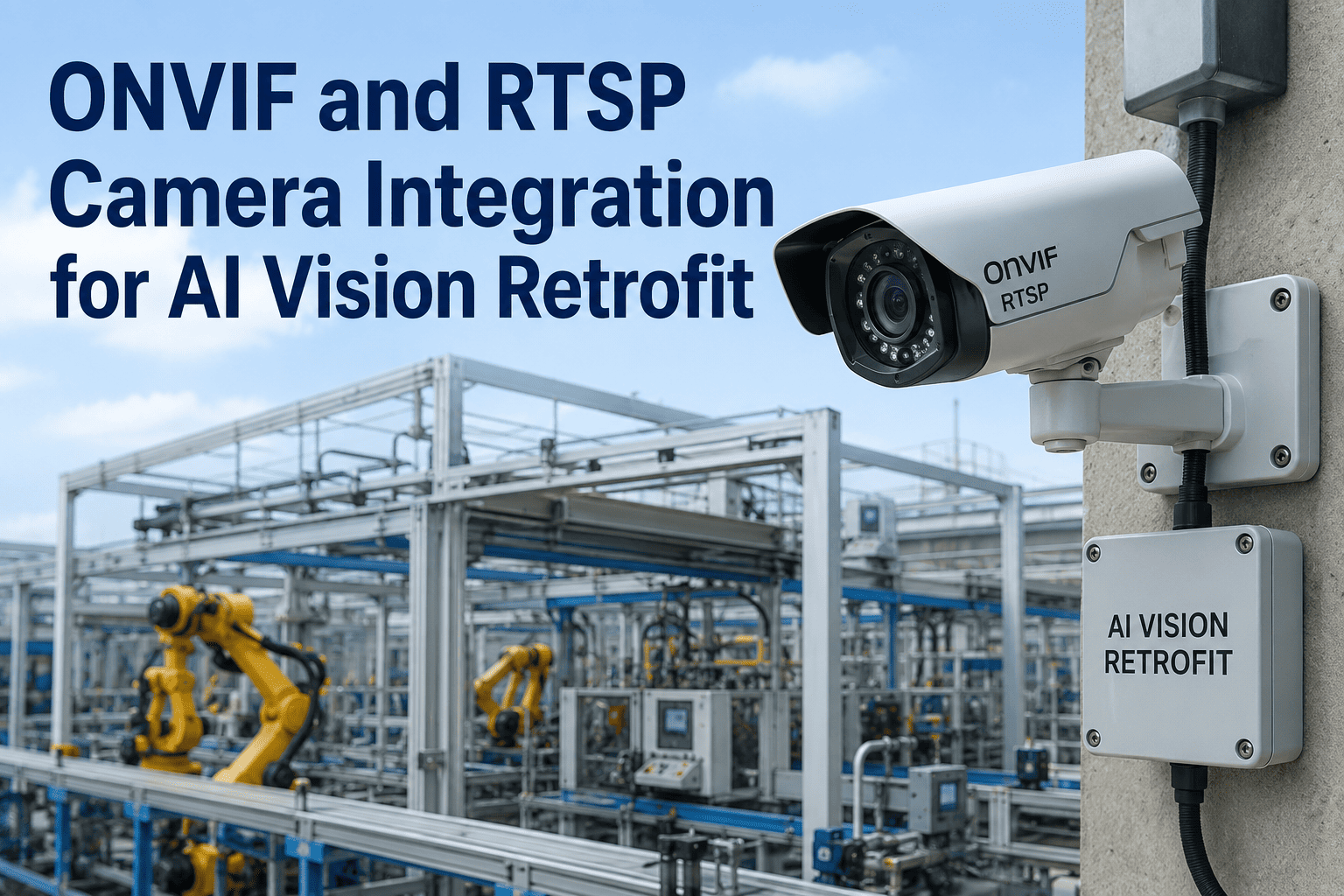
ONVIF-compliant cameras already on your network are detected automatically. No custom drivers, no per-camera SDK integration, regardless of camera brand.
AI Vision Is Live
Pre-trained models start classifying frames immediately, with fine-tuning against your specific product available from day one through the iFactory dashboard.
What Ships On the Server
NVIDIA GPU Silicon
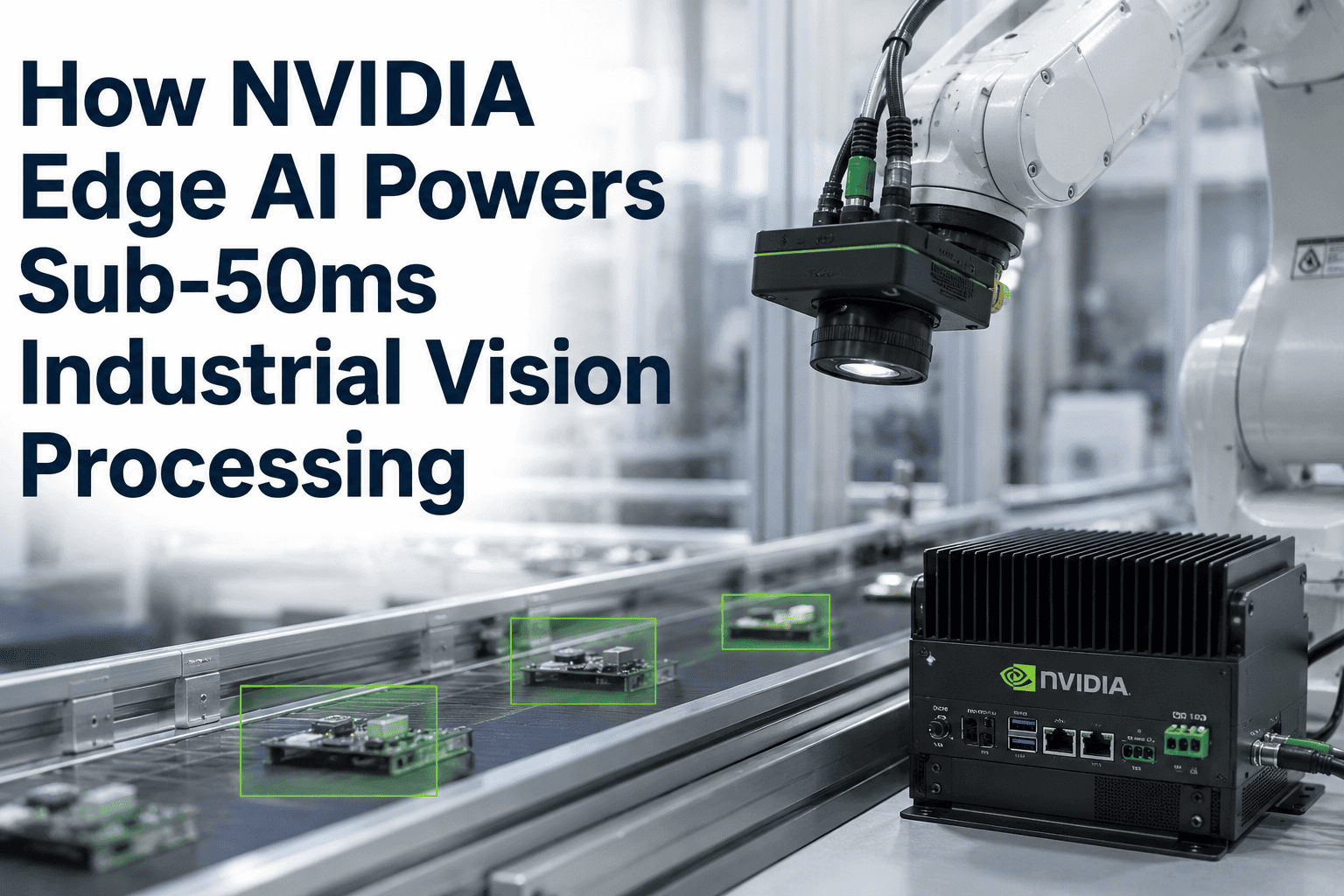
Built on NVIDIA Jetson AGX Orin class compute for standard camera counts, scaling to NVIDIA IGX Thor class hardware for higher-throughput, multi-line deployments — sized to your camera count and inference load during deployment scoping.
Pre-Trained Defect Detection
Models arrive pre-trained on common industrial defect classes — surface marks, color deviation, dimensional variance — and fine-tune against your product's actual sample images during onboarding.
ONVIF Protocol Support
Auto-discovers and connects to any ONVIF-compliant camera on the network without brand-specific drivers, letting you mix camera vendors across stations freely.
OPC-UA, Modbus, J1939
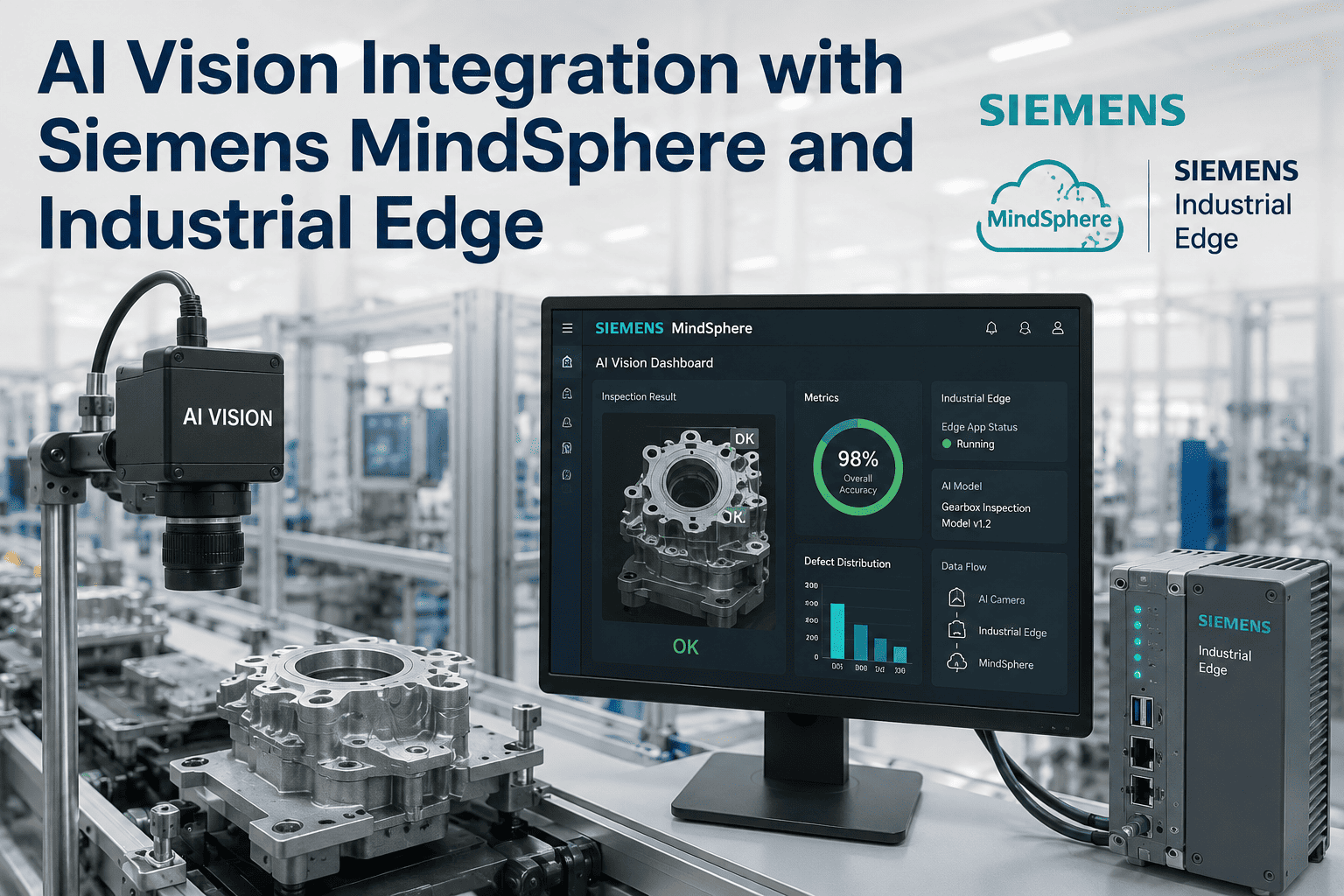
Speaks the industrial protocols your PLCs and sensors already use, so the server reads production context alongside camera frames instead of working blind.
Automatic Work Order Creation
A detected defect or drifting quality trend can open a work order directly in your CMMS without a human relaying the alert — closing the loop from detection to action.
Unified iFactory Interface
Every camera feed, model output, and maintenance trigger surfaces on one dashboard, giving quality and operations teams a shared view instead of separate tools.
The Case for Processing Video Where It's Captured
Sending production video to a cloud server for AI analysis introduces two costs most teams underestimate until they hit them: bandwidth and latency. A single high-speed line with several 4K cameras can generate terabytes of video per hour — expensive to move and too slow to act on when a defect needs to be caught before the part moves to the next station.
Beyond speed, edge processing keeps proprietary product images and process data inside your own network instead of exposed to third-party cloud infrastructure — a meaningful difference for any plant handling confidential product designs. Book a demo to see edge inference running against your own camera feed.
Turnkey vs Building the Stack Yourself
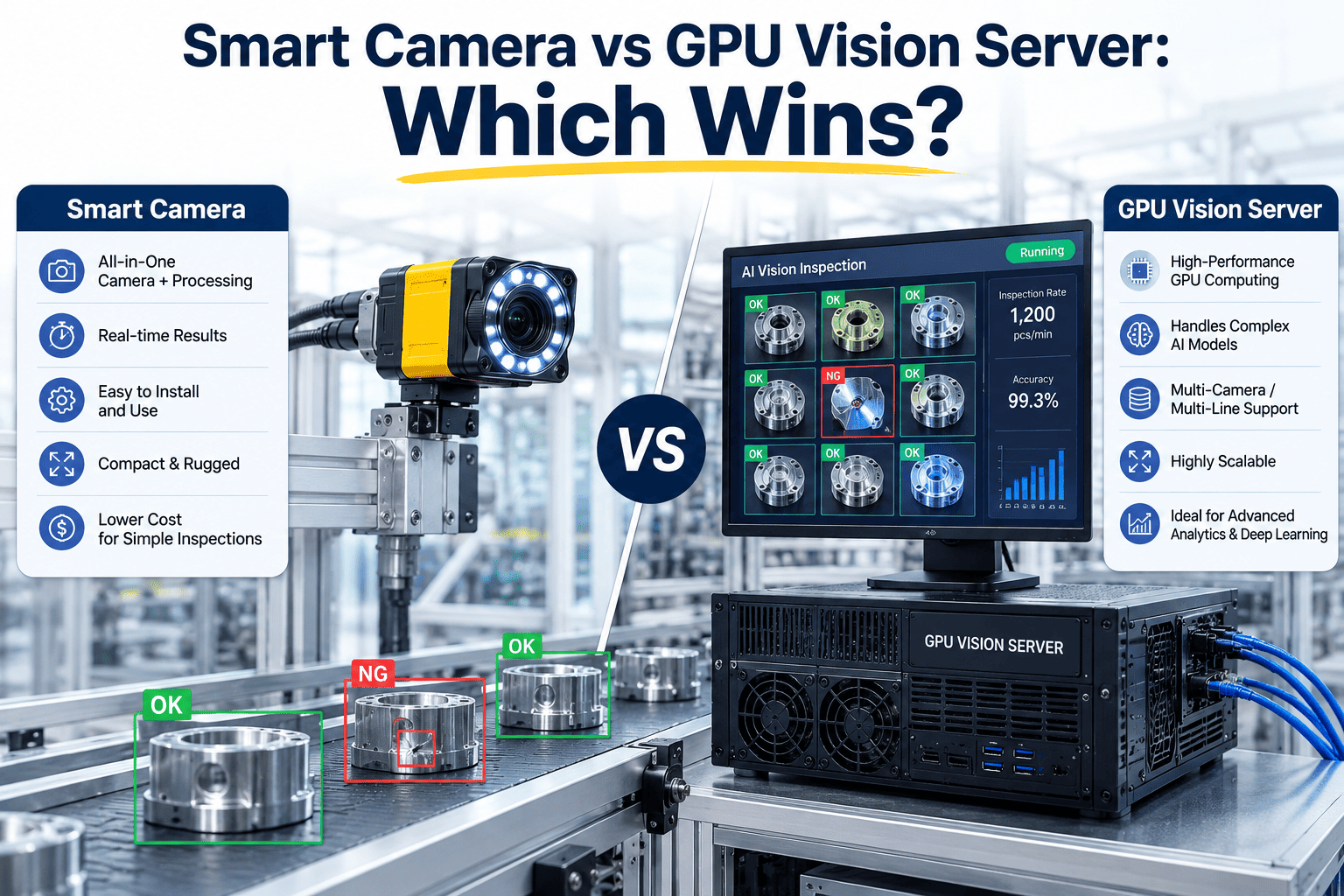
The appeal of a pre-configured server becomes clearest when it is placed next to what building the equivalent stack from scratch actually involves. Every layer that ships pre-built on the appliance is a layer your team would otherwise have to source, integrate, and maintain independently.
- Source and validate GPU hardware separately from camera and network infrastructure
- Hire or contract data scientists to build and train defect detection models
- Write custom integration drivers for every camera brand on the line
- Build a custom pipeline to connect vision alerts into the CMMS or MES
- Typical timeline of six to twelve months before production inference is live
- Hardware arrives racked and pre-configured to your scoped camera count
- Pre-trained models fine-tune against your product images from day one
- ONVIF auto-discovery connects any compliant camera without custom drivers
- CMMS work order triggers are built into the platform from the start
- Live production inference typically running within six to twelve weeks
From Hardware Delivery to Full Production AI
Scoping and Shipment
Camera count, network topology, and existing CMMS or MES systems are scoped during a deployment kickoff call. Hardware ships pre-configured to that scope.
Install and Model Tuning
Server is racked, cameras auto-connect, and pre-trained models are fine-tuned against sample images from your actual product to raise detection accuracy.
Full Production Rollout
Vision inference runs live across all scoped stations, CMMS work order triggers go active, and the dashboard becomes the daily reference point for quality and operations teams.
See the Rack-to-Live Timeline for Your Line
iFactory's team will scope your camera count, network setup, and CMMS integration on a single call, then walk you through exactly what ships and when it goes live.
Frequently Asked Questions About Turnkey NVIDIA Vision Servers
Ready to Rack, Plug, and Inspect?
Get a personalized scoping call for your camera count, network setup, and CMMS integration — and see exactly what a pre-configured NVIDIA vision server looks like running on your line.