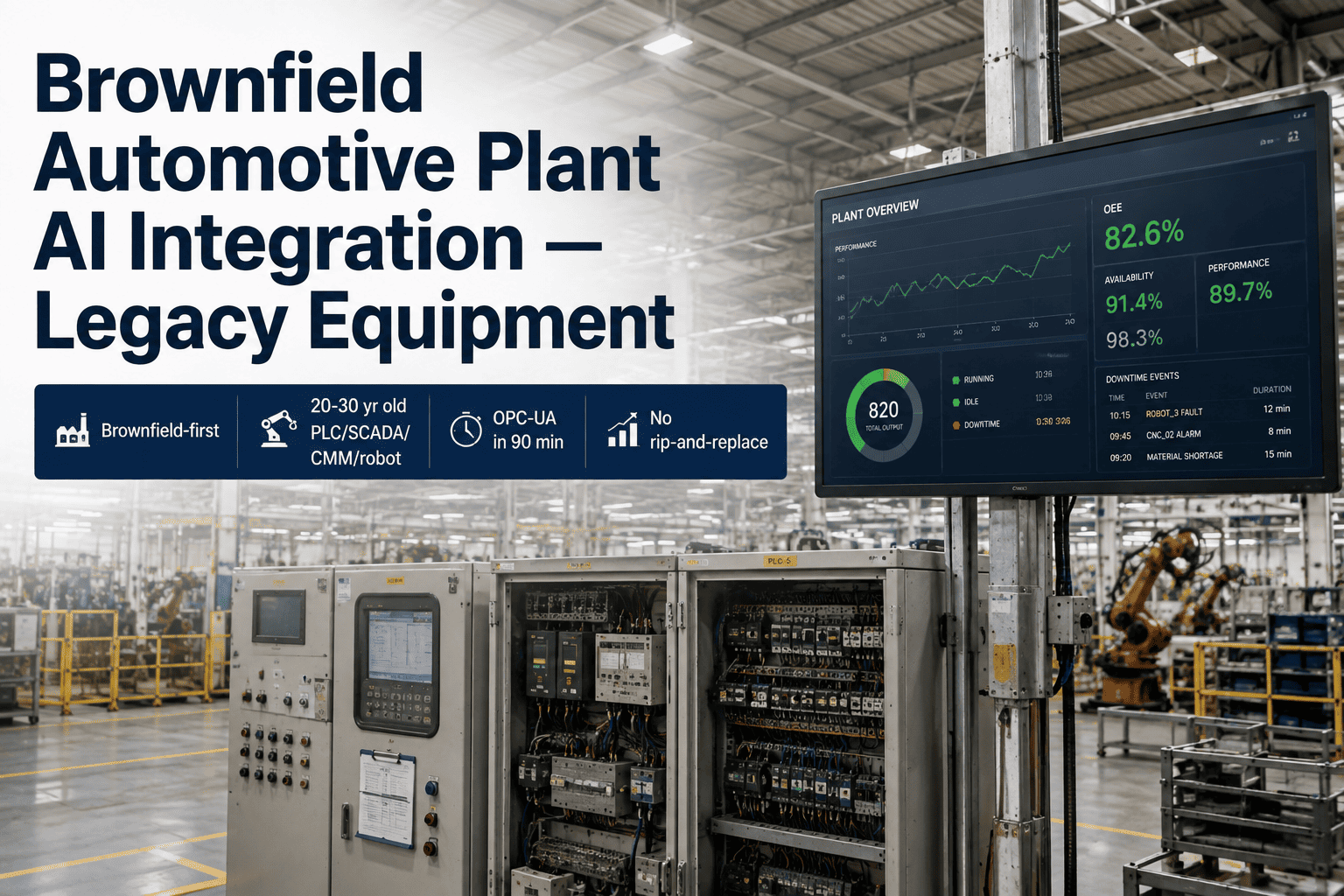
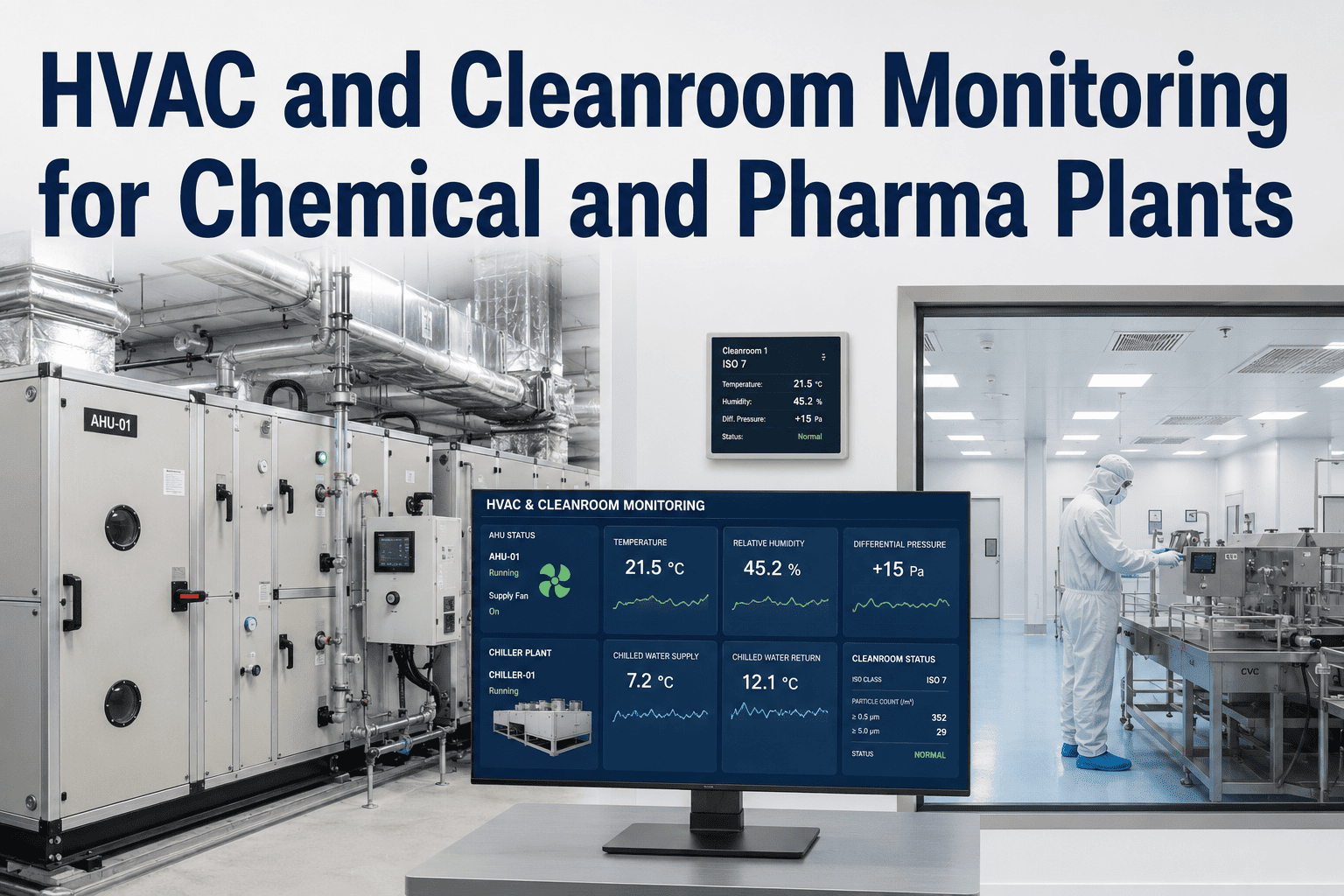
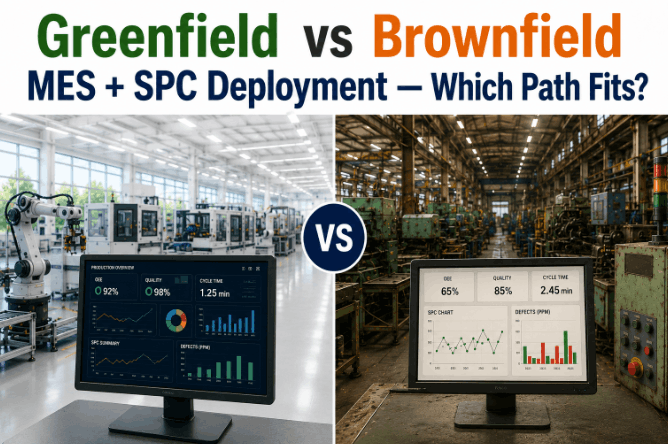
Every chemical plant project manager has heard the same pitch: to get AI-driven maintenance and analytics, you first have to modernize the control system. Rip out the DCS, replace the PLCs, re-validate everything, and lose weeks of production doing it. In a chemical plant, that's not modernization — it's a shutdown, a safety review, and a budget line nobody approved. The good news is that it's also unnecessary. The control system you already run — whether it's Honeywell Experion, Emerson DeltaV, Yokogawa Centum, ABB 800xA, or Siemens PCS 7 — already produces the data that predictive maintenance, digital twins, and anomaly detection need. Brownfield deployment means reading that data through a secure, read-only bridge and running the AI layer on top, without touching a single control loop or safety function. Nothing gets ripped out. Nothing gets re-validated. The plant keeps running exactly as it is while the intelligence gets added above it. iFactory Brownfield Deployment is built to retrofit onto the systems you already have.
iFactory Brownfield Deployment
Add AI to Your Chemical Plant Without Ripping Out the DCS
Retrofit onto any Honeywell, Emerson, Yokogawa, ABB, or Siemens system through a read-only edge bridge. No control changes, no re-validation, no production loss.
Read-only
no writes to control
Zero
production interruption
On-prem
or air-gapped option
Why Chemical Plants Can't Just Rip and Replace
The constraint isn't budget first — it's risk. A running chemical process can't tolerate control-system changes the way a discrete factory might. Every one of these is a reason brownfield, not greenfield, is the only realistic path for an operating plant.
Production can't stop
Continuous processes run for months between turnarounds. A control swap means an unplanned outage the schedule was never built to absorb.
Safety must be re-validated
Touch the control or safety system and you inherit re-verification, documentation, and sign-off before the unit can restart.
The DCS still works
These systems are reliable and proven. Replacing a working control layer to add analytics is solving the wrong problem.
The data already exists
The tags you need for PdM and digital twins are already flowing through the historian. They just aren't being used for it yet.
Works With the System You Already Run
Brownfield only matters if it fits your actual plant. The bridge connects to the major distributed control and PLC platforms through their standard interfaces — so the question isn't whether it's compatible, it's which of these you're on.
Honeywell
Experion PKS, TDC
Yokogawa
Centum VP, ProSafe
Rockwell & more
Allen-Bradley, Modicon
Connected through OPC UA and OPC DA, Modbus, historian interfaces (PI, Aspen, and equivalents), and standard OT protocols — the same interfaces these systems already expose.
How the Read-Only Bridge Works
The whole architecture rests on one rule: data flows up, never down. An edge gateway sits above your control layer and reads process data through standard interfaces. It never writes back, never issues a command, and never sits in the control path. The AI runs on the layer above it — so intelligence is added without the control system ever knowing it's there.
Added Layer
iFactory AI & Analytics
Predictive maintenance, digital twin, anomaly detection, and CMMS — running on-premise or air-gapped, above the plant.
data flows up — read-only, one way
The Bridge
Edge Gateway (OPC UA / Modbus / Historian)
Reads process tags through standard interfaces. No writes, no commands, never in the control path.
no commands ever flow down
Untouched
Your DCS / PLC + Safety System
Honeywell, Emerson, Yokogawa, ABB, Siemens — control loops and SIS run exactly as they do today.
Untouched
Field Devices & Process
Sensors, valves, and instruments — no rewiring, no new taps into the loop required.
What Never Changes
For a project manager, the most important part of a brownfield deployment is the list of things that stay exactly the same. This is that list.
The control loops
Every regulatory and supervisory control keeps running on the existing DCS. The bridge reads their output; it never influences it.
The safety system
The SIS is fully isolated. Read-only access means there is no path for the analytics layer to affect a safety function.
The operator's screens
HMIs and control-room workflows stay as they are. Operators run the plant the same way the day after go-live as the day before.
The Deployment, Phase by Phase
Brownfield rollout is built to be low-risk and reversible at every step. Each phase proves value before the next begins, and none of them requires stopping the plant.
01
Assess & Map
Inventory the control platform, historian, and available tags. Confirm interfaces and define the read-only data scope.
02
Install the Bridge
Deploy the edge gateway alongside the existing network. Read-only, no control changes, no downtime.
03
Baseline the Assets
Learn each asset's normal from live and historical data before any alerting is switched on.
04
Turn On Analytics
Predictive maintenance, anomaly detection, and digital twin go live on the first unit, ranked by impact.
05
Scale the Plant
Roll unit by unit across the site once value is proven — same bridge, same read-only pattern.
What You Get on Top
Everything the AI layer delivers is added value on infrastructure you already own — no new control system required to unlock any of it.
Predictive Maintenance
Catch pump, compressor, and rotating-equipment degradation weeks early from the tags already in the historian.
Digital Twin
A live model of the unit for what-if analysis and drift detection — built from real process data, not a rebuild.
Anomaly Detection
Surface process excursions and abnormal conditions before they become quality or safety events.
CMMS Integration
Turn every prediction into a work order in your maintenance system, closing the loop on action.
What Brownfield Delivers
The payoff of the brownfield approach is a fast, low-risk path to the same intelligence a full modernization promises — without the cost, downtime, or re-validation that comes with ripping and replacing.
No
Rip & replace
the DCS stays exactly as it is
Zero
Downtime to deploy
the bridge installs on a running plant
Weeks
Not months
to first analytics on the first unit
Lower
Risk & cost
no re-validation, no capital control project
Not sure what your historian is already exposing? Book a demo — we'll map your control platform and show what a read-only bridge could surface.
Frequently Asked Questions
Does the bridge ever write back to the control system?
No. The connection is strictly read-only, and it can be enforced at the network layer with a data diode for one-way flow. The edge gateway reads process tags through OPC UA, Modbus, or the historian interface and passes them up to the analytics layer. There is no path — logical or physical — for the AI layer to send a command, change a setpoint, or influence a control loop or safety function.
Which control systems does it actually support?
The major distributed control and PLC platforms in the chemical industry: Honeywell Experion and TDC, Emerson DeltaV and Ovation, Yokogawa Centum VP, ABB 800xA, and Siemens PCS 7, along with common PLCs like Siemens S7, Allen-Bradley, and Schneider Modicon. Connection is through the standard interfaces these systems already expose — OPC UA, OPC DA, Modbus, and historian APIs — so no vendor-specific control modification is needed.
Can it run entirely on-premise or air-gapped?
Yes. The analytics layer can run fully on-premise, and for high-security sites it can operate air-gapped with no external connectivity. This matters for chemical plants with strict OT security policies — the data never has to leave the site for the system to deliver predictive maintenance, digital twin, and anomaly detection.
Do we have to stop the plant to install it?
No. Because the bridge sits alongside your existing network and only reads, the edge gateway is installed on a running plant with no interruption to the process. There's no control change to schedule around a turnaround and nothing that requires the unit to be down. That's the core reason brownfield fits a continuous chemical operation.
Can we prove it on one unit before committing to the site?
Yes, and that's the recommended path. We start with one unit and your existing control platform, install the read-only bridge, baseline the assets, and turn on analytics there first. You see real predictions and value on that unit before any decision to scale across the plant. Book a demo and we'll scope the first unit around your system.
No shutdown. No re-validation. No rip and replace.
See Brownfield AI Running on Your Control System
Tell us your DCS or PLC platform and one unit to start with. We'll map the available tags, install the read-only bridge, and show live predictive maintenance and anomaly detection — on a plant that never stops running.