A cement kiln is at its most vulnerable in the hours after a stop. Heat it too fast and the refractory spalls, heat it too slowly and fuel burns for days without producing clinker, feed it too early and the preheater blocks, feed it too late and the plant loses a shift of output. Every restart is a judgement call made under pressure, and the outcome depends heavily on which operator is on the control desk. Heating curves live in a binder, lessons from the last restart live in someone's memory, and the quality of the first clinker is left to chance. iFactory AI Optimization with Digital Twin guides the restart stage by stage, so the kiln heats within refractory limits, uses less fuel to get there and reaches stable clinker quality sooner.
iFactory AI Optimization + Digital Twin - Cement Kiln Start-Up
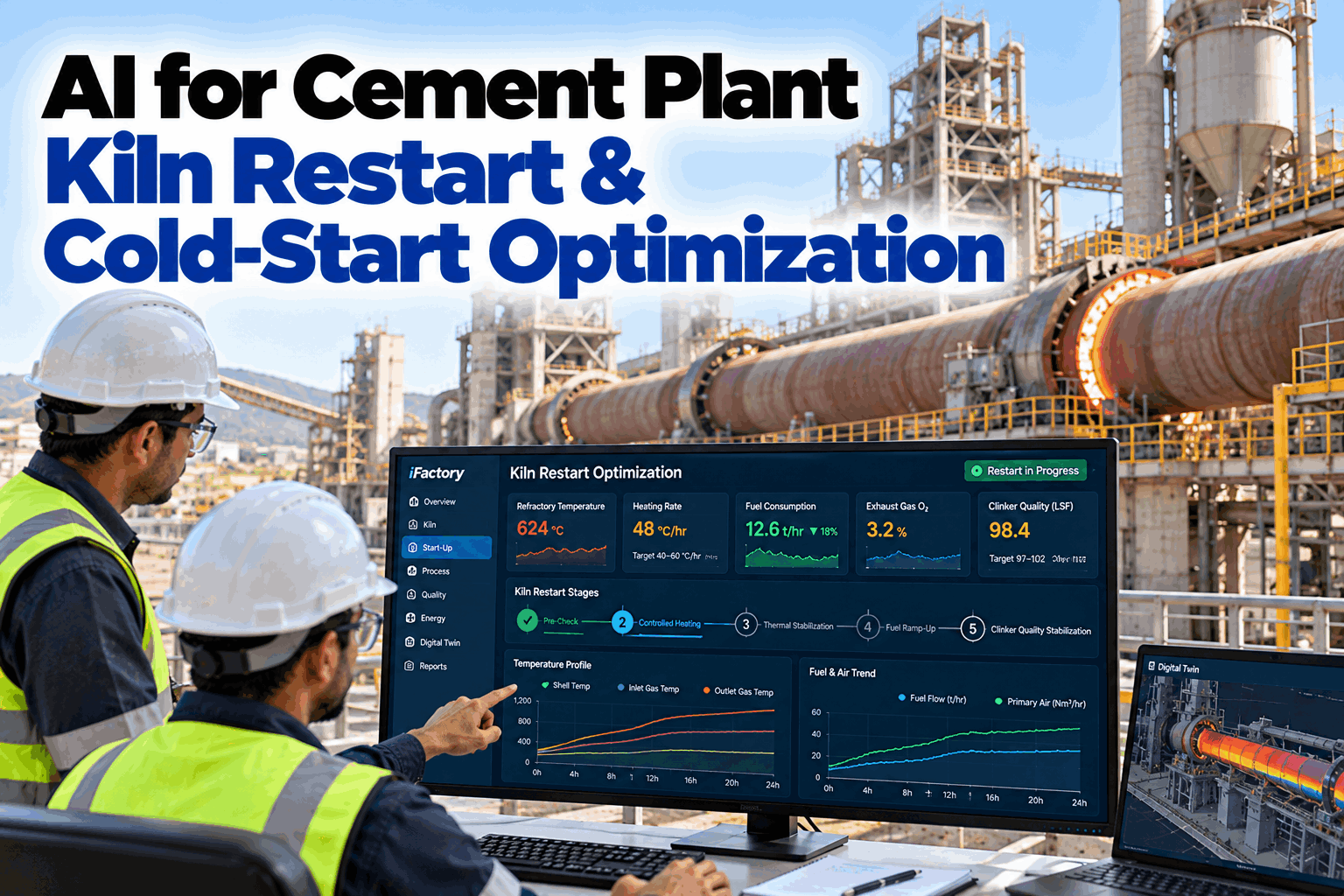
AI for Cement Kiln Restart and Cold-Start Optimization
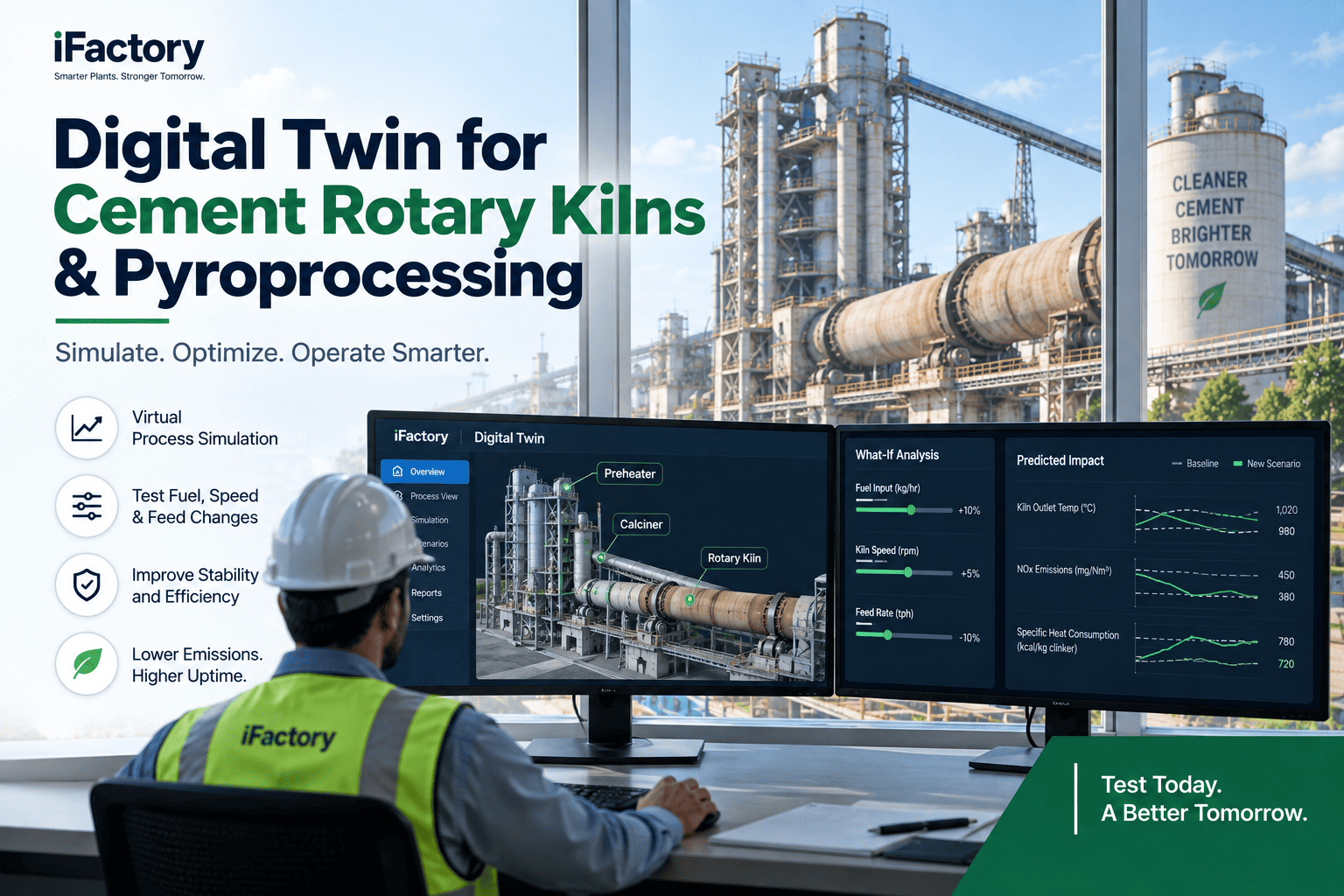
A digital twin of your kiln plans the heating curve, guides fuel, fan and feed setpoints at each stage and tracks stabilisation, so every restart follows the best known path instead of the last operator's habit.
Refractory-safe
heat-up rate held inside the limits you set for the lining
Less fuel
no long, idle heat-up and fewer false starts
Stage gates
clear checks before light-up, feed start and ramp
Faster stable
on-spec clinker reached sooner after the restart
Why Kiln Restarts Cost So Much
A restart is a short period that carries a large share of a kiln's annual risk, fuel waste and quality loss. These are the six reasons it is so hard to do consistently.
01
Heat-up by experience, not curve
Operators follow a heating schedule on paper, then adjust by feel. Under time pressure, the ramp creeps above the limit and nobody sees it until the damage is done.
02
Thermal shock to refractory
Fast or uneven heating causes spalling and cracking in new and old lining alike. The cost appears weeks later as a shorter campaign and an unplanned stop.
03
Fuel burned without output
Long heat-ups on premium start-up fuel, repeated light-ups and delayed feed start all add thermal energy cost that produces no clinker.
04
Feed introduced at the wrong moment
Feeding too early invites cyclone blockages and unstable burning. Feeding too late stretches the heat-up. The right moment depends on conditions no single reading shows.
05
Off-spec clinker during stabilisation
Free lime, liter weight and coating stability take hours to settle. Clinker made in that window is often downgraded, reprocessed or blended with a penalty.
06
Knowledge sits in people
The best restart the plant ever ran is remembered by one shift. When that crew is off, the next restart starts from a weaker playbook.
Restart Stage Tracking - Plan Against Actual
The restart tracker compares each stage with the plan the digital twin produced, so deviations are flagged while they can still be corrected. The figures below are an illustrative example of a cold start.
Stage
Plan
Actual
Gap
Status
AI guidance
Heat-up ramp
25 deg C/h
31 deg C/h
+6
Act
Above lining limit; reduce fuel and hold
Light-up and fuel switch
6.0 h
6.0 h
0
On plan
Switch to main fuel as scheduled
Feed start rate
40%
45%
+5
Watch
Hold rate until preheater temperatures settle
Coating and burning zone
Stable by h 8
Stable by h 10
+2 h
Watch
Keep flame steady, avoid sudden setpoint moves
Free lime in spec
Within 12 h
Within 12 h
0
On plan
Continue and confirm with lab sample
Restart summary
5 stages
3 off plan
-
1 to act on
The ramp breach is the one that damages refractory
Cold Start, Hot Restart and Stabilisation
Each situation carries a different risk and needs different guidance. The digital twin is configured for your kiln and refractory, so the plan reflects the way you are actually restarting.
Cold start
Risk
Thermal shock to lining, long heat-up, high start-up fuel use
AI guidance
Heating curve built from lining age and type, with ramp limits enforced against live temperatures
Output
Stage plan with times, fuel and fan setpoints and hold points
Hot restart
Risk
Coating loss, cyclone build-up and unstable burning after a short stop
AI guidance
Restart window and feed ramp based on how much the kiln and preheater cooled during the stop
Output
Shortest safe path back to stable operation for that specific stop
Stabilisation
Risk
Off-spec clinker and swings in burning zone temperature
AI guidance
Setpoint moves limited to what the process can absorb, with free lime and temperature trend tracked
Output
Clear time-to-stable estimate and a record for the next restart
What the Restart Guidance Contains
A restart plan is only useful if the operator can follow it at the desk. These are the five elements every iFactory restart guide carries.
1
Heating curve with refractory limits
A target temperature path built from your lining data and supplier guidance, with the allowed ramp shown against the live value.
Example: Ramp limit 25 deg C/h, current 31 deg C/h
2
Fuel and fan setpoints per stage
Recommended fuel rate, ID fan and air settings for each stage, with the reason shown so operators can accept or override.
Example: Reduce start-up fuel 8% and hold 30 min
3
Stage gates before each step
Conditions that must be met before light-up, main fuel switch and feed start, so no step is taken early under pressure.
Example: Feed start blocked until preheater exit temperature stable
4
Feed ramp plan
A feed rate schedule that balances getting to production quickly against blockage and burning zone risk.
Example: 40% for 90 min, then step to 60%
5
Stabilisation targets and restart record
Free lime, temperature and coating targets with time-to-stable, saved with the full restart record for review.
Example: On-spec clinker at hour 12, record archived
Want a restart plan built for your kiln? Book a demo - bring your last two restart logs and we will show where the plan and the actual path diverged.
How iFactory Builds and Learns the Restart Plan
The plan comes from a digital twin of your kiln that is checked against what actually happens and improved after each restart.
01
Record
Past restarts, lining data and process history loaded into the platform.
02
Model
A digital twin of kiln and preheater thermal behaviour built from your plant.
03
Plan
The twin tests heating and feed options and selects the safest, fastest path.
04
Guide
Live guidance at the desk, with alerts when a stage drifts from plan.
05
Learn
Each restart refines the model, so the next plan is better.
What Optimised Kiln Restarts Deliver
The return comes from a restart that follows the best known path every time, regardless of who is on shift.
Longer life
Refractory protected
heat-up kept inside lining limits
Less waste
Start-up fuel
fewer idle hours and repeated light-ups
Sooner
On-spec clinker
stabilisation tracked and shortened
Repeatable
Shift to shift
best practice captured, not remembered
Frequently Asked Questions
Does the AI take control of the kiln during a restart?
No. iFactory provides guidance, stage gates and alerts at the control desk. Your operators and process engineers decide what to apply, and refractory supplier schedules and plant procedures stay in force. The value is that the plan is clearer, deviations are visible earlier and every decision is recorded.
What data does the digital twin need?
Process history from your DCS or historian, such as kiln and preheater temperatures, fuel and fan data, plus lining information and logs from past restarts. Lab results for free lime help calibrate the stabilisation stage. We review what is available at scoping and plan around any gaps.
Does it work for both cold starts and hot restarts?
Yes. A cold start after a long shutdown and a hot restart after a short stop need different plans, so the twin is configured for both. The restart type and the measured kiln condition at the moment of restart decide which path the guidance follows.
Can we try it on one restart first?
Yes. A good starting point is the next planned stop. We build the twin from your history, produce a plan for that restart, and compare it with the path your team actually takes. Book a demo and we will help you choose the restart to start with.
Stop treating every kiln restart as a fresh gamble.
See AI-Guided Kiln Restart on Your Plant's Own Data
Bring your last restart logs and refractory details. We will show the heating curve, the stage plan and where your recent restarts lost time, fuel or lining life.
Heat-up
inside lining limits
Stage gates
checked at the desk