One fault on Cell B at Stand F3 of a five-stand tandem cold mill cost a 20-tonne coil last quarter. 2,000 metres of prime automotive steel downgraded to secondary, 18 hours of unscheduled downtime, and a corrective maintenance escalation that pulled three electricians from a planned shutdown. The PLC fault that caused the event — a stuck output relay on the automatic gauge control interface — had been generating an intermittent error code for 12 days. It was logged, visible in the alarm historian, and dismissed by shift technicians who had no context that this specific fault, on this specific stand, with the current coil grade in the schedule, would produce a gauge deviation that would scrap an entire coil. The data was present. The system that connects PLC fault signatures to quality outcome risk was not.
The Cost of Undetected PLC Faults in Coil Production
Every PLC fault that escapes detection before it affects production carries a cost that compounds across the operation. A single intermittent fault on a gauge control loop produces 100 metres of off-gauge coil before the operator responds. A fault on a tension controller creates a cobble that damages downstream equipment. A fault on a coolant valve produces a surface defect that escapes visual inspection until the coil reaches the customer. iFactory's analysis of PLC fault data across tandem cold mills and temper mills in North American steel operations reveals that 73% of quality-related coil downgrades are preceded by detectable PLC fault events within the preceding 14-day window — events that were logged, visible, and not acted upon because no system connected the fault signature to the quality consequence.
Why Standard PLC Alarms Cannot Protect Coil Quality
Standard PLC alarm systems monitor controller status against fixed diagnostic thresholds. When a fault code is generated, an alarm fires — regardless of whether that fault is on a non-critical drive or on the automatic gauge control interface of the finishing stand producing the highest-value coil in the schedule. The result is the alarm flood familiar to every mill control room: hundreds of PLC fault codes per shift, 70% classified as informational or maintenance required — and the critical fault that signals an impending quality event buried among routine notifications. iFactory's PLC fault detection replaces this flat architecture with a production-risk-weighted model that scores every fault against its potential impact on coil quality and line throughput.
| Capability | Traditional PLC Alarm System | iFactory AI PLC Detection |
|---|---|---|
| Fault Detection Method | Reactive, threshold-based HMI alarms — operator must be watching the correct screen | Continuous AI monitoring of all fault registers and diagnostic buffers across every controller |
| Fault Prioritization | All fault codes treated equally, sorted by timestamp regardless of production context | Faults ranked by combined quality risk and downtime impact score, critical alerts surfaced automatically |
| Quality Context Integration | None — fault codes isolated from production schedule, coil grade, and dimensional tolerance data | Full integration — fault severity calibrated against current coil grade, gauge target, and stand configuration |
| Response Workflow | Operator observes alarm on HMI, assesses relevance manually, and decides whether to escalate | AI auto-creates tagged work order with controller ID, fault code, location, and recommended action |
| Continuous Improvement | No systematic feedback loop — the same nuisance faults repeat without resolution | Closed work order outcomes and quality data fed back to improve detection model with every resolved event |
How iFactory's AI Ranks and Routes PLC Faults by Production Risk
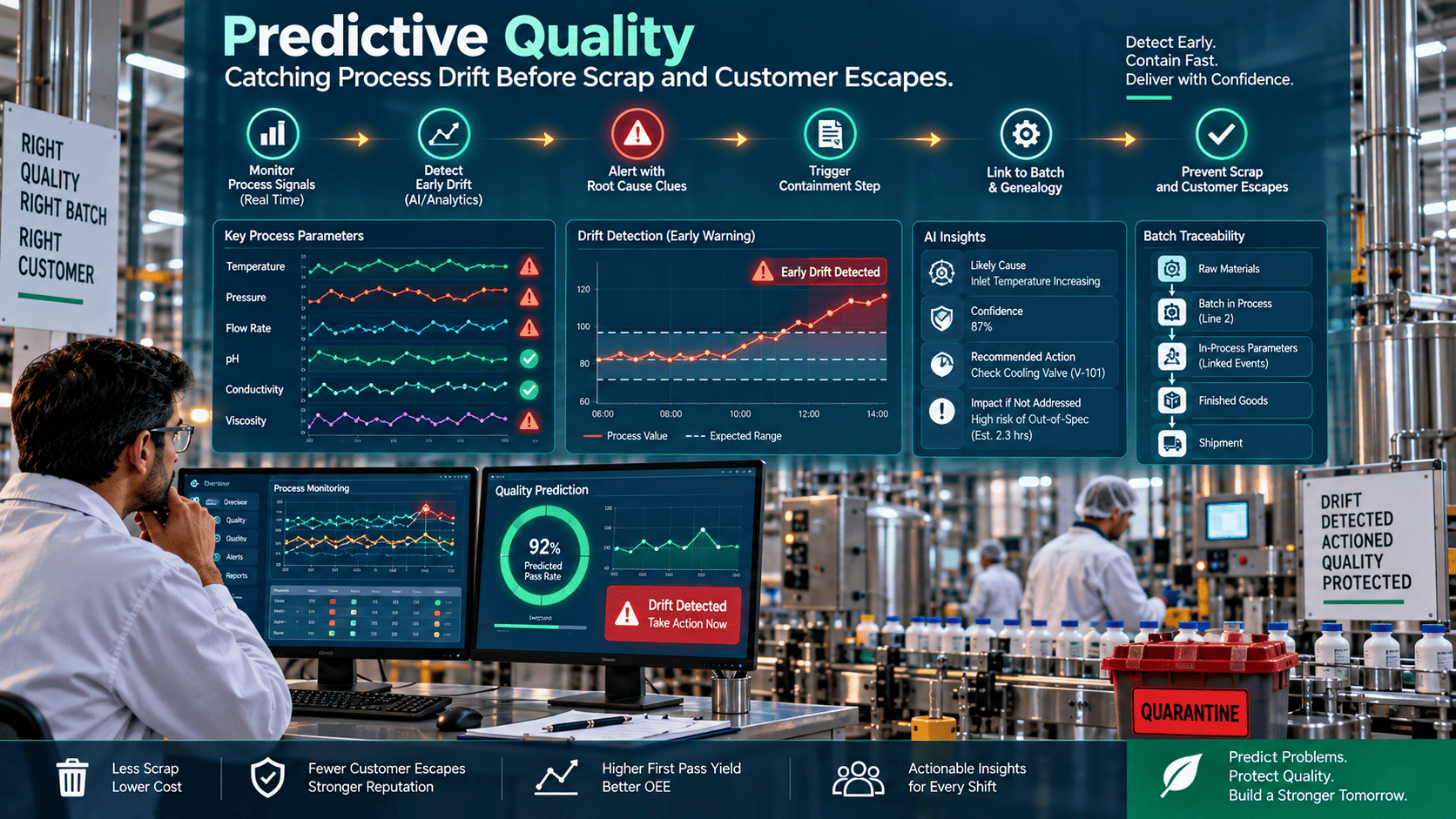
iFactory's AI PLC fault detection platform ingests data from every controller on the line — fault registers, diagnostic buffers, cycle time deviations, and communication status — and processes each event through a five-stage pipeline that converts raw fault codes into ranked, actionable work orders. The system learns from historical fault-to-quality mappings and improves detection precision with every resolved event. Book a Demo to see how this pipeline performs on your mill's PLC data.
Live PLC Fleet Status: From Fault Detection to Work Order in Seconds
Every controller on the line is displayed in a single fleet status pane — online status, fault count, and risk level updating in real time. When iFactory detects a fault that exceeds the production-risk threshold, a work order is created automatically in the CMMS with the controller ID, fault code, location, inspection checklist, and recommended action. The maintenance team receives the alert before the next coil reaches the affected stand — closing the gap between fault detection and intervention that costs the industry millions in downgraded steel every quarter.
Expert Review: Why PLC Fault Data Remains the Most Underutilized Quality Protection Resource in Steel Mills
In 31 years of controls engineering across integrated steel and EAF operations, I have reviewed the quality data from more than 200 coil downgrade incidents. In the majority of those cases, the PLC fault that initiated the quality deviation was present in the alarm historian — logged, timestamped, and visible. The fault was not acted upon not because the maintenance team was negligent, but because no system existed to tell them that this specific fault, on this specific controller, with the current production schedule and coil grade, would produce an outcome that costs the operation a quarter of a million dollars. PLC fault data is generated continuously, stored reliably, and almost completely disconnected from the quality management systems that could give it meaning. The investment required to bridge that gap is modest. The cost of not bridging it is measured in every coil that is downgraded, every 15 minutes of unplanned downtime, and every customer delivery that is missed because a fault that was visible was not understood. iFactory's approach — connecting PLC fault data to production context and routing it as an actionable work order — is the practical solution that the industry has needed for a decade.
Conclusion: The 12-Day Warning Window That Separates Prevented Defects from Downgraded Coils
PLC fault detection that protects coil quality requires more than alarm management. It requires a system that reads every controller on the line, scores each fault against its potential to degrade quality or disrupt throughput, and routes the right information to the right person before the next coil reaches the affected stand. The 12-day average warning window that exists in PLC alarm data before most quality-impacting events means that every downgraded coil is a failure of data utilization — not a failure of technology availability. The controllers are generating the data. The fault buffers are storing it. The alarm historians are archiving it. What is missing in facilities that continue to scrap coils from undetected PLC faults is the analytics layer that connects those signals to production context and delivers actionable intelligence to a decision-maker with enough lead time to intervene. The data is available. The question is whether your maintenance operation is connected to it. Book a Demo to see what your PLC fault data is saying about your next quality incident.
Frequently Asked Questions
iFactory monitors fault registers and diagnostic buffers across every controller on the line, applying AI models trained on historical fault-to-quality mappings to identify patterns that single-threshold alarms cannot detect.
iFactory detects intermittent output faults, communication dropouts, cycle time deviations, sensor drift, and diagnostic event sequences that precede quality-impacting failures across all major PLC platforms.
Each fault is scored against current production context — coil grade, gauge target, and stand configuration — so the same diagnostic code on a non-critical drive ranks lower than on a finishing stand producing automotive-grade material.
Yes — iFactory connects to Allen-Bradley, Siemens, Mitsubishi, and other major PLC platforms via OPC-UA and native protocols without requiring changes to existing control logic.
Most facilities see measurable reduction in quality-related stoppages within 60 days of go-live, with full ROI achieved within the first 90 days from prevented coil downgrades alone.