AI SPC Drift Detection — Catch Process Drift Before the First Rejection
By Henry Green on June 4, 2026
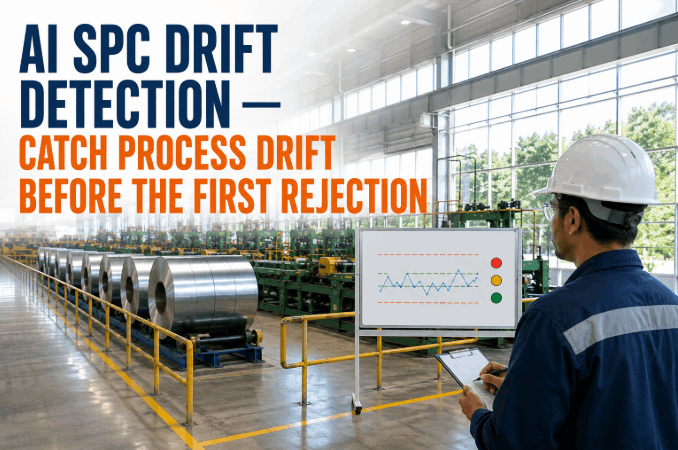
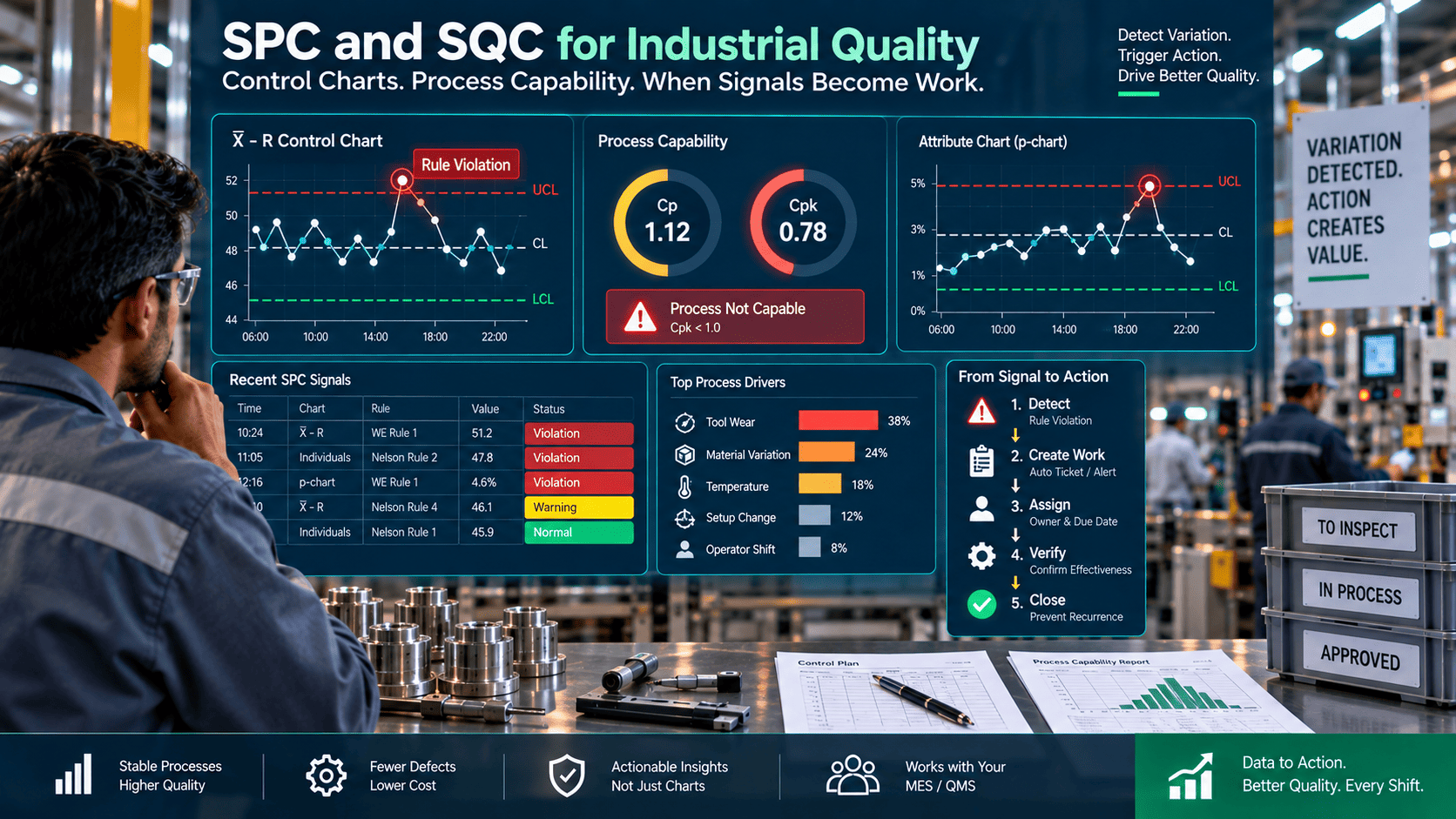
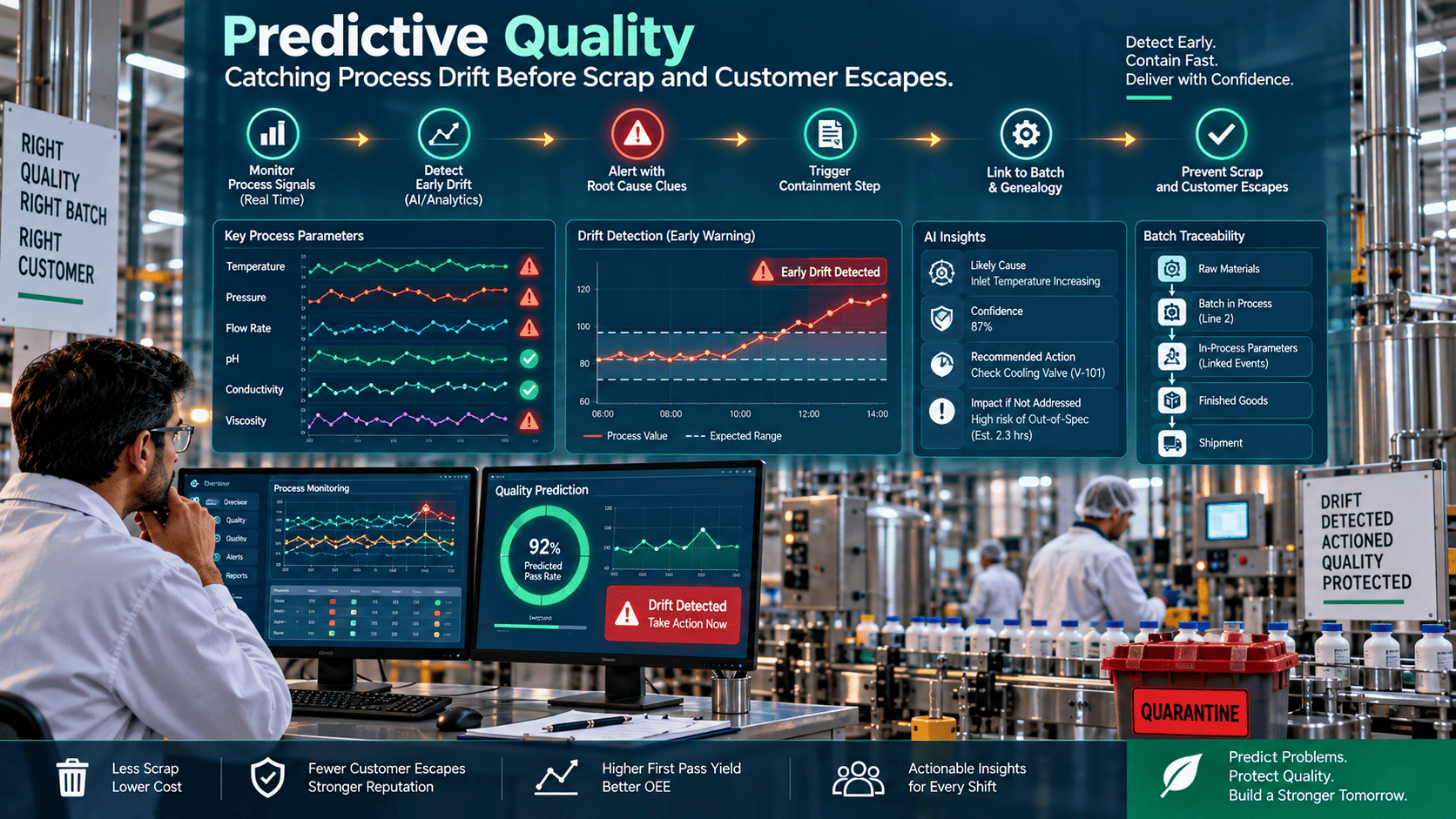
Statistical process control has been the backbone of manufacturing quality management for decades — but in the age of AI-powered analytics, the traditional Western Electric rules that define SPC are no longer the fastest early warning system available to process control engineers. Classical SPC detects a violation after it has already occurred. AI drift detection identifies the pattern trajectory that leads to a violation 30 to 120 minutes before the first rule fires. That time window is where recalls are prevented, yield loss is avoided, and corrective action is actually actionable. iFactory's AI SPC drift detection platform gives process control engineers in U.S. manufacturing plants the predictive lead time that classical control charting was never designed to deliver. Book a Demo to see how early detection changes your quality response curve.
See AI Drift Detection in Action on Your Process Data
Connect your existing SPC infrastructure to iFactory's AI drift model and see predicted violations before Western Electric rules trigger — without replacing your current control plan.
Why Classical SPC Leaves Process Engineers One Step Behind
Western Electric rules — the run rules that define an SPC violation — are reactive by design. Rule 1 fires when a single point crosses a 3-sigma control limit. Rule 2 fires after nine consecutive points on one side of the centerline. By the time any of these patterns are confirmed, the process has already been out of statistical control for minutes, often for an entire production run. A process control engineer monitoring a pasteurization line, an extrusion process, or a filling operation in real time is always responding to history, not preventing the future.
The structural limitation is not a flaw in Western Electric methodology — it is a fundamental constraint of rule-based systems. Rules require a pattern to be complete before they can fire. AI drift models work differently: they evaluate the trajectory, velocity, and contextual signature of process variable movement to predict where the control chart is heading, not just where it is. This is the analytical gap that iFactory's AI SPC platform closes for U.S. manufacturing operations.
How iFactory's AI Drift Model Works
iFactory's drift detection engine runs in parallel with your existing SPC control charts — it does not replace them. The AI model ingests the same real-time process variable streams that feed your control charts: temperature, pressure, viscosity, fill weight, moisture content, dimensional measurements, or any continuous parameter your process monitors. Rather than evaluating whether the current point violates a static rule, the model evaluates the dynamic drift signature of the data stream over a rolling analysis window.
iFactory AI Drift Detection: How the Prediction Engine Works
01
Real-Time Process Variable Ingestion
iFactory connects directly to your PLC, SCADA, or historian to ingest process variable data at the same sampling frequency used by your existing SPC system — no data duplication, no new sensor requirements for most applications.
Continuous · Millisecond to second sampling
02
Drift Signature Analysis Across Rolling Windows
The AI model evaluates trajectory slope, variance acceleration, autocorrelation shifts, and multivariate covariance changes across configurable rolling windows — identifying drift patterns that precede Western Electric rule violations in your specific process context.
Per window · Plant-calibrated analysis
03
Violation Probability Scoring and Lead-Time Estimation
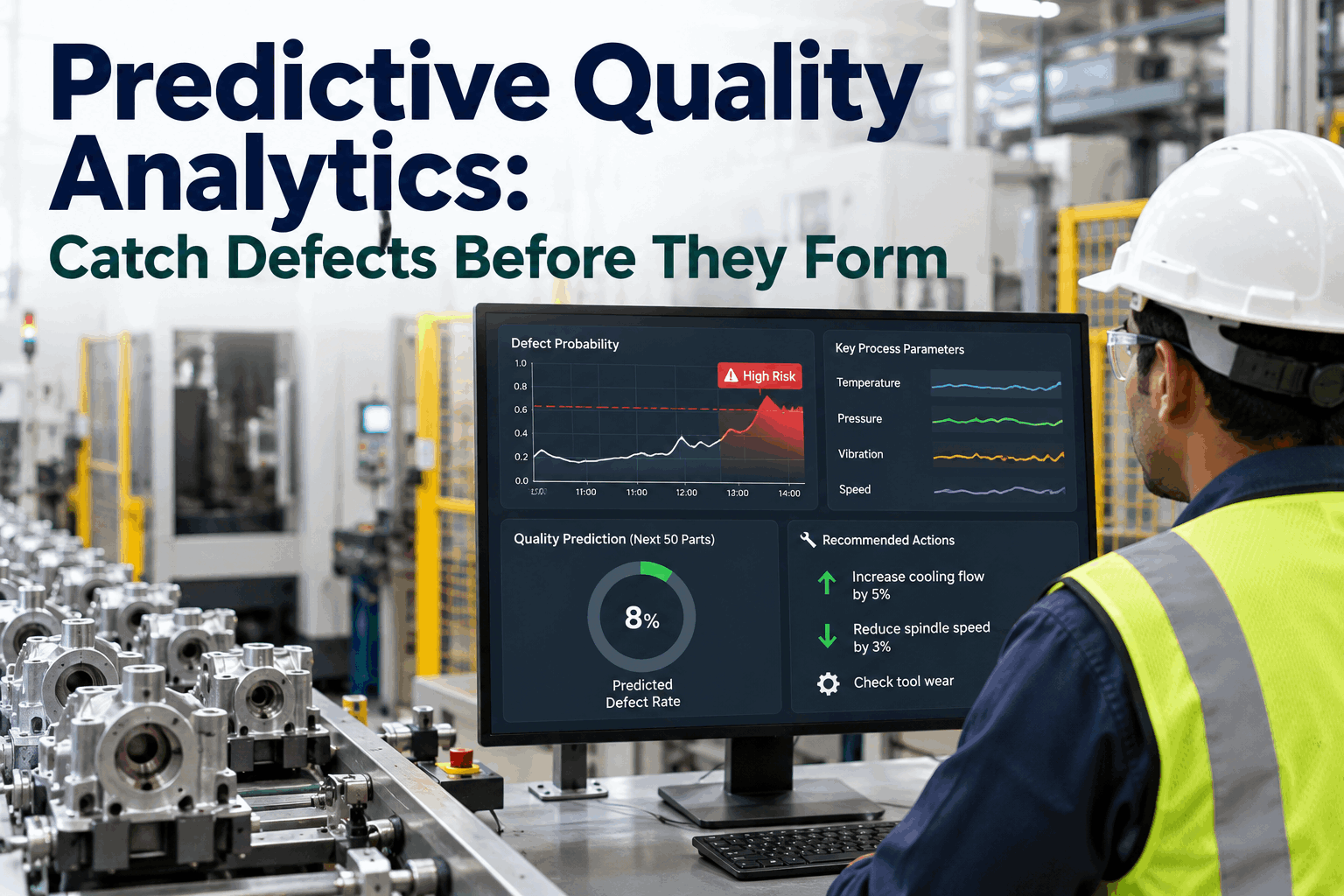
Each process variable receives a real-time violation probability score and an estimated time-to-violation — giving process engineers quantified lead time, not just a binary alert. Average prediction lead time across iFactory deployments: 30–120 minutes before the first Western Electric rule fires.
Continuous · Quantified lead time output
04
Alert Delivery with Root-Cause Context
Drift alerts are routed to process engineers with the contributing variable signatures, recent process events (material lot changes, equipment cycles, shift changes), and suggested corrective action categories — so the alert arrives with diagnosis, not just notification.
Per event · Contextual delivery
05
Corrective Action Documentation and Model Feedback
Corrective actions taken in response to drift alerts are logged in the system, creating a closed-loop feedback dataset that continuously improves prediction accuracy for your specific equipment and process environment over time.
Per event · Continuous model improvement
AI Drift Detection vs. Classical SPC: What Changes for Your Process
The operational difference between classical SPC and AI-augmented drift detection is not just speed — it is the nature of the intervention available. When a Western Electric rule fires, the engineer's options are limited: the violation has occurred, product may be impacted, and the corrective action is reactive. When an AI drift alert fires 60 minutes before the rule would trigger, the process engineer can adjust a process variable, initiate an equipment check, investigate a material lot, or call a changeover — and prevent the violation from ever appearing on the control chart.
Classical SPC (Western Electric Rules Only)
Rule fires after violation is confirmed — process already out of control
Quantified time-to-violation estimate delivered with every alert
Corrective action is preventive — violation never reaches the control chart
Violation probability scoring — continuous signal intensity, not binary trigger
Platform Capabilities: What iFactory Delivers for SPC Drift Detection
Predictive Drift Alerts
AI model predicts SPC violations 30–120 minutes before Western Electric rules fire — with violation probability scores and estimated time-to-violation updated in real time.
Simultaneous evaluation of correlated process variables — identifies compound drift signatures that single-variable control charts cannot detect until multiple rules fire at once.
Drift alerts include contributing variable signatures, recent process events, and corrective action categories — engineers receive a diagnosis alongside the notification.
Runs alongside your existing control charts — Western Electric rules remain active and compliant while AI drift prediction adds a predictive layer to the same data streams.
Corrective action outcomes feed back into the drift model — prediction accuracy improves over time as the AI learns your plant's specific failure signatures and process patterns.
Drift events, alert timestamps, corrective actions, and process variable states at alert time are all logged automatically — audit-ready records generated without manual entry.
Average AI drift alert lead time before Western Electric rule violation triggers
2×
Reduction in first-pass rejection rates reported at iFactory deployments within 6 months
85%+
Of drift-predicted violations corrected before product impact when alert lead time exceeds 45 minutes
300+
Manufacturing facilities contributing to iFactory's drift signature training database
Capability Summary: iFactory AI SPC at a Glance
Capability
What iFactory Delivers
Process Engineer Benefit
Predictive Drift Detection
AI model predicts violation 30–120 min before rule fires
Corrective action window before product is impacted
Violation Probability Scoring
Continuous 0–100% probability score per variable, updated in real time
Prioritize response by risk severity, not binary alert status
Multivariate Analysis
Correlated variable drift identified simultaneously across process streams
Compound drift signatures caught before any single variable trips
Root-Cause Context
Contributing variables, recent events, and corrective action categories with each alert
Diagnosis arrives with the alert — no manual investigation required to act
Western Electric Parallel Operation
Classical SPC rules continue running alongside AI layer — no change to control plan
Compliance record integrity maintained; AI adds prediction, not replacement
Automated Event Logging
All drift events, alerts, and corrective actions timestamped and stored automatically
Audit-ready SPC records without manual data entry
Expert Review: What Process Control Engineers Experience
"We had a robust SPC program — Xbar-R charts on every critical process variable, Western Electric rules configured and enforced, trained operators reviewing charts every hour. The problem was that by the time Rule 1 fired on our heat seal temperature, we had typically produced between 800 and 1,200 units in the drift window. Some of those units passed final inspection. Some didn't. And we had no reliable way to know which. After deploying iFactory's AI drift model, we started receiving drift alerts averaging 55 minutes before the first Western Electric rule violation on that same process variable. We corrected the temperature profile, the rule never fired, and those 800–1,200 units were never at risk. In the first six months, our first-pass rejection rate on that line dropped 61%. The Western Electric rules still run — we need them for compliance documentation. But the AI drift alerts are what our process engineers actually respond to now, because that's where the actionable lead time lives."
Process Control Engineering ManagerRigid Packaging Manufacturer — 4 Production Lines — U.S. Southeast — ISO 9001 Certified
Conclusion: The Lead Time Between Drift and Defect Is Your Competitive Advantage
Western Electric rules remain the compliance standard for SPC in U.S. manufacturing — and they should. But compliance documentation and quality prevention are different objectives, and classical SPC was designed for the former. For process control engineers responsible for reducing rejections, containing scrap, and protecting yield, the question is not whether a violation will eventually trigger a rule. The question is whether your team has enough lead time to correct the process before it does.
iFactory's AI drift detection platform delivers that lead time — 30 to 120 minutes of actionable window between the start of a drift trajectory and the first Western Electric rule violation — without replacing your existing SPC infrastructure, your control plan, or your compliance documentation workflow. For manufacturers where every rejection represents rework cost, scrap loss, and potential customer impact, that predictive window is not a marginal improvement. It is a structural change in how quality control operates.
Ready to Add Predictive Lead Time to Your SPC Program?
iFactory connects to your existing SPC data streams and delivers AI drift alerts without modifying your control plan, replacing your Western Electric rules, or adding new compliance overhead.
No — iFactory runs in parallel with your existing Western Electric rules. Classical SPC rules continue operating for compliance documentation while the AI drift model adds a predictive layer to the same data streams.
Any continuous process variable your existing PLC, SCADA, or historian already captures — temperature, pressure, fill weight, viscosity, dimensional measurements, and more — with no new sensor requirements for most applications.
Most facilities see reliable drift predictions within 6–10 weeks — a 30–60 day baseline period establishes normal operating signatures, after which the model begins delivering violation probability scores with meaningful lead times.
Yes — iFactory's multivariate drift analysis evaluates covariance changes across correlated variables simultaneously, identifying compound drift signatures that single-variable control charts cannot detect until multiple rules fire in sequence.
Yes — every drift event, alert timestamp, process variable state at alert time, and corrective action taken is automatically logged in audit-ready format, with no manual data entry required from process engineers.