AI Free-Lime Prediction & Real-Time Clinker Quality Control
By Josh Brook on September 19, 2026
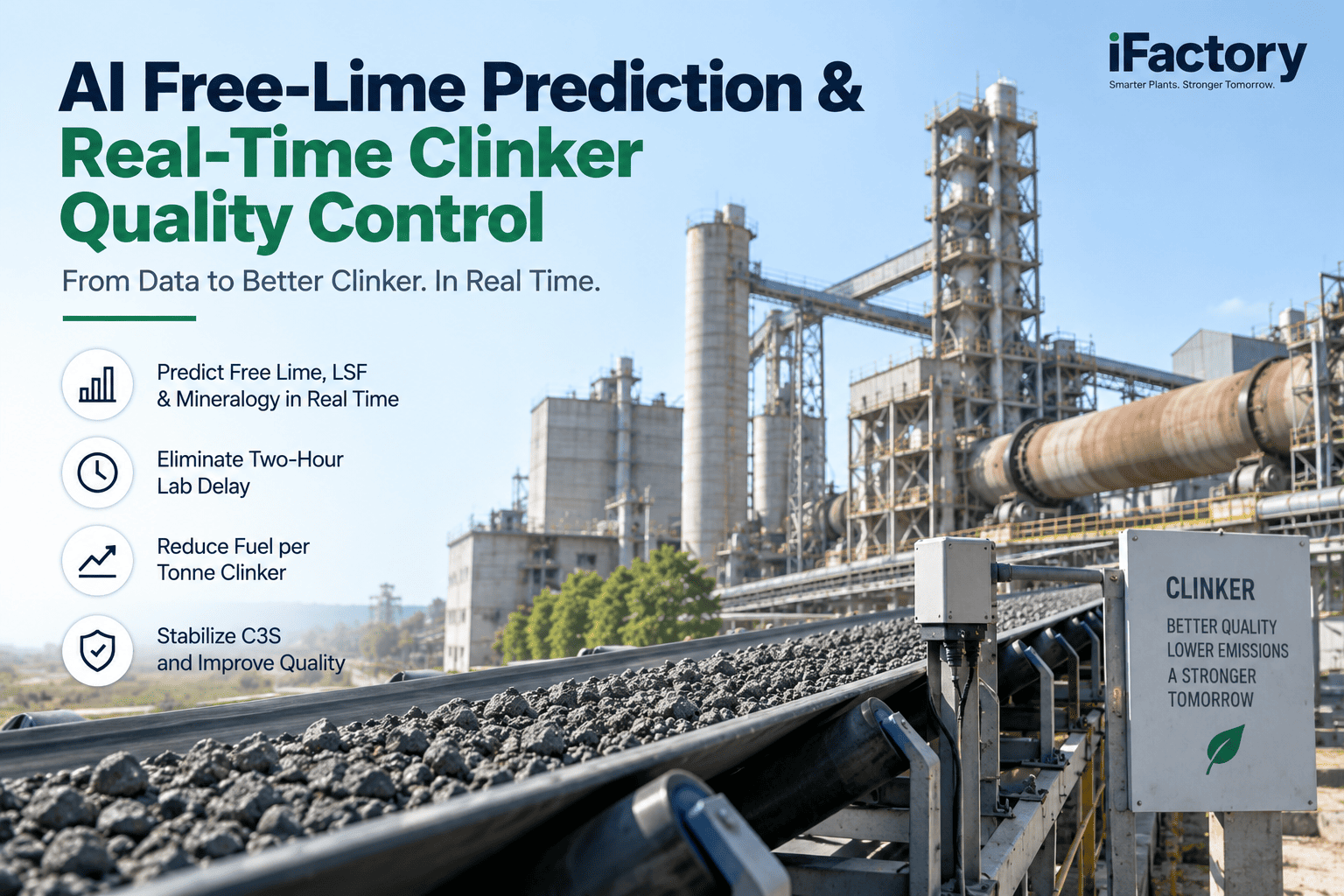
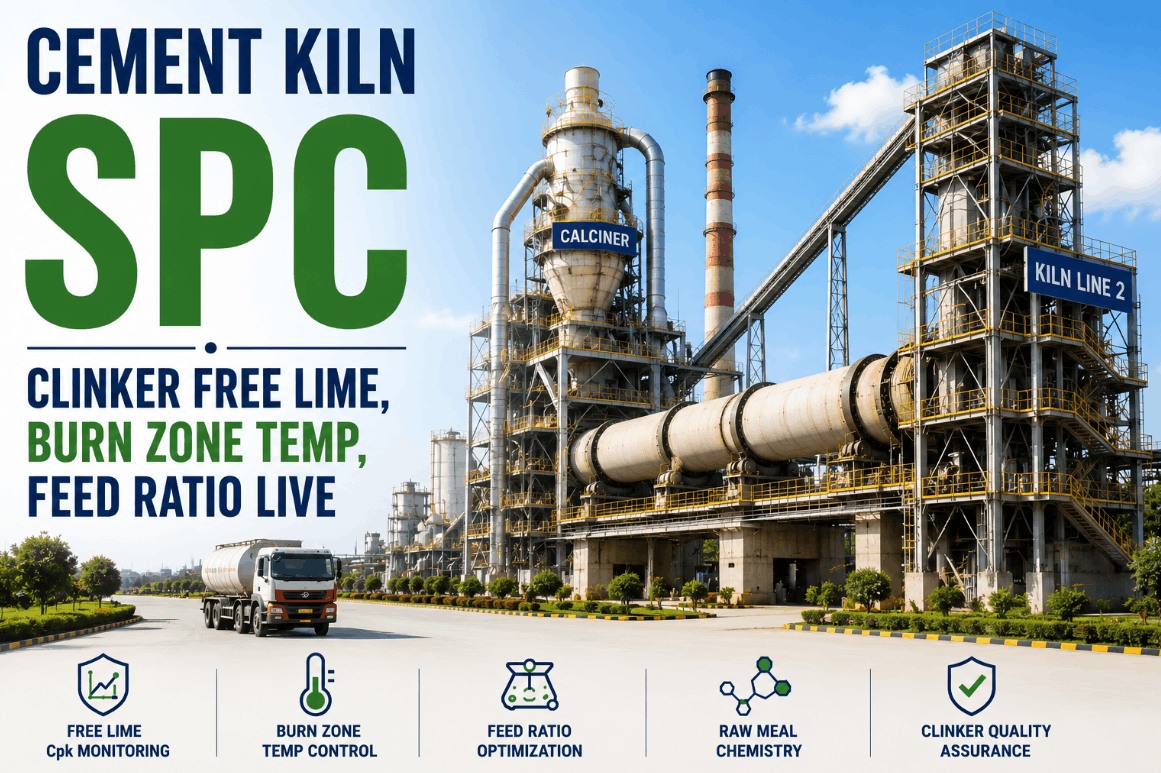
Clinker quality is controlled against a number that arrives too late to control anything. The sample is taken, carried, prepared and analysed, and by the time free lime appears on the screen the kiln has already made another hundred tonnes under conditions that have since changed. Operators compensate the only way they can — by burning harder than necessary, keeping a safety margin of heat that costs fuel on every tonne, every hour, in exchange for not being caught by a high free lime result. iFactory's quality AI predicts free lime, LSF and clinker mineralogy continuously from process data, so the operator is working with a current number instead of an old one.
AI Process and Quality Control for Cement
AI Free-Lime Prediction and Real-Time Clinker Quality Control
Predict free lime, LSF and clinker mineralogy in real time from kiln data. Close the two-hour lab lag, stop burning a safety margin into every tonne, and hold C3S steady instead of chasing it.
Between the sample and the result sits a gap that no amount of laboratory diligence can close, because the delay is in sampling, transport and analysis rather than in the analysis alone. During that gap the kiln has drifted: coating has moved, the fuel has changed calorific value, the raw mix has shifted slightly in burnability. When the result finally arrives it describes clinker that has already gone to the silo, and the operator has to decide whether it still applies. Most respond by holding a margin — a hotter burning zone than the target strictly requires — which is a sensible answer to an old number and an expensive one to pay for continuously. The real problem is not the accuracy of the lab. It is the age of the information.
Prediction Fills the Gap Between Samples
The kiln is producing signals about burnability and burning the whole time. Burning zone temperature, kiln drive torque, NOx, oxygen, secondary air and the feed chemistry entering the system all carry information about how completely the meal is combining. A model trained on those signals against your own lab history can estimate free lime continuously, and reconcile itself every time a real result comes back.
Lab cycle against continuous prediction
The lab stays the reference. The model fills the hours between samples and is corrected by every result that comes back, so the operator always has a current estimate and the lab still sets the truth.
What the Operator Sees
The prediction is only useful if it is specific about now and about what is coming. The quality view reports the current estimate, the direction it is heading, and the process signals that are driving it.
Live clinker quality — kiln 2
Kiln feed chemistryLSF 96.8 · SM 2.52 · AM 1.58
Prediction horizon60 minutes
Free lime now1.1%OK
Free lime in 60 minutes1.9% and risingwatch
Predicted C3S61.4%OK
Burning zone trendcoolingwatch
Agreement with last lab resultwithin 0.15%OK
A small kiln fuel correction now holds free lime inside target. Waiting for the next lab result would mean correcting an hour late, and correcting harder.
Tighter Control Beats Hotter Burning
Fuel savings in the burning zone do not come from running colder. They come from running with less variation, because a tight distribution can sit closer to the target without producing high free lime clinker. Every degree of unnecessary margin is paid for in coal or petcoke and in refractory life, so narrowing the spread is what makes a lower setpoint safe.
Free lime variability before and after prediction
When the spread narrows, the same quality limit can be met with a lower burning zone target. That is where the fuel per tonne of clinker comes from, and why standard deviation is the number worth managing.
What the Quality Model Uses
Four groups of input carry most of the predictive power, and the model weighs them against each other rather than treating any one as the answer.
Raw mix chemistry
LSF, silica and alumina modulus and fineness set how hard the meal is to burn before it ever reaches the kiln.
Burning zone condition
Pyrometer and scanner temperatures, flame condition and secondary air describe the heat actually applied to the bed.
Kiln torque and NOx
Drive torque tracks how the bed is nodulising and NOx tracks flame intensity, two of the earliest indicators of a change in burning.
Lab feedback
Every free lime and XRF result recalibrates the model, so it stays anchored to measured quality rather than drifting.
What Real-Time Quality Control Delivers
Predicting quality changes what the operator can act on, and that shows up in fuel, in consistency and in cement performance.
Faster
Corrections
minutes after the drift starts
Tighter
Free lime spread
less variation around target
Lower
Fuel per tonne
safety margin no longer burnt
Steady
C3S and strength
consistent clinker to the mills
Frequently Asked Questions
How does AI predict free lime without a sample?
It uses the process signals that determine free lime rather than measuring the clinker itself. Burning zone temperature, kiln drive torque, NOx, oxygen, secondary air, feed rate and the chemistry of the kiln feed together describe how completely the meal has combined. The model learns the relationship between those signals and your own lab results, so it can estimate free lime continuously. It behaves as a soft sensor: an inferred measurement that is validated and corrected against the real one.
How accurate is the prediction against the laboratory?
On a well-instrumented kiln with a consistent lab routine, agreement is usually close enough to act on between samples, and we report the validated error on your own data before anyone relies on it. Accuracy is best when the lab record is reliable and sampling is consistent, because the model is only as well anchored as the results it is trained against. It is designed to work alongside the lab, not to replace it.
Does it replace our quality control laboratory?
No, and it should not. The lab remains the reference for certification, for customer specification and for recalibrating the model. What changes is the operator's information between samples: instead of running blind for an hour or two and then reacting to an old number, they see a current estimate and a trend. The lab keeps doing the job it is good at, and the kiln stops being controlled on stale data.
Can it predict LSF, C3S and clinker mineralogy too?
Yes. The same approach extends from free lime to the modulus values and the main clinker phases, because they are driven by the same combination of raw mix chemistry and burning condition. In practice free lime is the one operators act on minute to minute, while predicted C3S and mineralogy matter for cement strength and for coordinating the kiln with the raw mill and the cement mills.
How does it connect to kiln control?
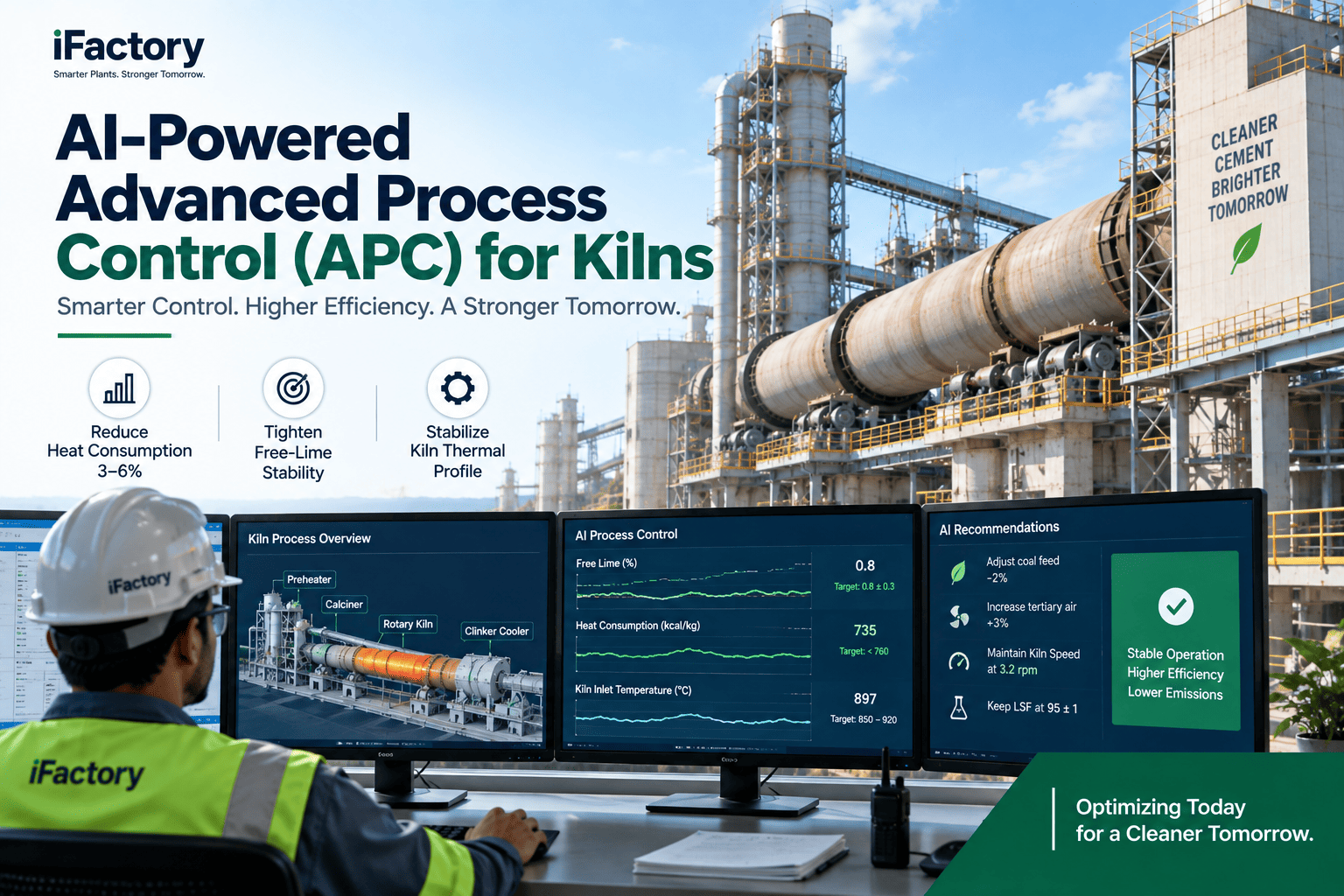
It can run as an advisory display for operators, or feed the prediction into advanced process control so the kiln is stabilised against predicted quality rather than only against temperature. Most plants begin in advisory mode, because trust has to be earned against the lab, and then move the signal into closed loop once the agreement has been demonstrated over a few weeks of real operation.
Stop Controlling the Kiln on a Two-Hour-Old Number.
See Free Lime Predicted on Your Own Kiln Data
Bring your historian tags and your lab record. We'll build the prediction model, show how it tracks your measured free lime, and quantify the margin you are currently burning to stay safe.