Choosing AI vision inspection software for an automotive plant is no longer a question of whether deep learning can find defects. It can. The real questions are harder: can one platform handle every model and trim you build, will it make the same call at 3 a.m. as at noon, will line 2 agree with line 5, and can you prove all of that to your customer’s quality engineer? This guide sets out the criteria that separate a good pilot from a good plant-wide system, how to test them with an attribute study your auditors already recognize, and what to ask every vendor before you sign. To see how iFactory scores against these criteria on your parts, book a short walkthrough.
Best AI Vision Inspection Software for Automotive in 2026: What Actually Separates the Leaders
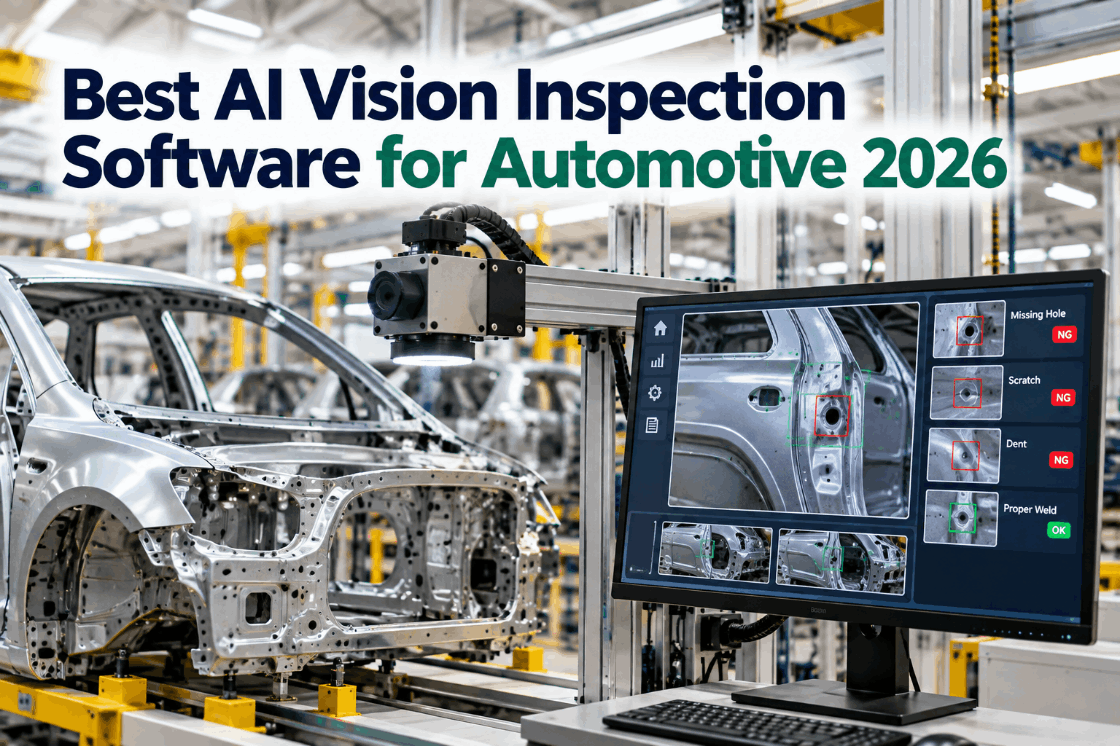
Multi-model deployment, lighting-invariant detection and cross-line calibration, tested with the same attribute study your quality team already uses.
Why Manual and Rule-Based Inspection Fall Short
Visual inspection has always been the weak link in automotive quality. People are good at judging unusual defects, but they tire, drift and disagree. A Sandia National Laboratories study of inspectors checking precision parts found they caught 85% of defective items, missed the rest, and wrongly rejected 35% of acceptable parts. Those numbers come from trained inspectors doing their best, not careless ones.
Traditional rule-based machine vision solved part of the problem. It measures gaps, checks presence and reads codes with great repeatability. It struggles with anything that varies naturally: paint defects on different colours, scratches on grained plastics, weld seams, sealer beads. Every new variant needs new rules, and every lighting change can break them.
Deep learning closes much of that gap, but only when the software around the model is built for a real plant. The rest of this guide is about that software. You can compare your current approach with our engineers.
Where Automotive Vision Is Heading in 2026
Automotive is one of the largest users of machine vision, and spending is rising. Research and Markets values the automotive machine vision market at about US$3.04 billion in 2025 and expects it to reach about US$6.09 billion by 2031, a compound growth rate of roughly 12%. The same report points to deep learning, smart cameras with edge computing, 3D vision for body gap measurement and the complexity of EV battery assembly as the main drivers.
That last point matters for buyers. Tight budgets reward platforms that scale across lines and models without a new project each time. We can walk through a scaling plan for your plant.
Seven Criteria That Separate the Leaders
Most vendors can show an impressive demo on a clean sample set. These seven criteria show what happens after the demo, on a real line with real variation.
| Criterion | What good looks like | Red flag |
|---|---|---|
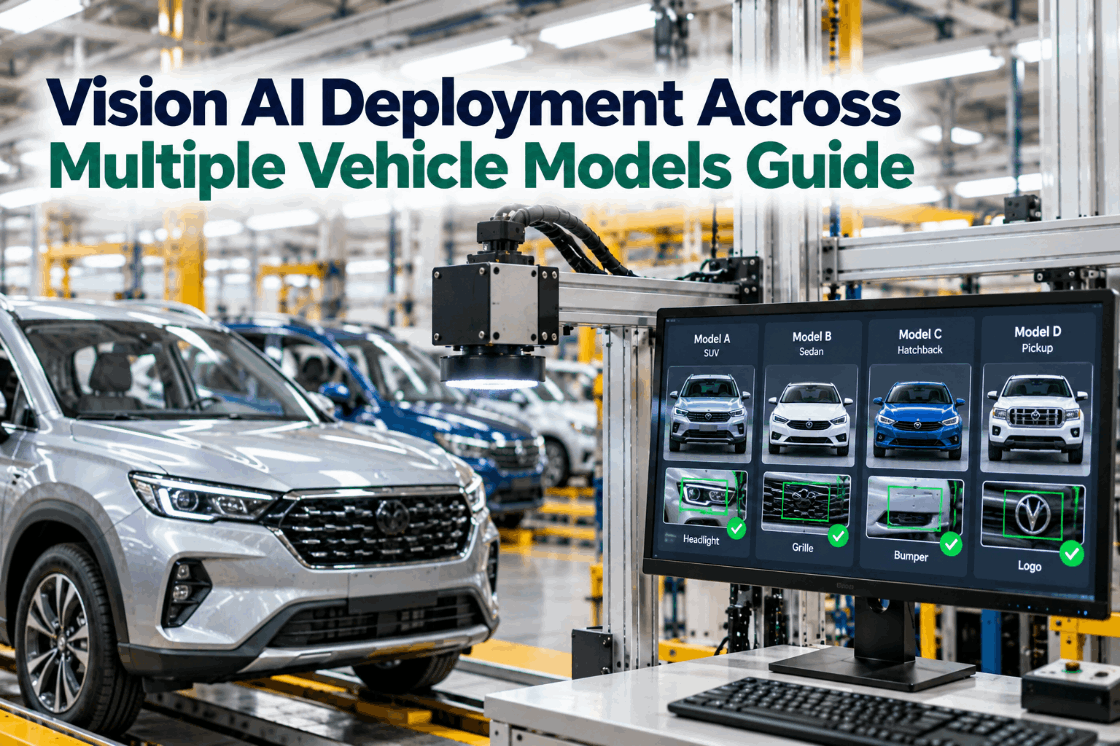
| Multi-model deployment | One platform, model-aware logic, new variants added by fine-tuning | A separate project for each model or trim |
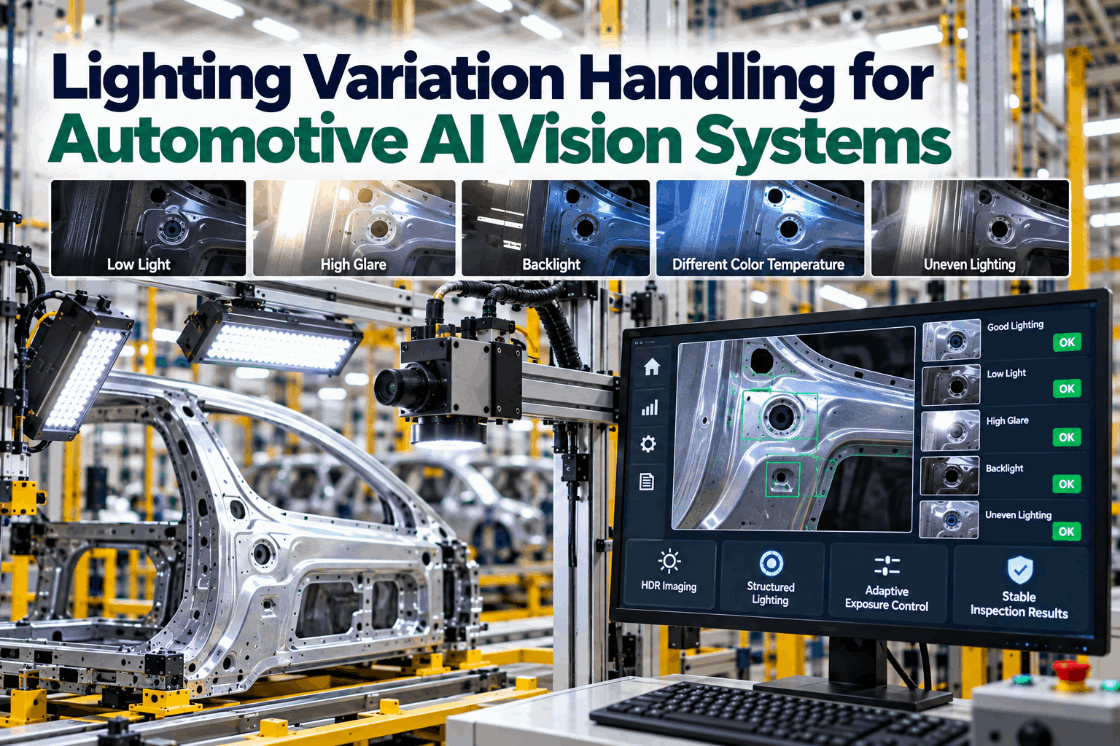
| Lighting invariance | Stable calls across shifts and seasons, drift monitored with reference targets | Accuracy that changes with time of day |
| Cross-line calibration | Same golden set scored on every line with matching results | Each line tuned by a different engineer |
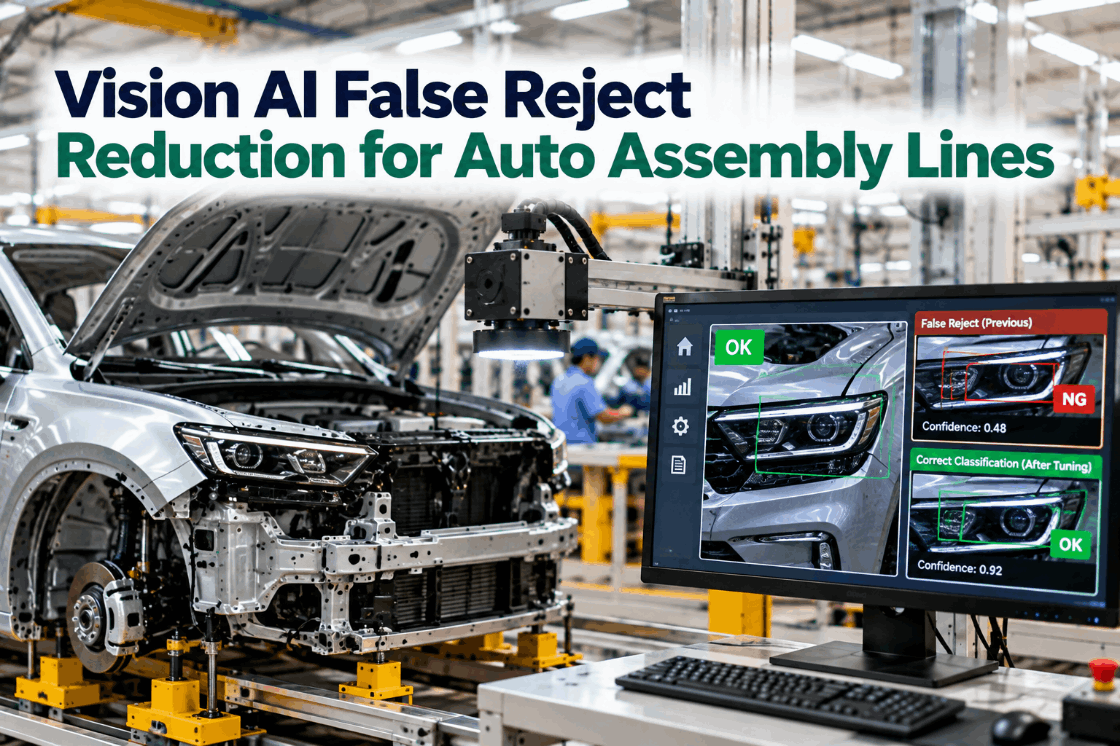
| False reject control | Per-class and per-region sensitivity, reviewed with miss rates | One global threshold for everything |
| Missed defect control | Recall targets per defect class, escapes fed back into training | No process for learning from escapes |
| Change control | Versioned models, validation records, approval before release | Models retrained and swapped without records |
| Integration | PLC reject signals, MES and VIN links, images stored per vehicle | Standalone screens with no line data |
Weight the criteria to your plant. A paint shop cares most about lighting and false rejects; a trim line with many variants cares most about multi-model handling. Our team can help you set the weights.
Rule-Based Vision Versus Deep Learning
The choice is rarely one or the other. Most strong stations combine both, using each where it is strongest.
- Excellent for measurement and presence checks
- Deterministic and easy to explain
- Needs explicit rules for each feature
- Sensitive to lighting and surface changes
- New variants mean new rules
- Struggles with natural variation
- Excellent for cosmetic and irregular defects
- Learns good and bad from examples
- Handles texture, colour and shape variation
- More tolerant of small lighting changes
- New variants added by fine-tuning
- Needs versioning and validation discipline
A typical body-in-white or final line station might use rule-based tools to confirm part presence and measure gaps, and a deep learning model to judge paint, sealer or surface quality. The software should let both run in one station and report one result per vehicle.
Ask vendors to show a mixed station on your parts rather than two separate demos. That request alone separates platforms from point tools, and it is a standard part of our pilots.
Proving Performance With an Attribute Study
Automotive quality teams already have a way to judge inspection systems: the attribute measurement system analysis in the AIAG MSA manual. Apply it to AI vision exactly as you would to human inspectors or a gauge. Build a master set of parts with known status, run them through the system several times, and score the results.
Miss rate = misses ÷ opportunities on nonconforming parts. False alarm rate = false rejects ÷ opportunities on conforming parts. Criteria from the AIAG MSA manual as published by SPC for Excel.
The master set is where most studies go wrong. It needs real defects at the edge of the specification, not just obvious ones, and good parts that show normal variation, including different colours and suppliers. A study built only on easy samples will pass any system and prove nothing.
Run the same master set on every line and after every model release. That turns a one-time study into a standing check of cross-line calibration. We share a master set template with every pilot plan.
What a Plant-Ready Vision System Includes
A model is one component. A plant-ready system needs everything around it to work every shift, on every line, for years.
Industrial cameras with lighting designed for the surface: dome, dark field, polarized or structured light.
Inference on the plant network, close to the line, fast enough to hold the takt time.
Reject, rework and stop signals sent to the line, with interlocks agreed with controls engineers.
Each image tied to the vehicle, model, trim and station, so results follow the car.
Every model version stored with its training data, validation results and approval.
Operators confirm or correct calls; confirmed cases feed the next training round.
When evaluating, ask to see each block on a working line, not a slide. The gaps usually show up in context and governance. Ask our support team for a reference architecture diagram.
Questions to Ask Every Vendor
Use this checklist in demos and reference calls. The answers show quickly whether a platform is built for one station or for a plant.
A strong vendor answers each question with evidence from a running line. Send us your own list and we will answer it in writing before any demo.
How iFactory Meets the Criteria
Shared base models fine-tuned for each vehicle and trim.
Lighting designed per surface, drift tracked with reference targets.
One golden set scored on every line and after every release.
False rejects and misses balanced by defect class and region.
Versioned models with validation and approval records.
PLC signals, MES and VIN links, images stored per vehicle.
It runs beside your existing vision tools and quality systems rather than replacing them. Bring your hardest station and we will show it in a session.
Test Us on Your Hardest Inspection Station
Pick the station that causes the most rework or escapes. We install cameras and lighting, train on your parts and run an attribute study against your master set before you commit.
Paint run flagged on the rear door of VIN ending 4471. Same defect class seen on two bodies from booth 3 this hour.
A Shift Start With iFactory
Here is how a quality engineer might use iFactory at the start of a shift on a final assembly line.
iFactory ships as a pre-configured NVIDIA AI server, racked and ready with the automotive defect detection models loaded. Rack it, plug in power and Ethernet, and the AI is live on your network. Our scope covers cameras and lighting at inspection stations and cells, PLC/SCADA and MES integration, cabling and network setup, operator and quality team training, and 24×7 remote monitoring.
Server installed, cameras and lighting mounted, PLC and MES links live, existing defect images and records loaded.
Models trained on your own parts, paint and variants, then run in shadow on one line with your quality team reviewing every call.
Rollout to the agreed stations under your change control, team training and 24×7 remote monitoring in place.
Hardware, software and integration come as one package. For pricing on your stations, contact our sales team.
Frequently Asked Questions
The best platform is the one that handles every model and trim you build, stays stable across lighting and lines, balances false rejects against misses by defect class, and keeps versioned, validated records for change control. Test it on your own parts, not a demo set.
Run an attribute study from the AIAG MSA manual on a master set of known good and bad parts. Acceptable results are effectiveness over 90%, a miss rate under 2% and a false alarm rate under 5%.
For cosmetic and irregular defects such as paint, sealer and surface flaws, usually yes. For measurement and presence checks, rule-based tools remain excellent. Strong stations often combine both.
Yes, if the platform uses shared base models with fine-tuning for each model and reads build data from MES or the VIN. Ask vendors how long it takes to add a new trim.
Model releases are changes to an inspection process. They should be versioned, validated and approved before release, with records kept, in line with the change control requirements of IATF 16949.
A typical rollout takes 6–12 weeks: installation and data links first, then training and a shadow pilot on one line, then go-live and training. Plan it with our engineers.
Choose a Vision Platform That Works Plant-Wide
iFactory handles every model and trim, stays stable across lighting and lines, and proves its performance with the attribute study your quality team already trusts.
Scored against AIAG attribute study criteria: effectiveness over 90%, misses under 2%, false alarms under 5%.