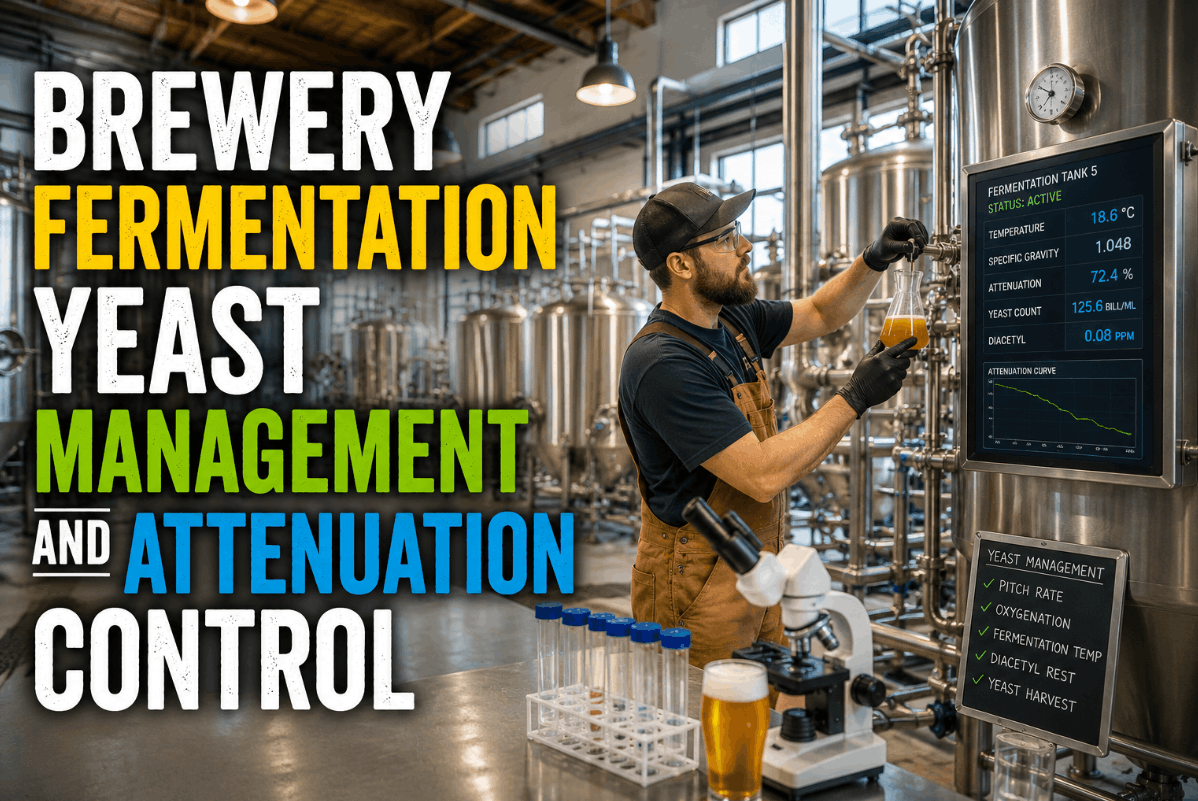
In modern craft and commercial brewing, fermentation is not a passive biological event — it is the most data-intensive, yield-critical stage of the entire production cycle. Yeast viability, pitch rate accuracy, attenuation curve trajectory, and diacetyl rest timing are not just technical parameters; they are the direct determinants of batch consistency, shelf stability, and brand reputation. Yet most breweries still manage these variables through manual gravity readings, paper logs, and reactive corrections that arrive too late to prevent off-flavor development or stuck fermentation. iFactory's industrial AI platform brings real-time fermentation intelligence to the brewery floor — giving brewmasters and production managers the live visibility they need to ship consistent, high-quality batches week after week. Breweries serious about eliminating fermentation variability typically start by booking a platform demo to see how predictive monitoring applies to their specific vessel configurations and yeast strains.
Real-Time Yeast Management for Consistent, Profitable Batches
iFactory's AI platform monitors cell viability, attenuation curves, diacetyl rest windows, and pitch rates — delivering the fermentation intelligence modern breweries need to eliminate variability at scale.
The Hidden Cost of Manual Fermentation Monitoring
Traditional brewery fermentation monitoring relies on scheduled manual gravity pulls, temperature spot-checks, and sensory evaluation — a protocol that was designed for a world where batches took weeks and margin for error was wide. In today's high-throughput craft and regional production environment, that model introduces compounding risk at every stage. A pitch rate that is 15% low on Monday creates an under-attenuated batch discovered on Thursday. A diacetyl rest that starts 8 hours late produces a butterscotch off-note that ends up in 400 barrels. These are not edge cases — they are the most common, most expensive quality failures in modern brewing operations. iFactory addresses this by placing continuous sensor intelligence directly on fermentation vessels, creating an always-on data layer that captures the biological dynamics of yeast behavior in real time. Production managers who Book a Demo consistently identify that their largest quality losses trace back to gaps in fermentation visibility — not ingredient quality.
Delayed Detection
Manual gravity readings taken every 12–24 hours miss the critical inflection points of attenuation curves, leaving stuck fermentations undetected for half a day or more.
Paper Log Gaps
Paper-based TPM logs and shift handover notes fail to capture continuous temperature drift, CO₂ evolution rate, or ramp timing with the precision needed for consistent replication.
Reactive Corrections
Without predictive alerts, brewmasters intervene after a problem has already developed — raising temperatures, re-pitching yeast, or extending rest periods under time pressure.
Generation Drift
Without automated generation tracking per yeast strain, breweries overpitch aged cultures with declining viability, silently degrading fermentation performance across successive crops.
Key Data Elements: What iFactory Monitors Across Every Fermentation Vessel
Effective yeast management requires tracking a specific set of biological and process parameters in continuous, correlated streams — not as isolated point-in-time measurements. iFactory's sensor integration layer captures the full picture of fermentation health and translates raw IoT data into actionable brewmaster intelligence.
| Parameter | What It Measures | Why It Matters | iFactory Capability |
|---|---|---|---|
| Yeast Cell Count & Viability | Cells/mL and % live cells at pitch | Under-pitching causes slow starts; over-pitching stresses yeast, reduces ester expression | Lab input integration with pitch rate calculation and alert on deviation |
| Specific Gravity (Continuous) | Real-time attenuation curve via inline sensors | Identifies stuck fermentation 8–12 hours before manual sampling would catch it | Live SG trend with predictive FG arrival window |
| Fermentation Temperature Profile | Vessel jacket, cone, and headspace temperatures | Temperature deviation alters ester/fusel alcohol balance and diacetyl production rate | Multi-zone continuous logging with ramp/crash schedule automation |
| Diacetyl Rest Window | Timing and duration of warm conditioning phase | Insufficient VDK rest produces butterscotch off-flavors in finished beer | AI-triggered rest initiation based on gravity slope and temperature correlation |
| Yeast Generation Count | Number of crops harvested per strain lot | Genetic drift and mutation accumulate with generation; most strains degrade beyond 5–7 crops | Per-strain generation registry with automatic retirement flag |
| CO₂ Evolution Rate | Pressure differential and off-gas rate | Correlates with fermentation activity; sharp drops signal yeast stress or nutrient depletion | Pressure trend analytics with anomaly detection |
| Ester & Fusel Profile Index | Estimated flavor compound development based on temp/pitch data | Allows replication of signature ester profiles across batches and facilities | Predictive flavor index model per recipe and strain |
Understanding and Controlling the Attenuation Curve in Real Time
The attenuation curve — the trajectory from original gravity (OG) to final gravity (FG) — is the most information-dense signal in brewery fermentation. Its shape, slope, and terminal behavior tell an experienced brewmaster more about yeast health and batch outcome than any individual measurement. iFactory converts this curve from a manual, retrospective data series into a live, predictive instrument. The platform's continuous gravity integration generates a rolling attenuation curve updated every few minutes, allowing production teams to detect deviations from the expected trajectory within hours of their onset. Craft breweries scaling to multi-vessel production regularly Book a Demo to understand how attenuation monitoring eliminates the batch-to-batch gravity variance that drives packaging rework and TTB compliance issues.
Pitch Point Verification (0–2 hrs)
iFactory logs OG at pitch, confirms wort temperature within tolerance, and validates pitch rate against cell count data. Any deviation triggers an immediate alert before fermentation begins.
Lag PhaseExponential Growth Phase Monitoring (6–36 hrs)
Continuous gravity slope tracking confirms healthy attenuation velocity. iFactory benchmarks the slope against historical data for the same recipe and strain, flagging anomalies such as premature flattening or excess CO₂ pressure buildup.
Primary FermentationDiacetyl Rest Trigger (Gravity Slope < 0.2°P/hr)
Rather than initiating the diacetyl rest on a fixed schedule, iFactory triggers it when the gravity curve enters its terminal deceleration phase. This data-driven approach ensures VDK reduction without wasting tank time on premature conditioning.
Conditioning WindowTerminal Gravity Confirmation & Crash Authorization
iFactory compares live FG against target, calculates apparent and real attenuation, and issues a crash-cool authorization signal only after two consecutive stable gravity readings confirm completion. Packaging delays caused by premature crash are eliminated.
Completion VerificationClosing the Loop on Yeast Propagation and Generation Tracking
For breweries using house yeast strains or managing multiple strains across production schedules, the propagation and crop management workflow is a second, parallel source of fermentation risk. Poor generation discipline, inaccurate cell count records, and ad-hoc harvest timing introduce variability that no amount of fermentation monitoring can fully compensate for. iFactory integrates yeast management as a first-class data domain within its platform — linking propagation records, harvest logs, viability measurements, and generation counts to the fermentation batches they directly influence. This closed-loop traceability allows production managers to correlate batch-to-batch quality trends with specific yeast lot characteristics, identifying when a strain is degrading well before sensory panels or consumer feedback surfaces the problem. Operations teams who Book a Demo regularly find that iFactory's yeast genealogy module becomes one of the highest-value tools in their quality assurance workflow.
Strain Registry & Genealogy
Each yeast strain is registered with its origin lot, supplier certificate, and initial viability profile. Every subsequent crop is linked to its parent, creating a full genealogical record that supports traceability audits and quality investigations.
Pitch Rate Calculation Engine
iFactory calculates the required pitch volume based on wort volume, OG, and target cell rate (typically 0.75–1.0M cells/mL/°P for ales, 1.5–2.0M for lagers), then cross-references against measured cell count to flag over- or under-pitch scenarios before tank loading.
Viability Trending per Crop
Cell viability data (hemocytometer or automated cell counter inputs) is logged against each crop number. iFactory identifies declining viability trends before they reach the critical threshold, prompting propagation or fresh pitch sourcing with sufficient lead time.
Harvest & Storage Condition Logging
Yeast harvest time post-crash, slurry temperature during storage, and holding duration before re-pitch are all tracked. iFactory flags slurry that has exceeded optimal storage windows, preventing stressed or autolyzed yeast from entering production tanks.
Measurable Impact: What Data-Driven Fermentation Management Delivers
The operational and financial case for continuous fermentation intelligence in a production brewery is grounded in recoverable losses that most facilities can quantify within a single quarter. The following metrics reflect outcomes achieved by food and beverage manufacturers using iFactory's AI-driven process monitoring platform across fermentation-intensive production environments.
"We were running six 120-barrel fermenters on two house strains, pulling gravity every 12 hours and calling it good. The first time we saw a live attenuation curve plateau at 1.018 when our target was 1.010, with eight hours until we would have manually caught it, we understood the value immediately. iFactory doesn't just give you data — it gives you time to act before the batch is already compromised."
Brewery Fermentation Yeast Management — Frequently Asked Questions
How does iFactory monitor yeast viability without a lab integration?
iFactory accepts manual lab input for cell count and viability data and integrates those values into its pitch rate and generation tracking models, so even breweries without automated cell counters gain the full benefit of structured yeast records.
Can iFactory trigger a diacetyl rest automatically based on fermentation data?
Yes — iFactory can issue an automated alert or trigger a setpoint change to glycol control systems when the gravity slope and temperature profile indicate the optimal VDK rest entry point, based on recipe-specific thresholds you configure.
What sensors are needed on a fermentation vessel to use the platform?
At minimum, a continuous gravity sensor (such as an inline density transmitter or tilt-style device) and vessel temperature probes are required; iFactory also integrates pressure sensors and CO₂ off-gas meters for a more complete picture.
How does iFactory help manage multiple yeast strains across a production schedule?
Each strain is registered independently in iFactory's yeast registry, with its own generation count, viability history, and pitch rate benchmarks, allowing brewmasters to manage house strains and guest pitches from a single dashboard.
Is iFactory's fermentation module suitable for lager production with extended lagering schedules?
Absolutely — iFactory's temperature profile logging and extended timeline tracking are well-suited to lager fermentation, including the precision temperature ramp management and prolonged conditioning visibility that lager schedules require.
The Brewery That Sees Its Fermentation Wins Every Batch
Fermentation is the one stage in brewing where biology, chemistry, and process control intersect at the highest level of complexity — and where the consequences of inadequate monitoring compound fastest. Yeast viability at pitch, attenuation trajectory through primary fermentation, diacetyl rest timing, and generation discipline are not independent concerns; they are a single, continuous system that must be managed with the same data rigor applied to any other industrial process. iFactory gives production breweries the platform to do exactly that: continuously, at scale, and with the predictive intelligence needed to intervene before losses occur. Whether you operate two tanks or two hundred, the value proposition is the same — consistent fermentation produces consistent beer, and consistent beer builds durable brands. To see how iFactory applies to your specific vessel setup and yeast program, Book a Demo with our food and beverage production team.
Stop Managing Fermentation Blind. Start Winning Every Batch.
iFactory's AI platform delivers real-time attenuation curve monitoring, yeast viability tracking, and diacetyl rest intelligence — purpose-built for production breweries that compete on quality and consistency.