A CHIPS Act greenfield fab under the 2022 Creating Helpful Incentives to Produce Semiconductors Act (P.L. 117-167) — 19 companies funded with $30.7B across 40 projects as of January 2025 — carries first-day quality and traceability expectations that traditional post-ramp retrofits can't meet. Auditors, customers, and CHIPS Program Office reviewers look for genealogy-linked SPC discipline from first qualification wafer, not from year two after the escapes started forcing it. Overlay SPC and lot genealogy designed in during Sprint 0 (before ramp) turns qualification-lot escapes from crisis events into contained, auditable events with recall scope measured in specific lots rather than blanket recalls.
iFactory / CHIPS greenfield quality stack
Design Closed-Loop SPC and Genealogy Before First Qualification Wafer
Overlay SPC, capability-aware alerts, and lot genealogy designed into the greenfield quality stack in Sprint 0 (before ramp) — surfacing OOC events with named lot scope, capability triggers on Cpk crossings, and audit-ready traceability from first qualification wafer.
S0
Discovery · 2wk
Feeds, IDs, lineage keys
S1
Pilot · 3wk
3 process steps · X-bar/R · MES holds
S2
Lockdown · 4wk
Cpk ≥ 1.33 baseline · genealogy audit · ramp-ready
Sprint 0-2
pre-ramp deploy
Cpk ≥ 1.33
capability targets
First-wafer
genealogy audit
The Problem in Greenfield Quality Retrofits
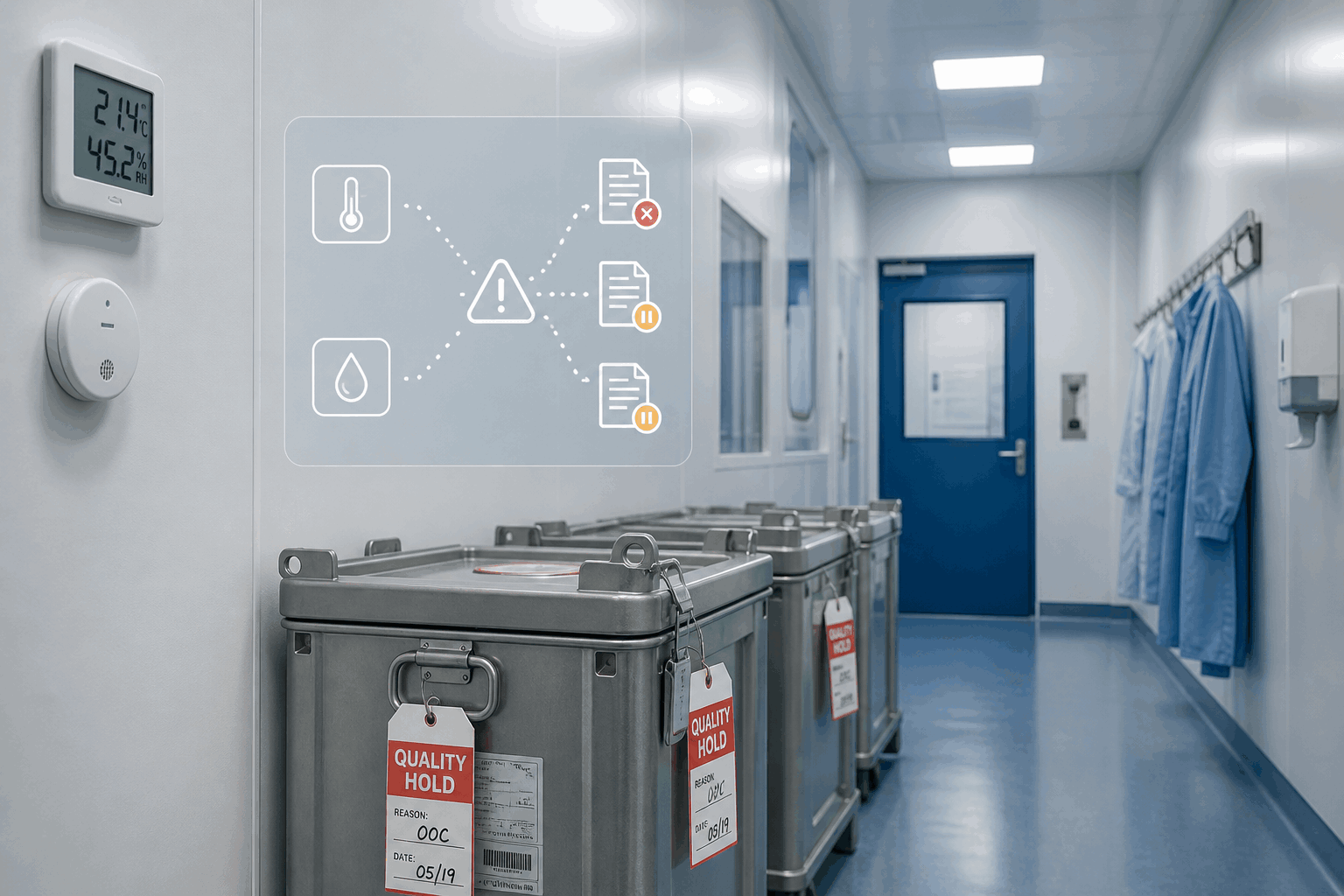
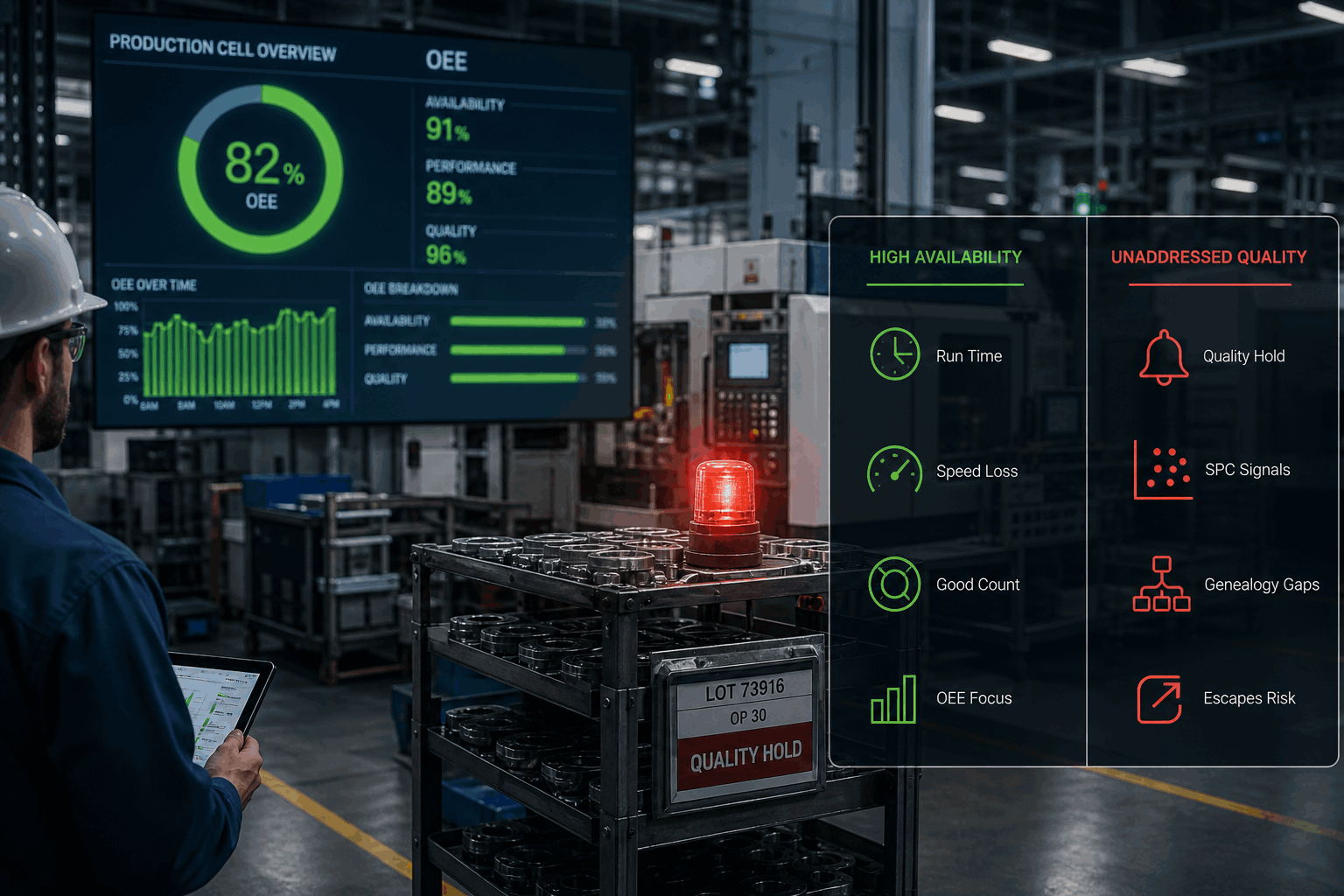
A typical greenfield semiconductor fab reaches first qualification wafer with MES, LIMS, QMS, and historian in place, but with SPC discipline and lot genealogy still being wired up. Detection happens; containment lags because MES hold flags aren't yet triggered by SPC events; CAPA workflows aren't yet linked to affected lot scope; audit trails require manual assembly from disparate systems. First qualification-lot escape reveals the gap; customer or CHIPS Program Office audit surfaces the traceability shortfall; retrofit begins under pressure. CHIPS Act facilities under P.L. 117-167 face heightened scrutiny — 25% investment tax credit conditions and $39B grant program monitoring both look for traceability discipline from day one, not from year two.
Where Greenfield Quality Stacks Actually Slip
Greenfield fab quality stack failure modes are consistent across CHIPS Act and comparable new-build fabs. Each is a specific design gap that closes cheaply pre-ramp and expensively post-ramp.
SPC not wired to MES
Historian-based SPC runs; MES lot holds require manual entry. First qualification escape sits until manual containment posts. Retrofit costs 3-5× pre-ramp implementation.
Genealogy joins unindexed
MES traceability captures lot-to-material-to-step but joins aren't indexed for query. Recall scope query takes hours; audit response strains.
Capability targets absent
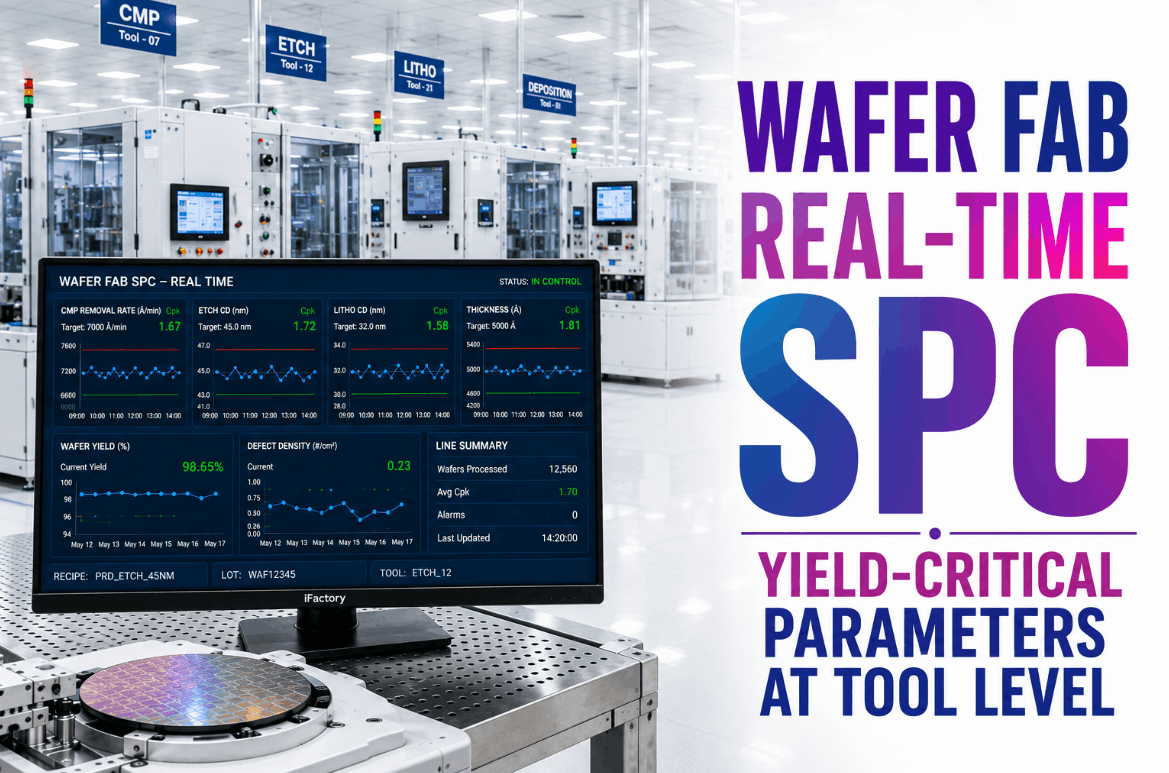
Cpk ≥ 1.33 target for critical characteristics and ≥ 1.67 for CTQ not enforced at gate. Processes ramp without capability baseline; drift invisible until yield impact.
Attribute vs variable mix
Wafer-level electrical tests attribute; supplier substrate variable. Attribute SPC (p-chart, np-chart) not deployed alongside variable SPC; supplier issues surface late.
What Good Looks Like in Greenfield Quality
A working greenfield quality stack holds four disciplines together — SPC-to-MES wiring in Sprint 1, capability targets from qualification, genealogy indexed for audit query, attribute + variable SPC parallel.
SPC-to-MES Live
OOC signals drive MES lot hold flags automatically from qualification lot 1. Not manual entry. Cost curve favours pre-ramp implementation heavily.
Wired, not manual
Capability Targets
Cpk ≥ 1.33 for critical characteristics, ≥ 1.67 for CTQ. Enforced at process qualification and monitored per tool/recipe/shift. Baseline established before ramp.
Gated, not aspirational
Indexed Genealogy
Lot-to-material-to-tool-to-shift-to-operator traceability with pre-indexed joins. Recall scope query returns in seconds; audit response ready from qualification.
Query, not walk
Attribute + Variable
Variable SPC on process parameters plus attribute SPC on test outcomes. Supplier issues and process drift surface via appropriate chart type. Both from Sprint 1.
Parallel, not sequential
How iFactory AI Fits
iFactory AI overlays greenfield semiconductor stack — MES (Applied Materials E3, Camstar, SmartFactoryRx), historian (PI, Aveva), YMS, and QMS — designed into the deployment sequence during Sprint 0-2, not retrofitted after first escape.
Sprint-Phased Deploy
Overlay + Program
Sprint 0 discovery (2 weeks): data feeds, identifiers, lineage keys. Sprint 1 pilot (3 weeks): 3 process steps with X-bar/R and MES hold. Sprint 2 lockdown (4 weeks): Cpk baseline, genealogy audit, ramp-ready.
Rule Engine
Overlay Layer
Nelson and Western Electric rules per parameter, per tool, per recipe. Severity tiers distinguishing advisory (operator ack) from immediate-hold (auto containment). Configurable per process step.
MES Hold Bridge
Overlay + MES
Rule fire drives MES lot hold via API from Sprint 1. Standard MES transaction chain. Downstream MES workflows (release gating, cross-tool notification) preserved.
Genealogy Engine
Overlay + MES/YMS
Pre-indexed lot-to-material-to-tool-to-shift joins. Query returns implicated substrates, reticles, tool serials, operators in seconds. Audit-ready from qualification lot.
If the greenfield ramp plan lists quality-stack integration as "post-ramp" or "after first customer qualification," ask what the plan is for the first escape that happens before then. Because it will happen, and closed-loop SPC costs 3-5× more to retrofit than to design in during Sprint 0-2. Book a greenfield quality stack review.
9-Week Greenfield Quality Stack Pilot (Sprint 0-2)
One greenfield fab, three process steps for pilot scope, nine weeks total across three sprints. The pilot delivers wired closed-loop SPC and indexed genealogy for pilot steps and the deployment pattern for remaining process coverage.
Sprint 0 · 2 wk
Discovery
Critical-path mapping for pilot product family. 3 priority process steps identified. Data feeds from historian and MES instrumented. Identifiers, timestamps, lineage keys defined.
Sprint 1 · 3 wk
Focused Pilot
X-bar/R on thin-film thickness, deposition rate. Immediate-hold rules with MES lot hold integration. Two production-equivalent lots run under pilot with operator feedback loop.
Sprint 2 · 4 wk
Expand + Lock
Attribute p-chart on incoming substrate; wafer-test defect escape monitoring. CAPA auto-creation with implicated lots. Genealogy queries validated across all 3 steps. Advisory rules with high confidence promoted to auto-containment.
Ongoing
Extend Coverage
Post-pilot sprints extend to lithography, CMP, final test. Governance and release authorities defined. Automation scope expands as organizational backing solidifies.
Who Owns the KPI
Greenfield quality stack crosses fab quality, process engineering, MES/IT, and CHIPS program office reporting. Each function owns a specific KPI or the stack retrofits post-ramp.
Greenfield Quality Lead
First-pass yield through qualification
Owns the outcome — first-pass yield during qualification through customer sample lots. Closed-loop SPC catches drift before capability drops.
Process Engineering
Cpk at process qualification
Owns the capability gate — Cpk ≥ 1.33 critical characteristics, ≥ 1.67 CTQ at process qualification. Non-negotiable at release.
Manufacturing IT
MES-Overlay integration reliability
Owns the integration — MES hold flag automation live from Sprint 1. Enterprise system integrity preserved.
Program Office Liaison
Audit-ready lineage query time
Owns the traceability outcome — genealogy query response time for customer or CHIPS Program Office audit. Seconds from qualification lot.
FAQ
Does this require our MES/YMS/LIMS to be fully validated before starting?
No — overlay integration begins as MES/YMS/LIMS come online during commissioning. Sprint 0 discovery starts when data feeds are stable enough to read; Sprint 1 pilot begins when MES lot IDs and process step timestamps are consistent. Overlay progresses in parallel with enterprise system validation.
How does this align with CHIPS Program Office reporting requirements?
CHIPS Program Office reporting focuses on capacity, capability, and workforce metrics; traceability discipline supports capability reporting and readiness for audit. Overlay-generated capability baselines, genealogy audit responses, and CAPA closure records provide the substantive evidence behind capability claims.
What happens when we bring on the second-generation product line after ramp?
Second-generation product line follows the same Sprint 0-2 pattern — discovery, focused pilot on priority process steps, lockdown to capability baseline and genealogy audit. Existing overlay infrastructure extends; per-product configuration adds without rebuilding the stack.
Book a demo to see the Sprint sequence.
Design closed-loop quality before first qualification wafer.
Sprint 0-2 Quality Stack Design for One Greenfield Line
Bring your greenfield ramp plan, target product families, and current MES/YMS/QMS commissioning schedule. We'll walk the Sprint 0-2 sequence, capability target framing, and pre-ramp closed-loop deployment pattern.
Cpk gates
at qualification