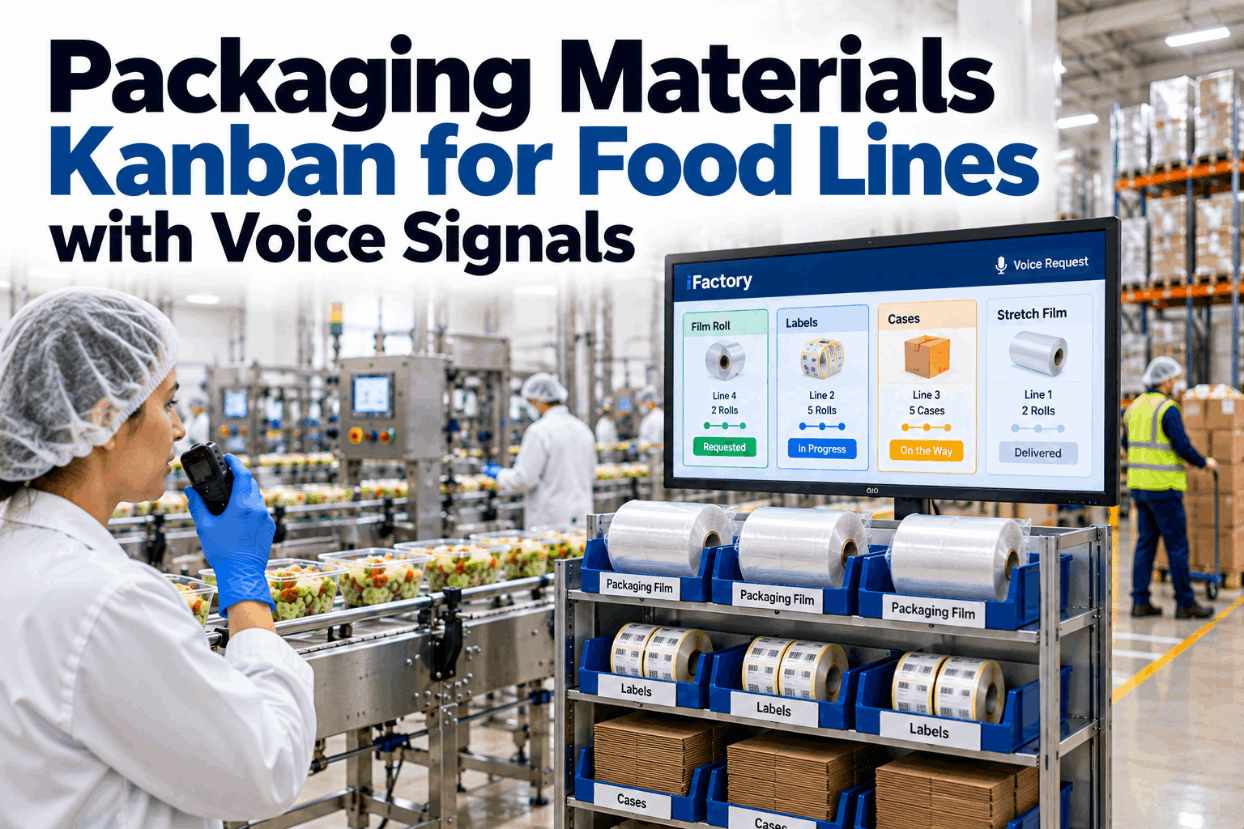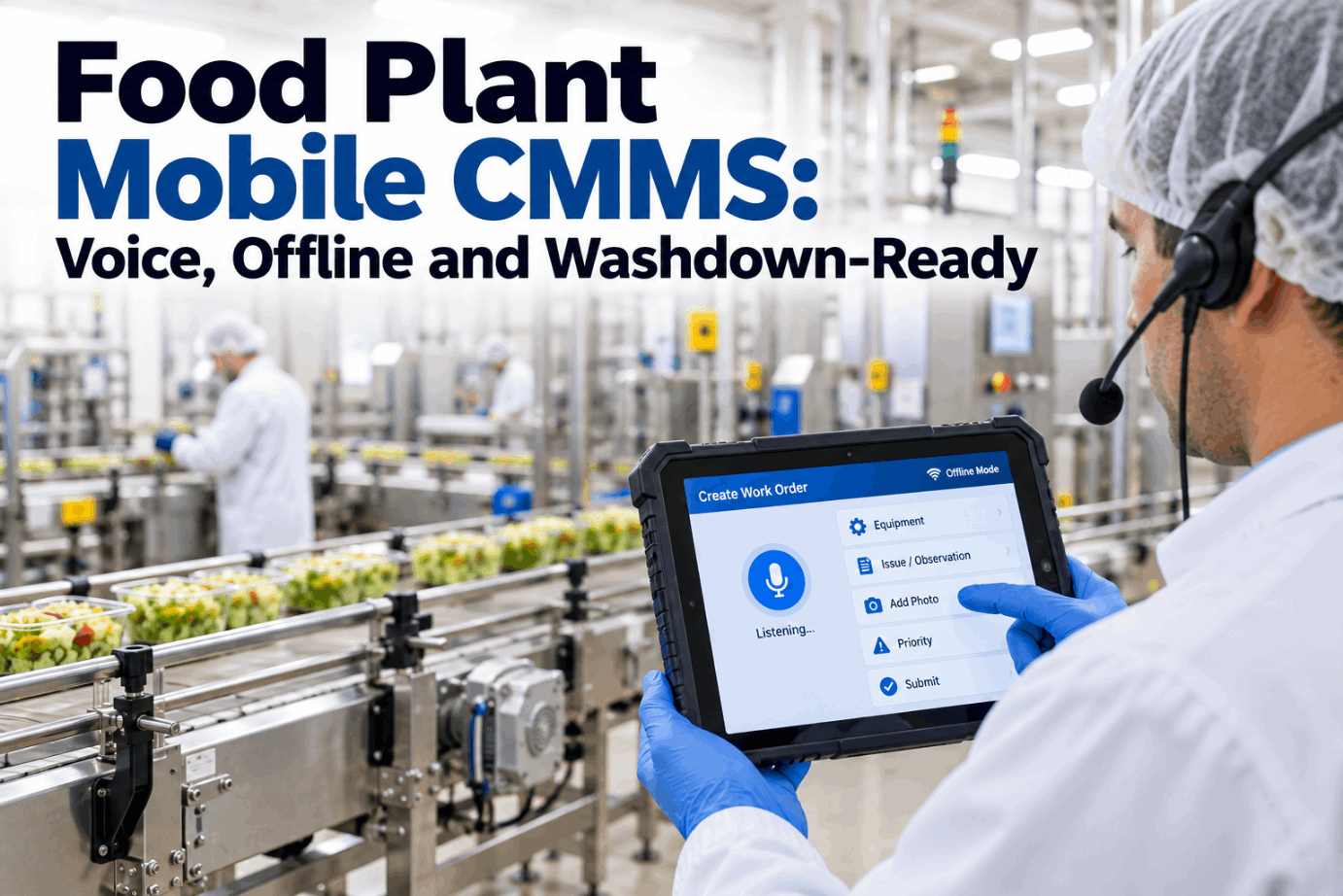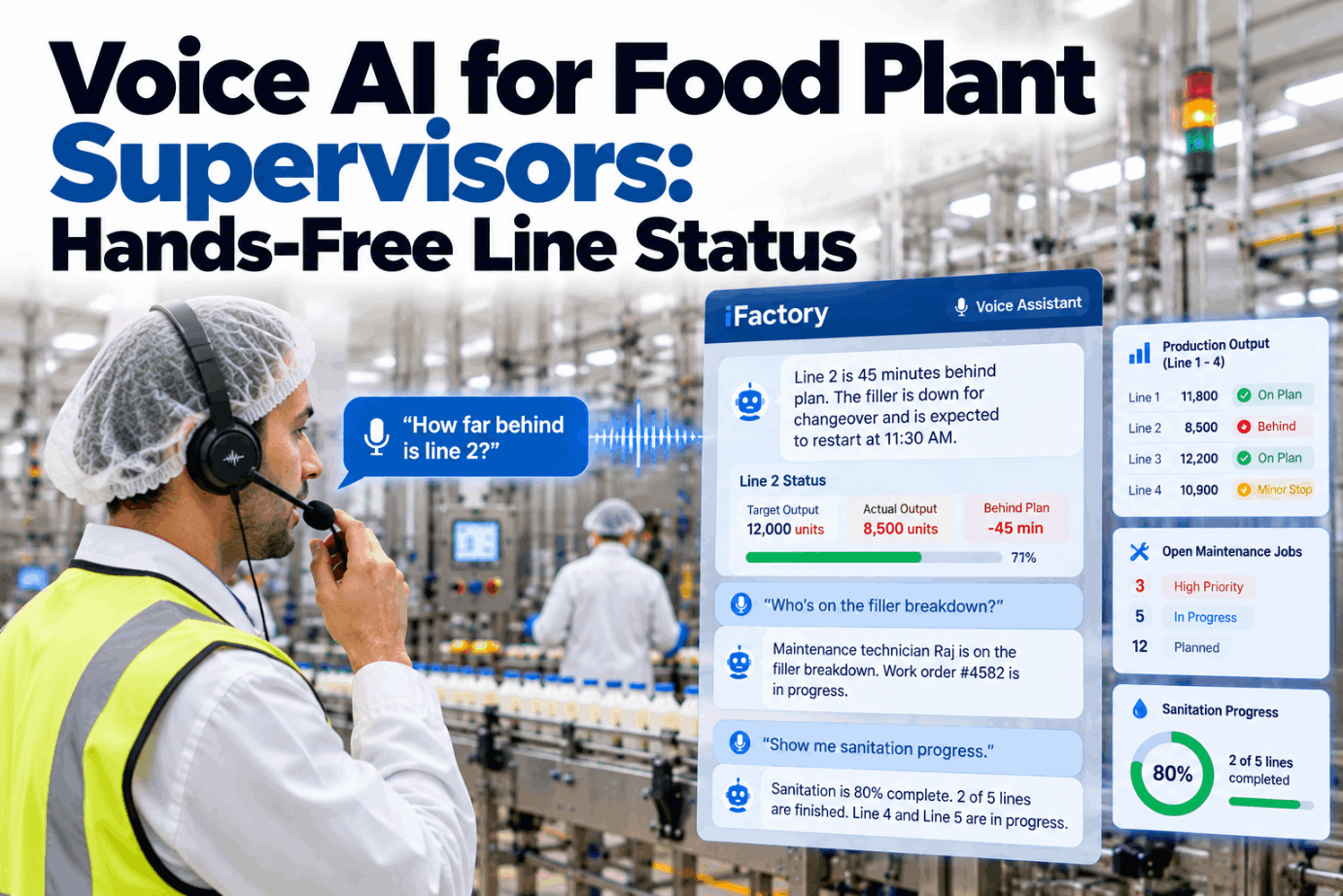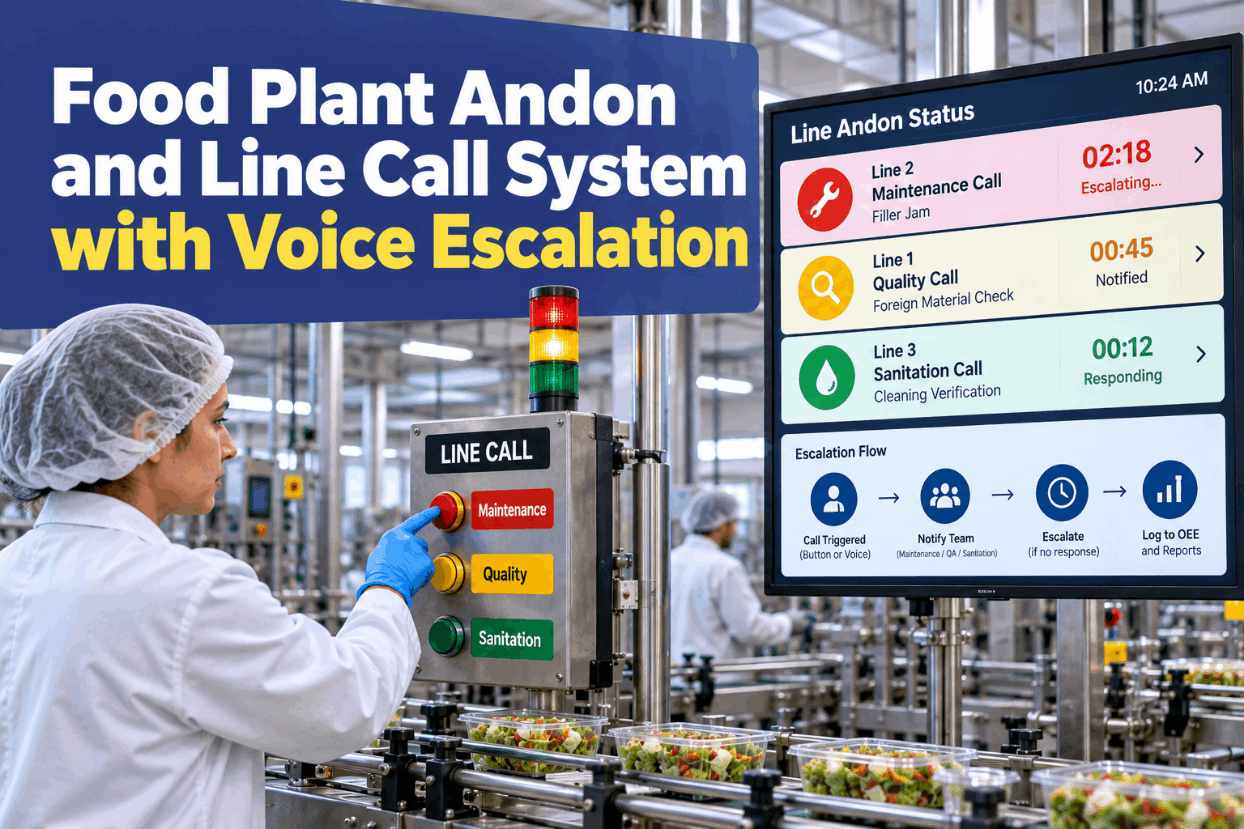
On a packing line, the minutes that hurt most are the ones spent waiting: a filler jammed while the technician is at the far end of the hall, a failed seal check while QA is in a meeting. A food plant andon system turns each problem into a call with a type, an owner and a clock, and escalates it when nobody answers in time. Hear a call routed and escalated in a short line call demo.
Every Line Call Reaches the Right Person, and Climbs Until Someone Answers
iFactory Andon + Escalation Agent takes a line call by button or by voice, routes it to maintenance, QA, sanitation or materials, and starts an escalation timer. Response times flow straight to the OEE and tier boards.
Cord, Button, Voice or Machine: Four Ways to Raise a Call
Andon began in the Toyota Production System as part of jidoka: anyone who sees a problem can call for help, and if it is not fixed within the cycle, the line stops at a fixed position. Food lines rarely use a pull cord, since guarding, washdown and long conveyors get in the way. Most use buttons, voice or signals from the machine itself, and many combine them. Choose your call methods with our support team.
Route Each Call by Issue Type, Not to Everyone
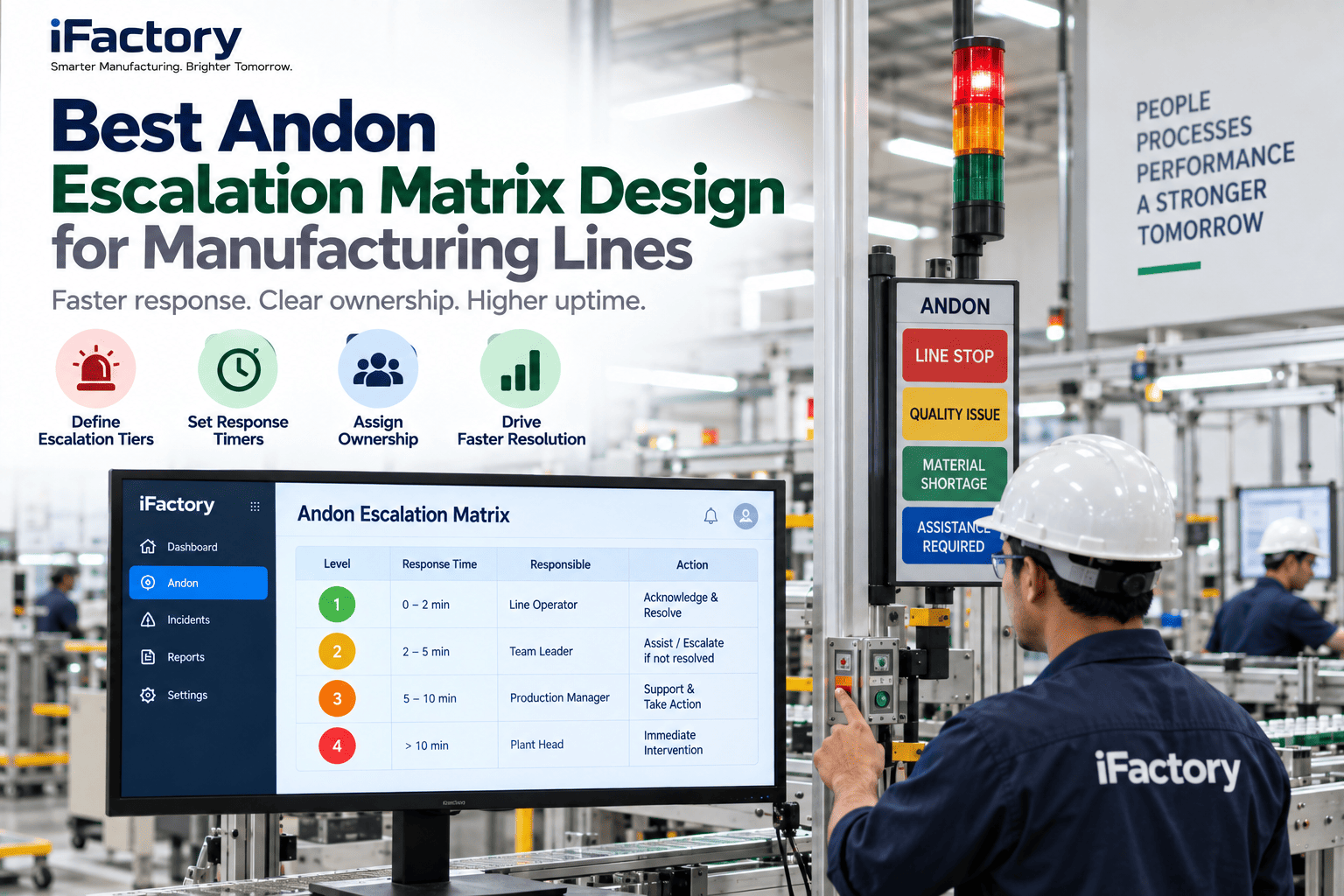
A call that goes to everyone gets answered by no one. A line call system should first ask what kind of problem this is, then send the call only to the people who own that type. In most food plants that means four call types, each with its own first responder and its own effect on the line. Map your call types and responders in a routing session.
Escalation Timers That Climb One Tier at a Time
Every call starts a clock. If the first responder does not reach the line in time, the call moves up a tier, and it keeps climbing until someone owns it. The timers below are example settings, not standards. Set yours from how long each call type can wait before it costs product or puts food safety at risk, which is why QA and sanitation calls usually get the shortest clocks. Tune your own timers with our support team.
A Line Call You Can Make Without Letting Go of the Product
Operators call by button or by voice. The Andon + Escalation Agent reads the issue type, routes the call, confirms back to the caller and starts the escalation timer. Every response time lands on the OEE and tier boards.
When a QA Call Stops the Packer
A QA call is not a breakdown. The machine may run perfectly while it packs product that should not ship, so the safe default is to hold packing and isolate everything made since the last good check. The call record then becomes part of the batch history: who called, when packing stopped and who released it. Walk through a QA hold in a QA call demo.
Spill Calls and Allergen Calls Need Different Rules
Both start as a sanitation call, but they end very differently. A spill of the product being run is mostly a slip and hygiene issue: clean, check and carry on. Contact with an allergen not declared on the current product is a food safety event that needs a stop, isolation, a full clean and QA sign-off before restart. The system should ask which one it is up front. Set up both paths with our support team.
- Area coned off, line slowed if needed
- Cleaned with the area's normal method
- Sanitation lead confirms the floor is safe
- Call closed by sanitation, no QA step
- Line stopped and affected product held
- Cleaned to the allergen changeover standard
- QA verifies the clean, for example with a swab
- Restart only after QA release is logged
Five Timestamps Behind Every Call
Response time and resolution time sound simple, but plants measure them differently, which makes trends meaningless. Define both once, from timestamps the system records on its own. Response time runs from call opened to responder on site. Resolution time runs from call opened to issue resolved. See the timestamps on real calls in a tracking walkthrough.
Every Call Ends as a Loss Reason on a Tier Board
A call that closes without a reason is lost data. When each call closes with a loss category, the andon log becomes an honest record of where OEE goes: maintenance calls mostly feed availability, materials and short-stop calls feed performance, and QA calls feed quality. Tier meetings then work from the same record, from the line huddle to the plant review. Link your calls to OEE with our support team.
Avoid Alarm Fatigue Before It Starts
An andon that sounds all day stops being heard. Process alarm guidance offers a useful warning: EEMUA 191 treats more than 10 new alarms in 10 minutes as a flood, and around 12 alarms an hour is often quoted as the most one operator can manage. Line calls are not process alarms, but the lesson carries over: fewer, clearer calls get faster answers. Review your call volumes in a call design session.
Too few calls can mean operators have stopped calling, not that the line is perfect. Lean Blog recounts a 2007 BBC report of about 2,000 cord pulls a week at Toyota's Georgetown plant, a sign of how often a healthy andon gets used.
Five Steps to the First Live Line
Start with one line and four call types, and add more only when the first line runs well. Agree responders and timers with the people who will carry the headsets, not only their managers. Get a starter plan from our support team.
Size the Value of Shorter Waits With Your Own Numbers
The measurable value of a line call system is time not spent waiting for help. Replace each assumed input with your own figures, and treat the result as line time, not cash, until you apply your own value per line minute. Build the full case with our operations team.
Multiply by your own value per line minute. Faster QA holds and allergen responses also limit how much product is at risk, but leave that out of the sum unless your records support a figure.
A Weekly Andon Review in One Picture
The illustrative week below shows the view plant managers tend to use most: median response time by call type. A long bar usually points to a staffing or routing gap, not a slow crew. Set your targets with our support team.
Call Points, Headsets, Agent and AI Server in One Package
iFactory delivers the Andon + Escalation Agent as a turnkey bundle: call buttons and voice headsets for the line, routing and escalation set up for your call types, and links to the OEE and tier boards. A pre-configured NVIDIA AI server ships racked and ready with the voice and escalation models pre-loaded, so calls are understood on site. You rack it, plug in power and Ethernet, and the AI is live. Scope it for your lines with a turnkey quote.
- Pre-configured NVIDIA AI server, racked and ready
- Call buttons and stack lights chosen for your washdown
- Voice headsets for operators and responders
- Call types, routing and escalation tiers set up
- PLC links for machine-raised calls
- Response and resolution data on OEE and tier boards
- 24×7 remote monitoring of models and hardware
Call types, responders and timers agreed. Buttons, lights and server installed.
One line live, timers tuned from real call data, callers and responders trained.
Remaining lines live, tier board links on, weekly andon review started.
Andon and Escalation Built for Food Lines
iFactory treats a line call as the start of a record, not just a light. Our support team can walk you through a pilot plan.
What Plant Managers Ask About Andon in Food Plants
Shorter Waits, Clearer Calls, a Record of Every One
Route each line call to the right responder, escalate it on a clock and send every response time to your OEE and tier boards. The full system is delivered turnkey and goes live in 6 to 12 weeks.