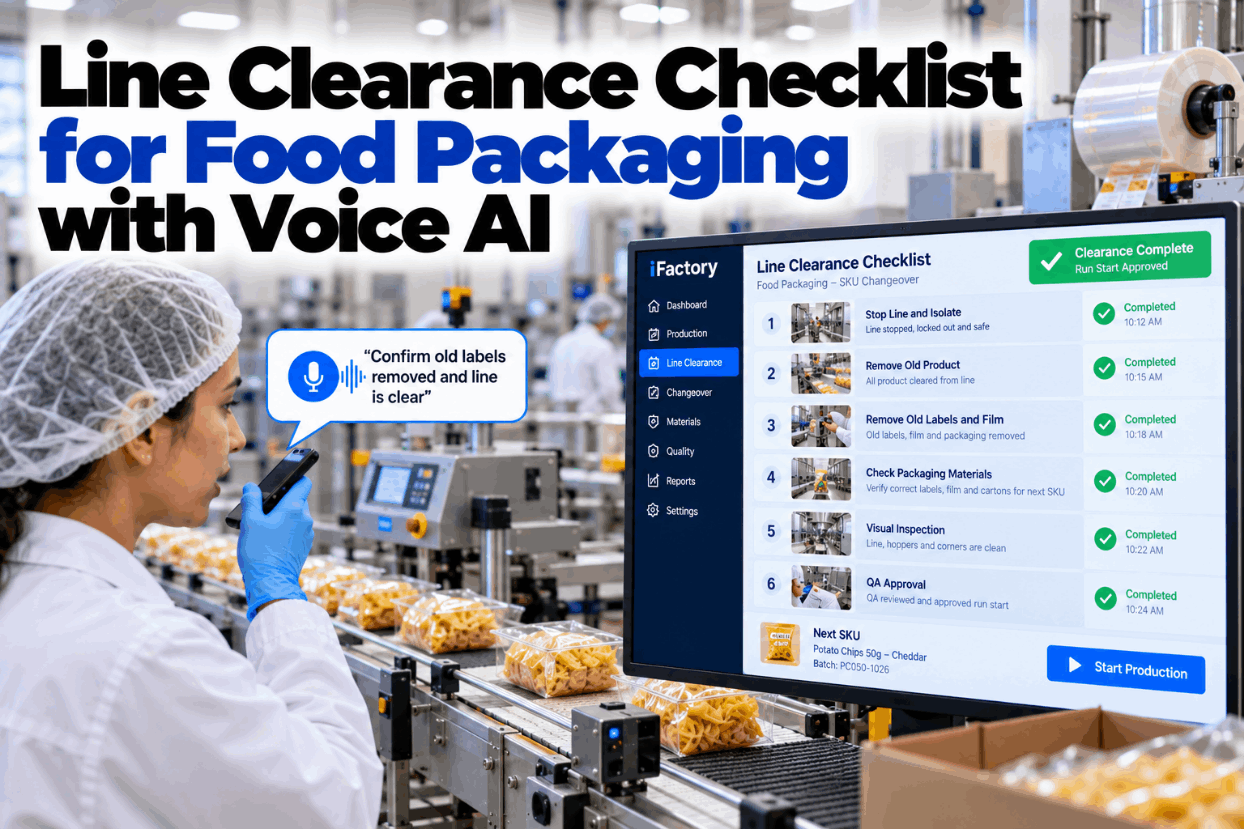
Every SKU change on a packing line is a chance to put the right food in the wrong pack. A roll of last run's labels left on a stand, a carton bundle under a conveyor or a date coder still set to the old lot is all it takes. A line clearance checklist for food packaging closes that gap, but only if every step is actually done, and paper ticks can't prove it. Voice AI reads each step aloud, confirms materials by voice and scan, and keeps the run start locked until QA signs. See it on a real changeover in a short clearance demo.
No New Run Starts Until the Old One Is Fully Cleared
iFactory Voice Clearance Agent reads the clearance step by step, confirms labels, film and cartons by voice and barcode scan, and blocks the run start until QA signs. Every step is logged with time, person and proof.
The Wrong Pack Is the Top Cause of Allergen Recalls
FDA researchers led by Steven Gendel reviewed the root causes of FDA food allergen recalls and reported them in Food Safety Magazine. The most common problem was using the wrong package or the wrong label for a product. They noted that when packages look alike, it is easy for a worker to grab the wrong package or roll of film. They also listed failures to remove unused packages or labels after a production run. Those are exactly the risks a line clearance procedure exists to stop. Map your own changeover risks in a risk review.
Where Line Clearance Sits in Your Food Safety Plan
Under the FDA preventive controls rule, 21 CFR 117.135(c)(2) says food allergen controls are procedures, practices and processes to control food allergens. They must cover protection from allergen cross-contact and labeling the finished food so it is not misbranded under section 403(w) of the FD&C Act. Line clearance is one of the main procedures that makes the labeling control real on the floor. Your plan sets the control, the clearance carries it out, and the records prove it. Ask our QA specialists how records link to your plan.
Who Does What at Each Stage of a Packaging Changeover
A clearance works when each role knows its part and QA checks the work rather than doing it. The lane view below shows a typical split for a packing line. Your own procedure decides the details, such as whether the line lead or QA changes the coder message. Agree the split for your lines in a procedure session.
Line Clearance Checklist for Food Packaging
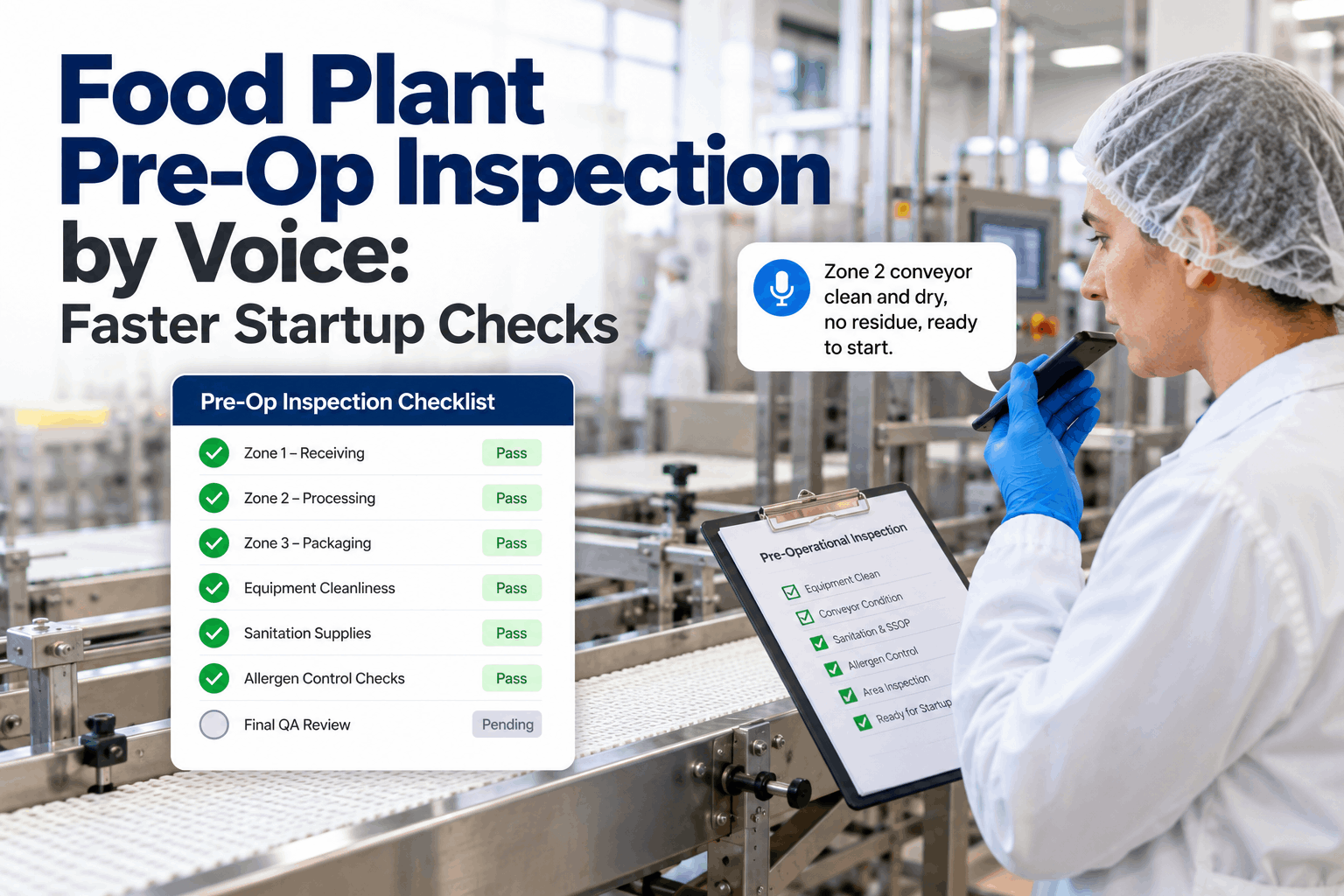
Use this checklist as a starting point and adjust it to your lines, packaging formats and food safety plan. Each box can be ticked here or confirmed by voice and scan on the floor. Where a step has a number, such as a count or a lot code, record the value, not just a tick. For a version loaded with your SKUs and allergen profiles, contact our support team.
Count Every Printed Item In and Out
A checklist tick says the labels were removed. Reconciliation proves it. Count what was issued to the line and account for every piece as used, returned or destroyed. If the numbers don't balance, some printed material is somewhere it shouldn't be, possibly on the next product. Both examples below use assumed counts to show the arithmetic. See how counts are taken from line counters in a short demo.
Search the line before release. If they are found, record where. If not, QA decides whether product packed since the last good count needs checking. Set your own variance limit per material.
Hands on the Line, Not on a Clipboard
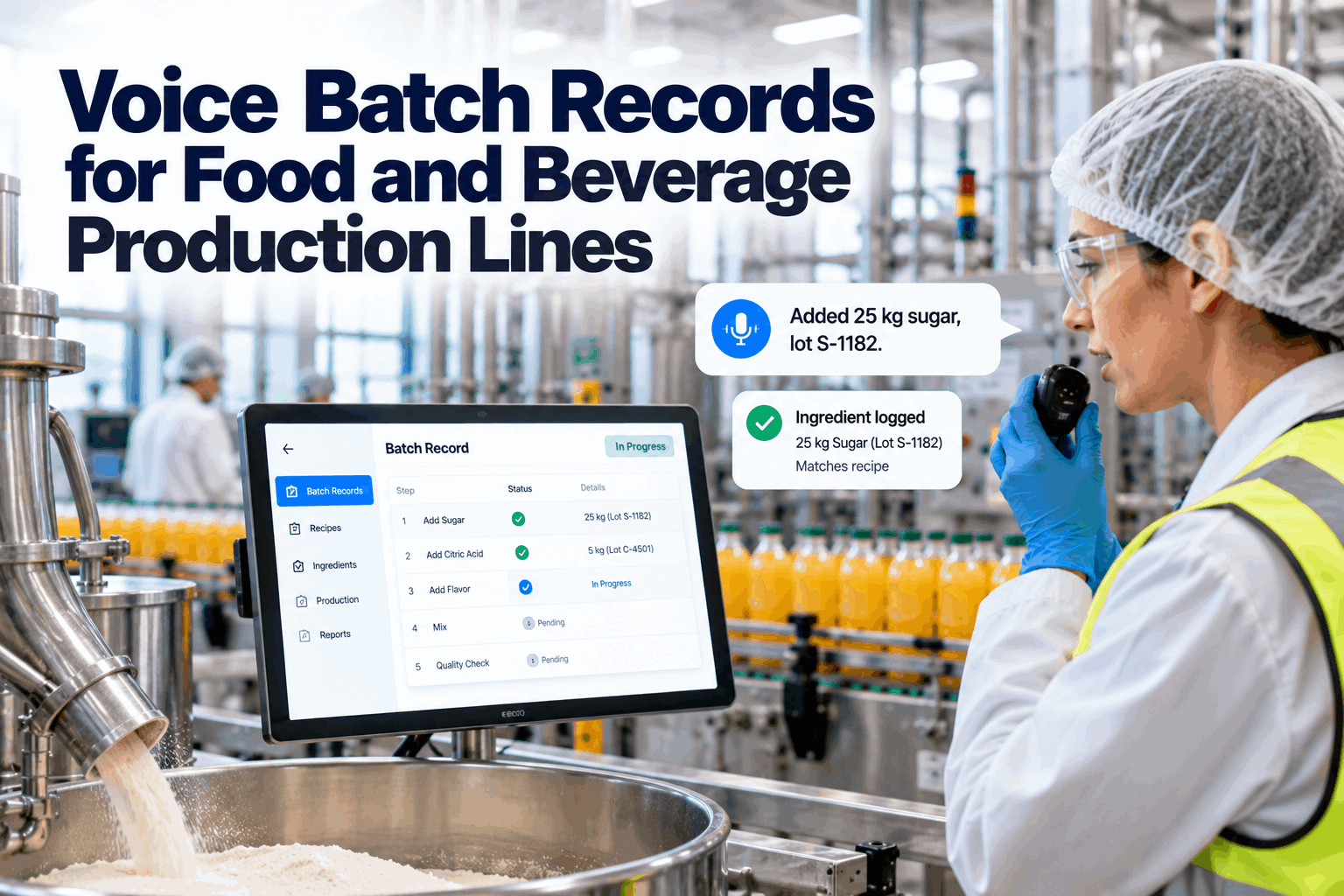
Operators clearing a line are lifting rolls, emptying magazines and wiping down guides. The Voice Clearance Agent reads the next step, hears the answer, checks the scan and moves on. Nothing is skipped and nothing is ticked from memory later.
Spoken Steps, Scanned Proof, Read-Back Every Time
Voice keeps hands free and the pace up, but codes are never trusted to memory. Anything with a barcode is scanned, and anything spoken is read back so the operator hears exactly what was logged. If a value doesn't match the run spec, the step stays open. Ask our voice team how read-back handles your SKU names.
The Run Start Stays Locked Until QA Signs
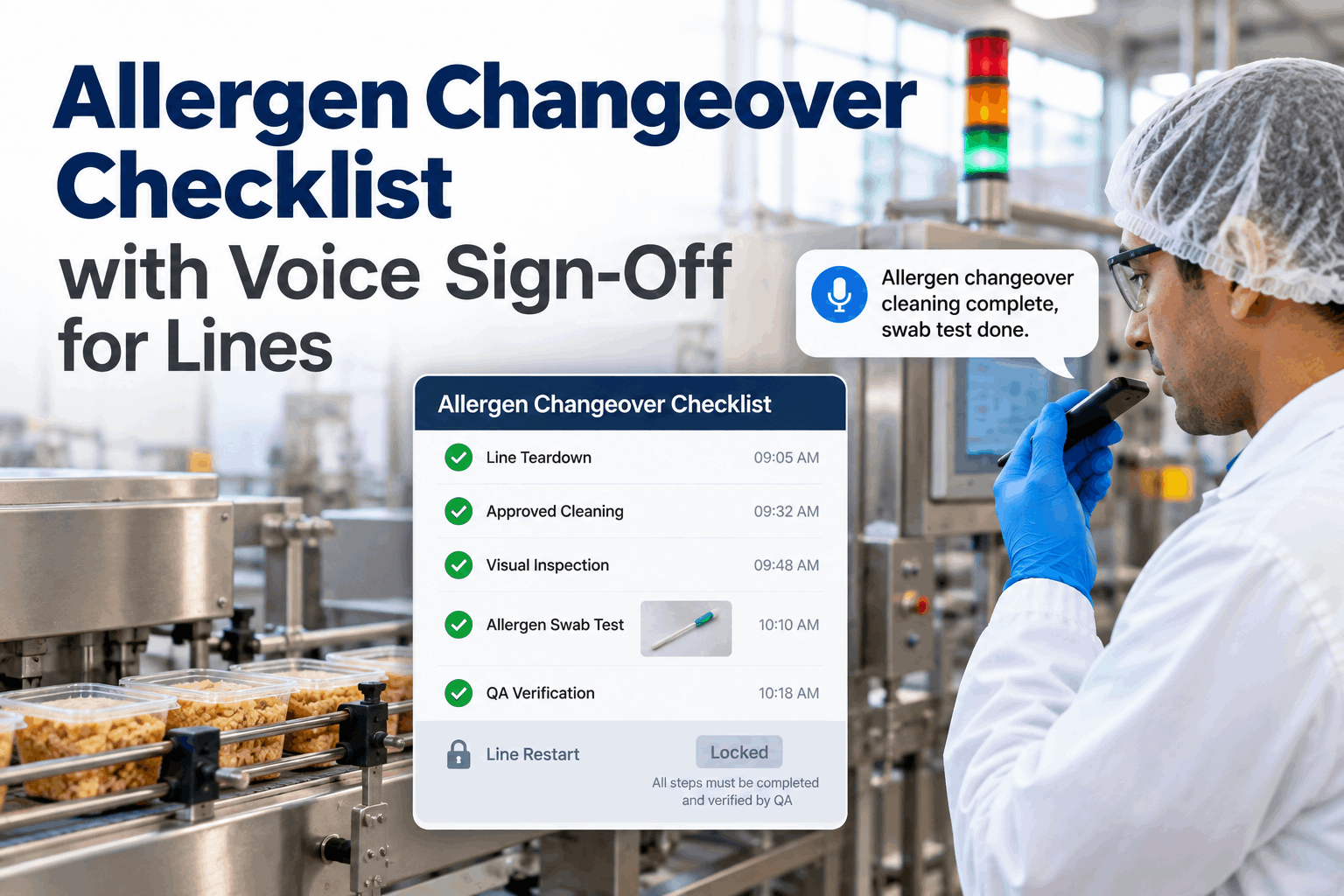
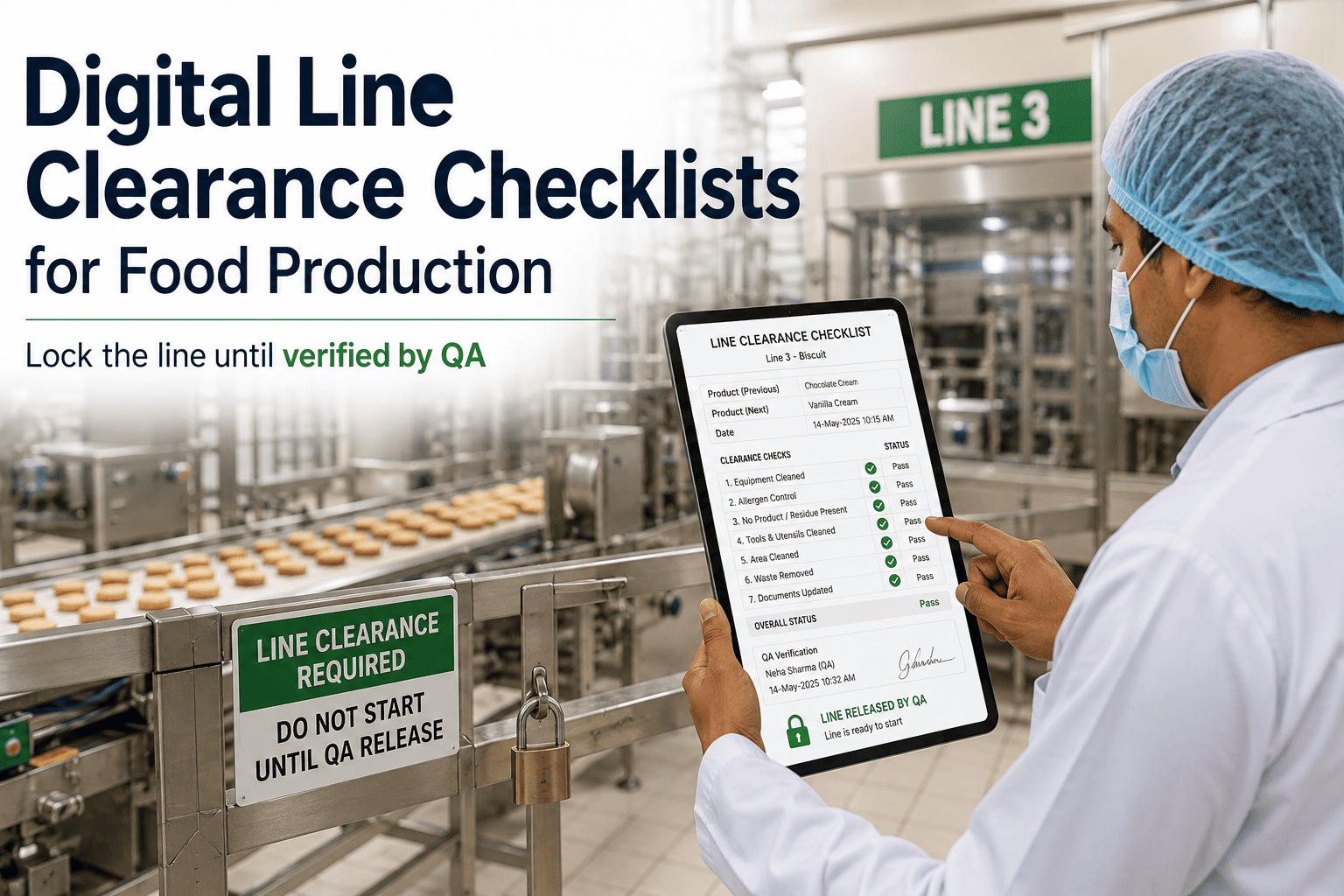
A clearance that can be skipped under pressure will be skipped. iFactory links the clearance to the line's run permission, through the MES or a PLC interlock where you choose to wire one. The line can jog for set-up and first-off packs, which are held, but the full run start stays locked until every step is confirmed and QA signs. Plan the interlock for your lines in an interlock review.
Three Mix-Ups Caught Before the Run
These are illustrations of how the agent usually catches problems during SKU changeover QA. They are not case studies. Walk through your own changeover scenarios with our support team.
Six Habits of Plants That Rarely Mislabel
Mislabel prevention depends as much on line habits as on the checklist itself. These practices come up again and again in packing halls that run many SKUs a day. Build them into your procedure in a planning call.
Five Steps From Paper to Voice Clearance
Most plants start on the line with the most SKU changes or the most allergen profiles, then roll out once crews trust the system. Plan your first line with our support team.
Voice Agent, Scanners and AI Server in One Package
iFactory delivers the Voice Clearance Agent as a turnkey bundle. A pre-configured NVIDIA AI server ships racked and ready with the voice agent, clearance steps and MES connector pre-loaded, so speech is processed on site with no cloud delay. You rack it, plug in power and Ethernet, and the AI is live. To scope it for your packing hall, request a turnkey quote.
- Pre-configured NVIDIA AI edge server, racked and ready
- Voice agent tuned for packing hall noise and SKU names
- Clearance steps built from your procedure per line
- Barcode scanners or handhelds for material checks
- MES or PLC link for the run start interlock
- Operator, line lead and QA training
- 24×7 remote monitoring of software and hardware
Server installed, SKUs, allergen profiles and materials loaded, scanners set up.
Voice clearance on one line alongside paper, steps and vocabulary tuned.
Run start interlock switched on, crews trained, paper checklist retired.
Line Clearance Checklist Food Packaging Software That Listens
iFactory is built for packing halls where SKUs change many times a day and one wrong label can mean a recall. Our support team can walk you through a pilot plan.
What QA and Plant Managers Ask About Line Clearance
Every Changeover Cleared, Counted and Signed
Read each step aloud, confirm every material by voice and scan and keep the run locked until QA signs. The full system is delivered turnkey and goes live in 6 to 12 weeks.