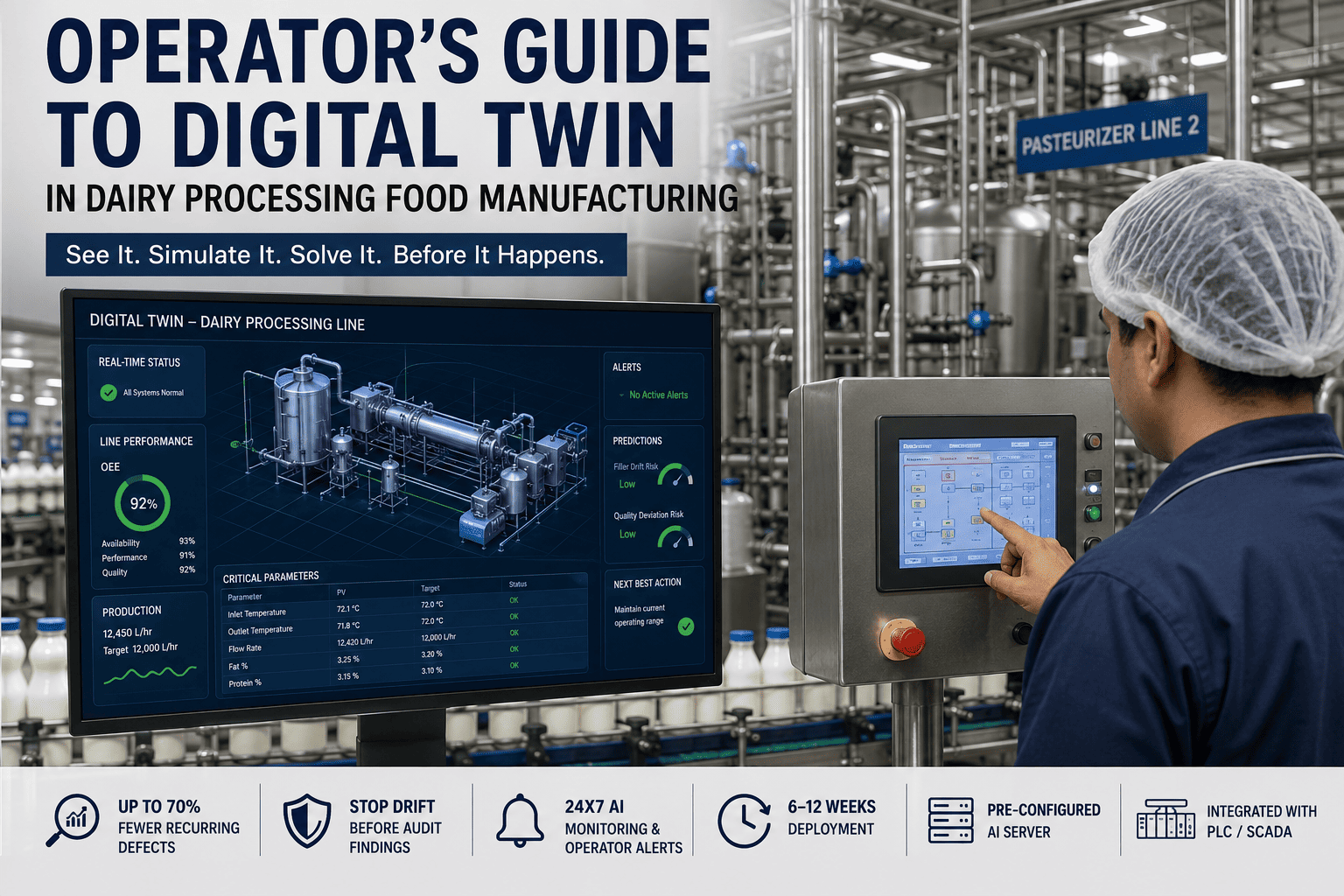
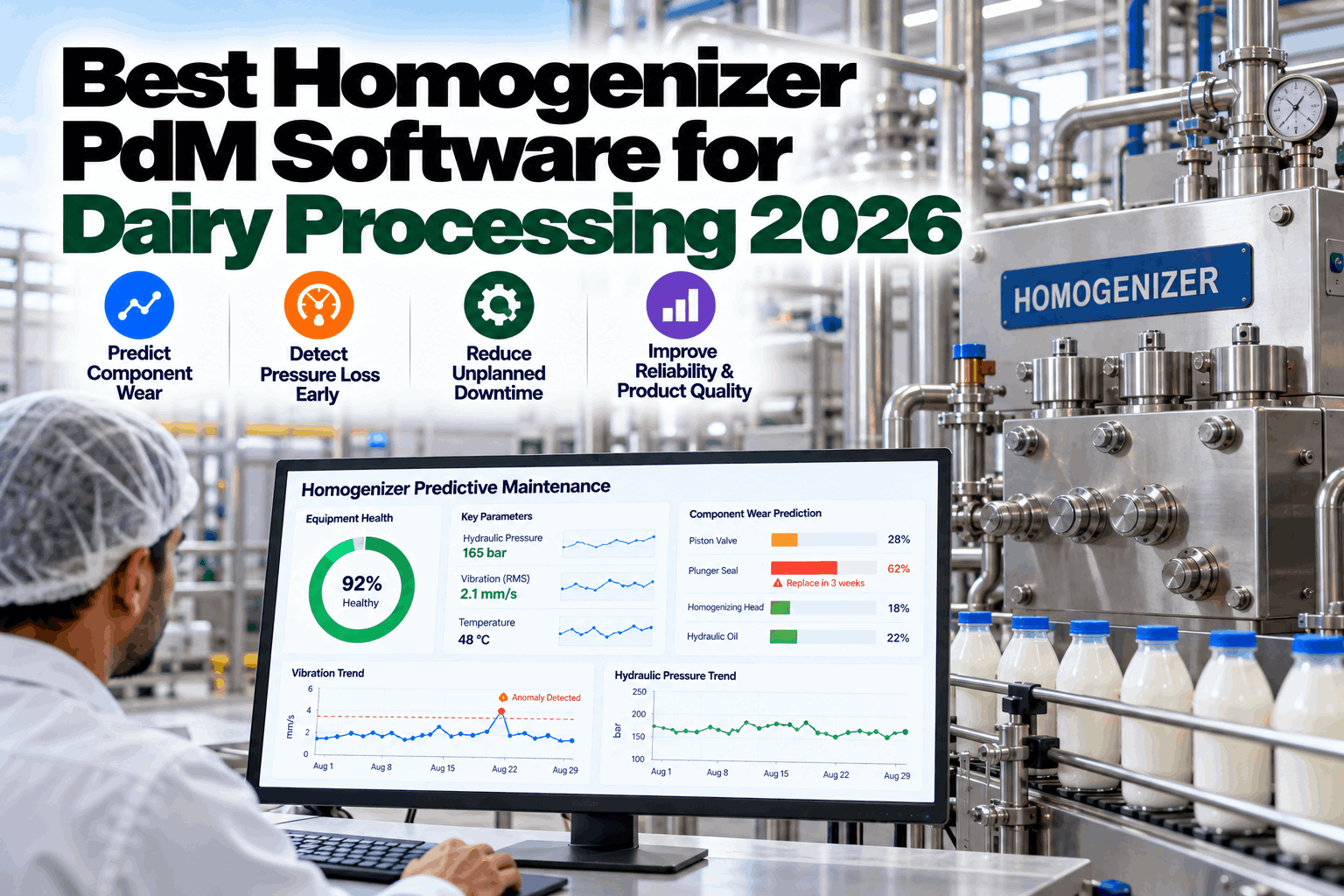
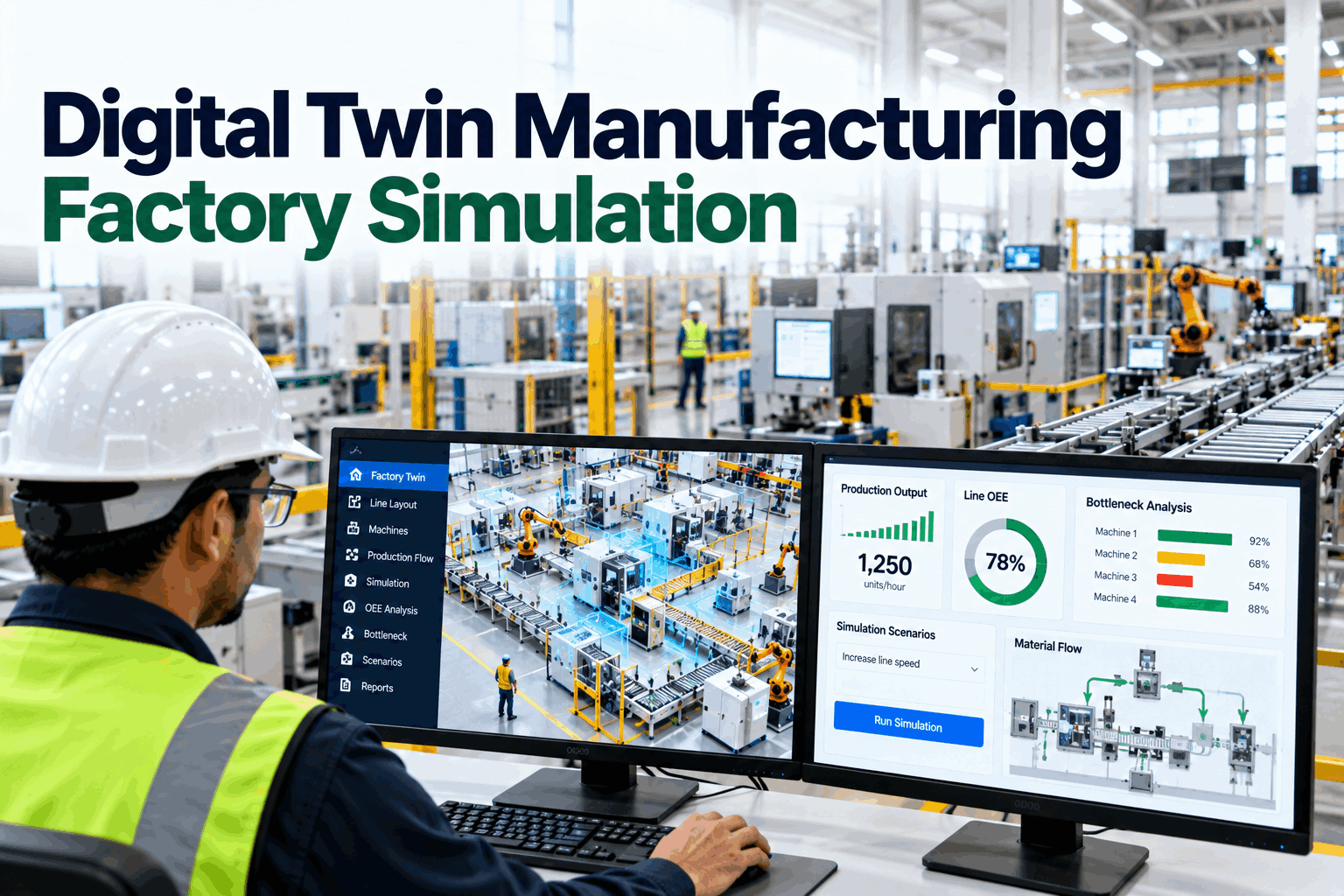
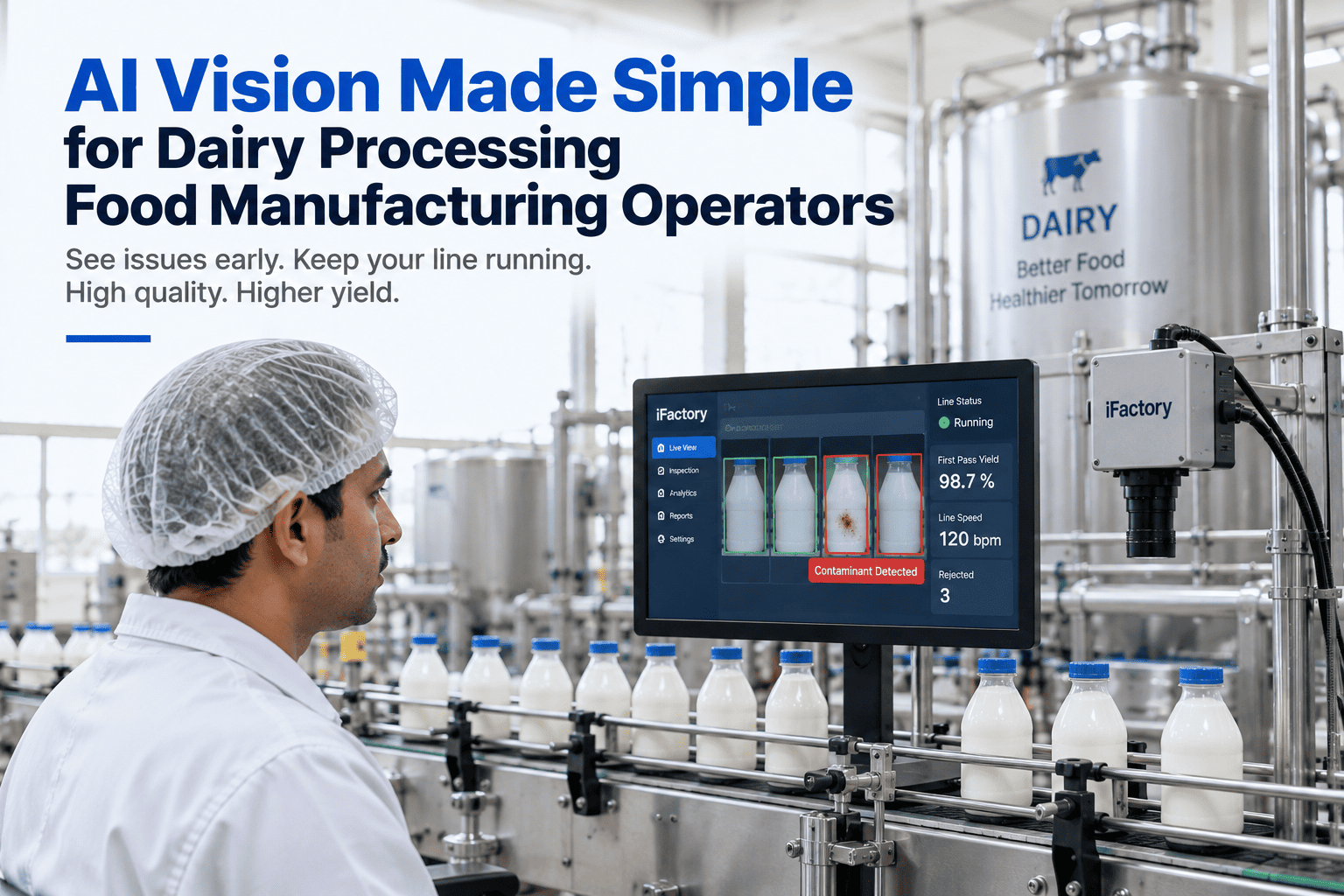
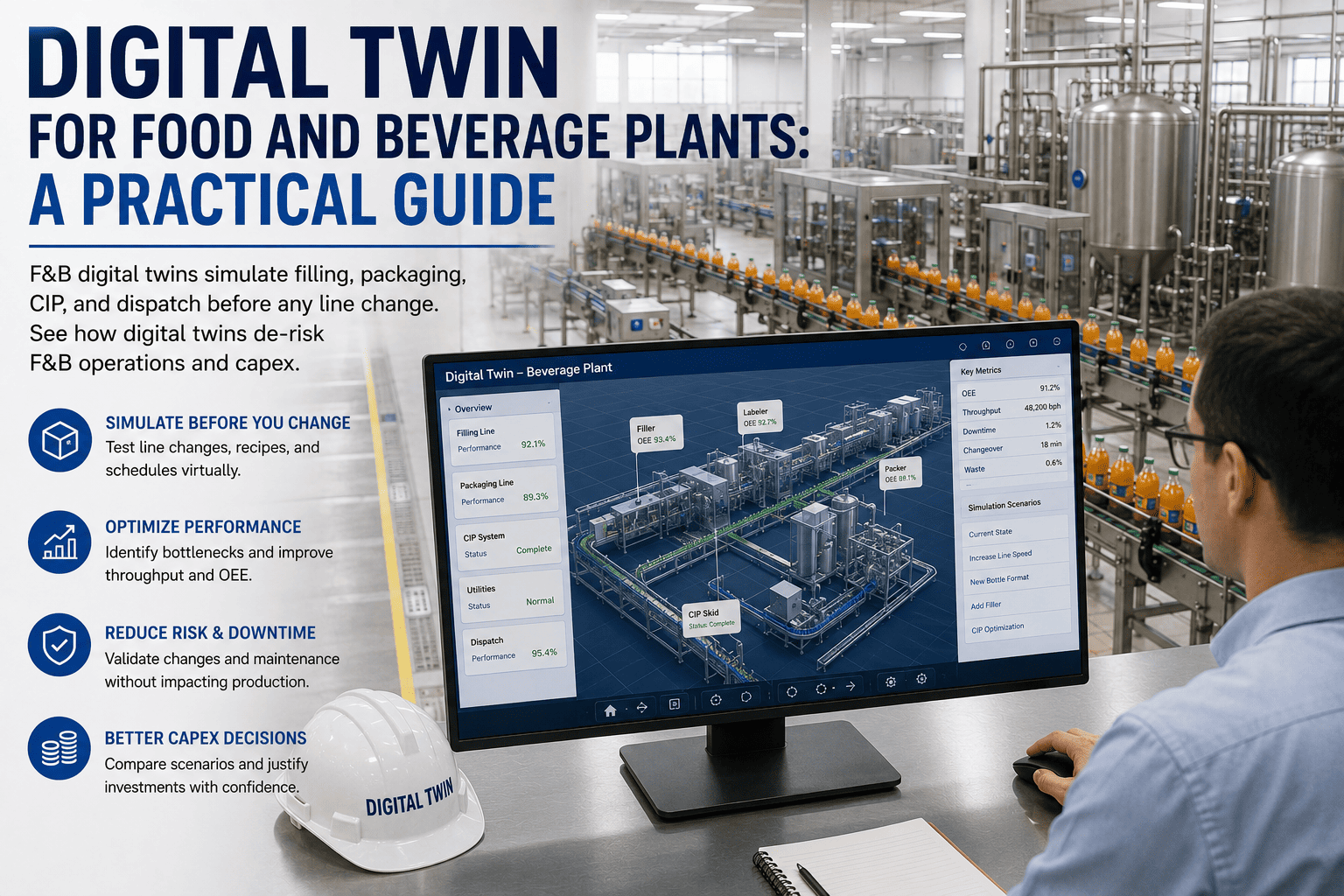
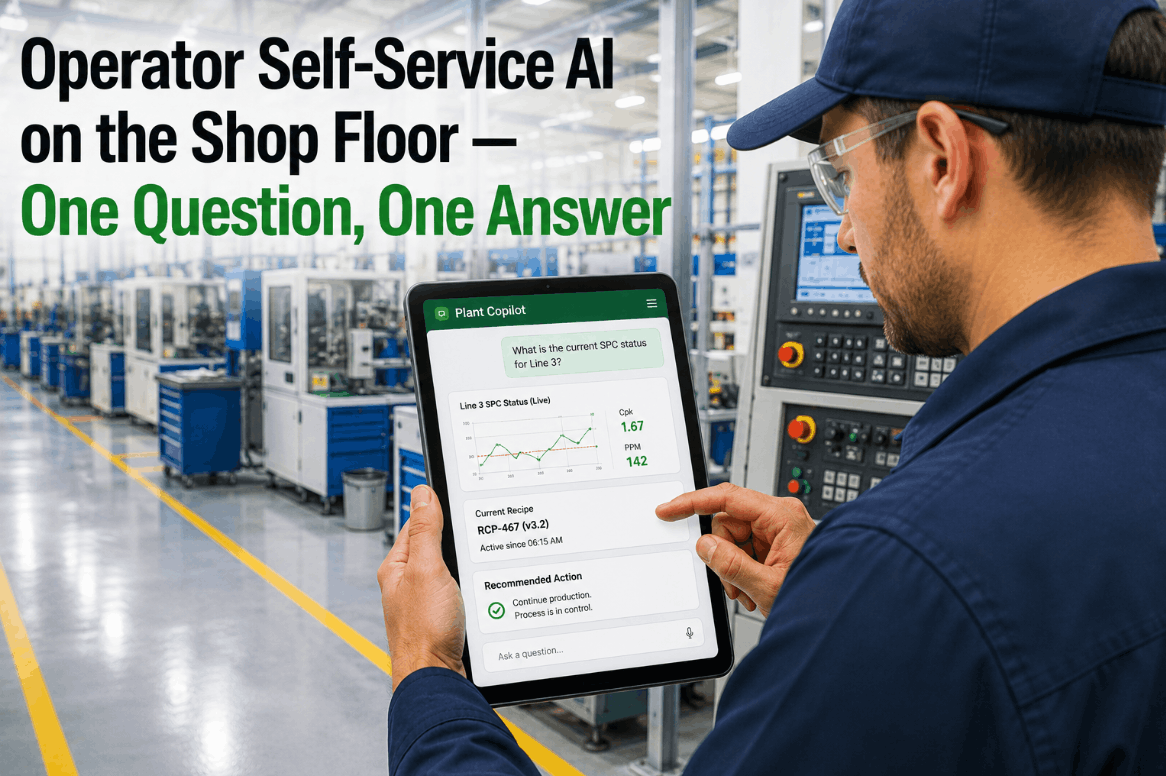
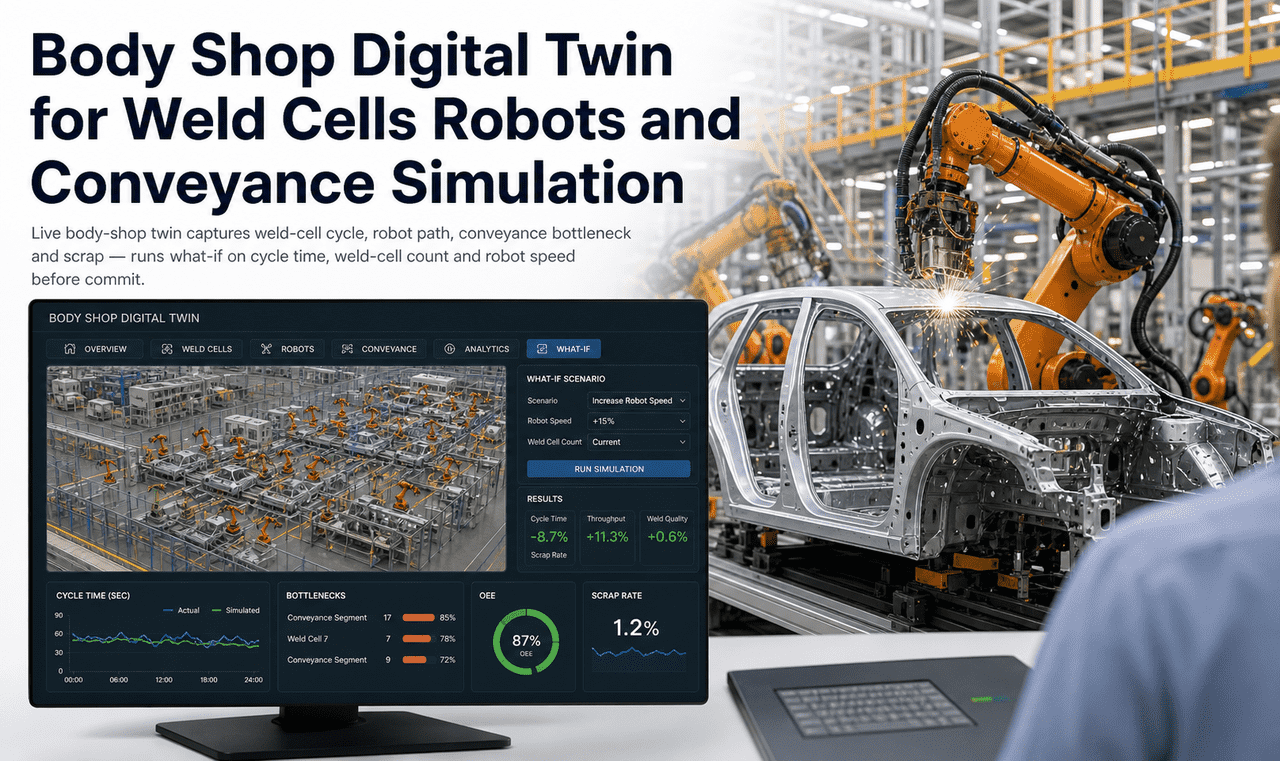
You know the feeling. The line is running fine, the numbers look normal, and then three hours in the filler starts drifting, fat-and-protein creeps off target, or the pasteurizer jacket runs a fraction of a degree cool. Nothing trips an alarm. By the time it shows up in a lab result or a customer complaint, a whole run has gone out the door and you are the one explaining it. A manufacturing digital twin flips that around. It runs a live virtual copy of your line, watches every sensor against how the process should behave, and taps you on the shoulder the moment something starts to drift — while you can still fix it in seconds, not after an audit finding. An iFactory digital twin is built to sit right beside the operator, not in a report someone reads next week.
iFactory · Digital Twin for Dairy Operators
An Operator's Guide to the Digital Twin in Dairy Processing
Filler drift, fat-protein wander, pasteurizer creep — the problems that only show up after the run is gone. A digital twin catches them live at your station and tells you what to do, before they become a defect or a finding.
70%
of recurring defects eliminated
24×7
monitoring beside the operator
6-12 wk
to deploy, pre-configured AI
PLC/SCADA
integrated, no rip-and-replace
What a Digital Twin Actually Is — in Plain Terms
Forget the buzzword for a second. A digital twin is a live virtual copy of your line that stays in sync with the real thing. It takes the sensor readings you already have — temperatures, flows, fat and protein, fill weights — and runs them against a model of how the process should behave when everything is right. Your SCADA screen shows you what is happening. The twin goes further: it compares what is happening to what should be happening, spots the gap early, and tells you why. That is the whole difference — from a screen that reports, to a partner that predicts.
Your SCADA today
Shows the current reading
Alarms when a limit is crossed
Tells you what already happened
You diagnose the cause yourself
The digital twin
Compares reading to how it should behave
Flags drift long before a limit is hit
Predicts what is about to happen
Names the likely cause and the fix
How It Catches Drift Before You Would
Here is the part that matters at your station. Take a real example: the pasteurizer jacket temperature drifts by three-tenths of a degree. Too small to alarm, easy to miss. The twin does not just log it — it simulates what that variance does downstream to viscosity, matches the pattern against every time this led to a seal failure before, and raises an alert before any product is compromised. That is the loop, running continuously on every critical signal on your line.
1
Sense
Reads the live signal — a 0.3°C jacket variance, a fat-protein nudge, a fill-weight wobble.
2
Simulate
Runs it through the process model to see the downstream effect before it reaches the product.
3
Match
Correlates the pattern against history — every past time this drift ended in a defect.
4
Alert
Taps you with the cause and the fix, in time to correct the run — not after it ships.
Want to see this drift-catch loop running on your pasteurizer or filler signals? Talk to a dairy specialist and we will model one line on your data.
Where It Helps on a Dairy Line
The twin is not one alarm — it watches the specific things that go wrong on a dairy line, each in its own way. These are the four that operators feel most.
Pasteurizer
The problem: a jacket or hold-tube drift too small to alarm
The twin: simulates the downstream effect and flags it before the CCP is at risk
Filler
The problem: slow drift in fill weight and seal integrity through a run
The twin: correlates the pattern to past seal failures and alerts before the rejects start
Fat & Protein
The problem: standardization wandering off target, giveaway or spec miss
The twin: watches composition live and warns as it trends off, before the batch is set
CIP & Cleaning
The problem: over-cleaning wastes time and water; under-cleaning risks biofilm
The twin: monitors fouling and cleaning adequacy, so CIP is done right, not by the clock
What Changes on Your Shift
The point of all this is not the technology — it is what your shift feels like. The twin moves you from cleaning up after problems to heading them off.
Find the drift in a lab result hours later
becomes
Get the alert the moment it starts
A whole run scrapped or held
becomes
A two-second correction mid-run
Guess which of ten things caused it
becomes
The twin names the likely cause
CIP run to a fixed time, every time
becomes
CIP run until it is actually clean
Explaining a defect at the audit
becomes
The defect caught before it happened
Want to eliminate the recurring defects that keep coming back on your line? Book a demo and we will scope the deployment.
What It Takes to Get Started
Fair question from any operator: is this a two-year IT project that makes my job harder? No. It is built to drop onto the line you already run.
Pre-configured AI server
The model arrives ready for dairy processing, not a blank tool you have to teach from scratch.
Integrated with PLC/SCADA
It reads the signals you already generate. No new control system, no rip-and-replace on the line.
24x7 monitoring
The twin never blinks — it watches every shift, including the quiet hours drift loves to hide in.
Live in 6-12 weeks
A turnkey deployment on your line, targeting up to 70% fewer recurring defects — in a quarter, not years.
Frequently Asked Questions
Do I need to understand the AI to use it?
No. From your side it is an alert with a plain-language cause and a suggested action — "pasteurizer jacket drifting, viscosity risk downstream, check the temperature loop." The modeling and pattern-matching happen behind the scenes. Your job stays the same; you just get the warning earlier and with the reason attached, instead of hunting for it after the fact.
How is this different from the alarms I already have?
Your alarms fire when a value crosses a fixed limit — by then the drift is already product. A digital twin compares the live reading to how the process should behave and flags the drift long before it reaches a limit, because it simulates where the trend is heading and matches it to past failures. Alarms tell you it broke; the twin tells you it is about to.
Will it slow down my line or change how I run it?
No. It reads the signals your PLC and SCADA already produce and runs alongside them — it does not take control of the line or add steps to your routine. You keep running the process the way you do now; the twin just watches in parallel and speaks up when something starts to go wrong.
What kinds of defects can it actually prevent?
The recurring ones that come from slow drift: fill-weight and seal problems on the filler, fat-and-protein standardization misses, pasteurizer temperature creep that risks the CCP, and cleaning issues from over- or under-run CIP. Because it catches these while they are still trends, deployments target eliminating up to 70% of recurring defects rather than just documenting them.
How long before it is running on our line?
A typical deployment is live in six to twelve weeks. The AI server arrives pre-configured for dairy processing and integrates with your existing PLC and SCADA, so there is no new control system to install and no long training period. It starts watching your real signals and raising alerts within that window.
Catch the drift before it becomes a defect or a finding.
See the Digital Twin Watching Your Line, Live
Bring one line — your pasteurizer, your filler, your standardization loop. We will run a live twin against your real signals, show it catching drift before it reaches the product, and name the cause and the fix at the operator's station. Turnkey: pre-configured AI server, integrated with your PLC and SCADA, 24x7 monitoring, targeting up to 70% fewer recurring defects. Live in 6-12 weeks.
70%
recurring defects eliminated
Alert
with cause, at your station
24×7
every shift, every signal
6-12 wk
to live on your line