Alarm Management in Pharma Cleanrooms and Production Lines
By James C on August 24, 2026
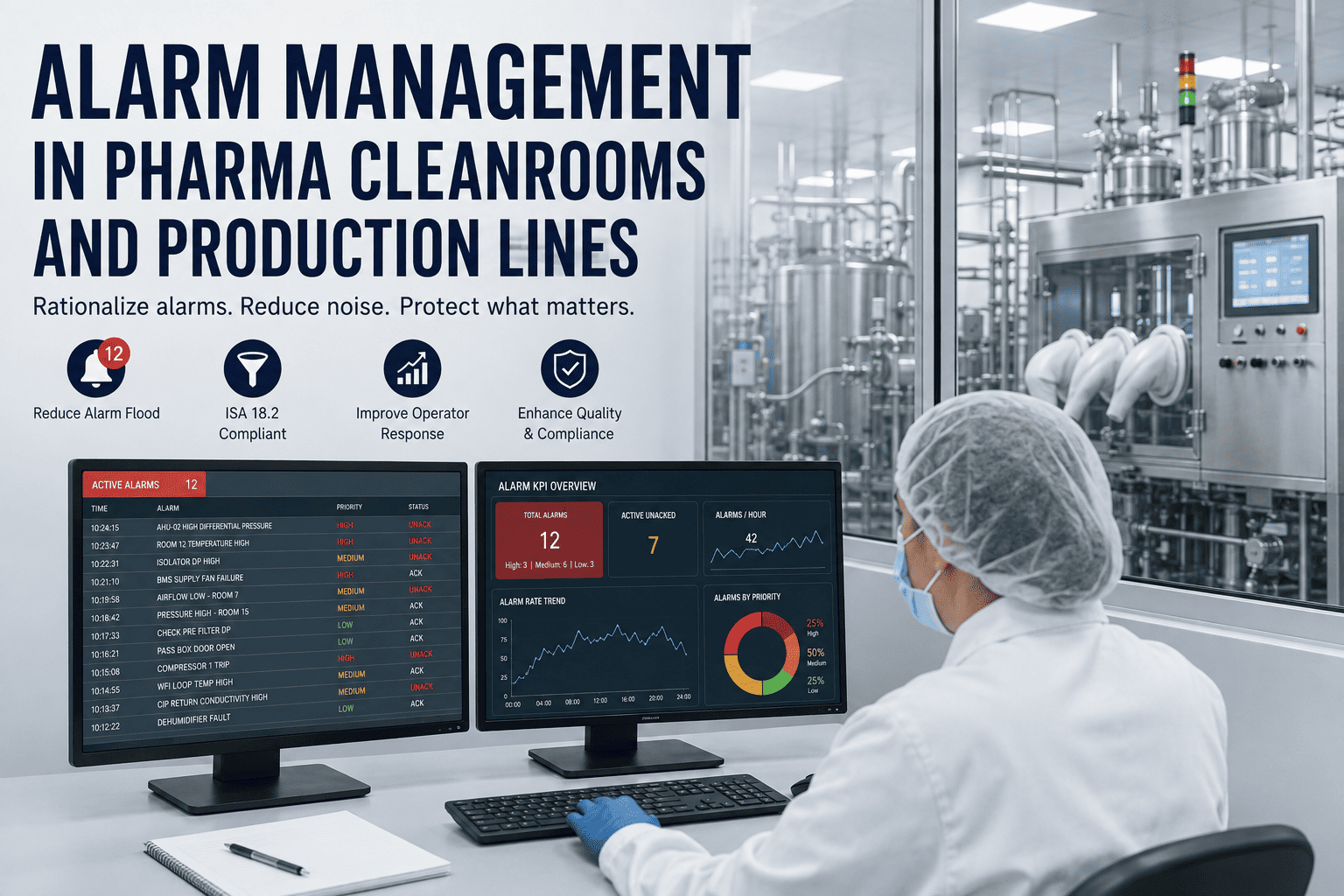
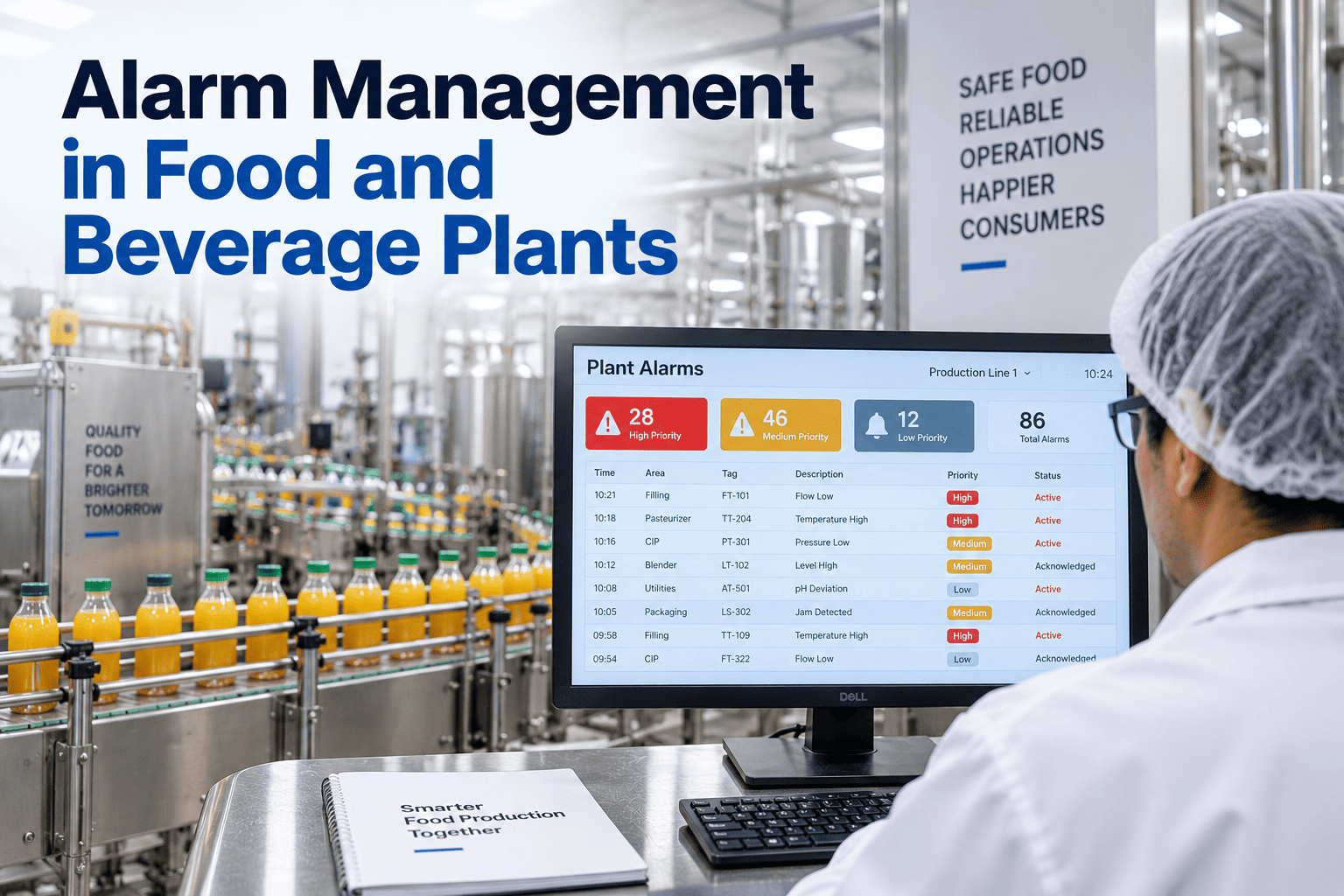
By the third hour of a shift, the alarms have become wallpaper. A door-ajar in an airlock, a transient pressure dip in a corridor, a particle count that spiked and cleared before anyone could look — hundreds of them across a shift, most needing no action, all demanding attention. So the operator does what any human does when a system cries wolf all day: tunes it out. And that is the danger, because somewhere in that noise is the one alarm that matters — the pressure cascade that signals a breach, the excursion that will cost a batch. In a GMP cleanroom, a missed alarm is not just a nuisance; it can become a contamination event, a deviation, and a patient-safety question. iFactory brings ISA 18.2 alarm rationalization to pharma — measuring the noise, finding what causes it, and cutting it back to alarms an operator can actually trust.
Production Execution for Pharma Operators
Alarm Management in Pharma Cleanrooms and Production Lines
Operators face hundreds of alarms a shift and learn to ignore most of them. iFactory applies ISA 18.2 and EEMUA 191 alarm rationalization to pharma plants — killing nuisance alarms, fixing priorities, and making the critical alarm impossible to miss.
Alarm fatigue is not carelessness — it is the predictable result of a system that alarms more than a person can process. When the same door alarm has fired forty times today and none of them mattered, the brain stops treating it as information. The problem is that the alarm system cannot tell the operator which of today's four hundred alarms is the real one, so all of them get the same diminishing attention. In pharma this is sharper than in most industries, because the alarms guarding cleanroom pressure cascades, environmental limits, and sterile boundaries are the ones protecting the product and, ultimately, the patient. Every one buried in the noise is a risk to a batch and a compliance record.
There Is a Number for This
Alarm overload is not a vague complaint; it is measurable against well-established guidelines. ISA 18.2 and EEMUA 191 define what a manageable alarm load looks like, and most pharma plants sit far outside it. The widely cited steady-state target is about one alarm per operator every ten minutes. Anything above ten in ten minutes is a flood.
Alarms per operator, per 10 minutes
Target~1
Manageableup to 2
Demandingup to 10
Flood10+
Typical pharma upset shift sits here, deep in flood territory
A plant averaging a few alarms per ten minutes in steady state can still generate hundreds in the ten minutes after an upset — exactly when the operator can least afford the noise.
The Shift That Floods
Averages hide the real problem, which is peaks. A single upset — an HVAC trip, a utility swing, a CIP cycle — cascades into dozens or hundreds of correlated alarms in minutes, burying the root cause under its own consequences. This is what a flood looks like plotted across a shift.
Alarms per 10 minutes across one operator shift
The root cause is somewhere in that spike, but so are dozens of consequential alarms drowning it out. Rationalization is what turns the spike back into a signal.
A Few Alarms Cause Most of the Noise
The encouraging part is that alarm floods are rarely democratic. A small number of badly configured points — the "bad actors" — generate the majority of the load. Find and fix the top handful and the flood collapses, without touching the alarms that matter.
Top nuisance alarms by share of total load
Airlock door open (EMS)
22%
Cleanroom dP low, transient
18%
Particle count spike, fleeting
14%
Corridor humidity high
11%
Chilled water temp deviation
8%
In most plants the top ten alarms cause the large majority of the total load. That is where rationalization starts — the fastest, safest noise reduction available.
Do you know which ten alarms are flooding your operators right now? Book a 30-minute demo and we'll analyze your alarm log against ISA 18.2 benchmarks.
The Alarms That Should Not Be There
Not all noise is the same. Rationalization sorts the nuisance alarms into recognizable types, each with a known fix. Clearing these is how the count comes down without losing anything of value.
Standing
Active almost all the time, so permanently in the background and permanently ignored.
Stale
Active for hours or days on end, now part of the furniture rather than a call to act.
Chattering
Flicking on and off repeatedly in minutes, flooding the log from a single loose setpoint.
Fleeting
Clears before anyone can respond, training operators that alarms fix themselves.
Duplicate
The same event announced by several alarms at once, multiplying one problem into many.
Right Alarms, Right Priority
When too many alarms are set to high priority, priority stops meaning anything. Guidelines suggest most alarms should be low, a smaller share medium, and only a few high — so that a high-priority alarm genuinely commands attention. Most plants are inverted from where they should be.
Typical pharma system
High 30%
Med 35%
Low 35%
ISA 18.2 target
5%
Med 15%
Low 80%
When almost a third of alarms are high, none of them are. Rebalancing priority is what makes the critical alarm stand out from the routine one.
Rationalization, the ISA 18.2 Way
Alarm rationalization is a disciplined lifecycle, not a one-time cleanup. Every alarm is justified, prioritized, and documented, and the system is monitored so it stays healthy. The lifecycle maps cleanly onto pharma change control and audit-trail expectations, which makes it a natural fit rather than an extra burden.
1
Philosophy
Agree the rules: what earns an alarm, how priority is set, expected response.
2
Rationalize
Justify every alarm against consequence and action, or remove it.
3
Prioritize
Set priority to the target distribution and document it in the master database.
4
Monitor
Track alarm KPIs live, catch new bad actors, and manage change under control.
What Rationalization Delivers on the Floor
Cutting the noise is not about fewer alarms for their own sake. It is about restoring trust in the alarm system, so that when it sounds, the operator acts — and the quality record follows.
↓↓
Alarm rate
back toward the manageable target
Gone
Bad actors
the chattering and fleeting nuisances cleared
Visible
Critical alarms
the one that matters no longer buried
↓
Deviation burden
fewer nuisance excursions to investigate
Frequently Asked Questions
Is removing alarms a compliance risk in a GMP plant?
Done properly, rationalization improves compliance rather than threatening it. Every change is justified against consequence and action, documented in a master alarm database, and made under change control with a full audit trail — exactly the discipline GMP expects. The alarms that protect product quality and sterility are strengthened and made more visible; only the alarms with no defined action or consequence are removed or reconfigured.
How do you measure our alarm performance?
iFactory analyzes the alarm and event history from your DCS, BMS, and EMS against ISA 18.2 and EEMUA 191 metrics: average and peak alarm rates, flood frequency and duration, standing and stale alarms, chattering and fleeting alarms, the bad-actor ranking, and the priority distribution. That baseline shows exactly where you sit against the benchmarks and where the fastest gains are.
Will this work with our existing control and monitoring systems?
Yes. The approach is system-agnostic and works from the alarm and event data your existing DCS, BMS, and environmental monitoring systems already produce. It sits alongside them as an analytics and rationalization layer rather than replacing your control infrastructure.
How fast do operators feel the difference?
The largest, fastest relief usually comes from the bad actors, because a small number of points cause most of the load. Reconfiguring the top offenders can cut the flood substantially in the first phase, before the full rationalization of the remaining alarms. Operators tend to feel the change on the very next upset.
What do we need to get started?
An export of your alarm and event history is enough to build the baseline. The best next step is a demo where we analyze a sample of your alarm log, show your rates against the ISA 18.2 benchmarks, and identify your top bad actors and the noise they are creating.
Make the Alarm That Matters Impossible to Miss.
See Your Alarm Load Against the ISA 18.2 Benchmarks
Bring an export of your alarm and event history. We'll show your average and peak rates, your flood frequency, and your top bad actors — and what rationalization would return to your operators and your quality record.