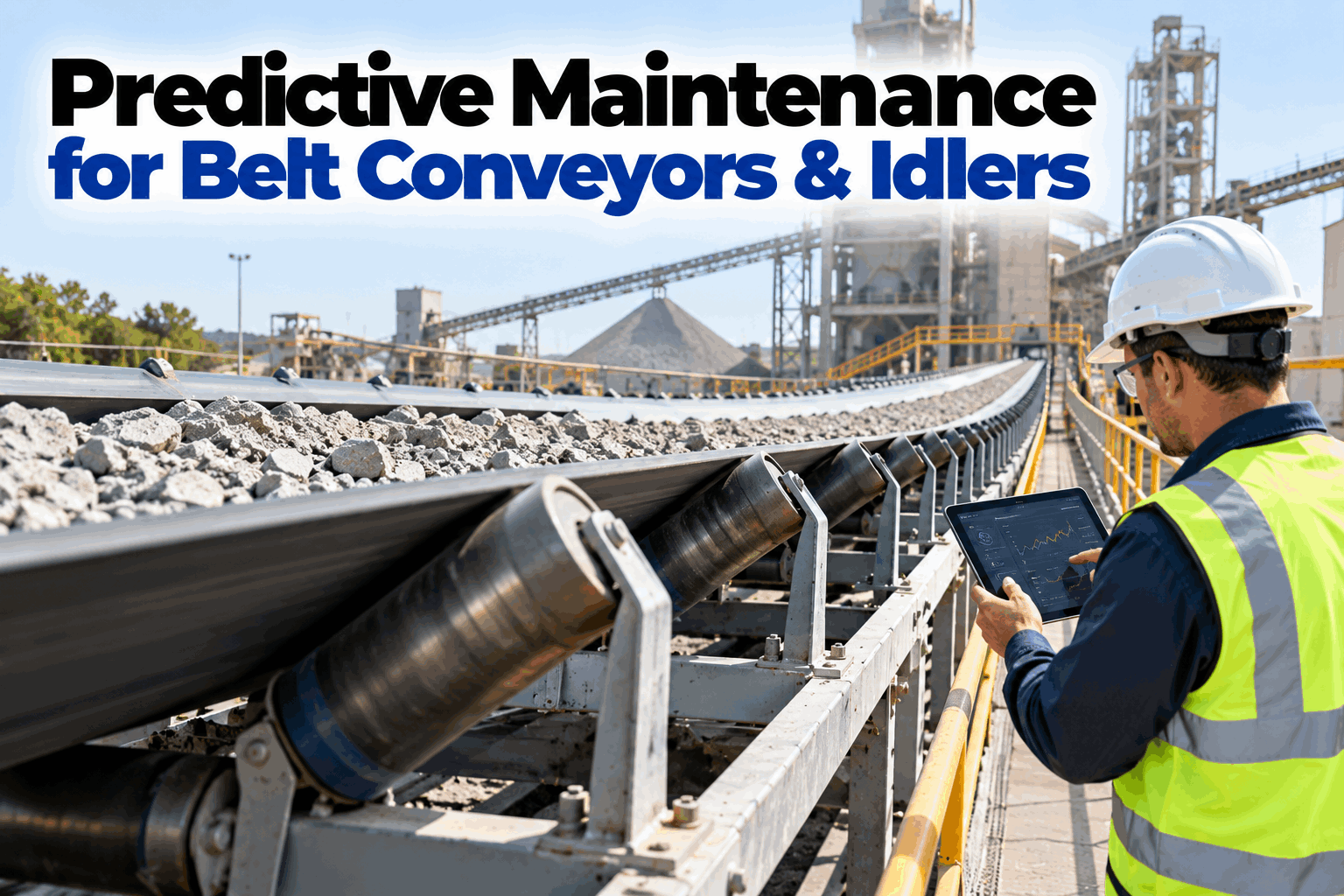
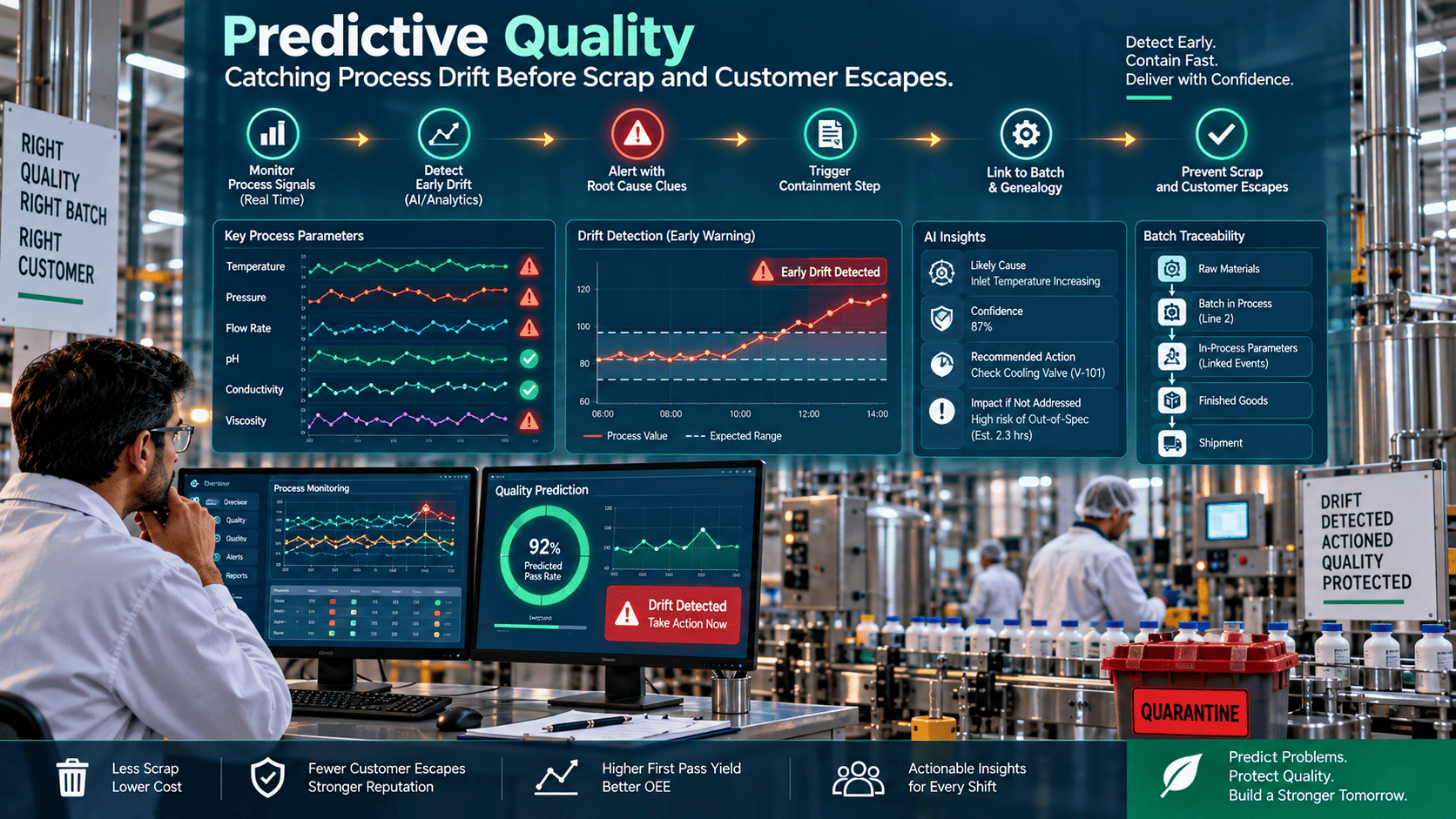
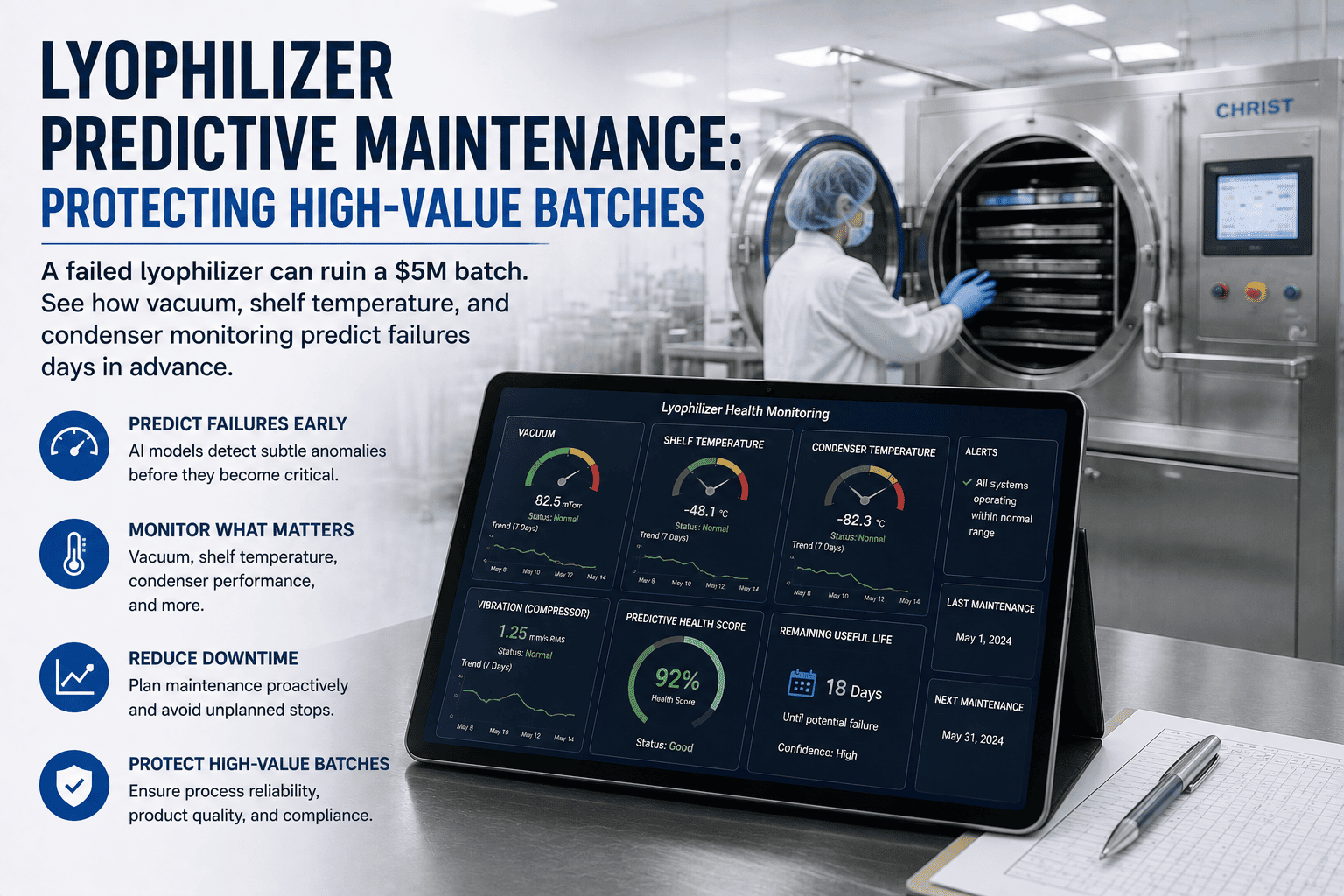
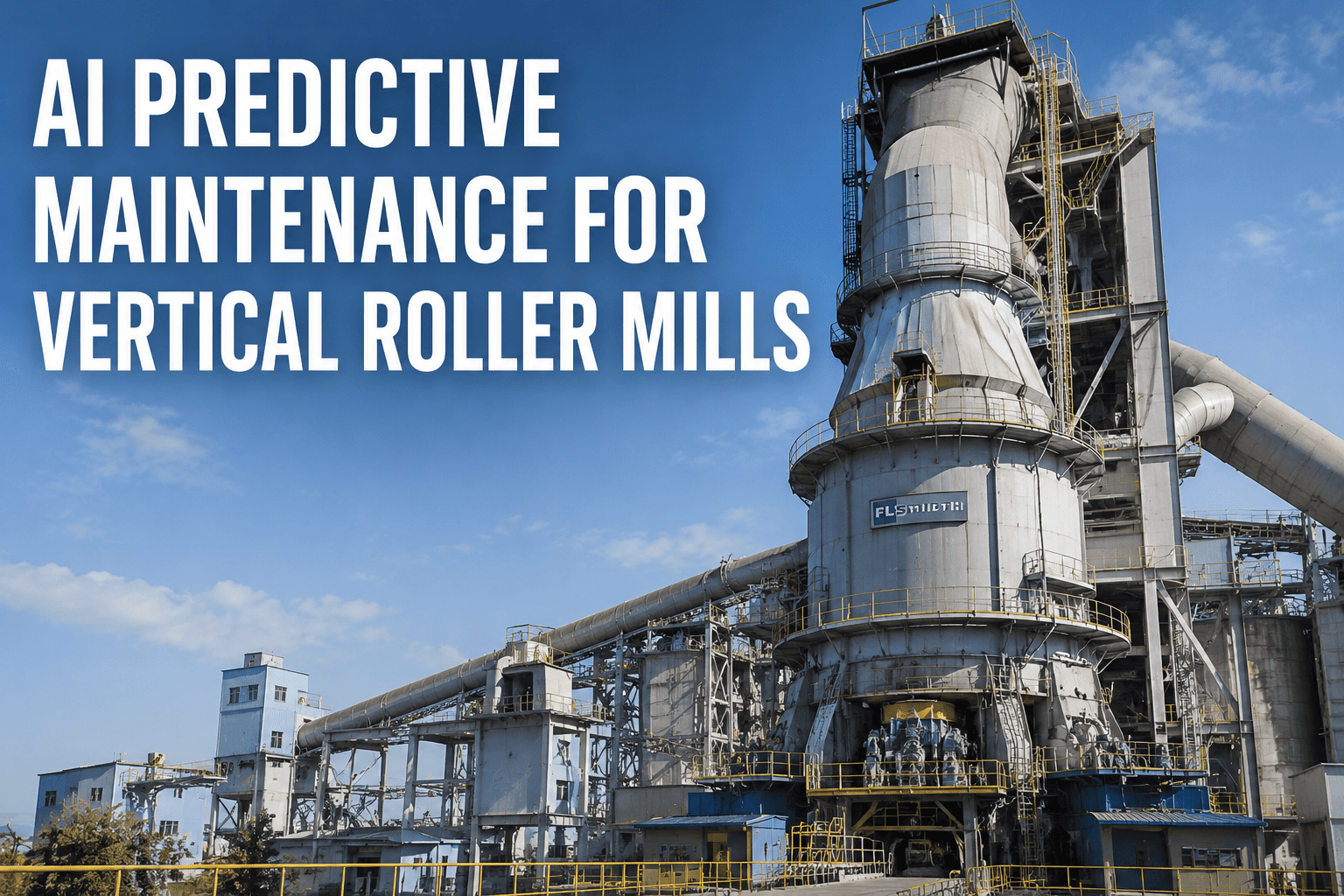
The crusher is the first machine limestone touches after it leaves the quarry, and it's the one piece of equipment the entire kiln line depends on to eat. When a primary crusher trips without warning, the raw mill starves within hours, the kiln feed buffer runs dry within a shift, and a mid-size plant loses $120,000 to $350,000 a day in production — with a possible kiln slowdown and hours of thermal recovery stacked on top of the repair. And crushers take a brutal beating: jaw crushers swallowing 1,200 mm limestone boulders, impact and hammer crushers spinning heavy rotors that shatter rock by force, everything wearing at rates that depend on feed size, hardness, and throughput. The good news is that these failures are among the most preventable in the plant. Hammer and blow-bar wear follows a predictable curve against tonnage; rotor imbalance from uneven or broken hammers announces itself in the vibration; bearing degradation shows clear signatures weeks before seizure; and crusher-gap drift is visible in product size and motor current. iFactory's predictive maintenance and vibration AI listens to all of it continuously — catching hammer wear, rotor imbalance, bearing faults, and gap-setting drift weeks ahead, so a crusher rebuild becomes a planned change aligned to your next kiln stop instead of an emergency that starves the line. To see it on your crushers, book a demo.
CEMENT PLANT · AI CRUSHER RELIABILITY & VIBRATION
Catch a Crusher Failing Before It Starves the Kiln.
A tripped primary crusher starves the raw mill within hours and the kiln within a shift — at $120,000 to $350,000 a day. iFactory monitors crusher vibration, bearing temperature, and motor current continuously, catching hammer wear, rotor imbalance, bearing faults, and gap drift weeks ahead — so a rebuild becomes a planned change aligned to a kiln stop, not an emergency.
$120–350K
Daily production loss from a crusher-starved line
~70%
Of crusher failures are bearing- or wear-related
weeks
Of warning from continuous vibration signatures
4 faults
Wear, imbalance, bearings, and gap drift caught
Why a Crusher Stop Starves the Whole Line
The crusher sits at the very front of the process, so a failure there doesn't stay contained — it propagates downstream through the entire raw-material feed chain and, if it runs long enough, reaches the kiln itself. That position is what makes crusher reliability a production-protection problem: the machine is cheap relative to the line it feeds, but its failure can idle the most expensive process in the plant.
The Feed Chain Starves Fast
A cement plant crusher processes hundreds to thousands of tonnes of limestone an hour, and when it stops the raw mill starves within hours and the kiln feed buffer runs dry within a shift. There's little slack in the system, so a crusher down for a repair quickly becomes a whole-line problem rather than a single-machine one.
The Real Cost Is Lost Production
A 12-hour crusher repair can stop thousands of tonnes of raw-material throughput, and if the kiln feed depletes, a kiln slowdown follows with hours of thermal recovery and fuel waste on top. The part is cheap; the production loss — $120,000 to $350,000 a day at a mid-size plant — is where the real damage lands.
One Missed Check Can Halt the Line
A missed bearing temperature reading, an unlogged motor-current spike, or a discharge blockage building undetected can shut a large cement line for 12 hours or more. Manual rounds catch a fault once it's produced a symptom — not at the early stage where it's still a quiet, scheduled fix rather than a line-stopping surprise.
Yet the Failures Are Predictable
The reason this is worth solving is that crusher failures are among the most preventable in the plant — wear follows tonnage, imbalance shows in vibration, and bearings signal weeks ahead. Up to 70 percent of crusher failures are bearing- or wear-related and develop detectable signatures long before collapse, if something is listening continuously.
The pattern maintenance teams know too well is that a crusher doesn't fail slowly and then suddenly — jaw-plate wear progresses predictably until it doesn't, a toggle cracks between shifts, a bearing arrives with 48 hours of thermal warning that no one catches because the reading was manual and overdue. Continuous monitoring is what turns that predictable-but-missed failure into a caught one.
Every Crusher in the Circuit
A cement plant runs more than one kind of crusher, and each fails in its own way — the primary that takes the blast-run limestone, and the impact and hammer crushers that reduce it further. iFactory monitors all of them, because any one going down interrupts the feed to the line.
JAW · PRIMARY
First after the blast
The primary jaw crusher is the first machine limestone touches after blasting, taking feed up to well over a metre and reducing it at hundreds to thousands of tonnes an hour — and it has the least tolerance for an unplanned stop of anything in the circuit. Its wear points are the fixed and swing jaw plates, the toggle plate, and the pitman and eccentric-shaft bearings, all of which degrade predictably against tonnage and show clear warning in vibration and temperature. It's the first asset to instrument, because its failure starves everything behind it.
IMPACT
Blow bars · high-speed rotor
The impact crusher shatters rock with a high-speed rotor swinging blow bars against impact and apron plates, so its critical wear parts are the blow bars, the aprons, and the rotor bearings. Blow bars wear at rates that vary sharply with feed size and material hardness, and uneven wear or a cracked bar throws the rotor off balance — a fault that both accelerates further damage and shows plainly in the vibration spectrum. Continuous monitoring tracks the wear and catches the imbalance before a bar lets go.
HAMMER
Swinging hammers · imbalance-prone
The hammer crusher reduces material with a rotor of swinging hammers turning at high speed, and it's the machine most prone to rotor imbalance in the whole circuit. When hammer heads wear unevenly, or a hammer breaks or falls off, the rotor loses dynamic balance and generates severe centrifugal vibration that fatigues the structure and can crack the housing. Because hammers must be balanced and replaced in symmetrical groups, catching uneven wear early is exactly what continuous vibration monitoring is built to do.
See Your Crushers Monitored Continuously
Bring your jaw, impact, and hammer crushers. iFactory engineers will show how continuous vibration, temperature, and motor-current monitoring catches hammer wear, rotor imbalance, bearing faults, and gap drift weeks ahead — and how each alert becomes a work order aligned to your planned kiln stop.
How Cement Crushers Actually Fail
Crushers fail in a handful of characteristic ways driven by the constant impact and abrasion of crushing limestone. Each leaves its own signature — in vibration, in temperature, in motor current, or in product size — which is why monitoring the right signals catches them early.
01
Hammer and Blow-Bar Wear
Hammers and blow bars wear as they crush, at rates that vary with feed size, rock hardness, and throughput — a blow-bar set may last a few hundred thousand tonnes, but the exact life shifts with the material. Because the wear rate per tonne is essentially constant for a given hardness, cumulative tonnage tracked against rated wear life predicts the change-out weeks ahead, turning a wear part into a planned replacement rather than a surprise.
02
Rotor Imbalance
Rotor imbalance is the signature high-speed crusher fault: when hammer heads wear unevenly or a hammer breaks or falls off, the rotor loses dynamic balance and generates severe centrifugal vibration. That imbalance shows as a rising amplitude at running speed, fatigues the structure, and can crack the housing or damage bearings if unchecked — so catching the climbing signature early lets the rotor be rebalanced and the hammers replaced in symmetrical groups before damage propagates.
Bearing Degradation
03
The majority of crusher failures are bearing- or wear-related, and bearings — the pitman and eccentric on a jaw, the rotor bearings on an impact or hammer — generate clear vibration signatures weeks before seizure. A developing defect produces energy at the bearing's characteristic frequencies and often a thermal rise well before failure, so continuous vibration and temperature monitoring catches the degradation while the fix is a planned bearing swap, not a wrecked machine.
Gap-Setting Drift
04
As jaw plates and liners wear, the crusher gap widens and product size drifts out of specification, while a bearing beginning to drag or a chute restriction shows as motor current running sustained above baseline at unchanged throughput. Tracking the setting against product size and watching the power-to-tonnage ratio catches both the quality drift and the developing mechanical problem, triggering a calibration or inspection before either becomes a stop.
Each fault lives in a different signal, which is why no single measurement covers a crusher: imbalance and bearing defects live in the vibration spectrum at their own frequencies, wear lives in cumulative tonnage, gap drift lives in product size, and drag lives in the motor-current-to-throughput ratio. Read together and trended over time, these give weeks of warning where a manual round gives a symptom already advanced.
What the Vibration AI Watches
Catching these faults early takes more than one sensor and more than an alarm threshold — it takes several signals read together, baselined to each crusher, and turned into a prioritized work order. That's the job of the vibration AI, which is a software intelligence layer that works with the sensors on your machines rather than a sensor itself.
1
Vibration, Temperature, and Motor Current Together
The AI reads vibration spectra from accelerometers on the bearing housings, bearing temperature, and motor current and power factor as one picture — because imbalance and bearing defects live in vibration, thermal problems in temperature, and wear and drag in the current-to-throughput ratio. No single signal catches every crusher fault, so the value is in correlating them.
2
Per-Crusher Baselines and ISO Bands
It learns each crusher's normal signature across its real operating range and calibrates ISO 10816 severity thresholds to that machine's profile, rather than applying a generic limit to a violently variable process. Tuning to the actual asset is what keeps normal crushing impact from flooding the team with false alerts while still catching the true early signs.
3
Tonnage Tracked Against Wear Life
Cumulative throughput is counted against each wear part's rated life, so blow-bar, hammer, and jaw-plate change-outs are predicted from actual tonnage processed rather than a calendar date disconnected from real wear. A liner-thickness regression against tonnage and material abrasivity puts a change-out date two to four weeks ahead, on the wear the machine has genuinely seen.
4
Alert Becomes a Planned Work Order
A developing fault routes into the maintenance workflow as a work order with a severity and a recommended intervention window — and, importantly, the window is aligned to your planned kiln maintenance stops, so a hammer change or bearing replacement happens during downtime the line was already taking. The finding lands where the work gets scheduled, not on a standalone dashboard.
The results plants report are concrete: continuous rotor-imbalance monitoring has cut impact-crusher blow-bar breakage events from several a year to about one, and an imbalance alarm gives operators the 20 to 30 minutes of warning they need to feather the feed and bring the machine down cleanly instead of catastrophically. That's the difference between a controlled stop on your terms and a violent one on the crusher's.
Plan the Fix to the Kiln Stop
The entire value of predictive crusher monitoring is that it opens a warning window wide enough to schedule the repair into downtime the plant is already taking. Catching a fault at the signature stage rather than the failure stage is what lets a crusher rebuild ride along with a planned kiln stop instead of forcing its own.
DETECT
The Signature Emerges
A bearing defect frequency appears, the imbalance amplitude begins to climb, or the tonnage counter nears a wear limit — invisible on the floor but clear in the continuous data. This is where a manual round sees nothing and the AI raises the first flag, opening the full warning window weeks before failure.
PLAN
The Window Aligns
With weeks in hand, the recommended intervention is aligned to the next planned kiln maintenance stop, and the right parts — a hammer set, a bearing, a jaw plate — are ordered at normal prices. The repair is slotted into downtime the line was already taking rather than triggering an unplanned one.
EXECUTE
The Change Is Planned
The hammer change, bearing replacement, or gap recalibration is done during the planned stop, with the rotor rebalanced and hammers replaced in symmetrical groups as it should be — before the fault ever reaches the point of starving the feed chain. A would-be line-stop becomes routine, budgeted work.
Aligning crusher interventions to planned kiln stops is the reliability prize: it eliminates unplanned crusher downtime during the critical clinker campaigns when limestone feed demand is highest, exactly when a surprise failure hurts most. Plants that act on the signatures convert reactive breakdown events into planned replacements that fit the maintenance calendar rather than blowing it up.
On-Premise: Your Plant Data Stays In-House
Crusher monitoring runs on continuous vibration, temperature, current, and throughput data from your feed circuit — operational information about how your plant runs and where it's vulnerable — so the AI is built to run on-premise, at the edge, with the reliability a continuous process demands.
Condition Data Stays Local
Vibration signatures, wear history, and process data reveal your equipment condition and operating detail, so on-premise and edge processing keeps all of it inside your network and out of any external cloud. Sensitive reliability data about your feed circuit never leaves the plant.
Edge Analysis in Real Time
Crusher vibration is high-rate, shock-laden data, and catching a fast-developing imbalance means analyzing it at the machine rather than shipping every sample to a remote server. Edge processing lets the system detect a rising signature and raise the alert in real time, right where the crusher runs.
Runs Through Connectivity Gaps
A quarry-side crusher can't have its protection depend on an internet link, so on-premise operation keeps monitoring and alerting running within the plant's own environment regardless of external connectivity — the resilience a 24/7 feed circuit requires.
Live in 6 to 12 Weeks
The turnkey model ships a pre-configured, racked-and-ready AI server with the software pre-loaded, so a focused crusher monitoring scope goes live in 6 to 12 weeks — continuous vibration AI on your critical crushers without an open-ended platform build.
Start With the Primary, Then Extend
Crusher monitoring proves out fastest on the highest-consequence machine, then extends across the circuit. As a software intelligence layer, it works with the sensors on your crushers, so the rollout is focused and low-disruption.
1
Instrument the Primary Crusher First
Deployment begins with the highest downtime-cost machine — the primary crusher whose failure starves the whole line — connecting vibration, temperature, and motor-current signals from sensors on its bearing housings and drive. The crusher most able to stop the line gets continuous monitoring first.
2
Baseline and Set Tonnage Counters
The AI establishes each crusher's normal signature across its real operating range, calibrates ISO 10816 thresholds to that profile, and sets cumulative-tonnage counters against each wear part's rated life — eliminating false alerts and grounding wear prediction in real throughput before it drives work.
3
Route Alerts to the Kiln-Stop Calendar
Fault classifications and wear forecasts route into the maintenance backlog as prioritized work orders with intervention windows aligned to planned kiln stops, proving the loop from signature to planned repair on the critical crusher before extending.
4
Extend Across the Circuit
With results shown on the primary, coverage extends to the impact and hammer crushers and other rotating equipment, and the growing wear and vibration history sharpens detection across the fleet — making condition-based crusher maintenance standard plant-wide.
What Changes in the Plant
AI crusher reliability turns the front of the feed circuit from an unplanned-failure risk into a predictable one — every crusher monitored continuously, every developing fault named and scheduled, the kiln protected from a starved feed.
01
Emergency Changes Become Planned Ones
Catching hammer wear, imbalance, and bearing faults weeks ahead converts a would-be crusher stop into a change aligned to a planned kiln maintenance window — cutting emergency hammer and blow-bar changes and the premium-priced parts and overtime that come with them.
02
The Feed Chain Keeps Running
Because crusher failures are caught before they force a stop, the raw mill and kiln keep their feed, avoiding the starve-slowdown-recovery cascade that turns a crusher repair into a whole-line loss — protecting throughput during the campaigns when feed demand is highest.
03
Named Faults, Not Just Alarms
Reading vibration, temperature, current, and tonnage together tells the team whether it's hammer wear, rotor imbalance, a bearing defect, or gap drift — so the response is planned and the parts are right, an actionable diagnosis in place of a late, generic high-vibration trip.
04
Longer Life, Less Structural Damage
Catching imbalance early — before it fatigues the structure or cracks the housing — and swapping bearings before they seize protects the crusher itself, extending machine life and avoiding the secondary damage an ignored fault propagates through the rotor and frame.
Frequently Asked Questions
The questions reliability and maintenance engineers ask most often about AI crusher monitoring in cement plants.
We change hammers and blow bars on a schedule already. Why add monitoring?
Because a calendar schedule has no connection to actual wear, so it's wrong in both directions. Hammer and blow-bar wear depends on feed size, rock hardness, and throughput, so a fixed interval either changes parts too early — throwing away usable life — or too late, letting a worn or uneven set drive the rotor out of balance before the scheduled date. Monitoring fixes both by grounding the change in real data. Cumulative tonnage is counted against each wear part's rated life, so the change-out is predicted from the tonnes actually processed rather than a date on the wall, typically flagging a planned replacement two to four weeks ahead. And continuous vibration catches the thing a schedule can't: uneven wear or a cracked or lost hammer that unbalances the rotor between scheduled changes, which shows as a climbing amplitude at running speed. That early imbalance warning is valuable on its own — it gives operators the 20 to 30 minutes they need to feather the feed and bring the machine down cleanly rather than suffering a violent failure, and plants using it have cut blow-bar breakage events from several a year to about one. So monitoring doesn't replace planned changes; it makes them land at the right time and catches the between-change surprises the schedule misses. To see it on your crushers,
book a demo.
Do you supply the sensors, or does this work with what we have?
iFactory is the AI software intelligence layer — the analytics and prediction — not a sensor manufacturer or hardware vendor, so it's designed to work with the condition-monitoring instrumentation on your crushers: the accelerometers on the bearing housings, temperature probes, and the motor-current and power signals from the drive. If your crushers already have vibration and temperature sensing feeding a DCS or a monitoring system, the AI ingests that data and adds the trend analysis, fault classification, and wear prediction that turn raw signals into weeks-ahead warnings and work orders. Where instrumentation is thin, the deployment identifies what sensing the critical machines need, but the point is that the intelligence is independent of any one sensor brand — it correlates whatever signals are available into a diagnosis. This matters because many plants already have vibration probes but review the trends manually and infrequently, so a developing fault slips through between reviews. The AI closes that gap by watching continuously and automatically, reading vibration, temperature, current, and tonnage together rather than relying on a technician's periodic look. So the honest answer is that this is the analytics layer that makes your sensors actually predictive, working with your existing hardware rather than requiring you to rip it out and start over.
How does it tell rotor imbalance apart from a bearing problem?
By where the energy shows up in the vibration spectrum, which is the foundation of vibration analysis. Different faults appear at different, predictable frequencies. Rotor imbalance — from uneven hammer wear or a broken or lost hammer — shows up primarily as a rise in the amplitude at running speed, because the once-per-revolution heavy spot drives the vibration; it's the classic signature of a rotor that's lost dynamic balance. A bearing defect is entirely different: as the rolling elements pass over a flaw, they generate energy at the bearing's characteristic defect frequencies, which are calculated from its geometry and don't coincide with running speed, and a developing bearing usually shows a thermal rise as well. Misalignment and mechanical looseness have their own patterns again. Because these live in distinct places in the spectrum, the AI can classify what's wrong rather than just reporting that overall vibration is high — so the alert says "rotor imbalance on the hammer crusher" or "bearing defect developing," which tells the team whether to plan a rebalance and symmetrical hammer replacement or a bearing swap, and to order the right parts ahead of the planned window. Correlating the vibration with temperature and motor current sharpens the diagnosis further, since a dragging bearing shows in current and heat as well as vibration. That specificity is what makes the warning actionable instead of just an alarm.
Will the constant impact of crushing cause false alarms?
Not if the thresholds are set to each crusher rather than to a generic number, which is exactly how the AI is designed to work. Crushing is inherently a high-impact, high-vibration process, so a single fixed alarm level would either sit too low and fire constantly on normal crushing shock, or too high and miss the early failure window — neither is useful. The AI avoids that by first learning each crusher's normal vibration signature across its full operating range and calibrating the ISO 10816 severity bands to that specific machine's profile, treating it as the large, robust machinery class it is. An alert fires when the vibration deviates from what's normal for that crusher in that operating state — a rising imbalance trend, an emerging bearing frequency — not when it crosses an arbitrary line that normal crushing would trip. Reading multiple signals together helps further: a genuine developing fault tends to show consistently across vibration, temperature, current, or tonnage, while a momentary impact spike doesn't, so correlating the signals filters out the noise a single-channel threshold would flag. And the findings are tiered by severity, so a developing wear trend opens a planned inspection rather than an emergency escalation. Getting this balance right is central to the value, because a system that cries wolf on every hard rock gets ignored, and an ignored system catches nothing — so the baseline-per-machine approach is what makes continuous crusher monitoring workable rather than a nuisance.
How fast does it deploy, and does our data leave the plant?
Deployment runs in a defined 6-to-12-week window, because the turnkey model ships a pre-configured, racked-and-ready AI server with the software pre-loaded rather than requiring a ground-up build, and because it works with the sensors already on your crushers as a software layer rather than a hardware replacement. The recommended scope is the primary crusher first — the machine whose failure starves the whole line — so the value proves out on the highest-consequence asset before extending across the circuit. On data, nothing needs to leave the plant: the system runs on-premise and at the edge, inside your network, because vibration signatures, wear history, and process data reveal your equipment condition and how your plant operates. Processing it locally keeps it out of any external cloud. On-premise and edge operation also serves the technical reality that crusher vibration is high-rate, shock-laden data best analyzed at the machine for real-time fault detection, and it keeps monitoring and alerting running within the plant's own environment even where a quarry-side location has limited or interrupted connectivity — important for crushers far from the main plant and essential for a continuous feed circuit that can't depend on an internet link. So you get a fast, low-disruption deployment and full control of your reliability data at once. Contact
iFactory support to scope your critical crushers.
MONITOR EVERY CRUSHER · CATCH THE FAULT EARLY · PROTECT THE FEED
Don't Let a Worn Hammer or a Dragging Bearing Starve the Kiln.
Continuous vibration AI on every crusher — jaw, impact, and hammer — that reads vibration, temperature, motor current, and tonnage together to catch hammer wear, rotor imbalance, bearing faults, and gap drift weeks ahead, classifies the fault, and routes it into maintenance aligned to your planned kiln stop. Per-machine baselines, no false-alarm floods, $120K-to-$350K-a-day starve-outs avoided. A software layer on your existing sensors, on-premise and at the edge, live in 6 to 12 weeks.