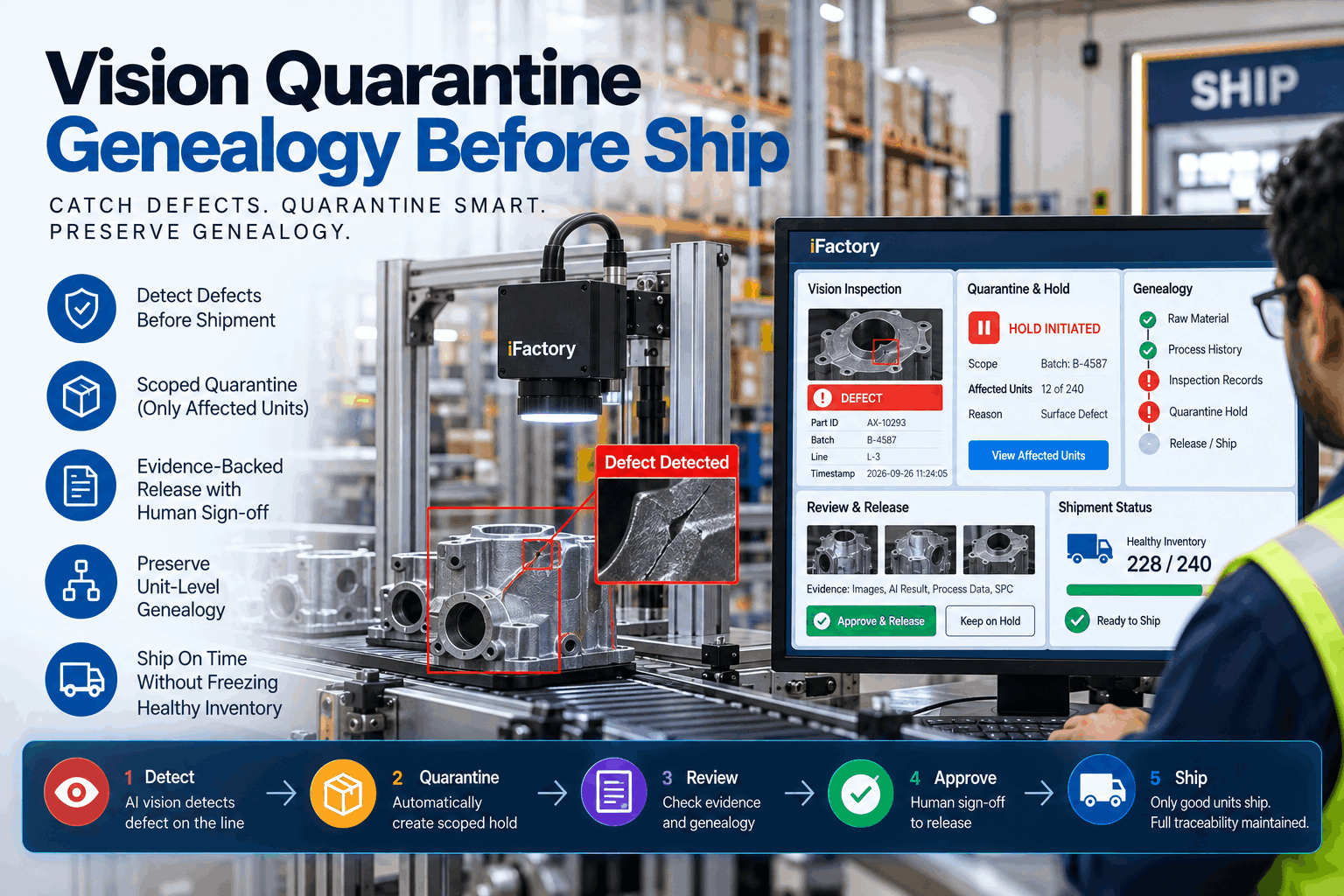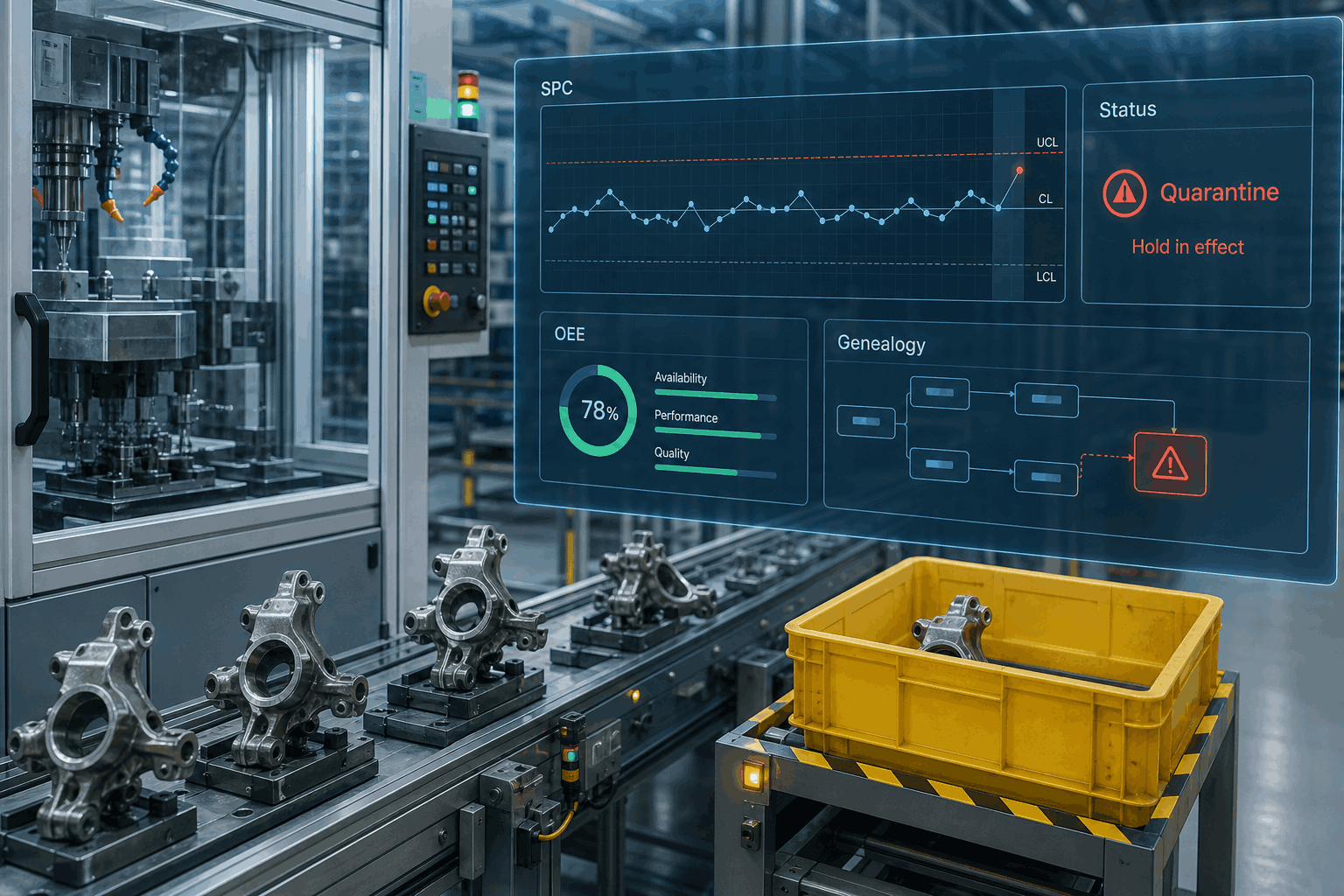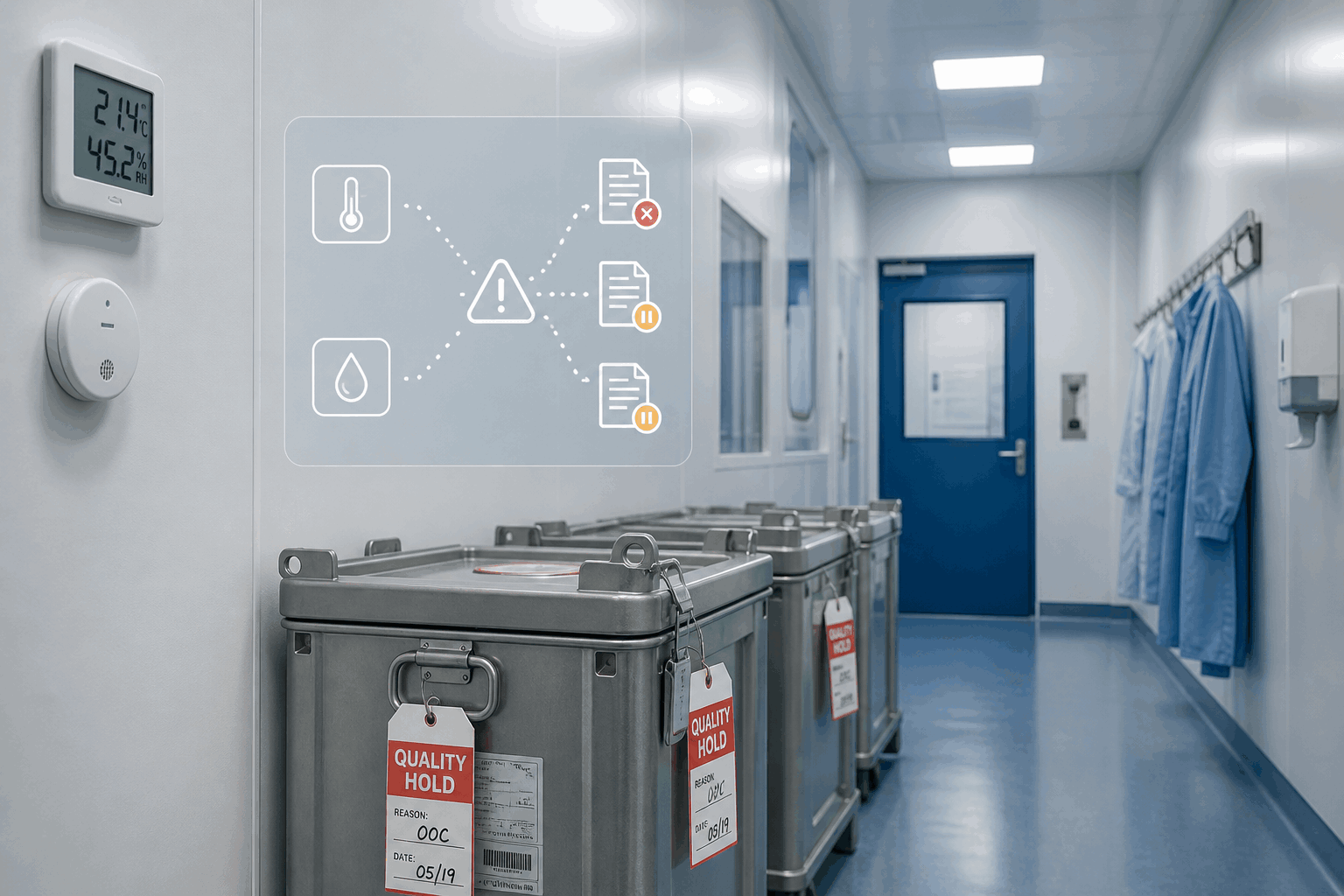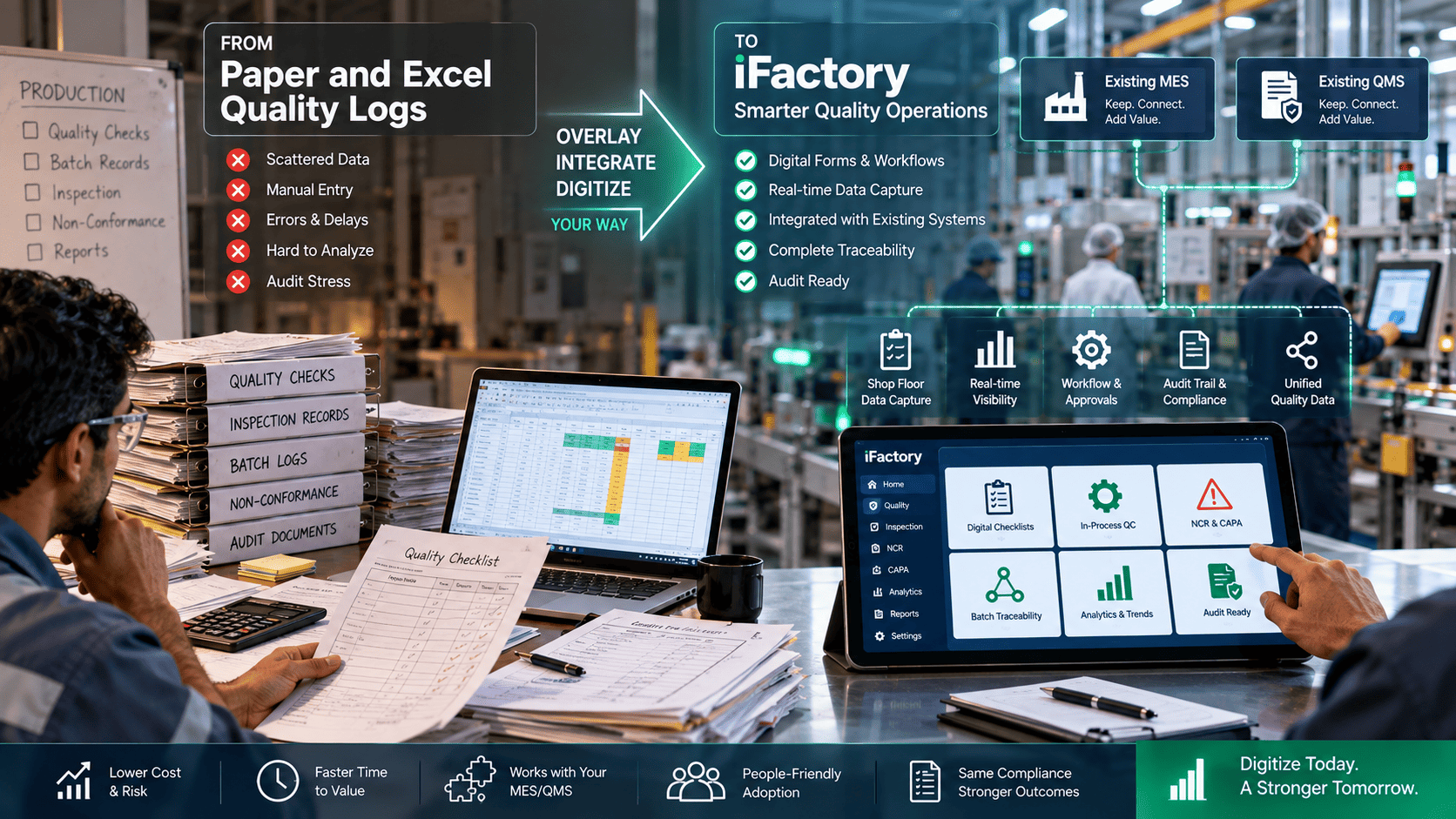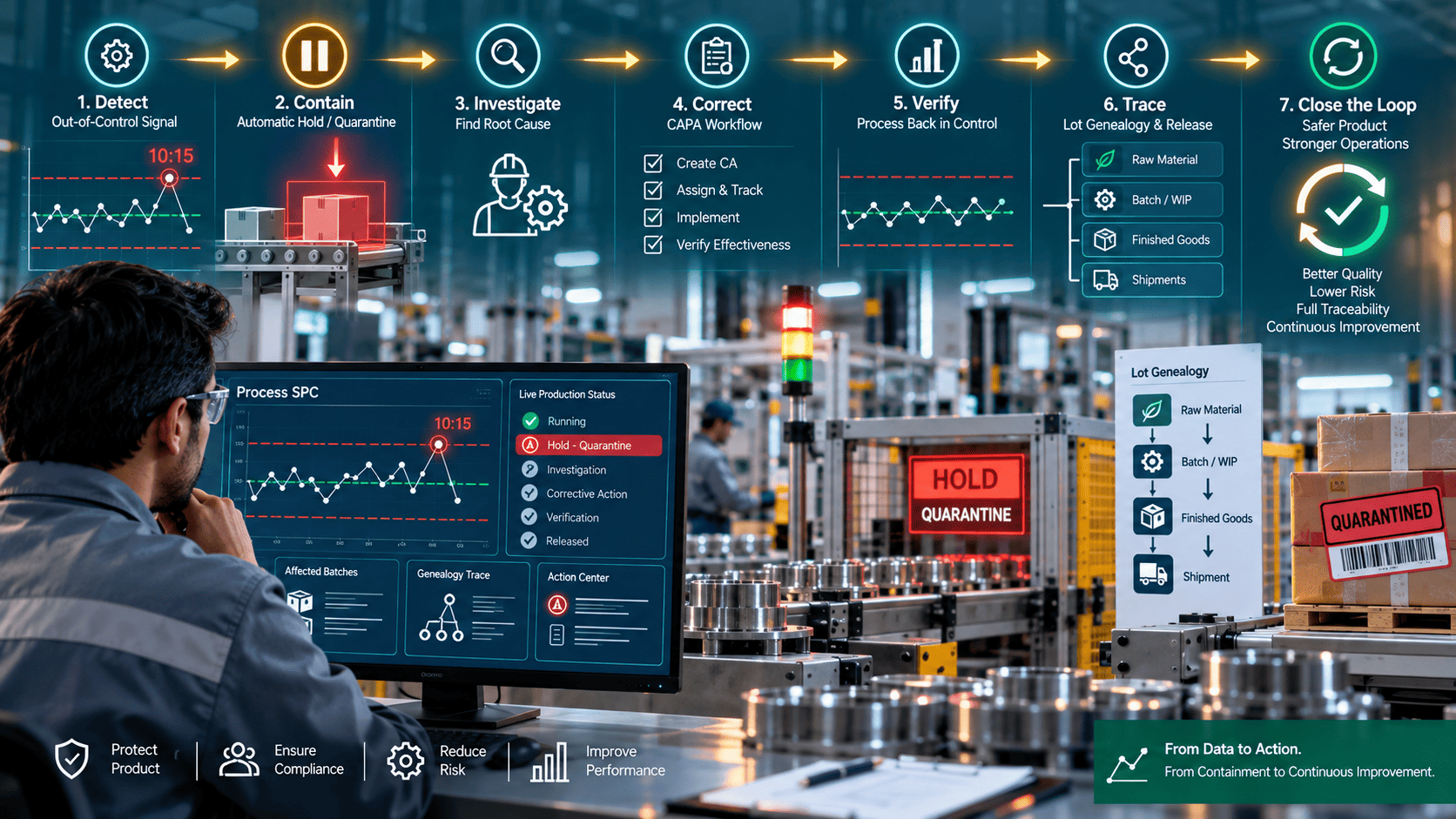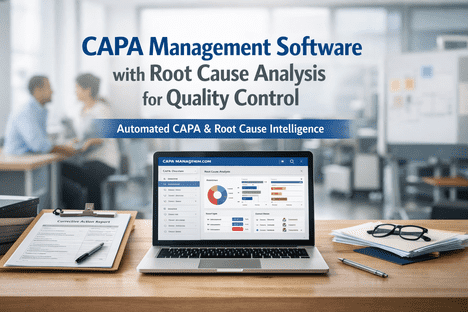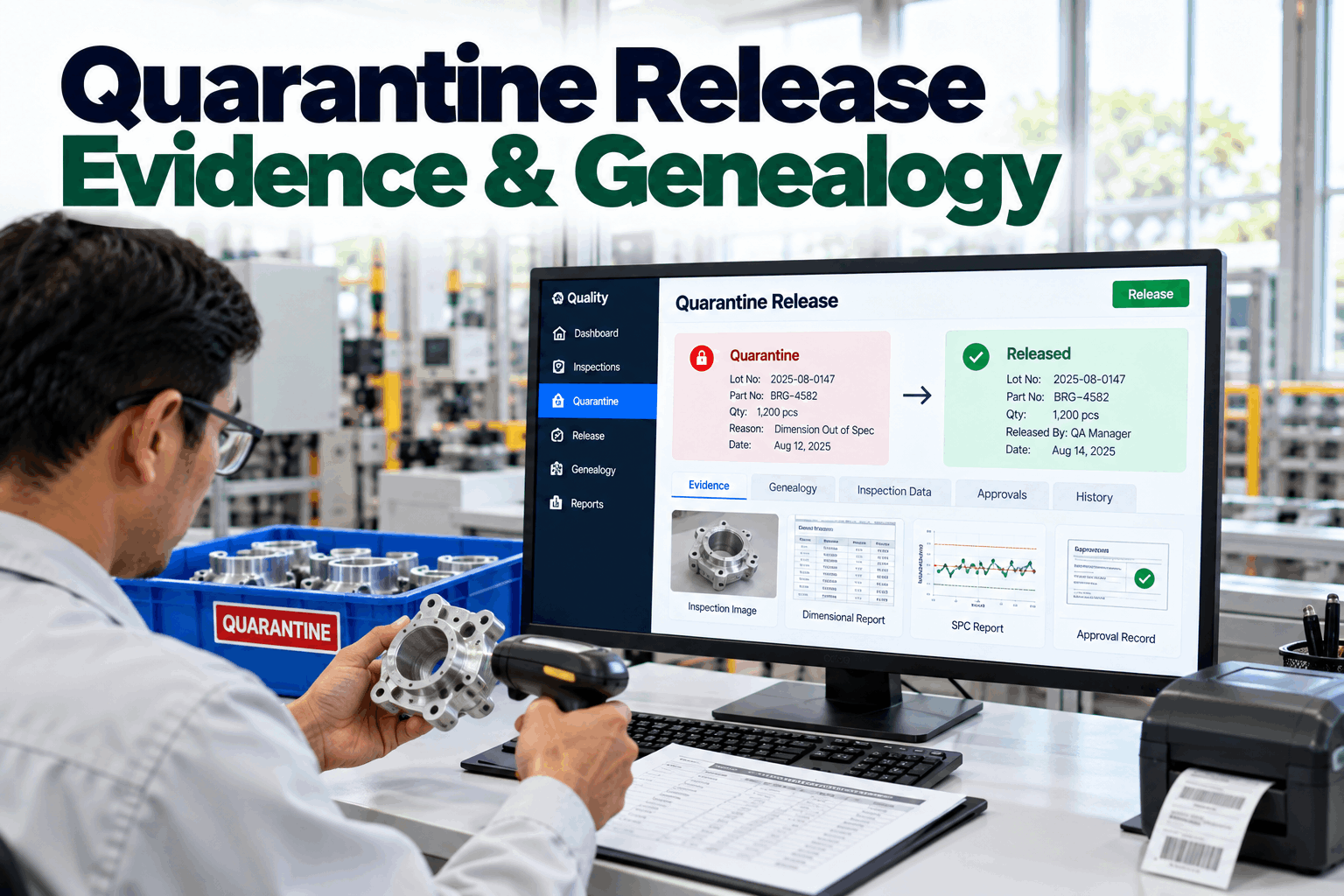
A quality manager stares at a held lot and a supply commitment that will not wait. In that moment the question is not whether to release the lot; it is whether the evidence supports release, and whether the story will hold up if a customer or auditor asks. iFactory AI overlays your MES, QMS, historian, and SPC systems so quarantine and release decisions have a single evidence record — genealogy, defects, PLC and vision context, CAPA linkage, sign-offs — reviewed by a person, recorded once, and defensible when the audit arrives. Book a 30-minute walkthrough of one held lot released against a full evidence stack.
Release decisions live where genealogy, defects, PLC and vision context, CAPA linkage, and sign-offs meet. That is the record that has to hold up.
At a Glance
Why Release Decisions Deserve Their Own Discipline
A hold gets placed the moment risk becomes visible. Release is different. Release is a moment of judgment. It commits the plant, the quality organization, and often the supply chain to a defensible position on whether the product met the intent behind the specification. In an audit or a customer investigation, a release decision is only as strong as the evidence packet behind it. That evidence should describe what was found, what was investigated, and why the risk was resolved — not merely who signed the release. The record must survive review by people who were not in the room when the decision was made.
In practice, that means the release workflow should assemble a full evidence stack: genealogy trace, defect and scrap history, inspection evidence, PLC and vision context, CAPA linkage, and the human sign-off with rationale. When each of those elements is present and consistent, the release decision is defensible. When any of them is missing or ambiguous, the release is either premature or requires a documented conditional release with follow-up.
Evidence Categories Inside the Release Record
Batch or lot identity, material inputs, machine and tool assignments, shift, and downstream containers.
Related quality events on the same line, machine, or lot family within the containment window.
SPC runs, vision inspection results, re-inspection outcomes, and sample plan compliance.
State transitions, alarms, and process signals that surrounded the containment event.
The corrective action reference and whether verification is complete or pending.
Named reviewer, timestamp, and rationale for release, conditional release, or extended hold.
What iFactory Delivers
iFactory assembles the release record from the systems you already run, so the person signing has the full evidence stack in one view.
Genealogy, defects, inspection, PLC and vision context and CAPA status in one view.
Gaps in the stack shown before anyone signs, not after an audit finds them.
Full release, conditional release with follow-up, or extended containment.
The quality manager asks what is still open on a held lot and hears the answer.
Reviewer, time, evidence and rationale stored with the release decision.
Past releases searchable by lot, product, CAPA or reviewer.
Bring one recent held lot. We walk through genealogy, defect linkage, CAPA verification, and the release rationale — beside your existing MES and QMS.
Three Release Paths a Defensible Workflow Should Support
Not every held lot needs a full release. Some need a conditional release with follow-up. A workflow that only allows binary decisions ends up forcing bad choices under pressure. A defensible workflow supports at least three paths.
All evidence categories complete, CAPA verified, no open concerns. The lot ships against a clean record.
Evidence supports release with a documented follow-up — additional sampling, downstream inspection, customer notification, or verification on next production window.
Evidence is not complete or is inconsistent. The lot stays on hold with a named owner and a re-review date.
Each path is a legitimate outcome. The point is that the choice is deliberate and the evidence supports it. A workflow that forces release-or-hold with no middle ground pushes teams to accept risk they should have documented, or to hold product they could have released with a follow-up plan.
Audit-Readiness That Survives Staff Turnover
One of the quiet reasons release records fail an audit is not that the release was wrong at the time — it is that the people who made the decision have moved on, the reasoning was never captured, and the surviving record cannot explain itself. A defensible workflow anticipates this. It captures the reviewer identity, the timestamp, the evidence reviewed, the rationale for the outcome, and the reference to the containment and CAPA records. The result is a release story that still holds up when the auditor arrives twelve or eighteen months later and asks how the decision was reached.
Audit readiness is not a separate discipline layered on top of quality. It is the natural byproduct of a release workflow that treats each decision as a durable record from the moment it is made. When that discipline is built into the daily rhythm, the plant no longer needs a scramble before an audit — the evidence is already in place.
Frequently Asked Questions
Genealogy trace, defect and scrap history, inspection results, PLC and vision context, CAPA linkage, and a documented human sign-off with rationale.
By walking the trace from raw material through downstream containers, confirming which containers share evidence with the containment event, and documenting why the release scope was chosen.
No. Spoken analytics helps organize and review the evidence, but the release decision and sign-off remain with authorized personnel.
They provide the surrounding process context — alarms, state changes, inspection results — that turn a stored record into a reviewable event chain.
It captures who released, when, on what evidence, with which CAPA reference, and with a clear rationale for full, conditional, or extended containment outcomes.
The workflow that produces them should assemble evidence, structure it, and preserve the sign-off in one place — so the record still stands when someone reads it a year later.