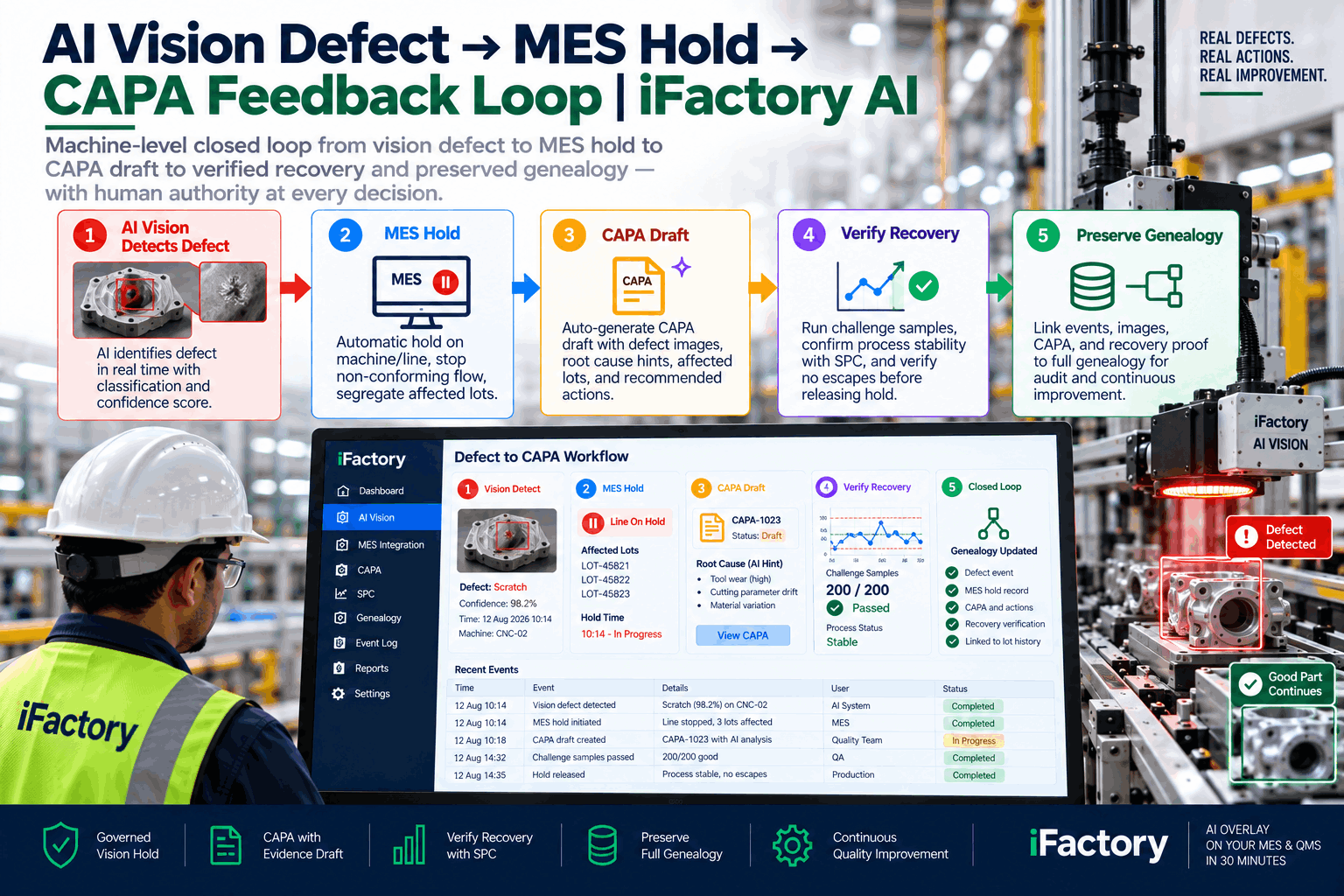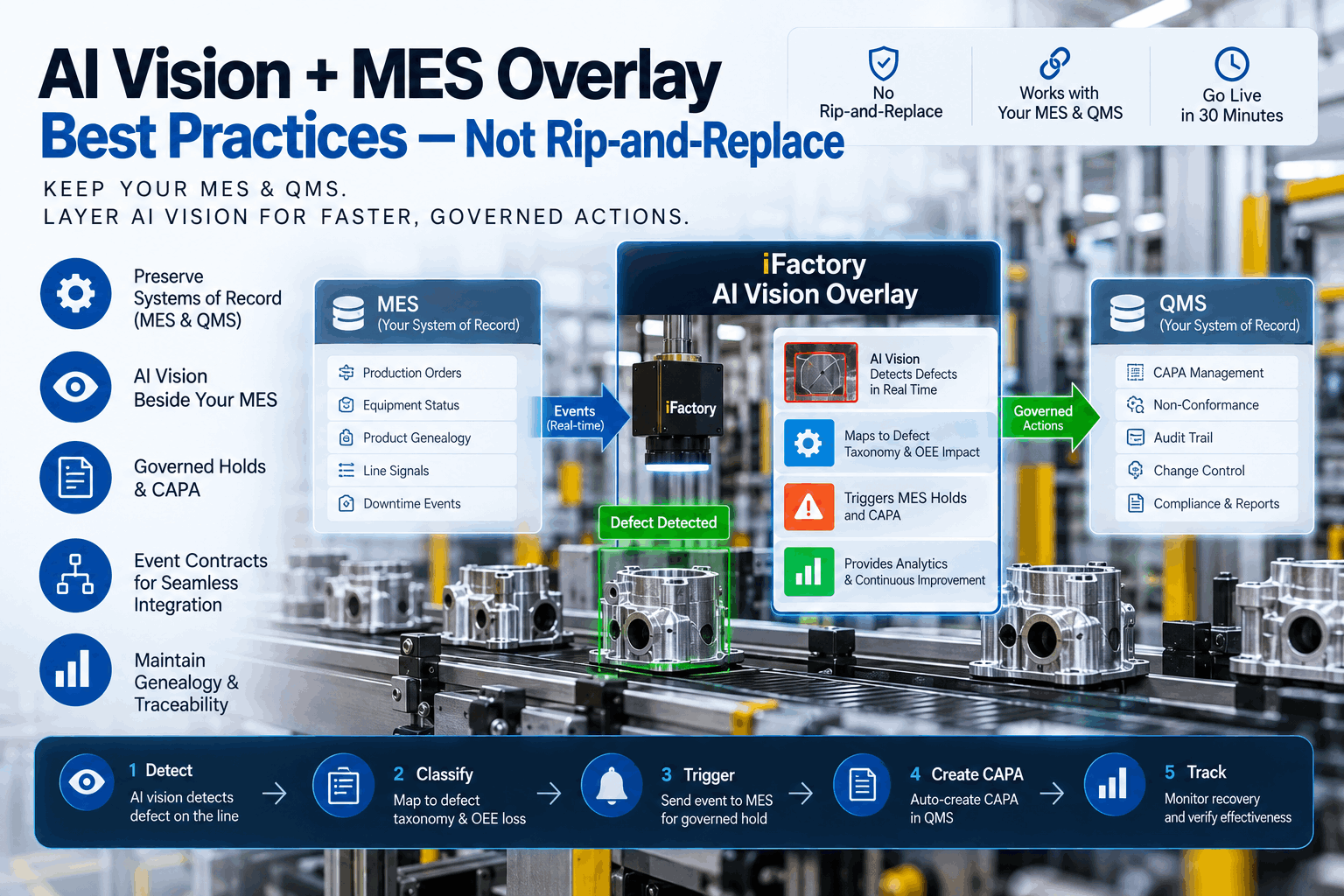
A final-pack vision defect can trigger the worst kind of quality tension — quarantine too broadly and you freeze good inventory, quarantine too narrowly and you risk an escape. Vision-triggered quarantine with genealogy before ship is about turning that defect signal into a precise, human-reviewed hold before anything leaves the dock. iFactory AI overlays your existing MES and QMS with the workflow layer that scopes the hold to the right serials, lots, or ship lanes, drafts the CAPA with evidence attached, and gates release on verified genealogy — so shipping stays on time without hiding an escape risk. See the containment loop in a 30-minute walkthrough.
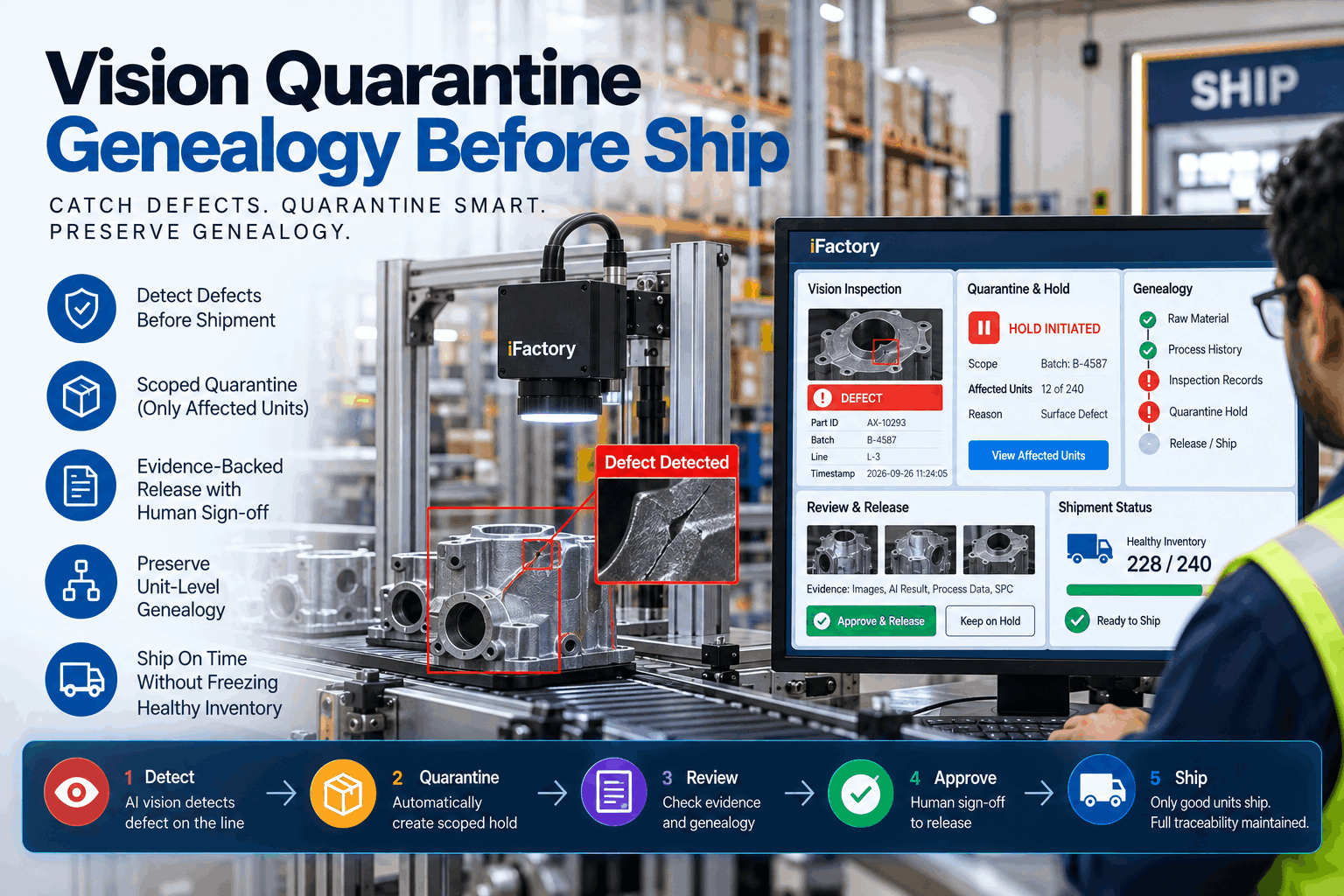
Convert a late defect alert into a scoped hold, verified release path, and preserved genealogy — without freezing healthy inventory or missing an escape.
At a Glance
Why Vision Defects Need Genealogy, Not Just Alerts
A camera can detect a missing label, damaged seal, wrong component, contamination, print failure, or assembly mismatch — but an alert alone does not answer the question shipping cares about: what exactly is affected? That is where genealogy becomes the control layer. A useful containment workflow starts with the signal and quickly adds context: timestamp of the vision event, station or camera source, serial, lot, batch or work order, upstream material genealogy, downstream staging or shipment status, and shift, line, and process window.
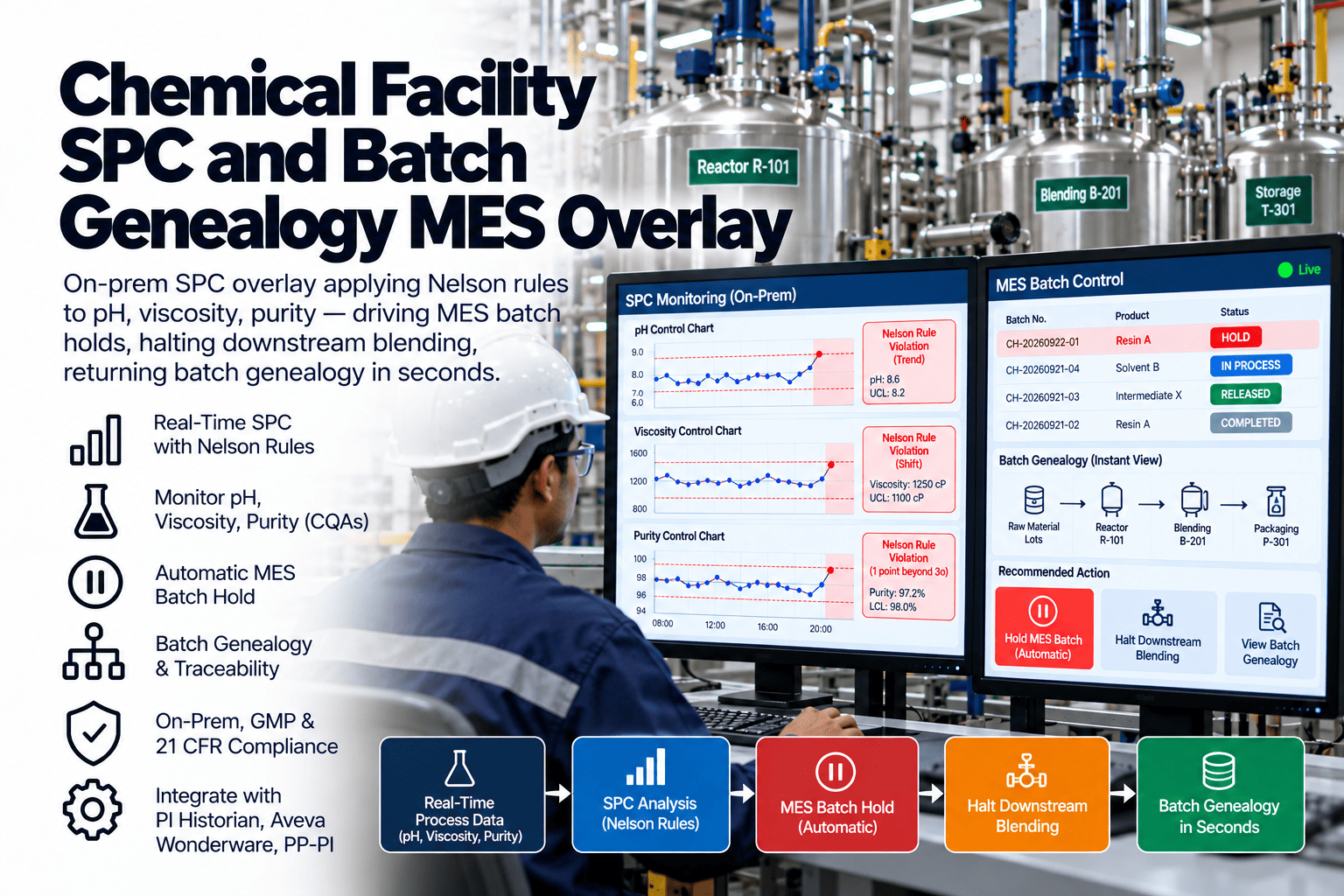
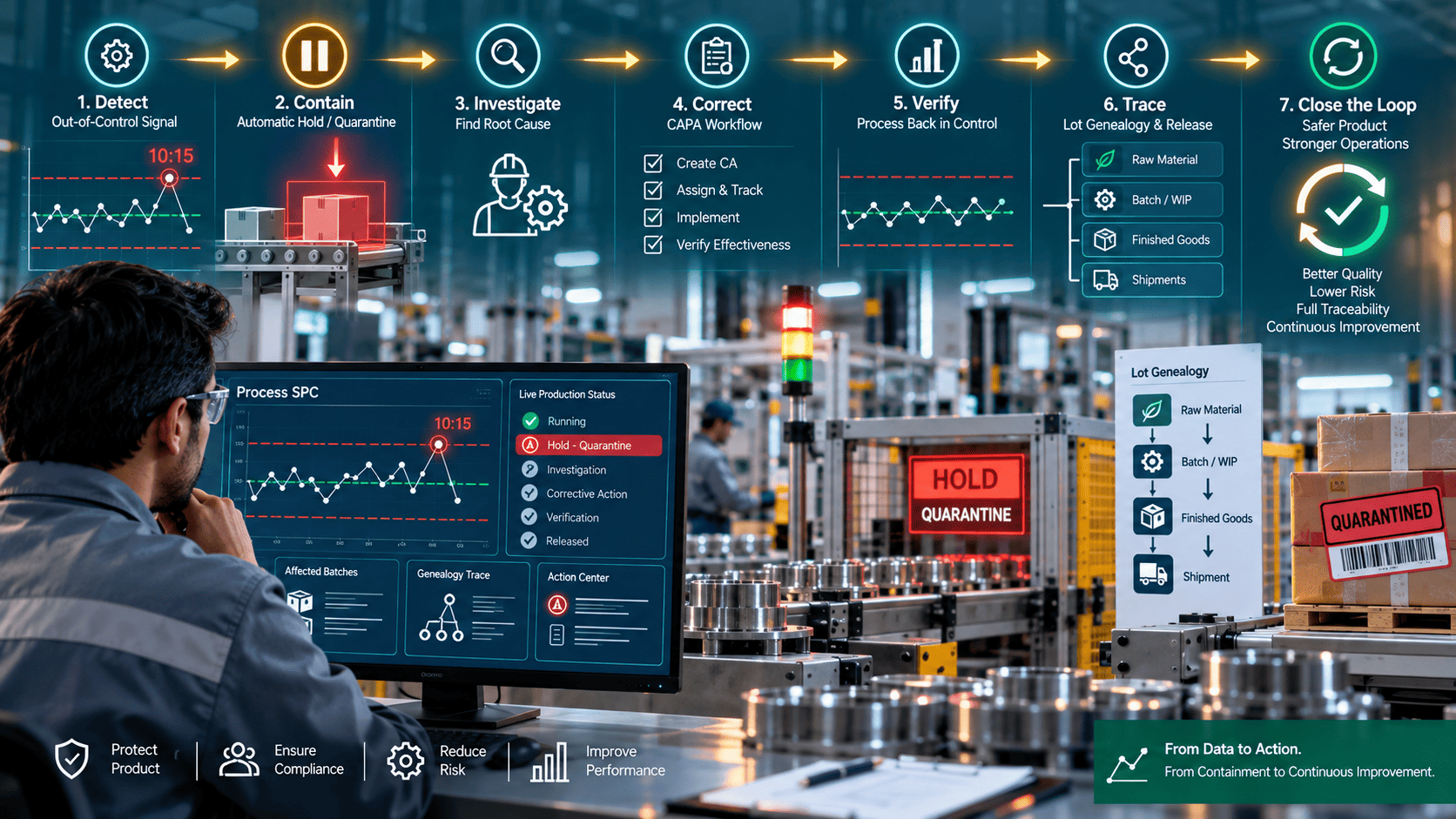
Without that layer, teams often fall into one of two bad habits: they either hold everything just in case, or they let exceptions move forward while people investigate later. Neither is a good shipping gate strategy. The better pattern is simple — detect, identify affected genealogy, scope the quarantine, get human sign-off, draft CAPA, verify recovery, then release. That closed-loop path prevents escapes without freezing the whole plant.
Scope the Quarantine to the Traceability You Have
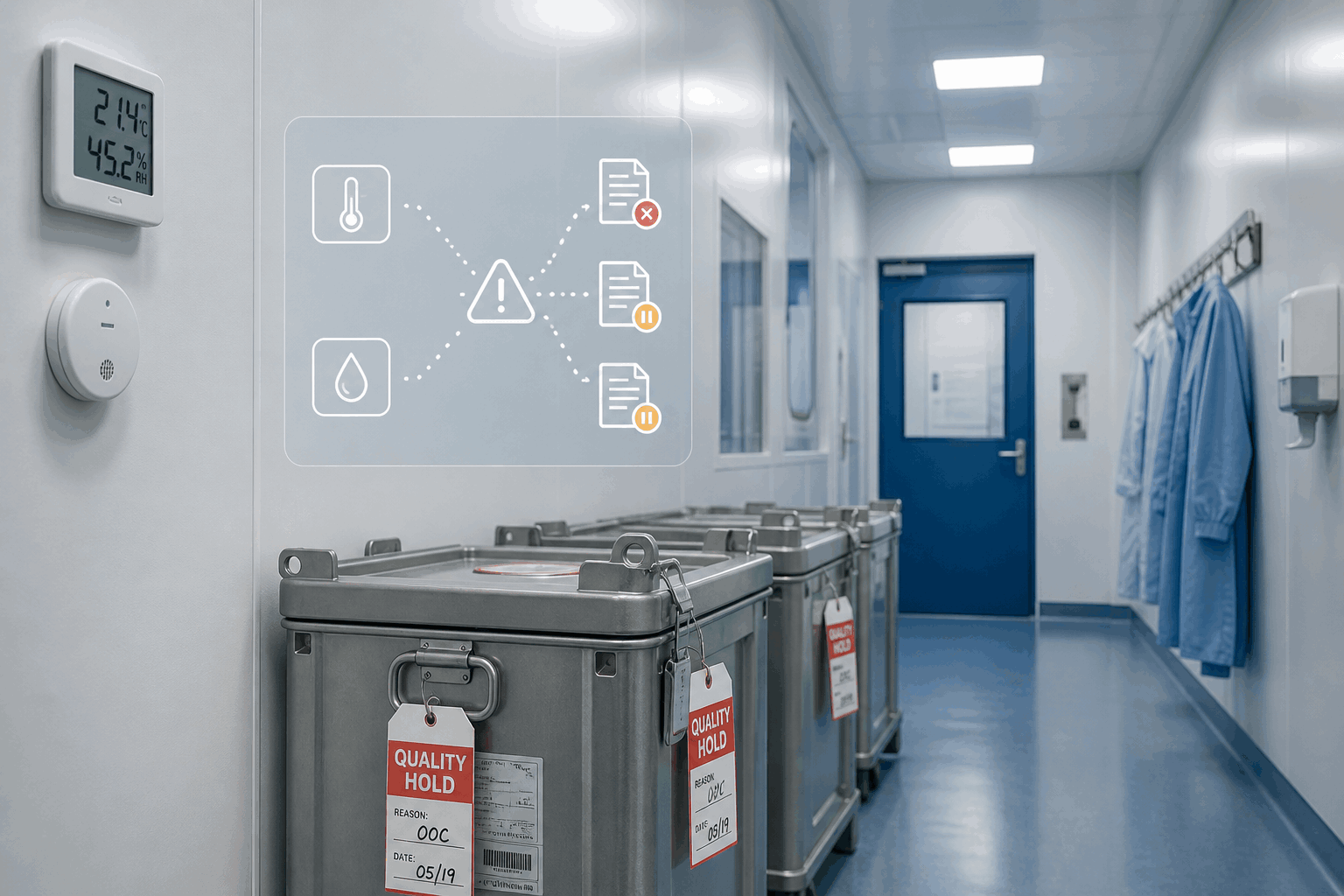
Not every vision-triggered issue should create the same hold. The containment scope should match the traceability you actually have — and the more precise the genealogy, the more targeted the hold can be.
If the line is serialized and the defect maps to a specific unit, one suspect serial or one pallet can be blocked while healthy output continues to move.
If materials are batch-based, the defect may imply a wider lot hold. Genealogy shows which finished goods share the same upstream material.
Some defects tie to a time window. Focus on units produced in that window rather than the entire shift or product family.
Sometimes the finished-goods defect is a material or subassembly issue. Genealogy expands the review to incoming material or a prior station.
For shipping gate owners, staged outbound inventory needs the hold to reach the lane fast enough to prevent an in-flight escape.
Where scope is uncertain, adjacent lots are flagged for review rather than automatically included — reducing over-holding.
The Hold-to-CAPA Workflow After a Vision Trigger
A strong quarantine process does more than block shipment. It creates a reliable quality trail. When iFactory AI is used as a decision-support overlay, the workflow moves through a governed sequence where each step feeds the next — and human authority stays intact throughout.
- Who placed the hold
- Why the hold was created
- What genealogy was included
- What evidence supported release
- Who approved the release
- When the quarantine was cleared
That keeps the process defensible and prevents shadow releases by email thread. Best practice is clear: AI can recommend, but quality owns release.
Walk through detect, trace, quarantine, CAPA draft, verify, and release — with genealogy tying every step together.
Where SPC Helps Explain Why the Defect Happened
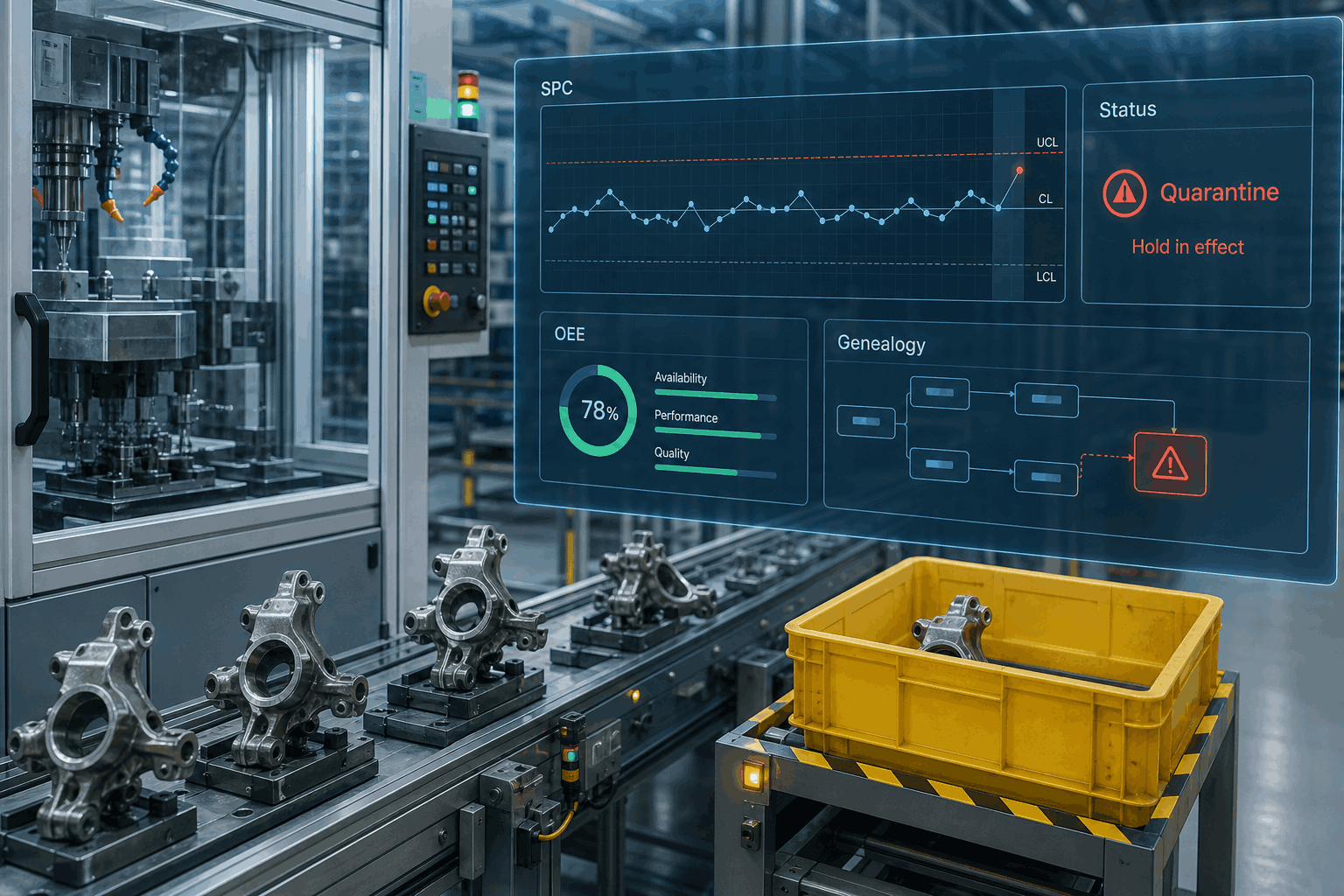
Vision is often the late signal. It tells you a defect is present, but not always why the process drifted there. That is where SPC context adds value. If the vision issue is recurring, quality teams can look at attribute charts for pass or fail counts, X-bar and R chart behavior for dimensional drift, trend breaks that suggest process instability, repeated defect families across shifts or stations, and correlation between earlier process variation and later inspection failures.
For example, a label placement issue seen at final packout may connect to a gradual shift in upstream equipment settings. The vision event is the alarm, but SPC and historical process records help explain the drift pattern. iFactory AI helps by making those records easier to search and summarize across systems — a quality and MES overlay that helps the team understand genealogy context without replacing existing SPC tools.
Where Predictive OEE Fits Into Quarantine Decisions
Quality release owners usually care first about containment. Operations leaders care about throughput. The good news is those goals do not have to conflict if the workflow is properly scoped. A quarantine event can affect OEE in three ways at once, so recovery is not just fewer defects — it is less downtime, fewer quality stops, and better flow.
- Defective units detected and blocked
- False rejects requiring rework
- Escape risk if scope is too narrow
- Line pauses for containment
- Rescan or reinspection queue
- Ship-lane blocking
- Manual sorting
- Reinspection time
- Slower release checks
If a vision-triggered hold creates a broad freeze, the OEE impact can be larger than necessary. If the quarantine is too narrow, the team risks an escape and rework later. The right answer is a contained hold with traceable recovery.
Frequently Asked Questions
It turns a defect alert into a scoped hold. Instead of freezing every unit, the system uses genealogy to identify only the affected serials, lots, or shipment staging.
It can trigger or recommend a hold workflow depending on how rules are configured. The important design choice is that the hold remains human-reviewed and fully auditable.
Genealogy shows which units share upstream materials, work order, station history, or time window — so quality isolates the right inventory instead of applying a blanket freeze.
Quality should own release, with documented evidence showing defect scope, corrective action, and verification results. The system records who approved and why.
Yes, as a human-reviewed assistant. It can summarize genealogy, recurrence, and process history in plain language but should not replace quality judgment or plant control.
The real value of vision-triggered quarantine is not the alert. It is the ability to convert that alert into precise containment and evidence-backed release before anything leaves the dock.