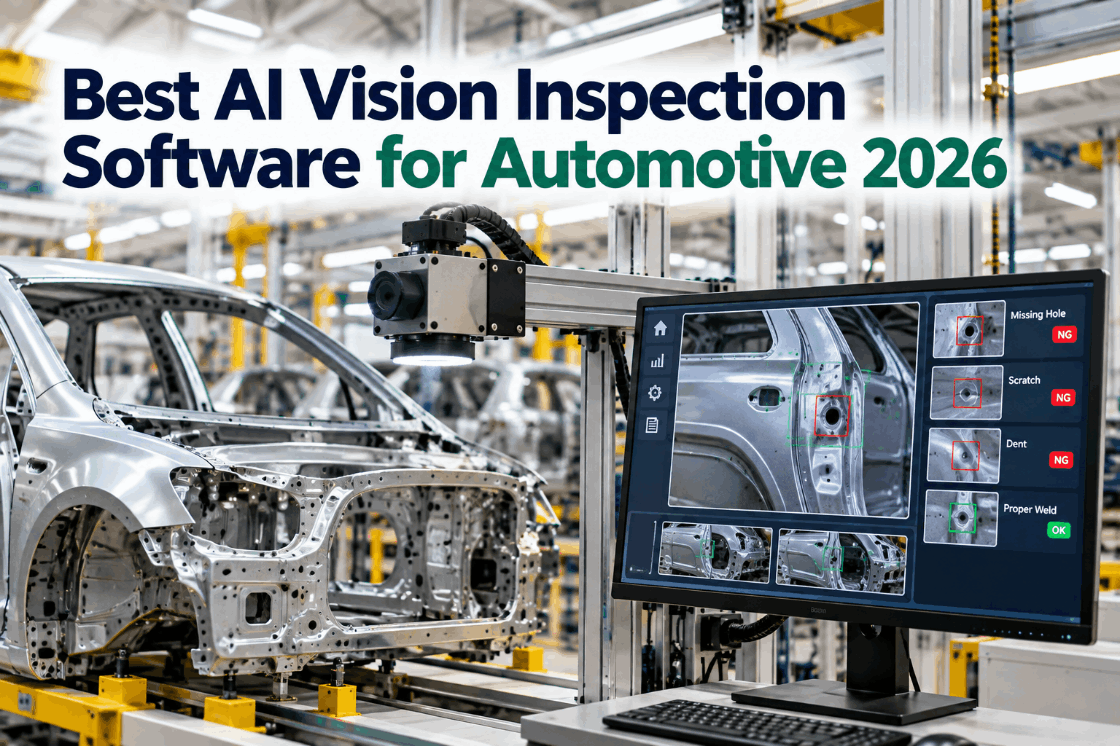
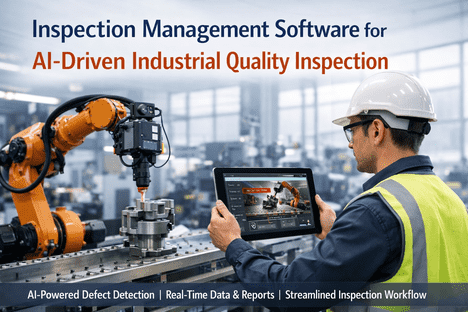
Every manufacturing company has a cost of poor quality averaging 20% of total revenue — for a plant generating $10 million, nearly $2 million disappears into scrap, rework, warranty claims, and inspection overhead. Human visual inspection misses 20-30% of defects under real production conditions, with accuracy degrading 15-25% after just 2 hours of continuous observation. Inter-inspector agreement on defect severity is only 55-70%, meaning identical products get different quality verdicts depending on which inspector and which shift. AI vision inspection systems now achieve 95-99% detection accuracy, inspect 10,000+ parts per hour at sub-100ms inference speed, and maintain identical quality standards 24/7 — with documented results showing 37% defect reduction, 85% fewer customer complaints, and 374% three-year ROI with 7-8 month average payback. The AI-based visual inspection market reached $1.62 billion in 2024 and is growing at 13.8% CAGR, driven by manufacturers who can no longer compete with inconsistent manual quality gates. iFactory deploys AI-powered vision inspection across automotive, electronics, food and beverage, pharmaceutical, steel, and general manufacturing — detecting surface defects, assembly errors, dimensional deviations, and product anomalies at production speed with automated work order generation and full defect traceability.
The True Cost of Poor Quality in Manufacturing
Defects that escape your inspection don't just cost the price of the part. They cascade into rework labor, production line stops, warranty claims, customer audits, and lost contracts. A defect caught at the inspection station costs $1. The same defect caught by your customer costs $100-$1,000. The same defect recalled from the field costs $10,000+.
Field Failure / Recall
Warranty claims, safety recalls, regulatory investigation, brand damage, lost accounts
Customer Discovery
Incoming inspection rejection, quality claims, sorting at service center, expedited replacement
Internal Rework
Downstream inspection catch, disassembly, rework labor, re-inspection, production delay
Point-of-Origin Detection
AI catches defect at the station where it was made — immediate reject, zero downstream cost
Why Human Inspection Fails at Production Speed
The problem isn't inspector skill — it's human biology. The human eye cannot sustain the focus required for 100% detection at modern production speeds. AI eliminates the biological limitations that make manual inspection unreliable.
Defects Missed
Even skilled inspectors miss 20-30% of defects under real production conditions — fatigue, speed, and repetition create systematic blind spots
Accuracy Drop After 2hrs
Inspector accuracy degrades 15-25% after 2 hours of continuous observation — peak miss rates occur in the final hours of each shift
Inter-Inspector Agreement
Different inspectors classify identical defects differently — the same part passes on first shift and fails on second, creating customer confusion
Manual Throughput
Human inspection handles 2-3 items per minute vs AI processing 10,000+ per hour — manual inspection becomes the production bottleneck
How AI Vision Inspection Works: End-to-End Pipeline
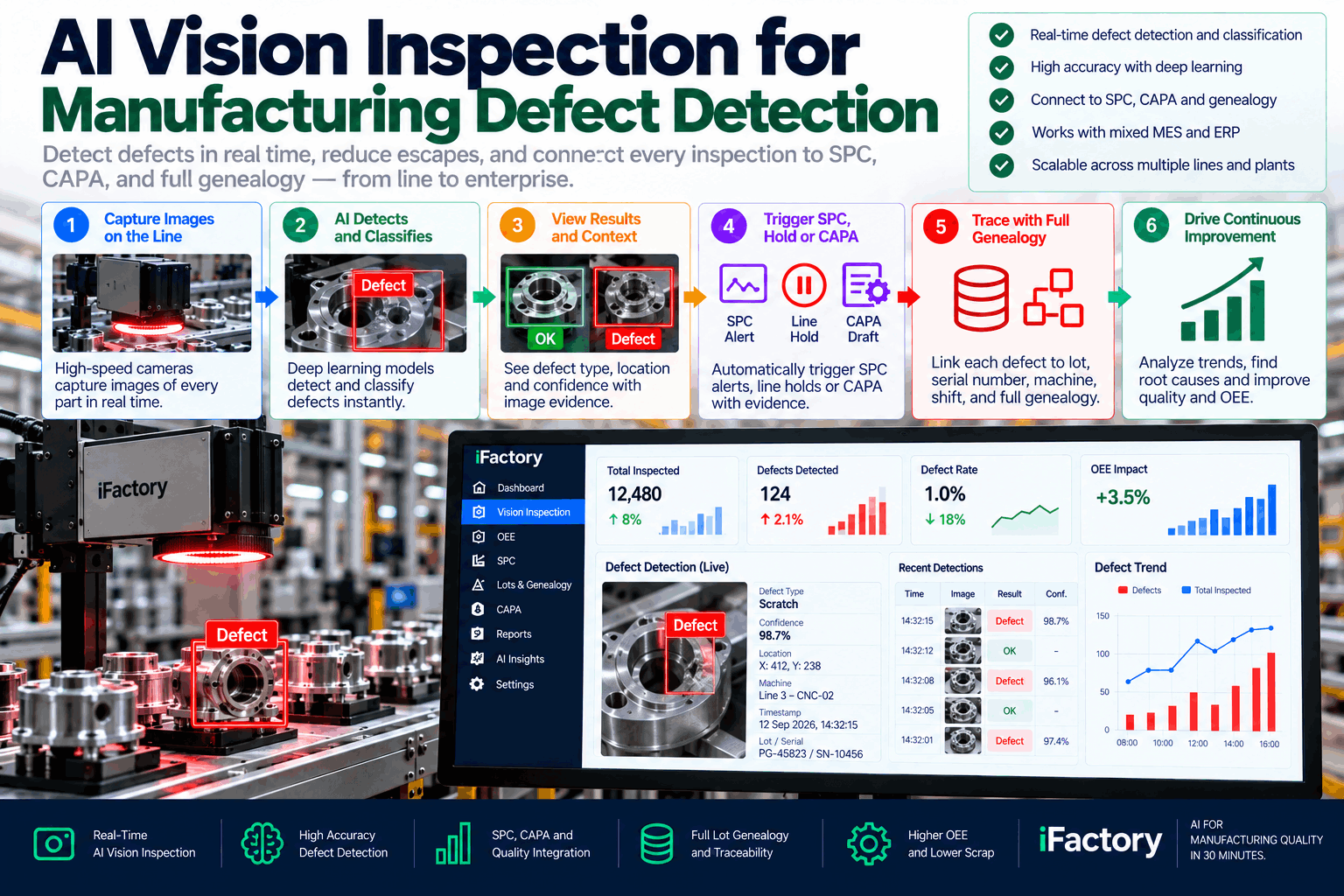
From image capture to defect classification in milliseconds — sub-100ms end-to-end latency, on-premise edge AI, zero cloud dependency. Every decision is logged with the image, timestamp, defect category, severity score, and disposition outcome — creating a complete auditable quality record.
Image Capture
High-res cameras with specialized lighting (diffuse, coaxial, dark-field, structured) capture every part at line speed. Multi-angle coverage eliminates blind spots.
AI Inference
Deep learning models (CNN, YOLO, Vision Transformer) analyze each image in under 100ms. Trained on your specific defect types with 500-2,000 labeled samples.
Classify & Score
Defect type identified, severity scored, location marked with bounding box. Conforming parts continue; non-conforming parts flagged or auto-rejected.
Act & Log
Auto work order with annotated photo, SAP PM/CMMS sync, push/SMS alerts. Every inspection logged for traceability and trend analysis.
AI Vision Inspection by Industry
Different industries face different defect types, tolerance requirements, and regulatory standards. iFactory trains industry-specific AI models that understand the visual characteristics and acceptance criteria unique to each manufacturing sector.
Body, Paint & Assembly
Paint defects, weld quality, gap/flush analysis, assembly completeness verification, stud placement. BMW achieved 37% defect reduction with AI vision across production lines.
Paint flaws, weld spatter, gap analysis, missing components, torque marksPCB & Semiconductor
Solder joint inspection, missing components, tombstoning, bridging, wafer defects. Sub-micron precision for semiconductor fabrication where defects determine chip functionality.
Solder defects, missing parts, misalignment, wafer flaws, contaminationPackaging & Safety
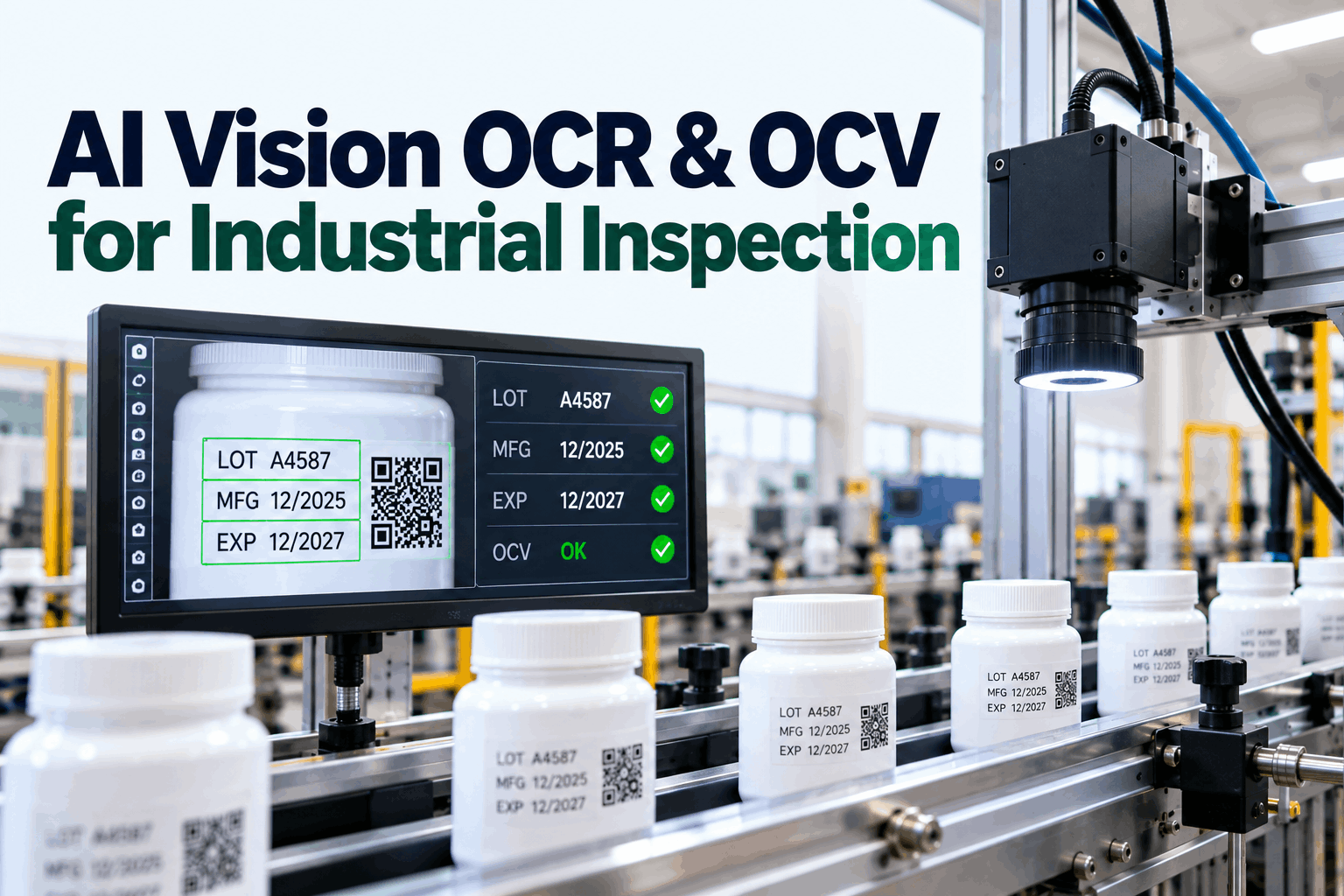
Fill level verification, seal integrity, foreign object detection, label accuracy, date code verification. 90% reduction in inspection time with 50% decrease in product waste documented.
Fill level, seal breach, foreign objects, label errors, contaminationCompliance & Packaging
Pill shape consistency, blister pack inspection, vial crack detection, serialization verification. Edge AI meets strict compliance with full audit traceability for FDA and GMP.
Pill defects, blister voids, vial cracks, label compliance, serializationSurface & Coating Quality
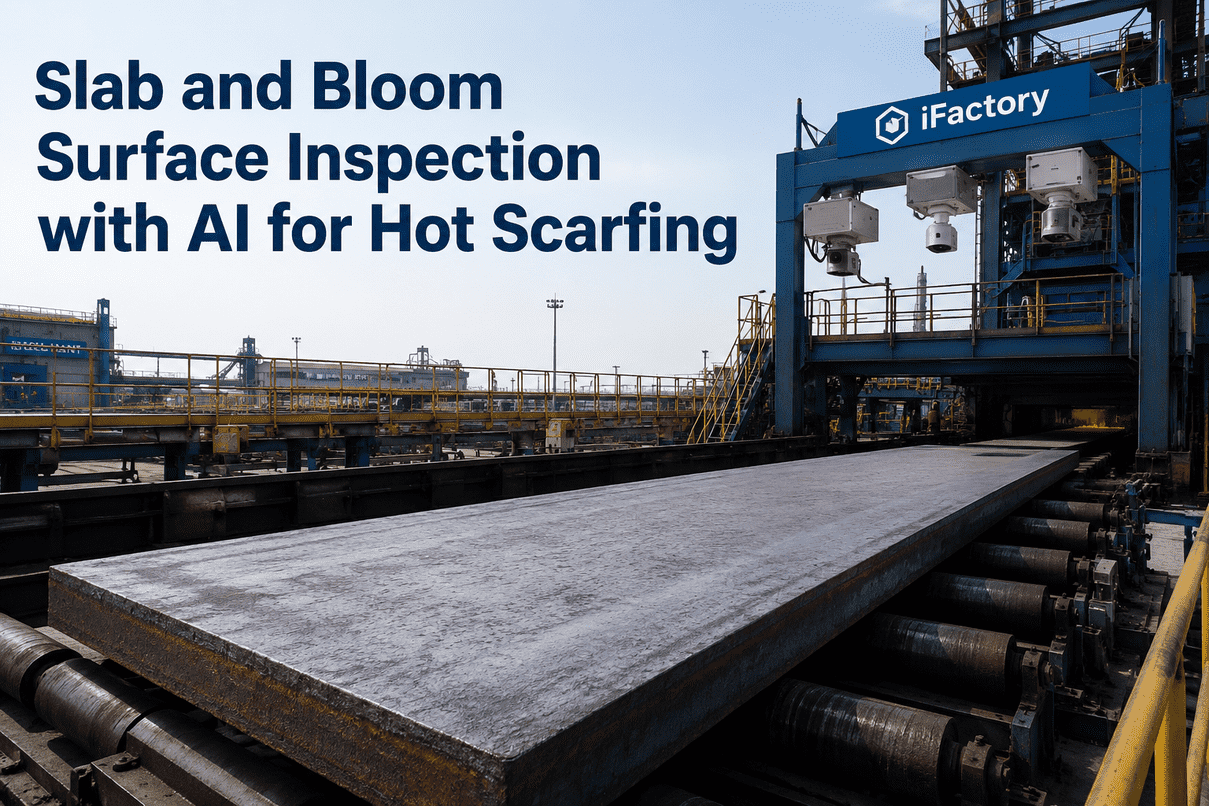
Cracks, scale, roll marks, coating defects at 1200+ m/min line speed. 2-5% of production typically downgrades — AI surface inspection saves $3M-$12M annually in steel mills.
Cracks, scale pits, roll marks, scratches, coating voids, inclusionsMachined Parts & Assembly
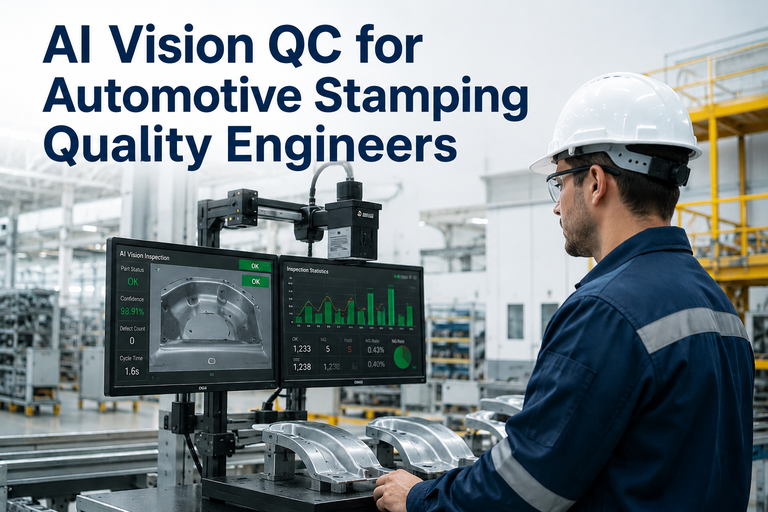
Dimensional verification, surface finish, burr detection, assembly completeness, color matching. Applicable across plastics, castings, forgings, stamped parts, and CNC machined components.
Dimensional errors, surface flaws, burrs, missing features, color driftProven ROI: Case Studies & Benchmarks
AI vision inspection is one of the few Industry 4.0 investments that delivers measurable ROI within months — not years. The financial case is straightforward: quantify your current COPQ, model the impact of improved detection, and subtract deployment cost.
AI wafer vision inspection detects micron-level defects during thinning process. Scrap avoidance and yield improvement delivered $2 million in annual savings.
CNN models inspect painted surfaces and critical parts in real time. Scratches, dents, and pseudo-defects detected more accurately than human inspection. 22% OEE increase.
Defect escape rate reduced from 2.3% to 0.1%. $1.8M saved annually in warranty claims. Implementation completed in 2-4 months for pilot line.
Leading automotive manufacturers report 60% reduction in warranty claims after implementing AI defect detection systems across production lines.
Deploy AI Vision in 4 Steps
iFactory's deployment methodology starts with a single high-impact inspection station, proves ROI within weeks, and scales from there. No enterprise-wide transformation required on day one.
Camera & Lighting Setup
Position cameras at your highest-impact inspection point. 30 minutes per camera. Works with existing IP cameras (ONVIF/RTSP) or new industrial cameras with optimized lighting.
Collect & Label Training Data
Capture 500-2,000 images across good parts, marginal parts, and defective parts. iFactory's active learning minimizes labeling effort while maximizing model accuracy.
Train & Validate AI Model
Train CNN model on your labeled dataset. Shadow-run alongside manual inspection for one week — comparing outputs and resolving edge cases before full handover. Target 99%+ recall.
Go Live & Scale
Enable AI in production. Continuous learning improves accuracy from 90-92% to 99%+ within first week. Scale to additional stations as ROI is proven on the first.
Frequently Asked Questions
Every Part Inspected. Every Defect Caught. Every Shift, 24/7.
iFactory deploys AI-powered vision inspection across your production lines — detecting surface defects, assembly errors, and product anomalies with 99% accuracy. Start with one station, prove ROI in weeks, scale from there.