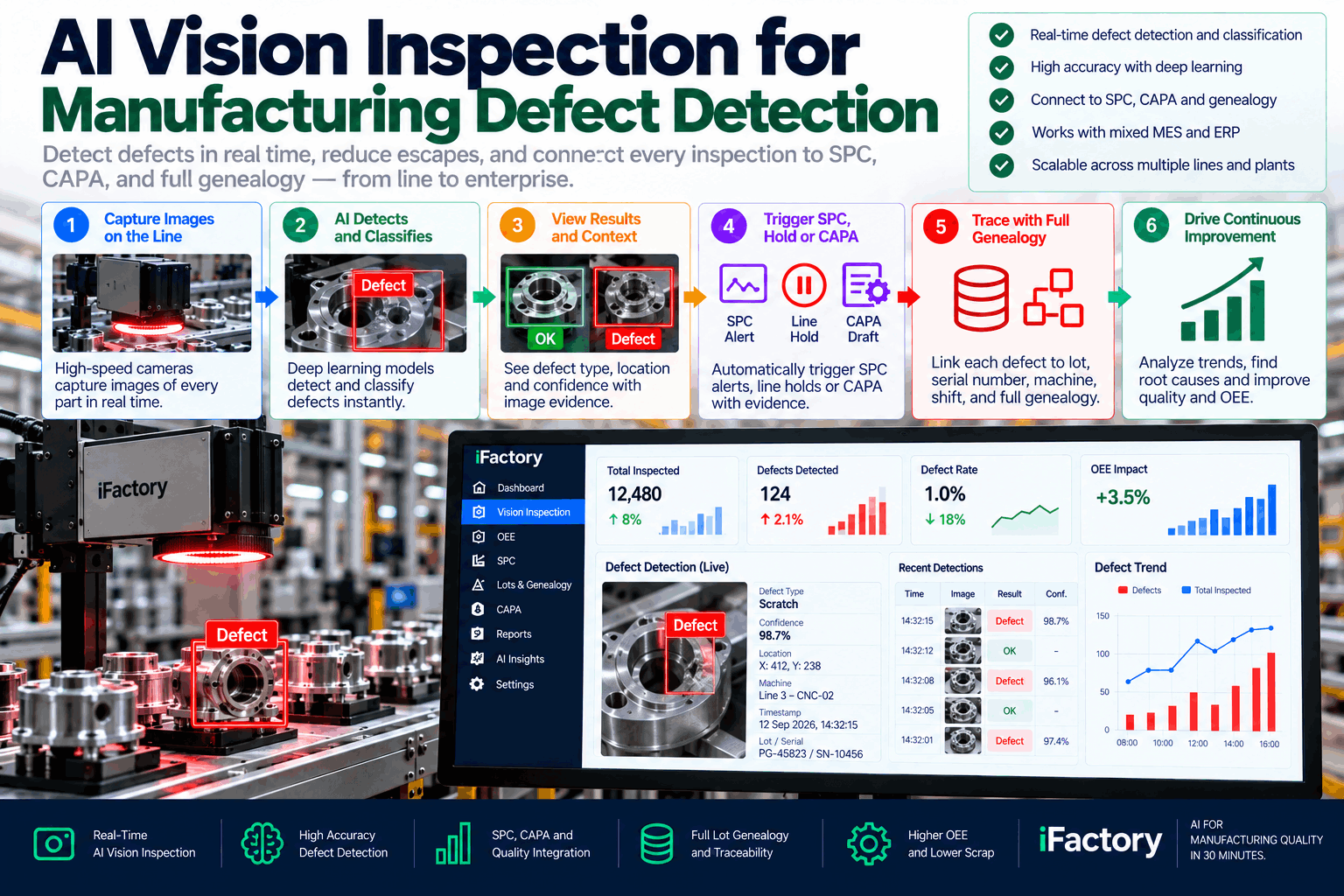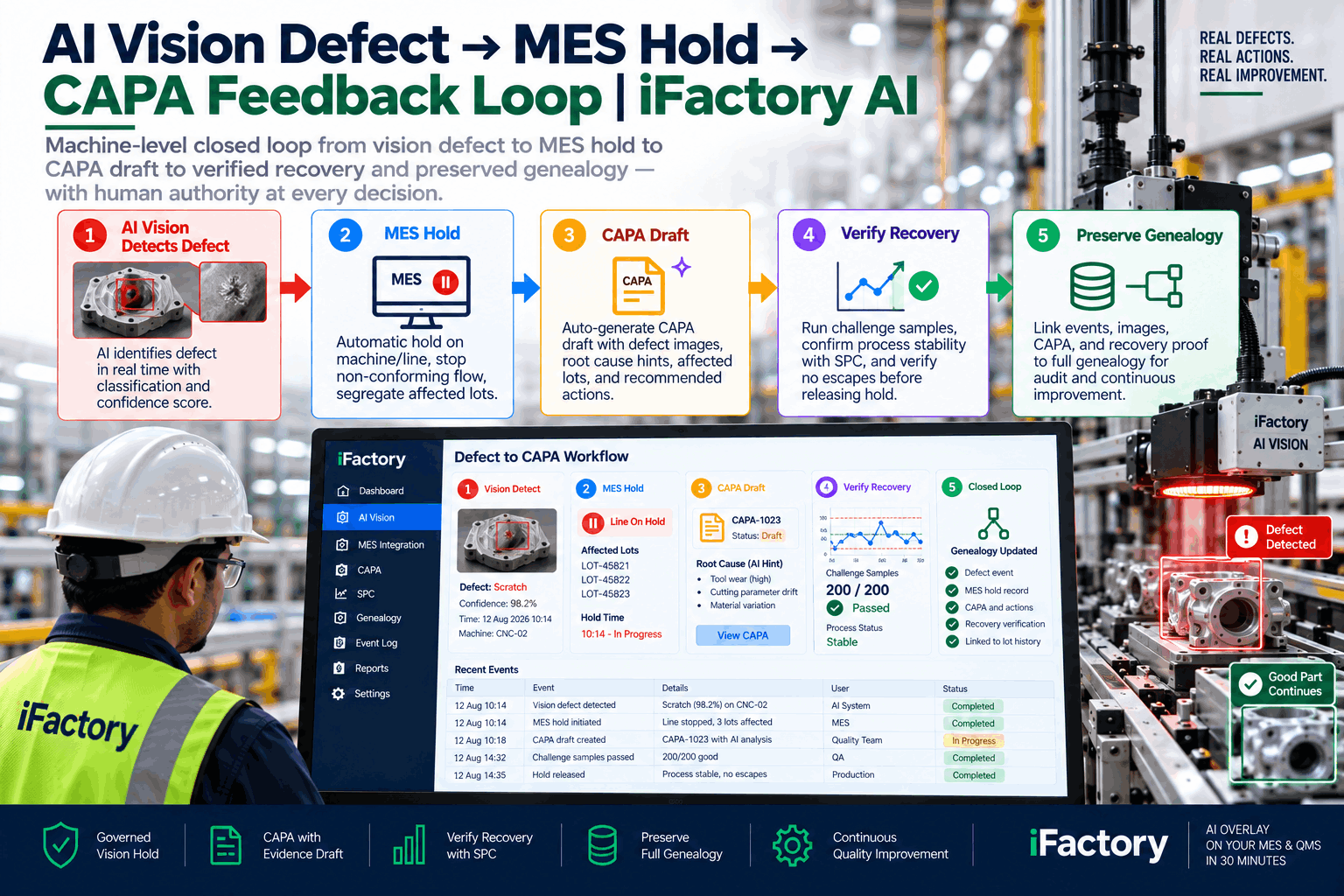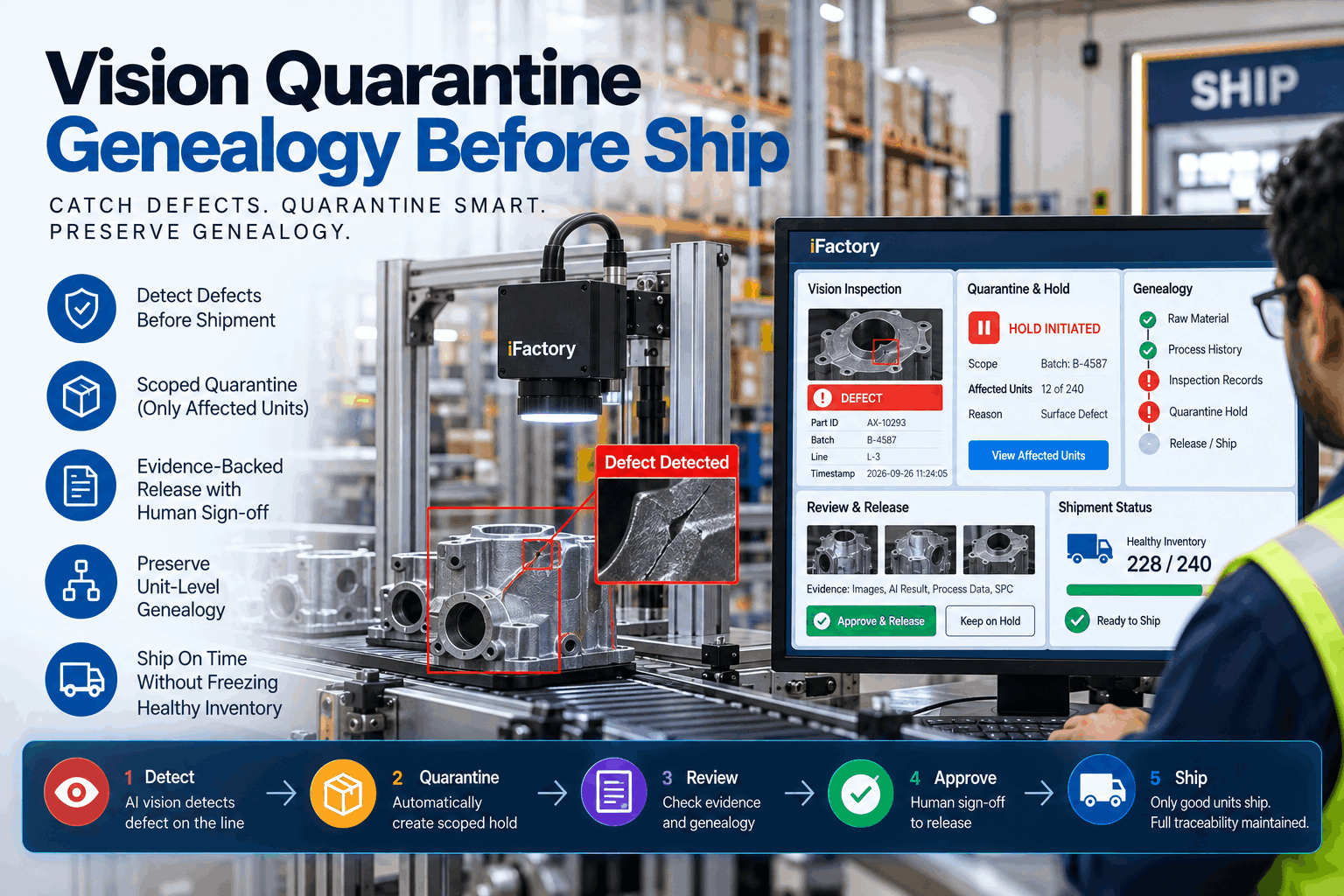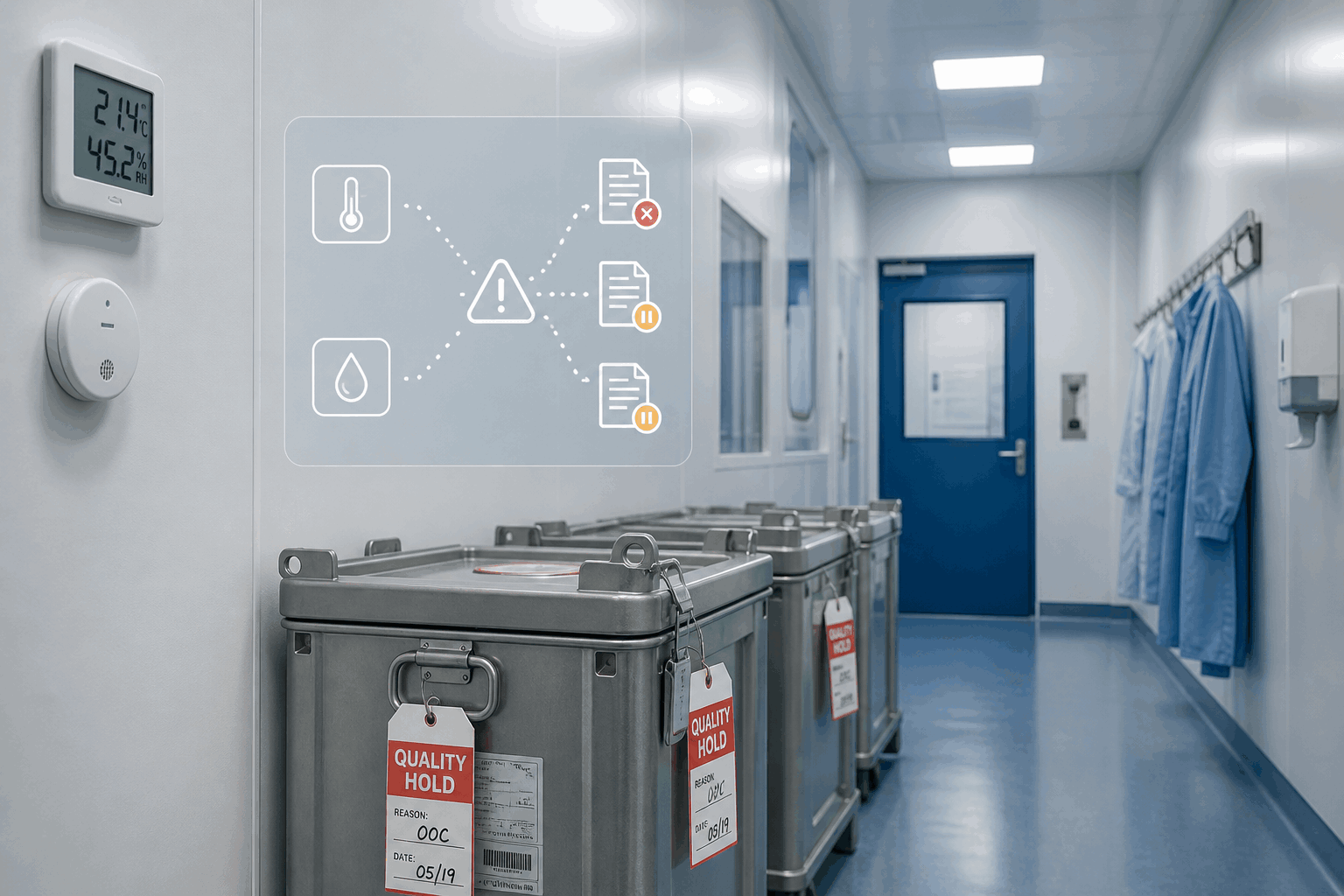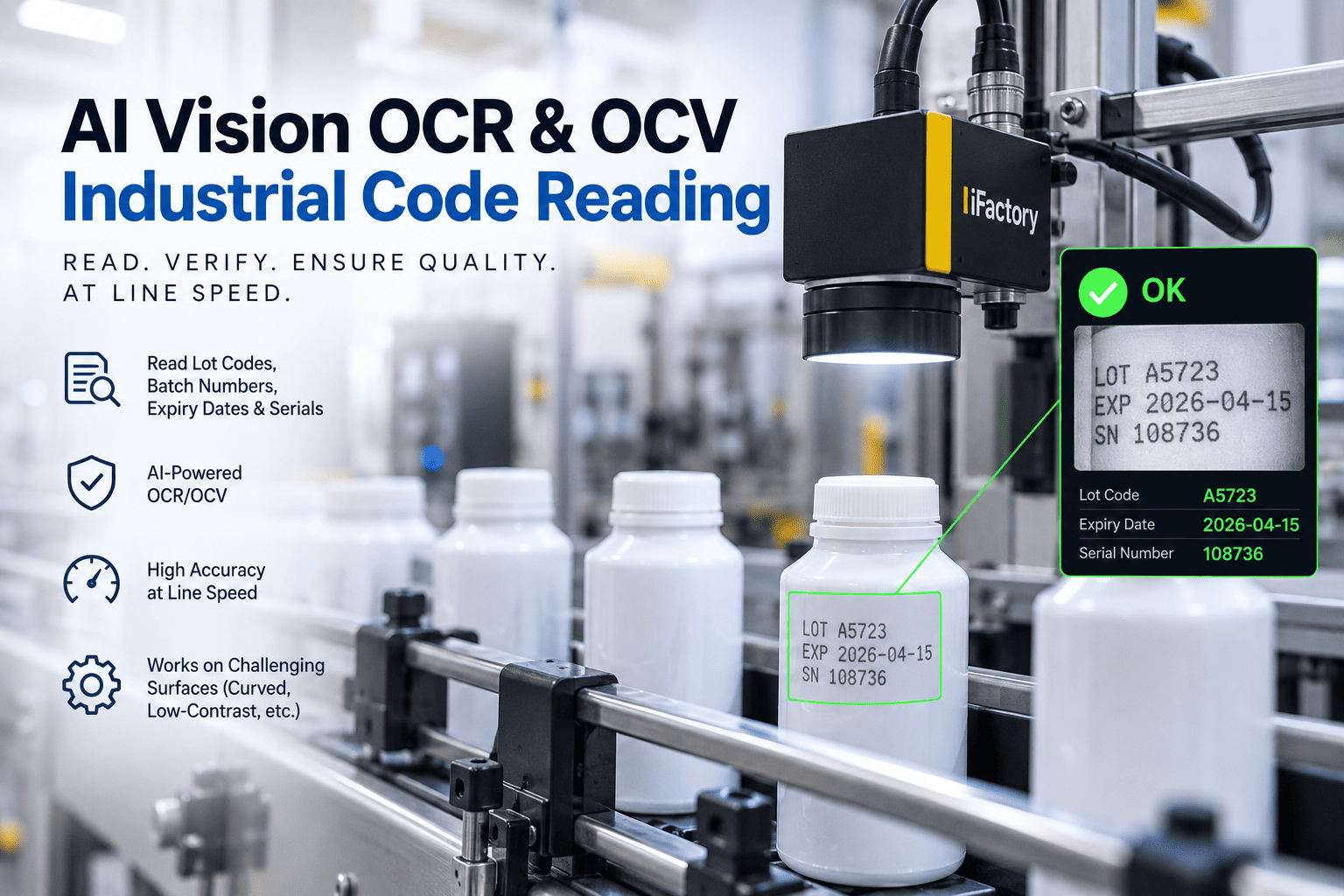
A code date reads as 25-09-27 when the plan says 25-09-28, and 40 minutes of finished cases keep moving toward the loading dock before anyone realizes the OCR flagged low-confidence and the operator approved by habit. That is the AI vision OCR and OCV blind spot the industrial inspection market is finally addressing — not the reading itself, but what happens when a label, date code, serial, or barcode fails to match plan. iFactory AI overlays your MES, QMS, and label systems so every OCR miss opens a scoped hold, a CAPA draft with the offending image attached, verified recovery, and a genealogy trail that shows exactly which cases carried the wrong code. Book a 30-minute walkthrough of label miss to CAPA closure.
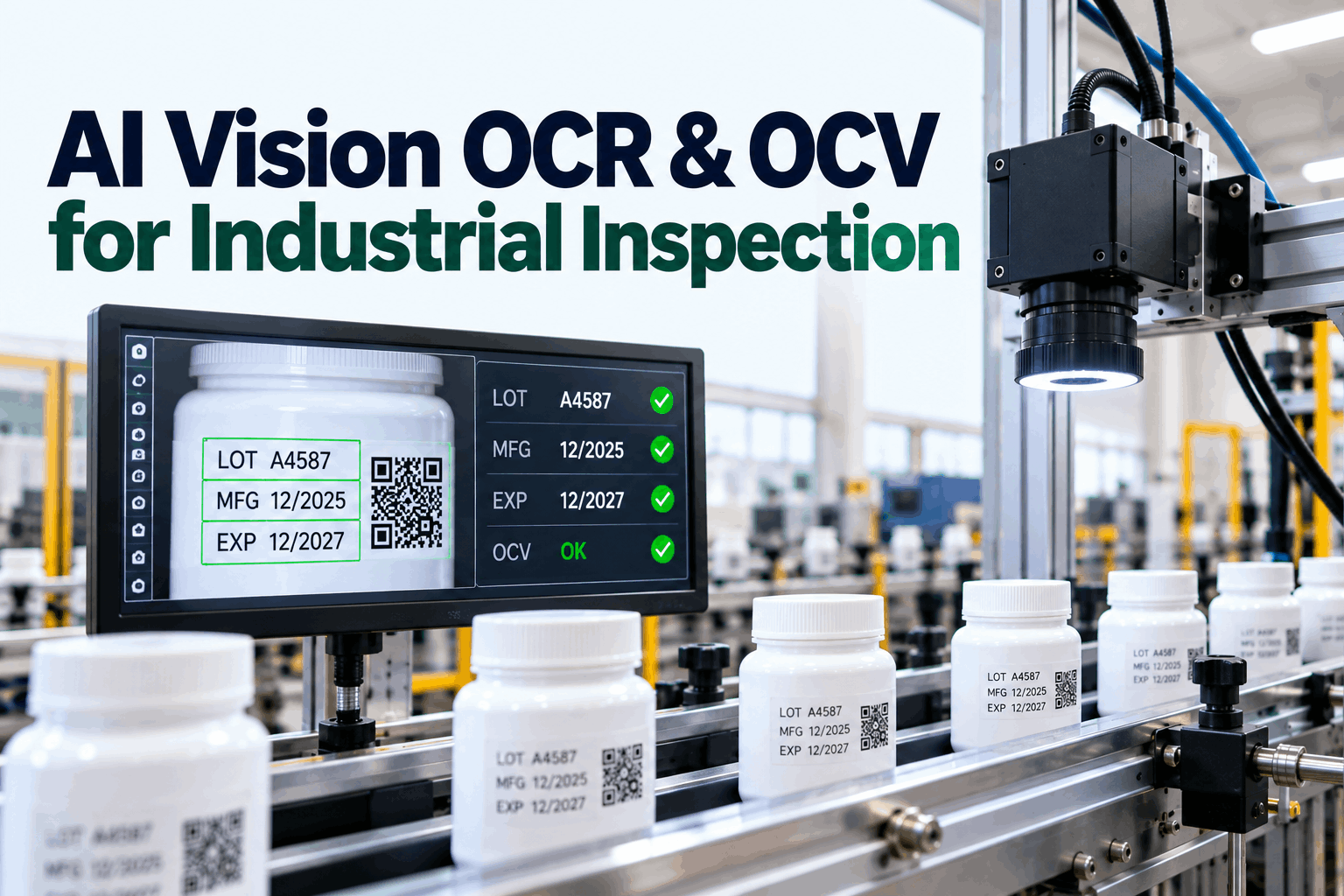
OCR reads the code. OCV verifies it against plan. The workflow around each miss decides whether the wrong label reaches the customer.
At a Glance
Why OCR and OCV Misses Become Compliance Problems
Label errors are among the most expensive quality escapes in industrial manufacturing because they carry regulatory weight the finished product itself may not. A code date miss on a pharmaceutical vial, a wrong serial on an automotive part, a mismatched batch code on a food case — each one can trigger recall obligations, customer chargebacks, or regulatory action that the plant would never face for a purely cosmetic defect. And yet the workflow around OCR and OCV misses is often the least governed part of the quality stack because everyone assumes the printer got it right.
That assumption is where the escape happens. An OCR system flags a low-confidence read, the operator overrides to keep the line moving, no CAPA is drafted, and the case ships. Three weeks later a customer reports the wrong date code and the plant has to reconstruct which cases were affected from spreadsheets and ship logs. The camera saw the miss. The workflow did not act on it.
Where AI Vision OCR and OCV Actually Earn Their Place
The value is not the read itself — modern OCR is accurate enough at line speed to be reliable. The value is in what happens on the miss. A governed OCR and OCV workflow turns every low-confidence read into a structured event with the actual image, the plan value, the confidence score, and the affected case IDs attached for review.
Manufacturing date, expiration, lot code — verified against plan before the case leaves the sealer.
Unique serialization for track and trace — verified against MES sequence and finished goods record.
Batch identifier verified against the work order and the current genealogy branch.
Grade quality, readability, and content verified against the label plan and downstream scanner requirements.
Position, skew, wrinkling, and coverage checked before the case moves to palletization.
Region-specific label content verified against the shipment destination and regulatory requirements.
The Closed-Loop Path — OCR Miss to Verified Release
The workflow that turns OCR into governance is not complicated, but it has to be consistent. Every miss follows the same sequence, every reviewer sees the same evidence, and every release is traceable to a decision-maker.
Camera reads the label, OCV compares the read against the plan value from MES or the work order.
Structured event with the actual image, confidence score, and plan comparison routes to the correct reviewer.
Genealogy shows which cases carry the same suspect label — hold matches actual exposure, not the whole shift.
Corrective action logged, reprinted labels verified against plan before the case rejoins the flow.
Reviewer approves release with the evidence trail preserved — image, decision, timestamp, and approver.
Bring one line where labels or codes matter. We walk through read, mismatch flag, scope, reprint, and release — with genealogy tying every case back to its label evidence.
Best Practices for OCR and OCV Governance
- Never treat low confidence as pass — every borderline read is a workflow event with review authority routed correctly
- Preserve the actual image — reviewers need to see what the camera saw, not just the text output
- Compare against plan, not history — OCV needs the plan value from MES, not just a stability check across recent reads
- Scope by time window — a print error usually affects a range of cases, not just the one that failed
- Verify the reprint — corrected labels go through the same OCV check before rejoining the flow
- Log every override — operator overrides are legitimate but always recorded with who, why, and when
Frequently Asked Questions
OCR reads the printed characters on a label. OCV verifies that the read matches the expected value from the plan. Governance needs both — the read alone does not tell you whether the label is correct.
Modern deep learning models handle print variation, glare, angle, and material variation more reliably than rule-based OCR. But accuracy is only half the value — the workflow around low-confidence reads is what prevents escape.
Yes, when configured to do so. High-confidence critical mismatches can trigger automatic case-level holds, and human sign-off is required for release. Configuration depends on your product and regulatory environment.
No. iFactory AI overlays your existing label, print, MES, and QMS systems. It orchestrates the workflow around the read and preserves the evidence trail, without changing how labels are produced.
Genealogy answers which cases carried the suspect label, which pallets they went to, and which shipments are affected — so the hold and any customer notification match actual exposure, not a worst-case estimate.
AI vision OCR and OCV are only as valuable as the workflow they trigger. iFactory AI turns every miss into a scoped hold, a CAPA draft with the actual image, verified recovery, and preserved genealogy — before the wrong label reaches your customer.