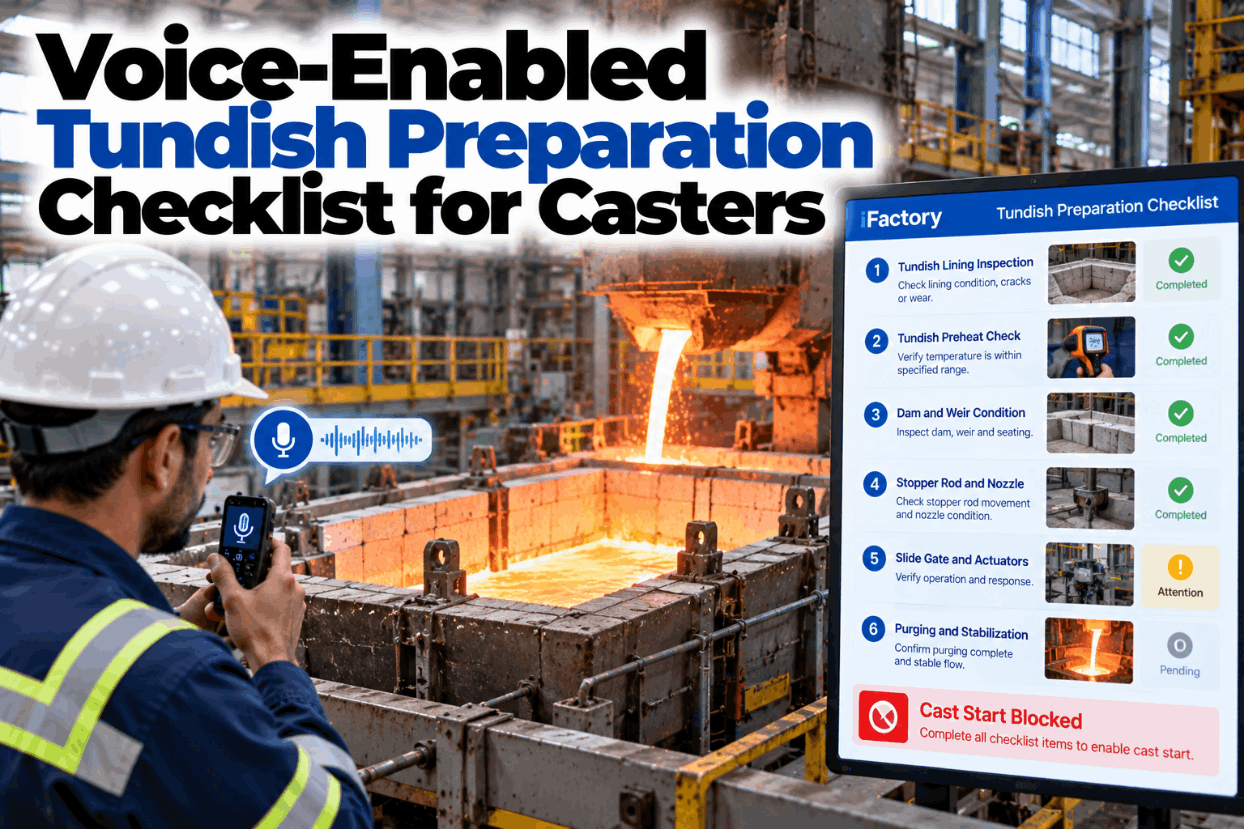
A tundish that is not ready shows it at the worst moment, when the ladle opens. A stopper that will not seat, a dam out of place or a damp patch in the working lining can turn a routine cast start into a breakout, a clogged nozzle or a steam explosion. Most caster crews already work from a tundish preparation checklist, but it is often paper, ticked after the fact and seen by no one until something goes wrong. This page gives a practical checklist, explains each hold point and shows how voice capture records every reading and holds the cast start until it is safe. Hear a tundish prep round in a short voice checklist demo.
Every Tundish Check Spoken, Recorded and Enforced
The iFactory Voice Checklist Agent walks the crew through tundish prep step by step and captures readings hands-free. A failed check holds the cast start card and notifies the shift caster lead at once.
What the Crew Is Actually Checking
The tundish is the reservoir and distributor between the ladle and the moulds, and it keeps steel flowing during ladle changes. It is also where inclusions float out into the slag layer. Each part of its lining and furniture has a job in that, so each one appears on the checklist. The drawing below is a simplified slab caster tundish with a stopper rod. Your layout may differ, so ask our caster support team to map it.
Why a Wet Lining Is the Hazard That Matters Most
Water trapped in refractory turns to steam the moment liquid steel reaches it, and steam takes up far more space than water. Standard sprayed tundish mixes go on with about 20 to 30% water by weight, so drying is not optional. A recorded case from Germany in 2013 shows the cost when it goes wrong. Walk through your own drying controls in a safety review call.
The Tundish Preparation Checklist
Use this as a starting point and adapt it to your tundish design, refractory supplier and casting practice. Items marked hold point block the cast start if they fail. Limits for lining thickness, preheat and stopper travel come from your refractory supplier and equipment maker, so record the reading, not just a tick. For a version loaded with your own limits, ask our support team.
Readings Spoken, Checked and Saved
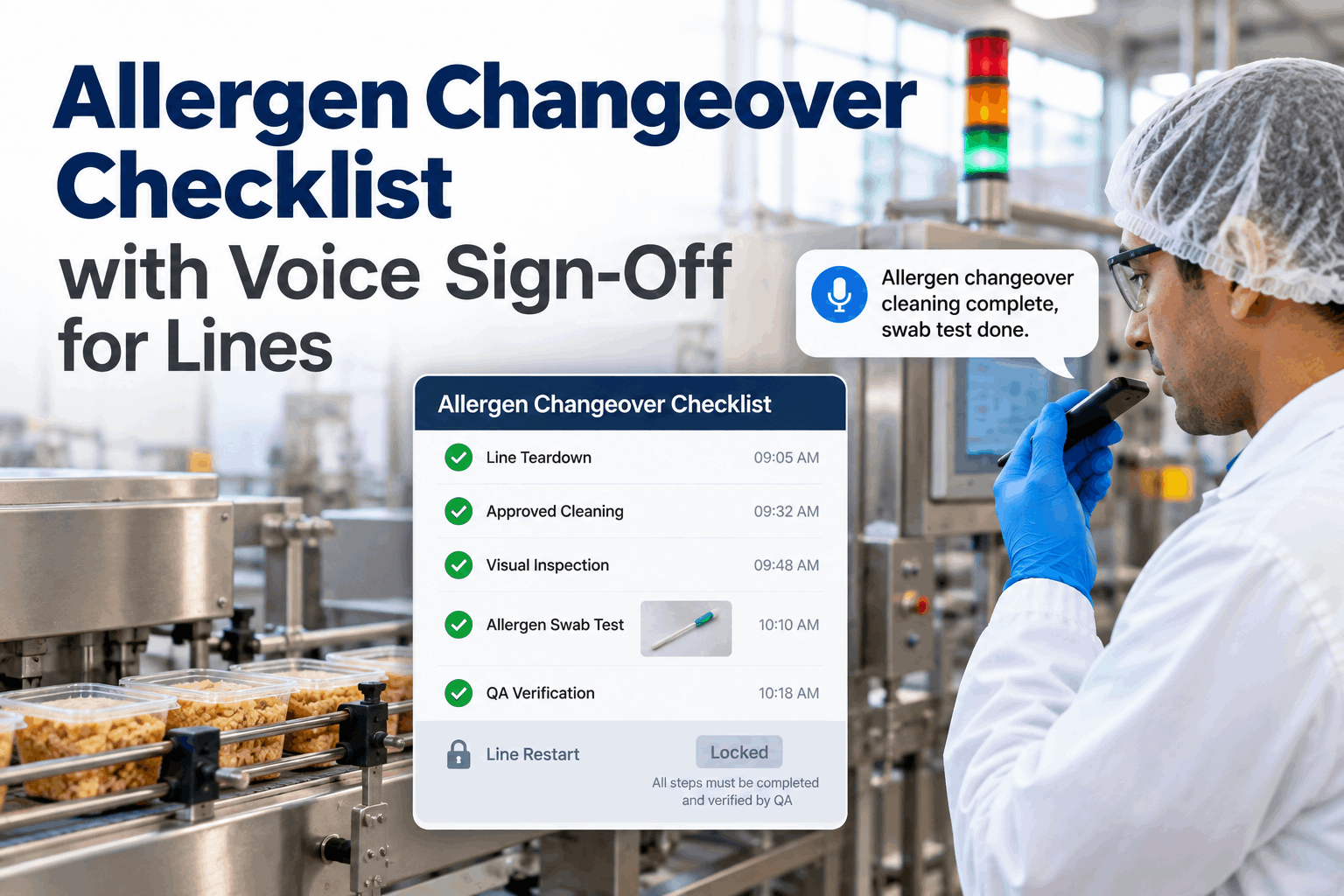
On a caster platform, nobody wants to take off gloves to type. With a voice checklist app, the crew speaks the tundish, the item and the reading. The agent matches it to the right checklist line, compares it with the limit and repeats it back before saving. Anything outside its limit is treated as a fail. Hear it handle platform noise in a live voice session.
Hands on the Tundish, Not on a Clipboard
The Voice Checklist Agent guides each step of tundish prep, captures readings hands-free and holds the cast start card when a check fails. The shift caster lead hears about it at once, with the reason attached.
How a Failed Check Holds the Cast Start Card
The hold rule is simple and the agent applies it the same way every shift. Any failed hold point puts the cast start card on hold, and only the shift caster lead can release it, either after a passing re-check or with a recorded decision and reason. Set your hold points and who can release them with our support engineers.
Follow the Supplier Curve, Then Record the Proof
Preheat targets depend on the lining, its thickness and your burners, so take them from your refractory supplier, not from a general guide. Some linings are built for cold-start practice, others must be heated before use. The facts below come from supplier publications and show why the curve matters. Review your preheat records in a preheat practice session.
Lining type and supplier curve, preheat start and end time, the reading your practice uses and who confirmed it. That record is the proof of dryness the hold point needs.
Three Holds and How They Cleared
These illustrations show how the hold rule usually plays out. They are not case studies, and each response must follow your own procedures. Walk through your own scenarios with our support team.
Habits That Keep Cast Starts Clean
Good tundish prep is mostly consistency. The same checks, in the same order, with readings recorded and nobody skipping a hold point because the ladle is waiting. Compare your current practice in a practice review.
- Ticking the sheet after the tundish is on the car
- Pass or fail with no reading behind it
- Shortening preheat because the ladle is early
- Releasing a hold with no reason recorded
- Using wet tools or patch mix near a hot lining
- Each check spoken and saved as it is done
- Readings checked against supplier limits
- Preheat curve logged from start to finish
- Only the shift caster lead can release a hold
- Repairs dried and re-checked before release
What the Records Tell You Each Week
Once every check is recorded, the checklist becomes data. A weekly summary shows which items fail most, on which shift and how long holds last. The example below is an illustration. Ask our team for a sample report.
Voice Agent, Checklists and AI Server in One Package
iFactory delivers the Voice Checklist Agent as a turnkey bundle. A pre-configured NVIDIA AI server ships racked and ready with the voice model, your tundish checklists and the hold rules pre-loaded, so speech is processed on site. You rack it, plug in power and Ethernet, and the AI is live. To scope it for your caster, book a turnkey planning call.
- Pre-configured NVIDIA AI server, racked and ready
- Voice agent tuned for caster platform noise
- Tundish prep checklists with your limits
- Hold rules linked to the cast start card
- Alerts to the shift caster lead
- Rugged headsets for prep and caster crews
- 24×7 remote monitoring of software and hardware
Server installed, checklists, limits and hold points loaded.
Crews use voice beside paper, holds logged but not yet enforced.
Hold rule switched on, leads trained, paper retired.
Checklists Built for the Caster Platform
iFactory is designed for crews who work in heat, noise and full protective gear, against a ladle that will not wait. Our support team can walk you through a pilot.
What Plant Managers Ask About Tundish Preparation
No Cast Start Without a Ready Tundish
Guide every tundish prep by voice, record each reading as it is taken and let failed checks hold the cast start until the shift caster lead clears them. Delivered turnkey and live in 6 to 12 weeks.