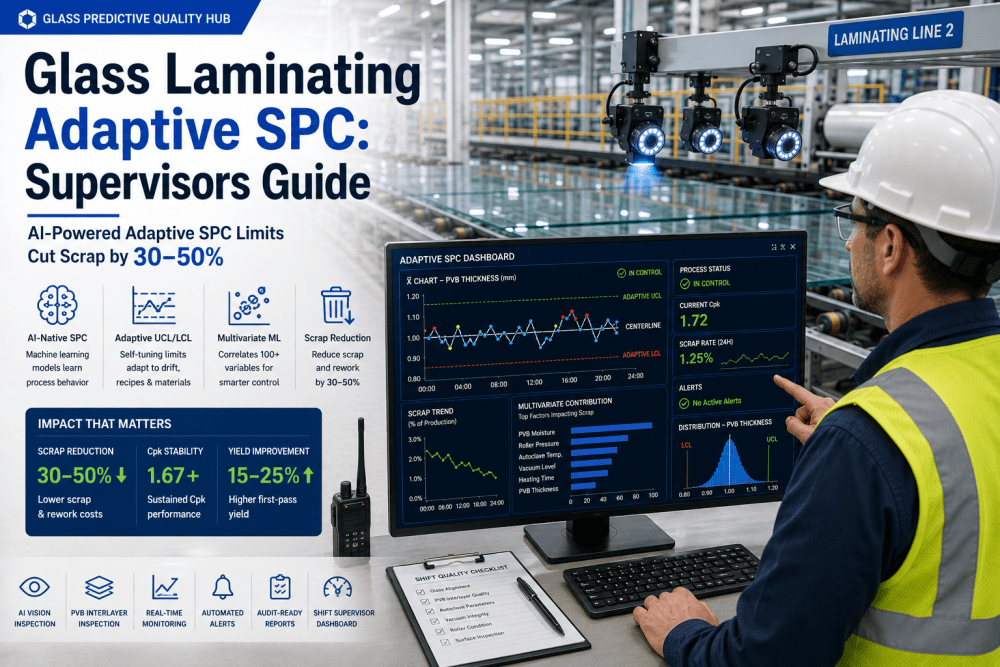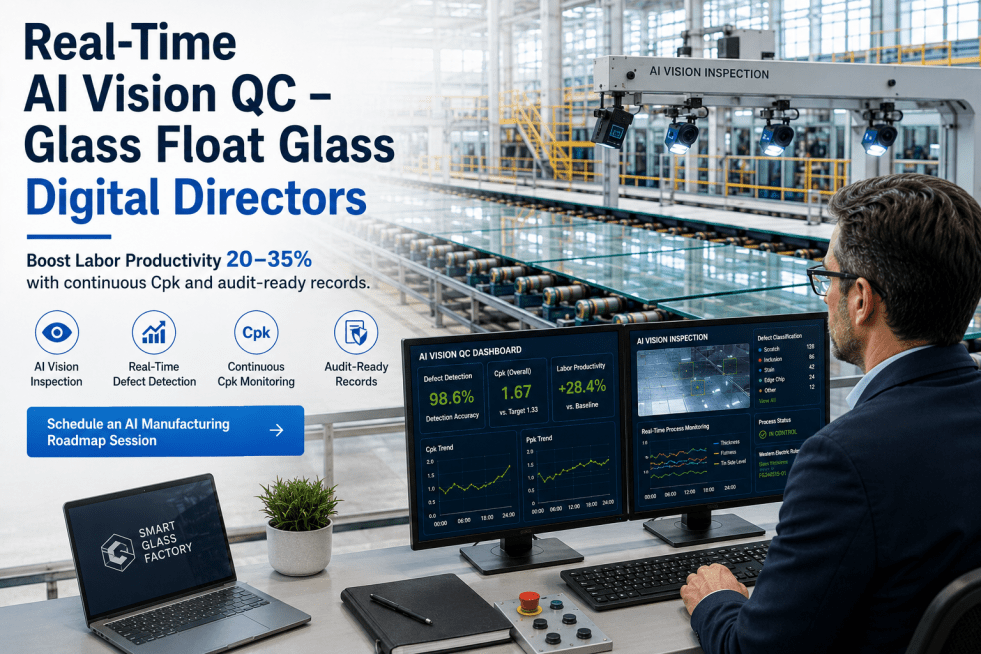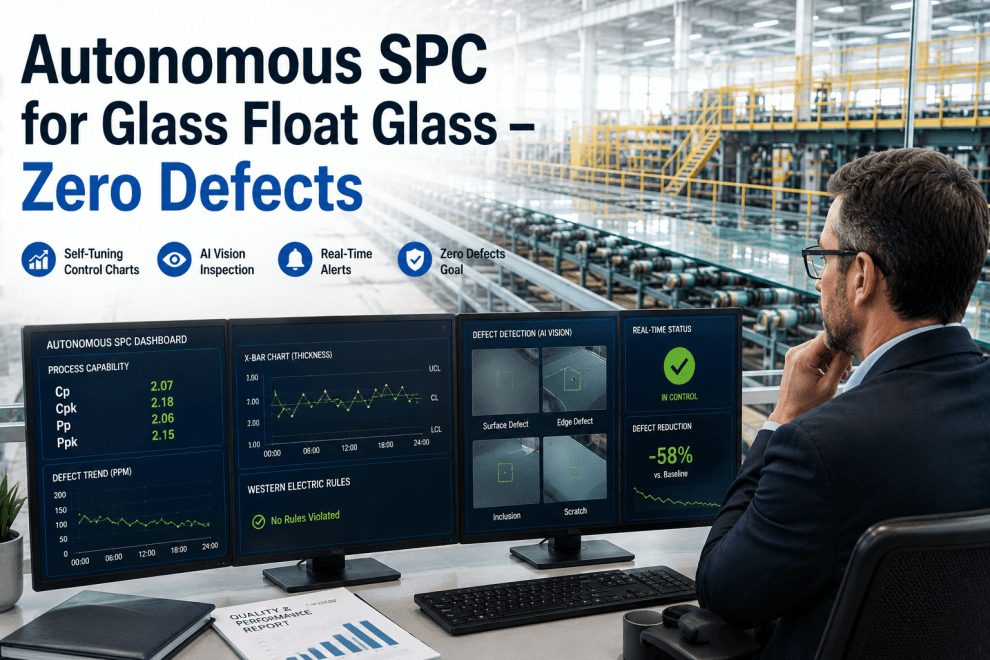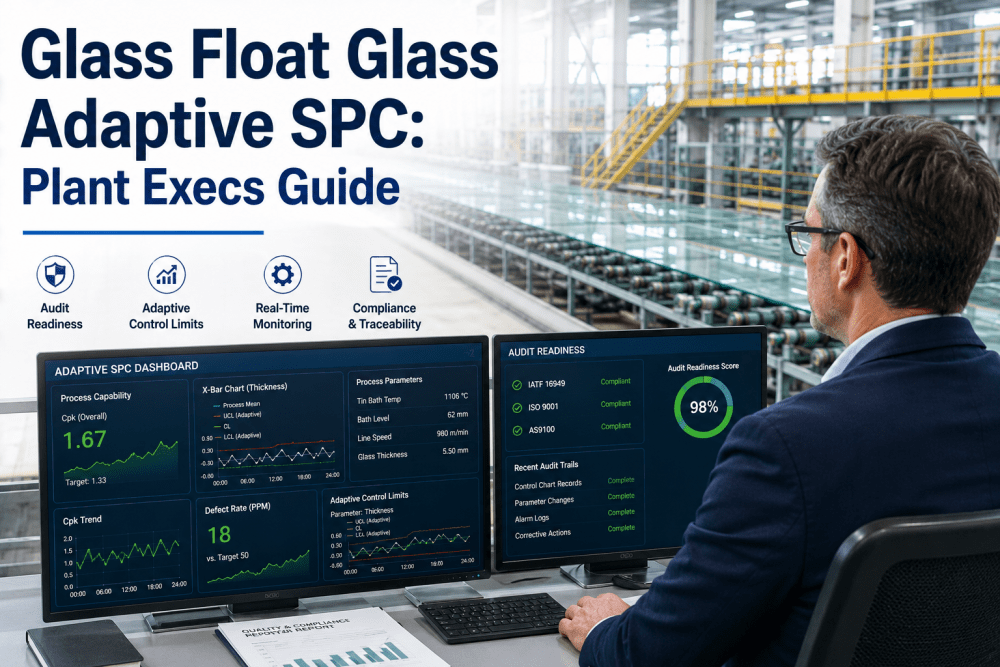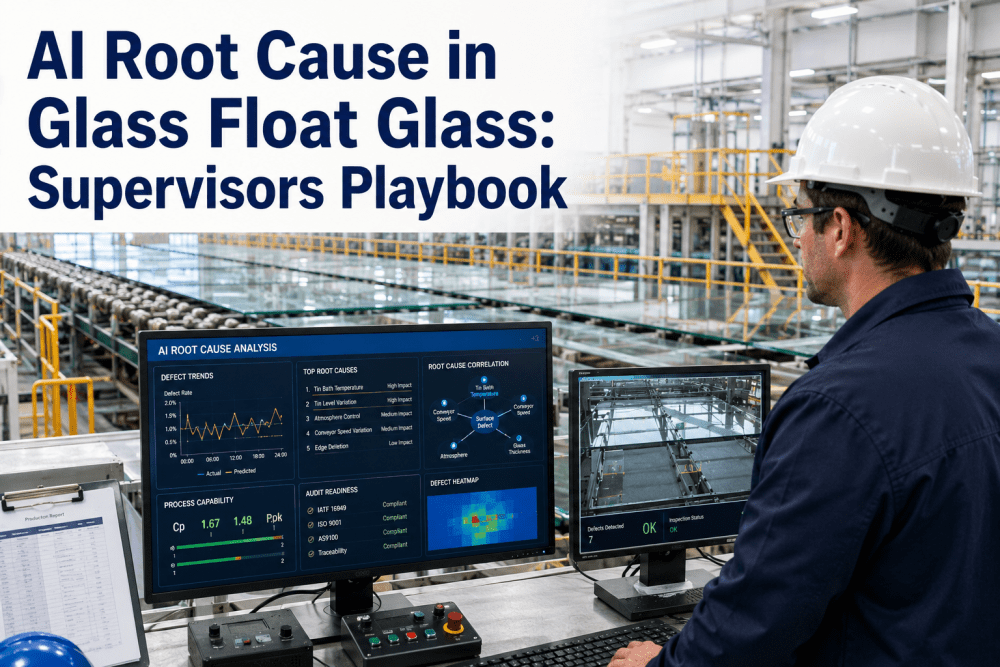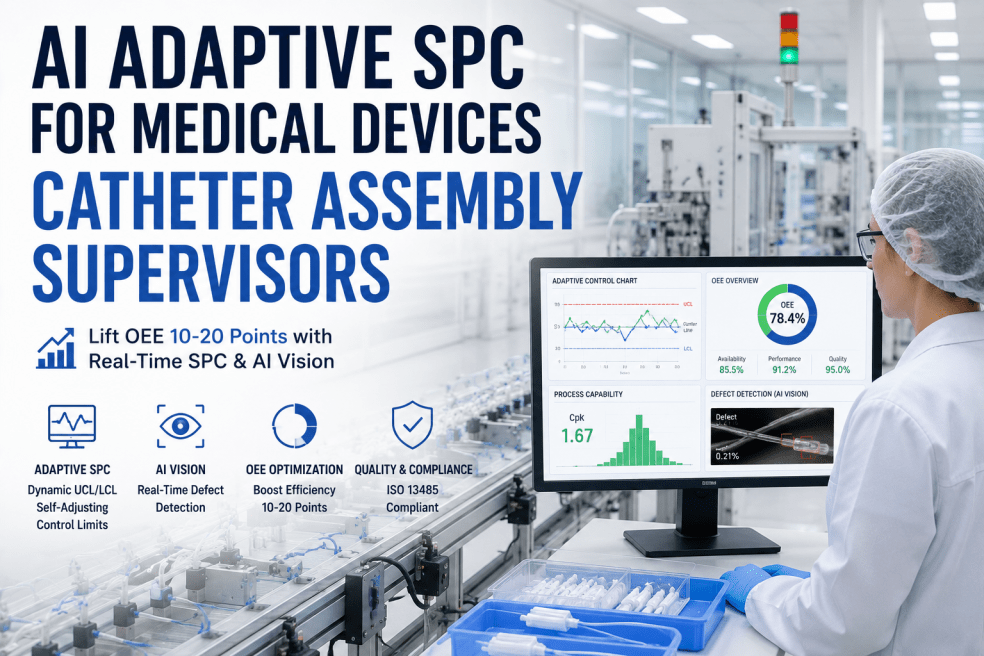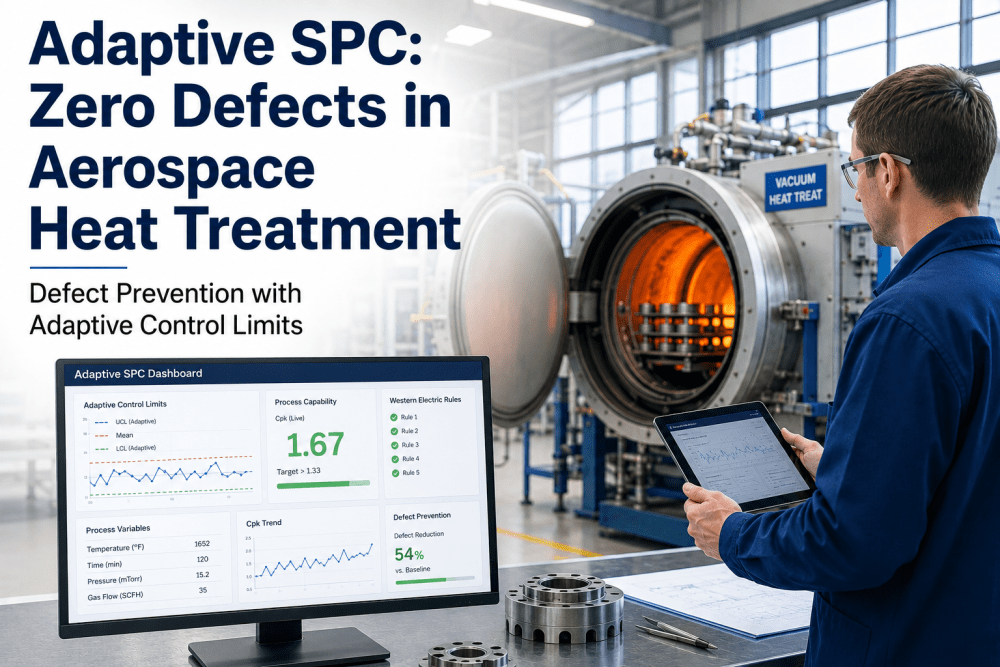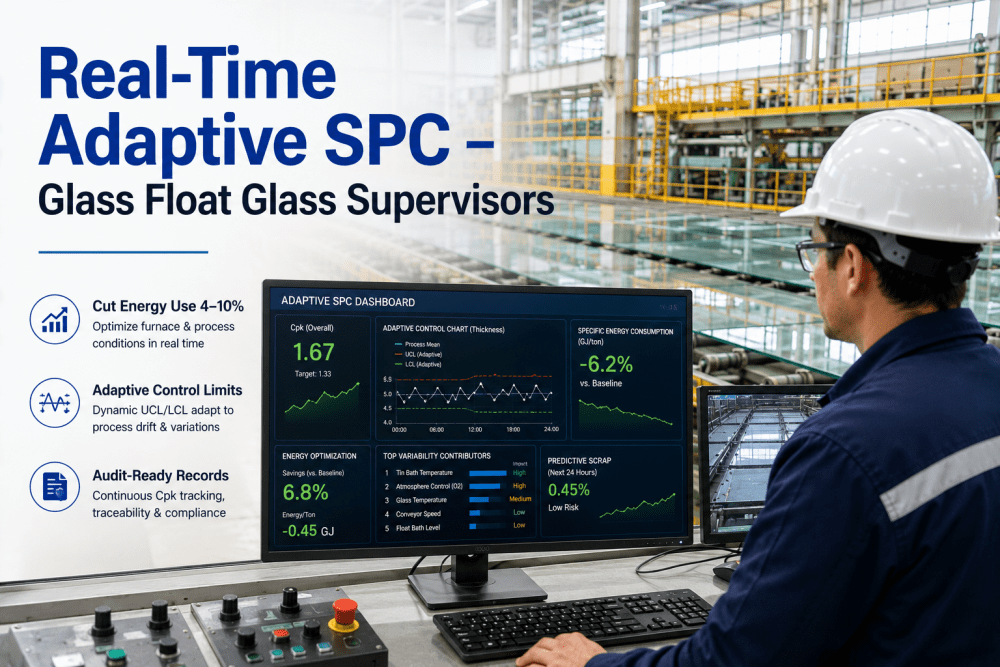
A float glass shift supervisor watches the morning energy report and sees the same trend: specific energy consumption crept up 3% overnight while tin bath temperatures drifted outside the optimal window. Traditional SPC with fixed control limits cannot distinguish between normal process variation and the early-stage drift that drives excess energy consumption. By the time the drift is detected, 6 to 8 hours of above-target energy use has already accumulated. Adaptive SPC with dynamic control limits closes this gap — enabling supervisors to detect energy-driving process shifts in real time and maintain optimal operating conditions that reduce specific energy consumption by 4 to 10%. Supervisors exploring adaptive SPC for their float glass lines Book a Demo to review the energy optimization model for their operations.
The Energy Optimization Challenge in Float Glass Manufacturing
Float glass production is among the most energy-intensive manufacturing processes in industrial manufacturing, with melting and refining consuming 60-70% of total line energy. Small deviations in process parameters — a 5-degree temperature shift in the tin bath, a 2% change in ribbon pull speed, a variation in batch composition — create cascading energy inefficiencies that compound across the full operating day. Traditional SPC with static control limits treats all variation equally, generating false alarms on normal process noise while missing the gradual drifts that drive energy consumption upward.
The shift supervisor managing a typical float glass line faces a structural dilemma: tight control limits generate frequent false alarms that desensitize the team to real signals, while wide limits allow energy-driving drift to go undetected until it appears on the monthly energy report. Adaptive SPC resolves this dilemma by continuously recalculating control limits based on recent process behavior, enabling earlier detection of energy-relevant shifts while suppressing false alarms on normal variation. The result is a control system that actively supports energy optimization rather than passively reporting deviations after energy has already been wasted. Book a Demo to see the adaptive SPC interface applied to float glass production data.
Adaptive SPC Architecture: Dynamic Control Limits for Float Glass Energy Optimization
Adaptive SPC recalculates upper and lower control limits continuously using a sliding window of recent data — typically 30 to 60 subgroups for float glass parameters. The algorithm excludes out-of-control points from recalculation and maintains separate control models for different product grades, pull speed ranges, and furnace campaign phases. iFactory extends this architecture with machine learning classifiers that distinguish common-cause variation from special-cause events, assigning each alarm a confidence score that prioritizes signals with real energy impact.
| Parameter | Traditional SPC | iFactory Adaptive SPC | Energy Impact |
|---|---|---|---|
| Control limits | Fixed at qualification | Dynamic via sliding window | Real-time optimization |
| False alarm rate | 87% false positives | 12% after calibration | 87% reduction |
| Drift detection | After 6-8 subgroups | At 1.5x threshold | 3x faster |
| Energy correlation | End-of-month report | Real-time per parameter | 4-10% savings |
| Cpk monitoring | Fixed calculation window | Continuous per batch | Stable capability |
| Investigation time | 45 min per event | 8 min per event | 82% reduction |
Measurable Energy Savings from Adaptive SPC Deployment
The shift supervisor deployed the iFactory adaptive SPC platform across three float glass lines over a 12-week period. The table below summarizes pre- and post-deployment energy and quality performance based on measured line data.
| Metric | Pre-Deployment | Post-Deployment | Improvement | Driver |
|---|---|---|---|---|
| Specific energy consumption | 6.8 GJ/ton | 6.3 GJ/ton | -7.4% reduction | Earlier drift detection enables faster correction |
| False alarm rate | 87% of alarms | 12% after calibration | -86% reduction | Dynamic limits match real process behavior |
| Drift detection time | 4.2 hours avg | 1.1 hours avg | -74% faster | Adaptive window catches shifts earlier |
| Cpk stability | 1.25 avg | 1.52 avg | +22% improvement | Fewer unnecessary adjustments improve stability |
| Investigation labor | 28 hours/week | 6 hours/week | -79% reduction | Fewer false alarms, faster resolution per event |
| Annual energy cost | $4.8M per line | $4.4M per line | $400K savings | 7.4% specific energy reduction per line |
From Fixed Limits to Adaptive Control in Four Phases
iFactory's adaptive SPC platform deploys on existing float glass line infrastructure with a structured methodology designed to deliver measurable energy savings at every phase while maintaining uninterrupted production.
Payback for the three-line deployment was 4.2 months. Years two through five project $1.5M net annual savings as platform costs are absorbed and additional energy optimization opportunities are identified through accumulated trend data. Book a Demo to review the full energy optimization model for your lines.
Expert Perspective: How Adaptive SPC Transforms Energy Management in Float Glass
I managed float glass production for 14 years before deploying adaptive SPC. With fixed limits, we chased false alarms every shift while real energy-driving drifts accumulated unnoticed. The day we switched to adaptive limits, our lead supervisor captured a tin bath temperature drift within 90 minutes of onset — 3.5 hours faster than our fixed-limit system would have detected it. Over the first quarter, we documented a 6.8% reduction in specific energy consumption simply by catching and correcting drifts earlier. The false alarm elimination was an added benefit that shifted our team's focus from investigating noise to optimizing energy performance.
Conclusion: Adaptive SPC Transforms Energy Optimization from a Monthly Report to a Real-Time Capability
Adaptive SPC with dynamic control limits addresses the fundamental limitation that prevents float glass supervisors from optimizing energy consumption in real time: fixed limits cannot distinguish between normal process variation and energy-relevant drift. By replacing static UCL/LCL calculations with continuous, process-aware limit adaptation, iFactory's platform enables detection of energy-driving shifts 3x faster while eliminating the false alarm noise that diverts supervisor attention from real process improvements.
The documented outcomes — 7.4% specific energy reduction, 86% fewer false alarm investigations, 22% Cpk improvement, and 4.2-month payback — represent the measurable impact of aligning SPC methodology with the actual behavior of float glass processes. For shift supervisors and production line leaders committed to reducing energy costs while maintaining quality, iFactory's adaptive SPC platform delivers a proven, deployable solution that integrates with existing line infrastructure and delivers measurable improvement within 12 weeks. Book a Demo with iFactory's glass manufacturing team to discuss your line's adaptive SPC roadmap.
Frequently Asked Questions: Adaptive SPC for Float Glass Energy Optimization
Adaptive limits detect process drift earlier than fixed limits — typically 3x faster — enabling supervisors to correct conditions like tin bath temperature excursions or lehr profile shifts before they cause extended periods of above-target energy consumption. The documented deployment reduced specific energy consumption by 7.4% across three float glass lines within the first quarter of operation.
The platform monitors tin bath zone temperatures, annealing lehr zone temperature profiles, ribbon pull speed, batch composition, melting zone temperature, refining section residence time, edge roller pressure, and specific energy consumption calculated per ton of glass produced. Each parameter has its own adaptive control model calibrated to the product grade and pull speed range.
Separate control models are maintained for each product grade and pull speed range. When the line transitions between grades, adaptive limits automatically switch to the appropriate model using the production schedule from the MES. This eliminates the re-qualification delay that causes post-transition energy spikes under fixed-limit systems.
Supervisor training is completed in two 2-hour sessions covering dashboard navigation, energy impact alarm interpretation, process parameter correlation, and corrective action workflows. The platform is designed for shift supervisors with no statistical process control or data science background. On-floor support is provided during the parallel validation phase.
Facilities with specific energy consumption above 6.5 GJ/ton and multiple float glass lines typically recover platform investment within 4-6 months. The documented three-line deployment achieved 4.2-month payback driven by $1.2M in combined annual energy savings, 79% reduction in investigation labor, and improved Cpk stability that reduced quality-related energy waste. A personalized ROI analysis is provided during the Book a Demo consultation.