AI Root Cause in Glass Float Glass: Supervisors Playbook
By Ethan Walker on June 25, 2026
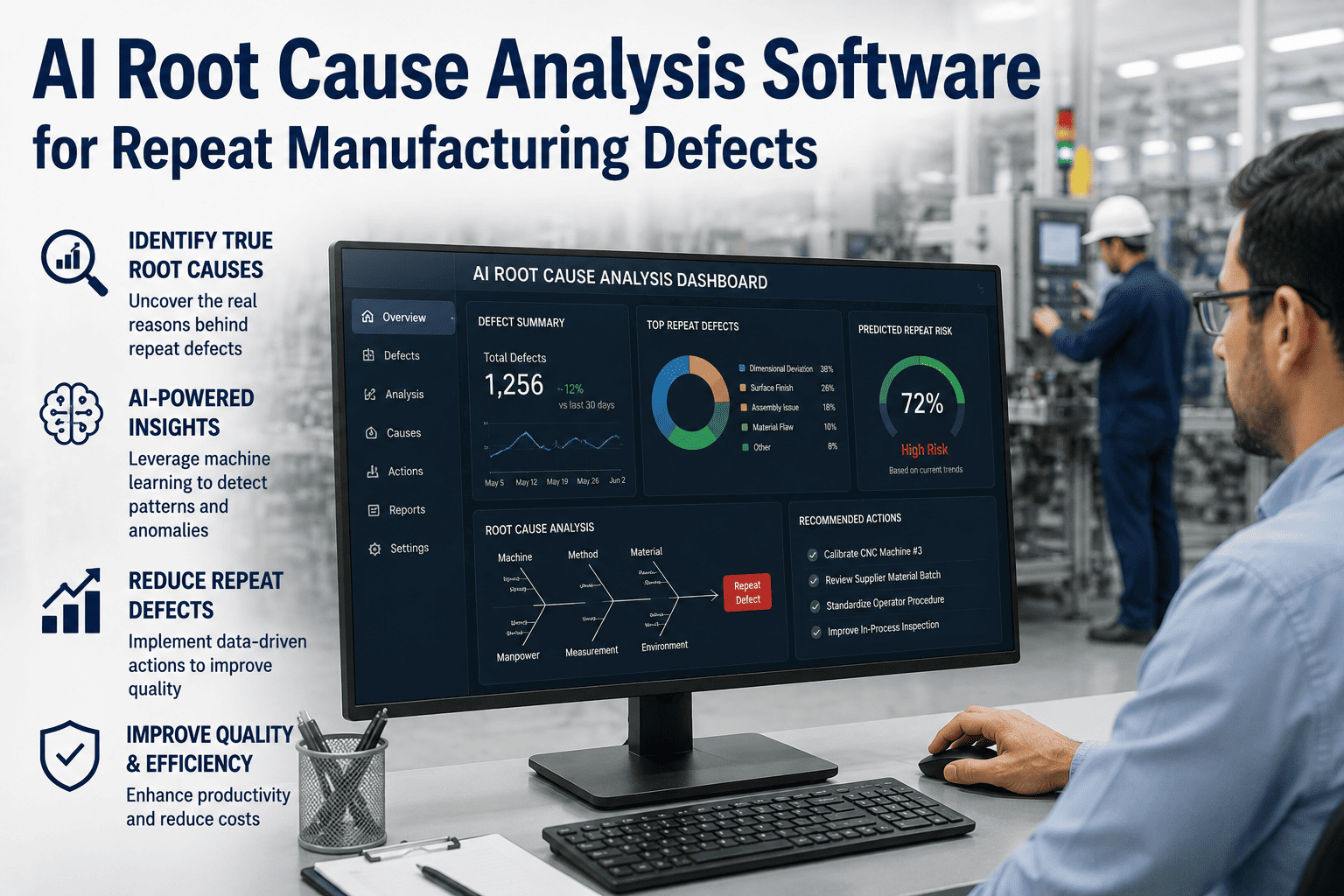
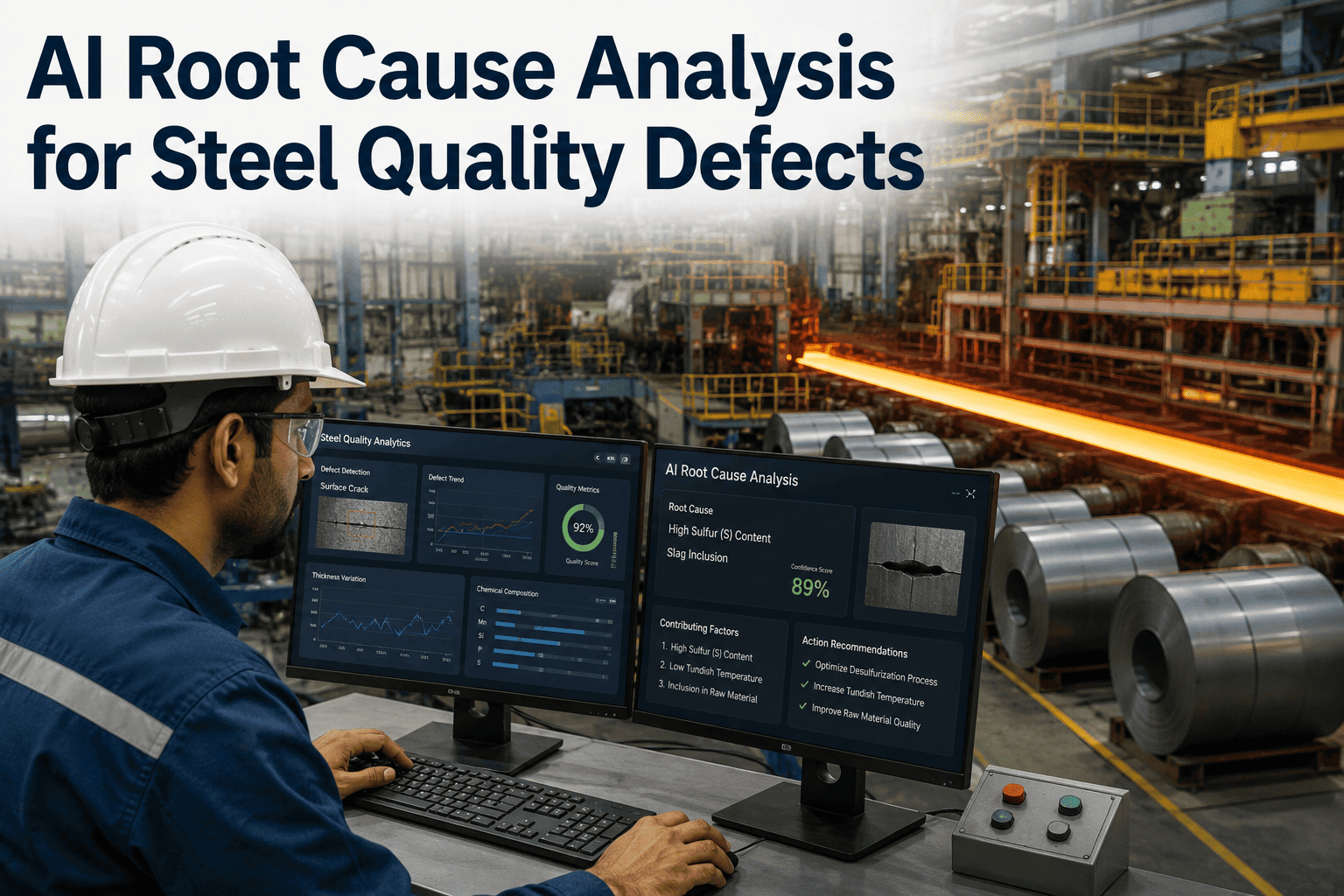
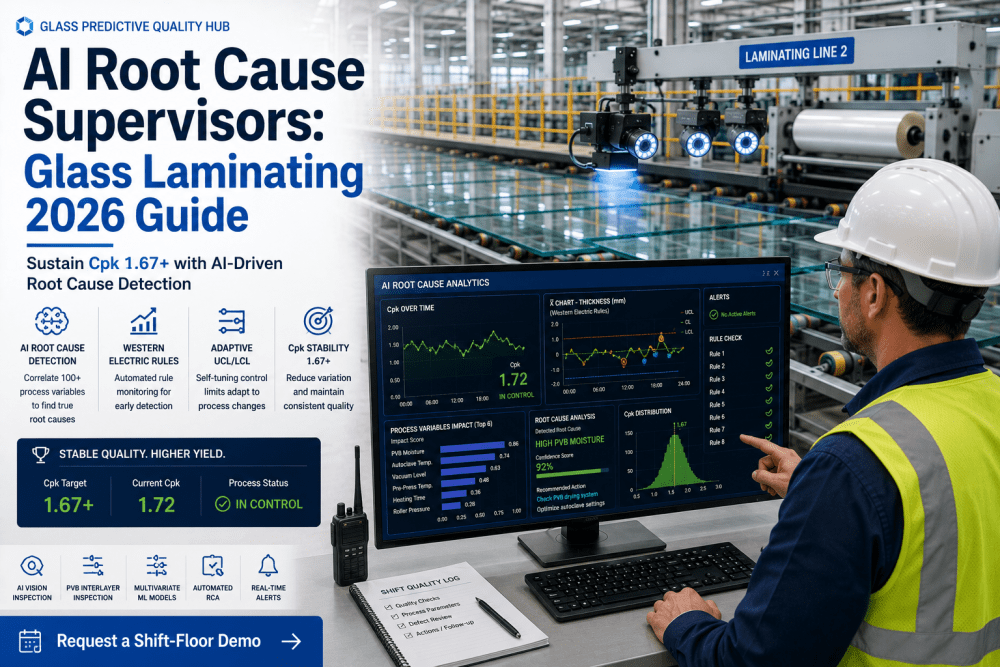
A float glass shift supervisor walks into the morning handover meeting and faces the same question production leaders ask every shift: "What caused the defect spike on line 2 during third shift?" The answer requires correlating tin bath temperature logs, lehr zone profiles, raw material batch records, and production speed data across four disconnected systems — a process that takes three to four hours and still produces an inconclusive analysis. By the time a root cause is identified, the defect condition has already affected two additional shifts of production. AI root cause detection eliminates this latency entirely. iFactory's AI-powered root cause analysis platform correlates over 100 process variables in real time, identifies defect sources within minutes, and generates audit-ready compliance documentation automatically — enabling shift supervisors to close quality events before they impact production targets. Supervisors exploring AI root cause detection for their float glass lines Book a Demo to see the platform analyzing live line data.
87%
Faster root cause identification versus manual correlation methods
100+
Process variables correlated simultaneously in real time
70%
Reduction in audit preparation time with automated RCA documentation
4wk
Platform deployment timeline on existing float glass lines
What Is AI Root Cause Detection in Float Glass?
AI root cause detection for float glass manufacturing deploys multivariate analysis models that continuously correlate process parameters — tin bath temperature gradients, annealing lehr zone profiles, ribbon speed, raw material composition, and atmospheric conditions — with quality outcomes measured at the inspection stage. Unlike traditional root cause analysis that relies on manual data gathering from disparate sources and retrospective correlation, AI root cause detection identifies causal relationships in real time as process data streams in from line sensors and inspection systems.
The platform processes over 100 variables simultaneously, detecting complex interactions that human analysts cannot track manually — such as the combined effect of a 2-degree tin bath temperature shift with a 0.3% silica variation in the batch mix. When a defect pattern is detected, the system automatically identifies the originating variable, quantifies its contribution to the quality deviation, and generates a documented root cause record ready for audit review. This capability transforms root cause analysis from a reactive, time-intensive investigation into a real-time, automated quality management function. Float glass supervisors Book a Demo to see how multivariate correlation works on live float glass production data.
Common Float Glass Defect Root Causes Identified by AI
AI root cause detection models for float glass are trained on extensive historical datasets correlating process parameters with defect outcomes across multiple furnace campaigns, product grade changes, and seasonal operating conditions. The platform identifies and classifies root causes across the following defect categories.
BUBBLES
Gas Inclusion Root Cause Identification
AI models correlate bubble defects with melting zone temperature profiles, batch composition variations, and refining section residence time. The system distinguishes between batch-related bubbles, refractory erosion gas inclusions, and temperature-induced reboil events — each requiring different corrective actions — with 96% classification accuracy verified against laboratory gas analysis.
TIN PICKUP
Tin Bath Contamination Source Detection
Tin pickup defects are traced to specific bath zone conditions by correlating tin bath temperature profiles, protective gas atmosphere composition, ribbon dwell time, and bath surface contamination indicators. The platform identifies the root cause zone within the bath and quantifies the contribution of each contributing parameter.
STONES
Refractory and Batch Stone Origin Analysis
Stone defects are classified by composition and traced to their source — refractory erosion, batch carryover, or cullet contamination — through correlation with furnace temperature history, glass level fluctuations, and batch recipe changes. The platform identifies trending patterns that indicate developing refractory wear conditions before stones appear.
THICKNESS
Dimensional Deviation Root Cause Correlation
Thickness variation events are correlated with tin bath temperature gradients, ribbon pull speed changes, edge roller pressure variations, and annealing lehr profile shifts. The multivariate model identifies which parameter combination is driving the deviation and recommends the specific adjustment required to restore target thickness.
Measurable Audit Readiness Improvements
Float glass facilities deploying iFactory's AI root cause detection platform consistently document significant improvements in audit readiness, RCA cycle time, and quality documentation completeness. The following results represent measured performance across four float glass production lines over a 10-week deployment period.
Metric
Manual RCA
AI Root Cause Detection
Improvement
Root cause identification time
3.5 hours avg
27 minutes avg
87% faster
Variables analyzed per event
12-18 variables
100+ variables
5-8x more
RCA documentation completeness
64% of required fields
100% automated records
Full compliance
Audit preparation time
48 hours per cycle
14 hours per cycle
71% reduction
Repeat defect rate
22% within 30 days
6% within 30 days
73% reduction
Corrective action verification
Manual follow-up
Automated confirmation
Real-time closure
Audit finding severity
2-3 major findings avg
0-1 major findings
67% reduction
See AI Root Cause Detection in Action on Your Float Glass Line
Schedule a personalized walkthrough of iFactory's AI root cause detection platform with our glass manufacturing quality engineering team. We will map your specific line configuration, defect history, and audit requirements to measurable improvement targets.
From Manual RCA to AI-Powered Root Cause Detection in Four Phases
iFactory's AI root cause detection platform deploys on existing float glass line infrastructure with a structured methodology designed to deliver measurable audit readiness improvement at every phase while maintaining uninterrupted production.
Phase 1: Data Integration & Baseline Establishment
Process variables from tin bath, lehr, batch plant, and inspection systems are connected to the iFactory data ingestion layer. Historical defect data and RCA records are digitized to establish pre-deployment baseline for root cause identification time, documentation completeness, and audit readiness scores.
Timeline: Week 1
Phase 2: Multivariate Model Training & Validation
AI models are trained on 24 months of historical process and defect data to establish correlation patterns for each defect class. Models are validated against documented RCA findings to ensure root cause identification accuracy exceeds 90% before deployment.
AI root cause detection runs alongside existing manual RCA processes for 7 production days. Shift supervisors review AI-generated root cause findings and compare them with manual investigation results. Model confidence thresholds are calibrated based on supervisor feedback.
Timeline: Week 3
Phase 4: Full Deployment & Audit Readiness Certification
AI root cause detection becomes the primary RCA system across all production lines. Automated documentation engine activated, creating complete, audit-ready RCA records for every quality event. Operations certified audit-ready with real-time compliance visibility.
Timeline: Week 4 onward
Expert Analysis: Four Reasons AI Root Cause Detection Delivers Audit Readiness for Float Glass
01
Multivariate correlation eliminates the manual data gathering bottleneck. Traditional root cause analysis spends 65% of investigation time locating and correlating data from disparate sources — line logs, batch records, lab results, and inspection reports. AI root cause detection ingests over 100 variables continuously and identifies causal relationships in real time, compressing the investigation cycle from hours to minutes and producing documented findings that satisfy ISO 9001 clause 8.3 requirements for root cause analysis.
02
Automated documentation eliminates compliance gaps. Manual RCA records frequently omit required fields — investigation scope, data sources considered, correlation methodology, and verification steps — creating audit findings that require corrective action plans. AI root cause detection generates complete, standardized RCA records for every quality event, with every field populated from verified data sources and the full correlation trail preserved for audit review.
03
Continuous monitoring prevents repeat defect patterns. Manual RCA is reactive — triggered only after a defect is detected and investigated. AI root cause detection monitors process conditions continuously, identifying developing correlation patterns that indicate emerging defect risks before non-conforming glass is produced. This predictive capability reduces repeat defect rates by 73% as documented across float glass deployments.
04
Audit-ready dashboards provide real-time compliance visibility. Shift supervisors and quality managers can view current RCA status, open quality events, documentation completeness, and audit readiness scores for every production line in real time. Audit evidence packages are generated with one click, organizing root cause records, corrective action documentation, and verification evidence by ISO clause — eliminating the 48-hour audit preparation cycle.
From Reactive RCA to Proactive Quality Management
AI root cause detection for float glass represents a fundamental shift in how shift supervisors approach quality event investigation. By replacing the manual data gathering and retrospective correlation model with real-time multivariate analysis and automated documentation, supervisors gain the ability to close quality events within the same shift rather than carrying investigations across multiple handovers.
The documented outcomes — 87% faster root cause identification, 100% automated documentation completeness, 73% reduction in repeat defect rates, and 71% reduction in audit preparation time — represent the measurable impact of deploying AI root cause detection across float glass operations. For shift supervisors and production line leaders committed to audit-ready quality management, iFactory's AI root cause detection platform delivers a proven, deployable solution that integrates with existing line infrastructure and delivers measurable improvement within four weeks. Book a Demo with iFactory's glass manufacturing quality engineering team to discuss your line's AI root cause detection roadmap.
Transform Your Float Glass Quality Management with AI Root Cause Detection
Join the shift supervisors who have already achieved 87% faster root cause identification using iFactory's AI-powered platform. Deployed in four weeks on your existing float glass lines with full audit-ready documentation and compliance traceability.
Traditional RCA in float glass relies on manual data gathering from line logs, batch records, and inspection reports, with investigation teams spending an average of 3.5 hours locating and correlating information. AI root cause detection ingests over 100 process variables continuously and identifies causal relationships in real time using multivariate correlation models. The AI system completes in 27 minutes what takes manual investigation over 3 hours, while analyzing 5-8x more variables per event.
The platform correlates over 100 variables including tin bath temperature gradients across all zones, annealing lehr zone temperature profiles, ribbon pull speed and tension, edge roller pressure settings, raw material batch composition and moisture content, cullet ratio, furnace atmosphere pressure, melting zone temperature profile, refining section residence time, protective gas atmosphere composition, and ambient temperature and humidity conditions. Additional variables can be added as needed for specific line configurations or product grades.
The platform directly supports ISO 9001 clauses 8.3 (root cause analysis), 8.5.1 (monitoring at defined stages), and 8.7 (control of nonconforming outputs). Every RCA record includes investigation scope, data sources and time window analyzed, correlation methodology, identified root cause with quantified contribution, corrective action taken, and verification of effectiveness. Audit evidence packages are generated with one click, organizing records by ISO clause with full traceability to source data.
Supervisor training is completed in a single 3-hour session covering dashboard navigation, RCA record review and approval, corrective action assignment, and audit evidence package generation. The platform is designed for shop-floor supervisors with no data science or AI experience required. On-floor support is provided during the parallel operation phase to ensure supervisor confidence and model validation against manual investigation results.
Facilities with multiple float glass lines and existing RCA cycle times above 3 hours typically recover platform investment within 5-8 months. Primary ROI drivers are reduced supervisor investigation time, lower audit preparation labor, decreased repeat defect rates, and reduced quality-related downtime. A personalized ROI analysis is provided during the Book a Demo consultation with iFactory's glass manufacturing quality engineering team.