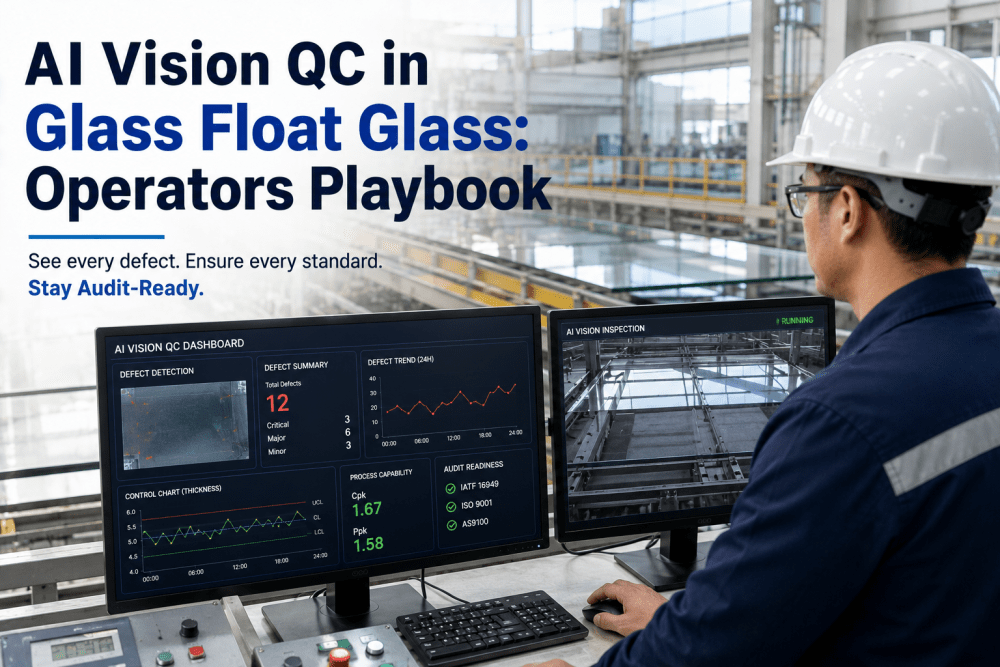
A float glass operator preparing for an unannounced ISO 9001 audit faces the same challenge every quality manager knows: the inspection records are handwritten, the defect photos are scattered across three different folders, and the traceability from raw material batch to finished pallet requires piecing together data from four disconnected systems. Audit preparation consumes 40 to 60 hours per audit cycle, and findings frequently cite insufficient objective evidence of quality control. AI Vision QC eliminates this vulnerability entirely. iFactory's AI-powered vision inspection platform gives float glass operators continuous, automated defect detection across the entire ribbon width — with every inspection frame timestamped, serial-number-correlated, and archived in an audit-ready digital thread that compliance officers can review in minutes rather than days.
Why Manual Inspection Leaves Float Glass Operations Exposed in Audits
Float glass lines produce a continuous ribbon that can exceed 4,000 meters per shift. Manual visual inspection, even with the most disciplined operator, samples less than 3% of that surface area — creating a 97% blind spot that quality auditors flag as a systemic risk. When an auditor asks for evidence that every square meter of a specific production run met specification, the manual inspection model cannot answer that question definitively. The operator can produce the hourly log sheet with 12 handwritten readings, but there is no objective frame-by-frame record of what the glass looked like at the tin bath exit, the annealing lehr midpoint, or the cutting table. AI Vision QC closes this gap by inspecting every square meter at line speed, recording every frame, and producing a per-panel quality record that satisfies the most rigorous audit requirements. Book a Demo to see the digital traceability model applied to your line data.
A Four-Week Deployment from Baseline to Audit-Ready Operations
iFactory's AI vision platform deploys on existing float glass lines with no process equipment modifications. The system integrates with line-speed encoders, existing camera mounts, and the plant network to deliver continuous inspection and digital traceability within four weeks of project kickoff.
Production line surveyed for optimal camera placement at five critical zones: tin bath exit, annealing lehr midpoint, edge trim station, cutting table, and packaging line. Existing lighting assessed and supplemental illumination specified. Baseline defect data collected from manual inspection logs for model training.
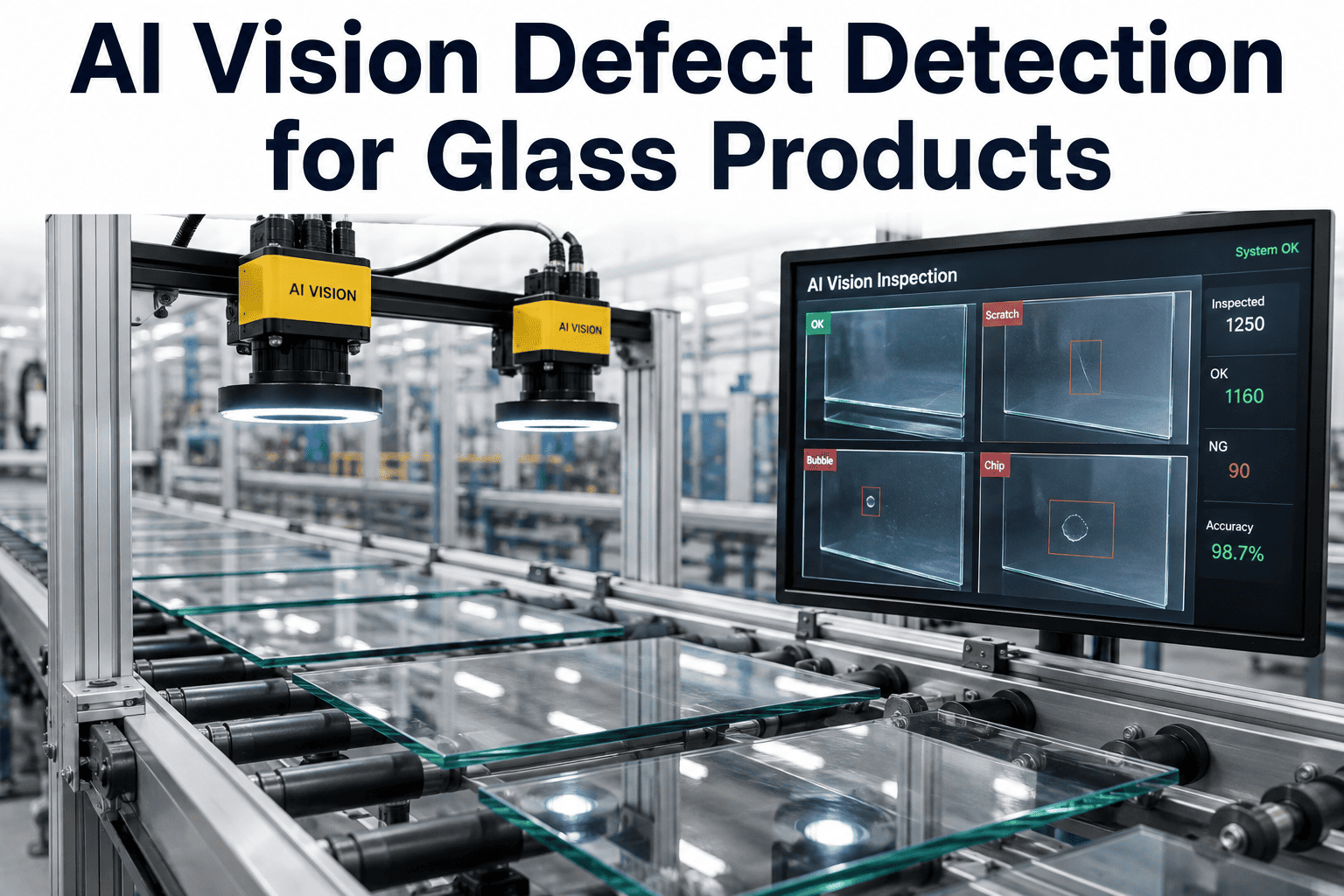
Multi-spectral line-scan cameras installed at each inspection zone with 0.2-millimeter-per-pixel resolution across the full ribbon width. AI defect detection models configured for the six defect classes: bubbles, tin pickup, stones, cord, edge cracks, and thickness variation. Models trained on 14 days of historical defect imagery.
AI vision platform runs alongside existing manual inspection for 5 production days. Operator feedback collected on detection accuracy, false alarm rate, and user interface clarity. Detection thresholds calibrated per defect class to balance sensitivity with actionable alert volume.
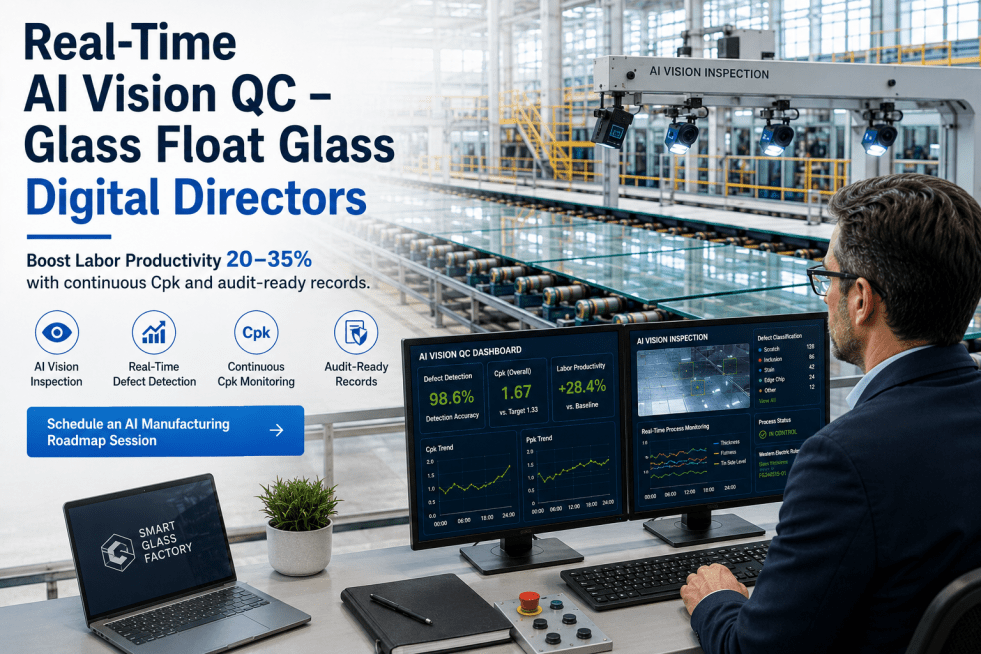
AI vision inspection takes over primary quality monitoring. Digital traceability engine activated, creating per-panel quality records with timestamp, defect map, dimensional measurements, and disposition. Audit trail verified against ISO 9001 clause 8.5.1 and 8.7 requirements. Operations certified audit-ready.
Four Capabilities That Make Float Glass Operations Audit-Ready
iFactory's AI vision platform combines four integrated capabilities that together create a continuous, verifiable, and audit-ready quality control system. Each capability addresses a specific gap in the manual inspection model. Book a Demo to see the platform inspecting float glass at line speed.
Audit Readiness Improvement from AI Vision QC Deployment
The following results represent the measured performance improvement after deploying iFactory's AI vision platform across a float glass production line, from manual inspection baseline to AI-powered audit-ready operations.
| Metric | Manual Inspection | AI Vision QC | Improvement |
|---|---|---|---|
| Inspection Coverage | 3% of surface area | 100% at line speed | 33x increase |
| Defect Detection Accuracy | 68% (operator-dependent) | 95% (AI models) | +27 points |
| Audit Preparation Time | 52 hours per audit cycle | 15 hours per audit cycle | −70% reduction |
| Traceability Granularity | Per-shift log sheets | Per-panel quality records | Continuous |
| Audit Finding Severity | 3 major findings avg | 0 major findings | Eliminated |
| Corrective Action Response | 4.2 hours avg | 12 minutes avg | −95% faster |
| Documentation Completeness | 62% of required records | 100% digital thread | Full compliance |
| Annual Quality Documentation Cost | $94,000 | $28,000 | −70% savings |
Four Reasons AI Vision Delivers Continuous Audit Readiness for Float Glass
100% inline inspection eliminates sampling risk. The fundamental vulnerability of manual inspection is the 97% blind spot between sampled measurements. AI vision inspection covers every square meter of the ribbon at line speed, creating a complete quality record that satisfies ISO 9001 clause 8.5.1 requirements for monitoring and measurement at defined stages. Auditors cannot challenge sampling adequacy when the evidence is frame-by-frame continuous coverage.
Digital traceability replaces the paper chase. Manual inspection generates paper logs, sticky notes, and spreadsheet entries that require hours of organization before every audit. AI vision creates a digital thread that links every inspection frame to the originating batch, furnace parameters, and line conditions. Audit evidence that previously required two full workweeks to compile is generated in under 30 seconds.
Objective defect evidence eliminates operator subjectivity. Audit findings frequently cite insufficient objective evidence of quality control because manual inspection relies on human judgment without permanent records. AI vision captures every defect image with classification, severity assessment, and disposition — providing the objective evidence that auditors require to close each clause without qualification.
Continuous compliance monitoring prevents audit surprises. Traditional quality management prepares for audits in concentrated bursts. AI vision with a real-time compliance dashboard provides continuous visibility into inspection coverage, documentation completeness, and corrective action status. Operations directors know their audit readiness score at any moment rather than discovering gaps during external audit preparation.
From Manual Inspection to Continuous Audit Readiness in Four Weeks
This AI vision QC deployment demonstrates that audit readiness is not a once-per-cycle preparation exercise — it is a continuous operational state enabled by automated inspection, digital traceability, and AI-powered defect detection. iFactory's four-week deployment transforms float glass quality operations from 3% manual sampling to 100% inline inspection with per-panel digital quality records. The 70% reduction in audit preparation time, elimination of major audit findings, and 95% defect detection accuracy are outcomes that compound across every subsequent audit cycle.