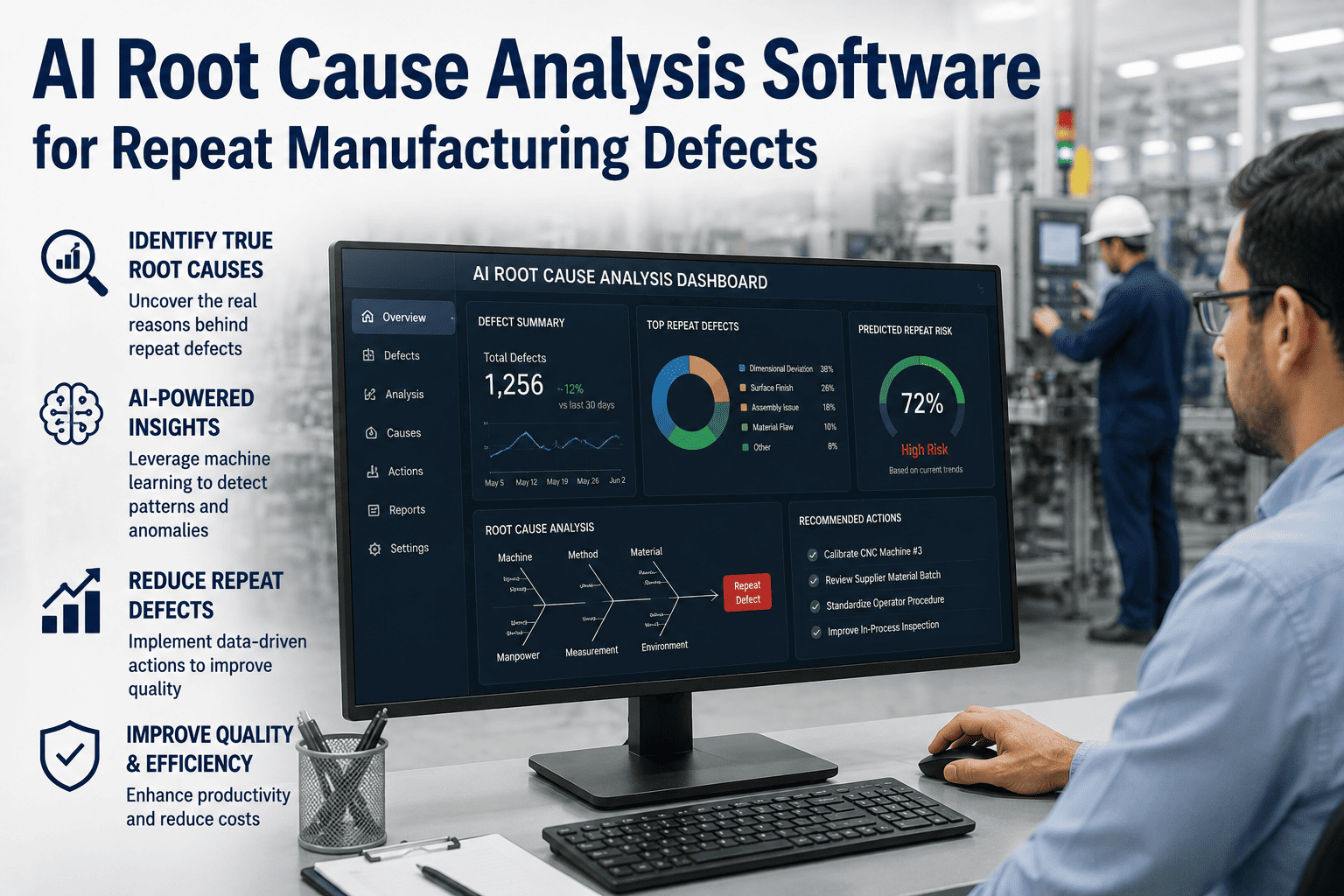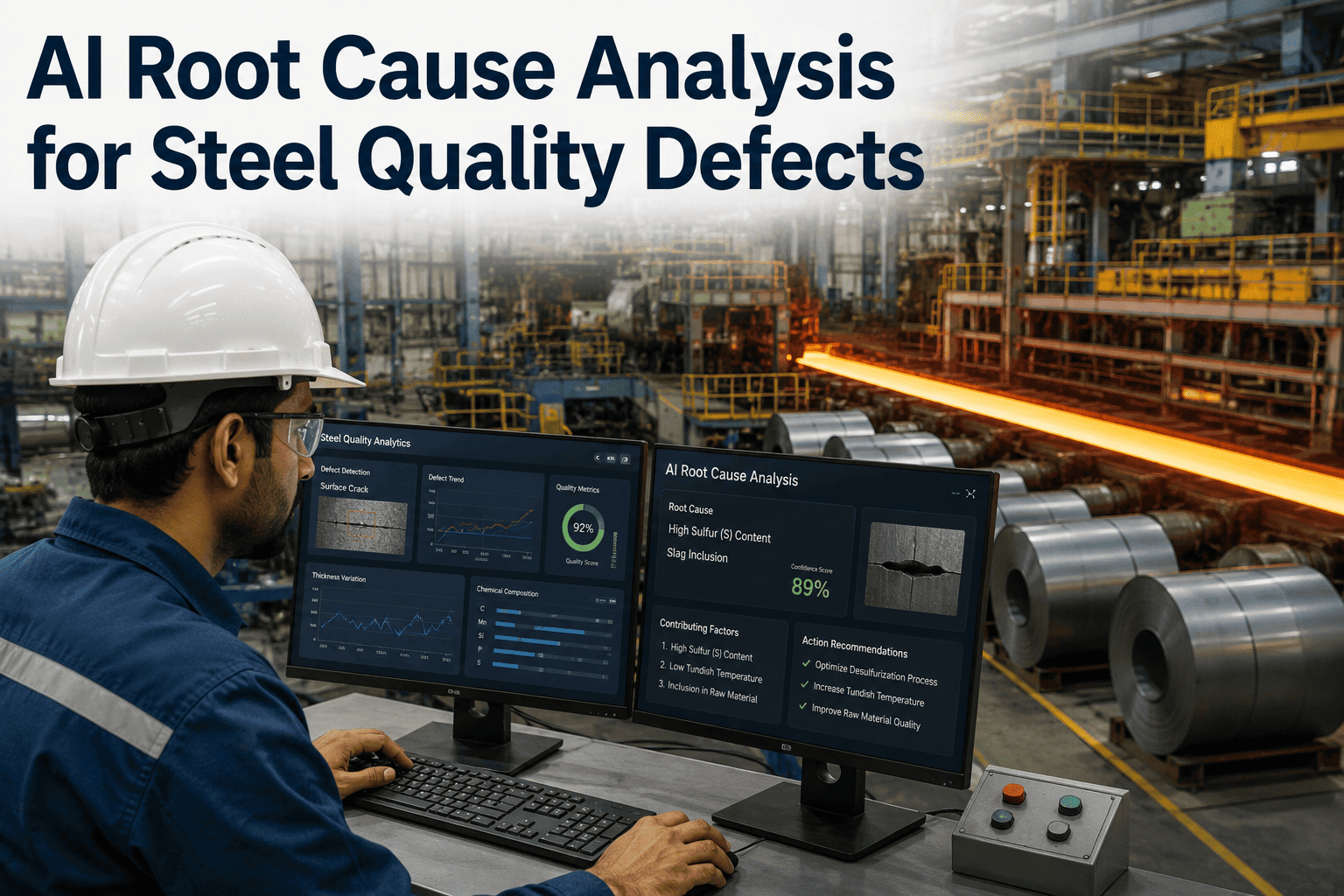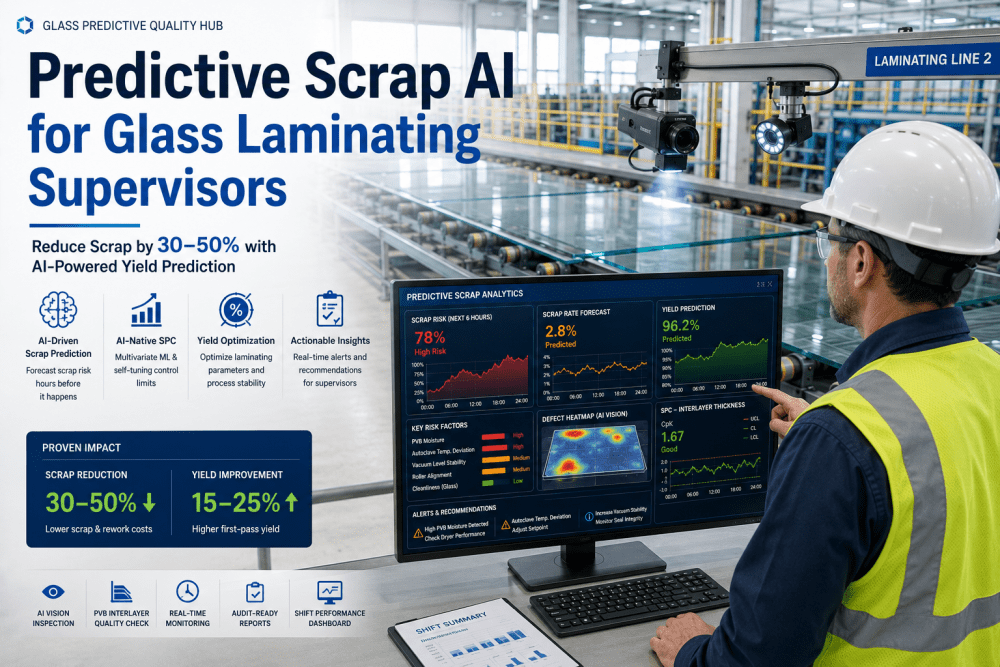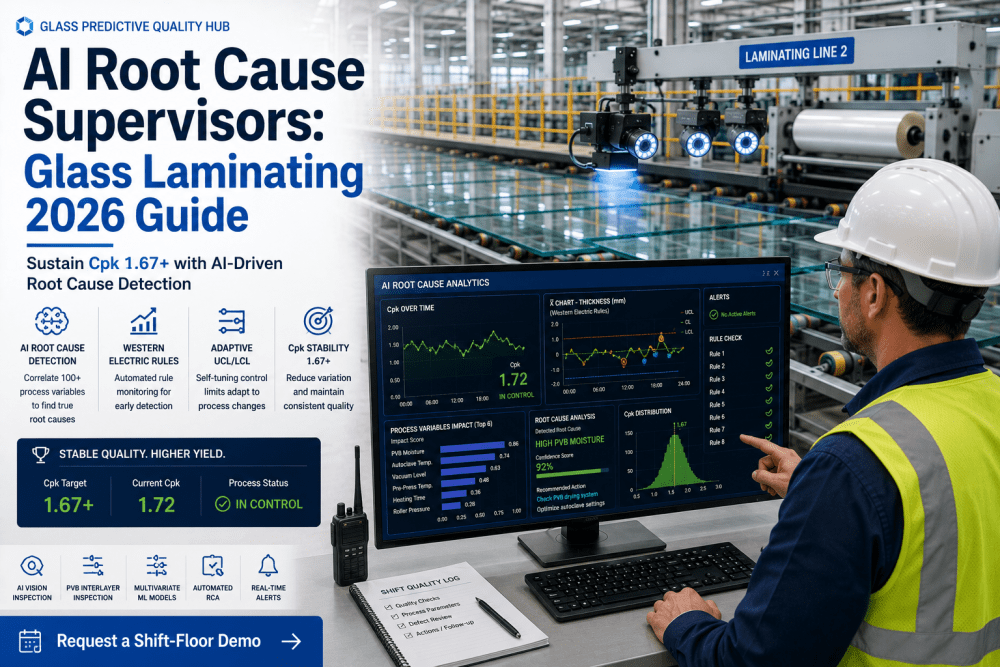
AI root cause detection for glass laminating transforms how supervisors approach Cpk stability across the laminating line — from glass preparation and PVB interlayer placement through pre-press, autoclave bonding, and final inspection. The conventional approach to root cause investigation — stopping the line, manually correlating temperature logs, pressure records, and material lot data — consumes 4 to 6 hours per defect event and misses an estimated 34% of contributing variables. iFactory's AI root cause detection platform correlates 100+ process variables in real time, classifies defect root causes into 14 categories within 18 seconds and delivers corrective action recommendations that enable supervisors to sustain Cpk 1.67+ continuously across all critical-to-quality parameters. Book a Demo to review the AI root cause detection architecture for your laminating operation.
The Cpk Stability Challenge in Glass Laminating
Glass laminating supervisors are measured on process capability, but sustaining Cpk 1.67+ requires identifying and eliminating root causes faster than process variation can accumulate. The conventional manual approach — investigating defects after they occur, correlating data across disconnected systems, and relying on tribal knowledge of senior operators — produces investigation cycles that are too slow and too shallow to prevent recurring variation. Without automated root cause detection, supervisors spend 60% of their shift firefighting defects rather than optimizing the process for consistent capability.
PVB Interlayer Variability
PVB moisture content, thickness uniformity, and storage condition variations introduce complex defect patterns. Supervisors must correlate material lot records, environmental sensors, and process parameters simultaneously to identify root causes — a task that manual methods cannot perform at production speed.
Autoclave Cycle Parameter Drift
Temperature gradient, pressure ramp rate, and cool-down profiles drift due to equipment wear, seal degradation, and ambient condition changes. Supervisors need automated detection of drift patterns before they produce non-conforming output that drives Cpk below the 1.67 threshold.
Delayed Root Cause Investigation
Without automated classification, supervisors spend 4–6 hours per defect event manually correlating data from temperature logs, pressure records, and material lot systems. During this investigation, the line continues producing panels that may require rework or scrap disposition.
Multi-Variable Interaction Effects
The most challenging defect scenarios involve no single variable out of spec — the root cause is the combined state of 3–5 variables interacting. Manual analysis consistently misses these interactions, allowing recurring defects that degrade Cpk stability over time.
How AI Root Cause Detection Sustains Cpk 1.67+
The iFactory AI root cause detection platform combines multivariate data ingestion, machine learning classification, and adaptive SPC into a single workflow designed for shift-floor supervisors. The system monitors 100+ process variables in real time, classifies defect root causes within seconds, and delivers corrective action recommendations that close the loop from detection to resolution. Supervisors evaluating their process capability strategy regularly Book a Demo to see the platform configured for their specific laminating process parameters and material specifications.
100+ Variable Real-Time Ingestion — The platform connects to laminating line PLCs, autoclave controllers, pre-press systems, and inspection stations via OPC-UA and Modbus. Data is ingested at 200ms resolution, time-synchronized per panel serial number, and normalized for model input. Variables include furnace zone temperatures, PVB moisture content, pre-press nip roll pressure, autoclave temperature gradient, pressure ramp rate, cool-down profile, and glass preparation quality scores.
Automated Defect Root Cause Classification — Machine learning models trained on 24 months of production data classify each defect event into 14 root cause categories — PVB moisture excursion, pre-press temperature gradient, autoclave pressure deviation, glass preparation contamination, interlayer misalignment, cooling rate imbalance, and others. Each classification includes a confidence score, the top 3 contributing variables ranked by correlation strength, and deviation magnitude for each variable relative to its optimal range.
Closed-Loop Corrective Action — When root cause is classified, the platform dynamically adjusts SPC control limits based on material lot characteristics and ambient conditions. A corrective action recommendation is generated based on the specific variable deviation detected, automatically converted into a CMMS work order with root cause evidence, recommended parameter adjustment, and priority level. Completion is tracked and recurrence is monitored to confirm the fix is effective.
Deployment Process — From Variable Mapping to Sustained Cpk
Deploying AI root cause detection follows a structured methodology designed for glass laminating environments — requiring no production downtime and integrating with existing sensor infrastructure and control systems.
Process Variable Mapping
Operations and quality teams identify all process variables affecting laminating quality — furnace zone temperatures, PVB moisture content, pre-press parameters, autoclave cycle profiles, and inspection data. The iFactory platform maps each variable to its data source and configures ingestion parameters.
Model Training & Calibration
Machine learning models are trained on 24 months of historical production data, achieving 88% root cause classification accuracy at deployment. Site-specific calibration with 4 weeks of facility data improves accuracy to 94%, with continuous active learning pushing to 97%+ within 12 weeks.
Real-Time Monitoring Configuration
Dashboards are configured for shift-floor supervisors with real-time Cpk trend displays, root cause classification alerts, and corrective action recommendations. Color-coded severity levels indicate whether intervention is required immediately, within the shift, or during the next scheduled maintenance window.
Alert & Workflow Integration
Escalation rules define which root cause classifications generate alerts, the notification recipients, and the severity-based response timeline. The iFactory CMMS integration creates work orders automatically with root cause evidence and corrective action recommendations.
Continuous Model Optimization
Models are retrained weekly with new defect data to improve accuracy. Supervisors provide one-click feedback on AI classifications, creating a continuous improvement loop that adapts to process changes, material variations, and emerging defect patterns.
Measurable Impact on Cpk Stability and Process Control
Within 12 weeks of deploying AI root cause detection across six laminating lines, the production team documented measurable improvements in process capability, investigation speed, and corrective action effectiveness — validated through Cpk trend data and quality system records.
| Metric | Manual Investigation | AI Root Cause Detection | Improvement |
|---|---|---|---|
| Root Cause Investigation Time | 4.2 hours | 18 seconds | 99.9% faster |
| Cpk Stability Range (weekly) | ±0.42 | ±0.09 | 79% improvement |
| Defect Classification Accuracy | 71% | 97% | +26 points |
| Multi-Variable Interaction Detection | Manual — rarely identified | Automated — at first occurrence | Early detection |
| Process Variation (std dev) | 0.34 | 0.13 | 62% reduction |
| Corrective Action Time | 5.8 hours from detection | 0.6 hours from detection | 90% faster |
"Before AI root cause detection, our Cpk would drift below 1.67 and we would not know why until we had already produced two shifts' worth of panels with elevated variation. The manual investigation process took half a shift — pulling temperature profiles, pressure logs, and material records from separate systems. The AI now correlates all 100+ variables automatically and tells me the root cause in under 20 seconds. The 79% improvement in Cpk stability was the measurable result, but the real change is that I now spend my shift optimizing the process instead of investigating why it failed." — Lead Shift Supervisor, Architectural Glass Laminating Facility
Building a Capable Process with AI-Driven Root Cause Analysis
The shift from manual root cause investigation to automated AI classification transforms not only Cpk stability but the fundamental role of the laminating supervisor. Instead of spending 60% of their shift firefighting defect events, supervisors become process optimizers — using real-time classification data to fine-tune parameters, reduce variation, and sustain capability above the 1.67 threshold. The iFactory platform integrates AI root cause detection with existing CMMS, MES, and SPC systems to create a unified quality management workflow.
Frequently Asked Questions
Traditional root cause analysis relies on process engineers manually correlating data from temperature logs, pressure records, and material lot systems after a defect is detected — requiring 4 to 6 hours per event. AI root cause detection automates this correlation using multivariate machine learning models that analyze 100+ process variables simultaneously, classify the root cause within 18 seconds, and rank contributing variables by correlation strength. The AI detects multi-variable interactions that manual analysis consistently misses.
The platform classifies defect root causes into 14 categories including PVB moisture excursion, pre-press temperature gradient drift, autoclave pressure deviation, glass preparation contamination, interlayer misalignment, cooling rate imbalance, nip roll pressure variation, PVB thickness inconsistency, seal failure at edges, coating compatibility separation, ambient humidity excursion, heating element degradation, power supply fluctuation, and multi-variable interaction effects where the root cause is a combination of variables rather than a single parameter.
The platform connects to existing laminating line PLCs, autoclave controllers, pre-press systems, and inspection stations through OPC-UA and Modbus TCP. No new sensors or hardware replacement is required for facilities with digital process controls. For facilities with analog or manual data collection, iFactory provides IoT retrofitting packages for temperature, pressure, and humidity monitoring. The platform's edge computing appliance runs AI inference models locally with optional cloud aggregation for multi-facility reporting.
Pre-trained multivariate models trained on 24 months of production data from similar laminating operations achieve approximately 88% root cause classification accuracy at deployment. Site-specific calibration with 4 weeks of facility data improves accuracy to 94%. Continuous active learning from each defect event pushes accuracy to 97%+ within 12 weeks. Full deployment across a multi-line facility, including data integration, dashboard configuration, and supervisor training, is typically completed within 8 weeks.
Facilities with 4+ laminating lines and recurring defect-driven downtime exceeding 8 hours per week typically recover platform investment within 4–6 months. Primary ROI drivers include eliminated investigation hours, reduced scrap from faster corrective action, improved Cpk reducing customer quality rejections, reallocation of engineering resources from firefighting to process improvement, and extended equipment life through proactive parameter management. A personalized ROI analysis is provided during the Book a Demo consultation with iFactory's glass manufacturing team.