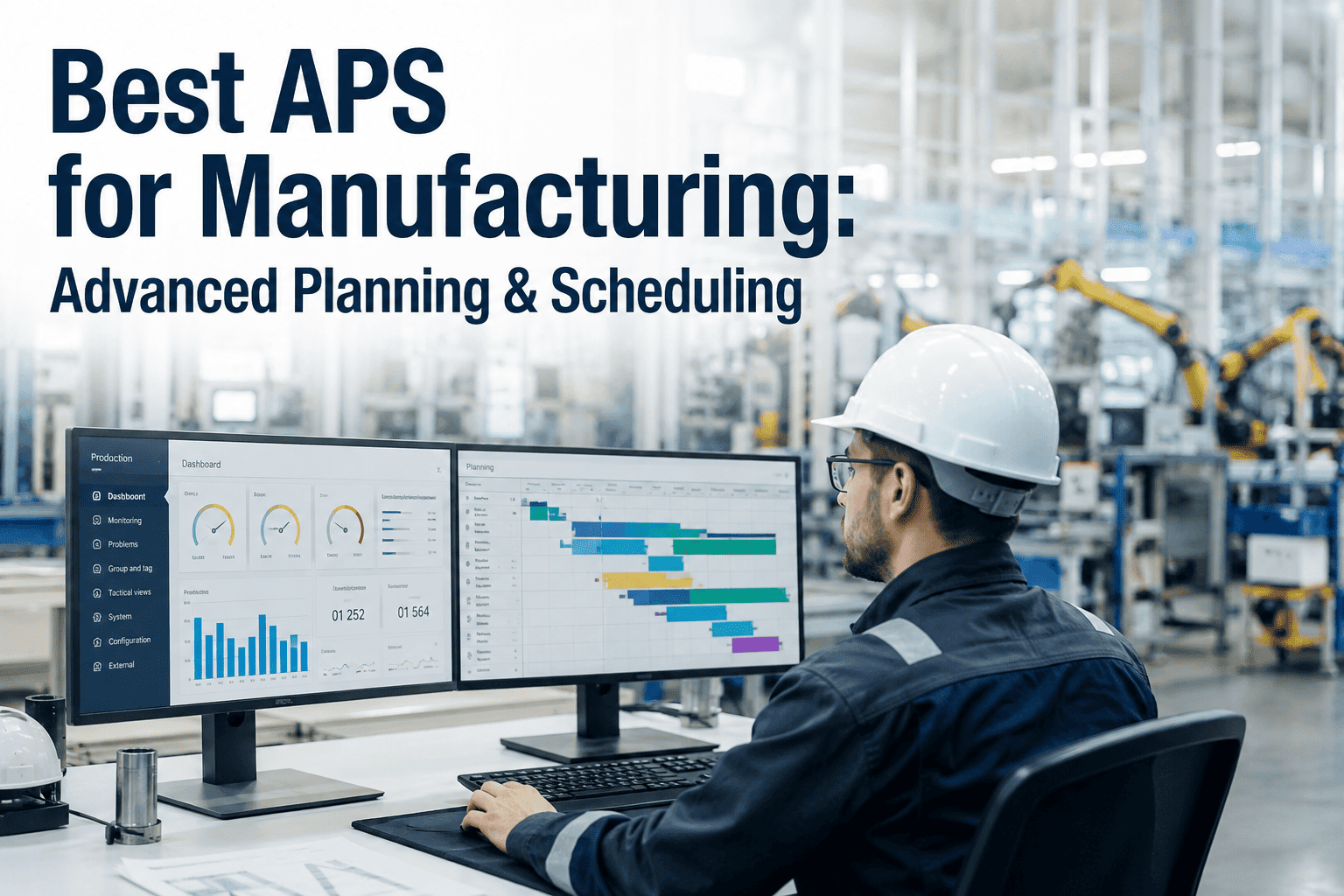
Somewhere in your plant a planner is probably still building tomorrow's schedule in a spreadsheet that took three hours to construct and was already wrong by lunch, because it never accounted for the tool change that pushed one job back and knocked every job behind it out of sequence. Advanced Planning and Scheduling software exists to solve exactly this problem, but the market is crowded with platforms ranging from lightweight add-ons to heavyweight enterprise suites, and picking the wrong one wastes a budget cycle and a year of adoption effort. This guide walks through what actually separates a good APS fit from a bad one, and you can book a demo of iFactory's AI-driven APS platform to see the difference against your own scheduling constraints.
Choosing an APS Platform Is a Bigger Decision Than the Sales Deck Makes It Look
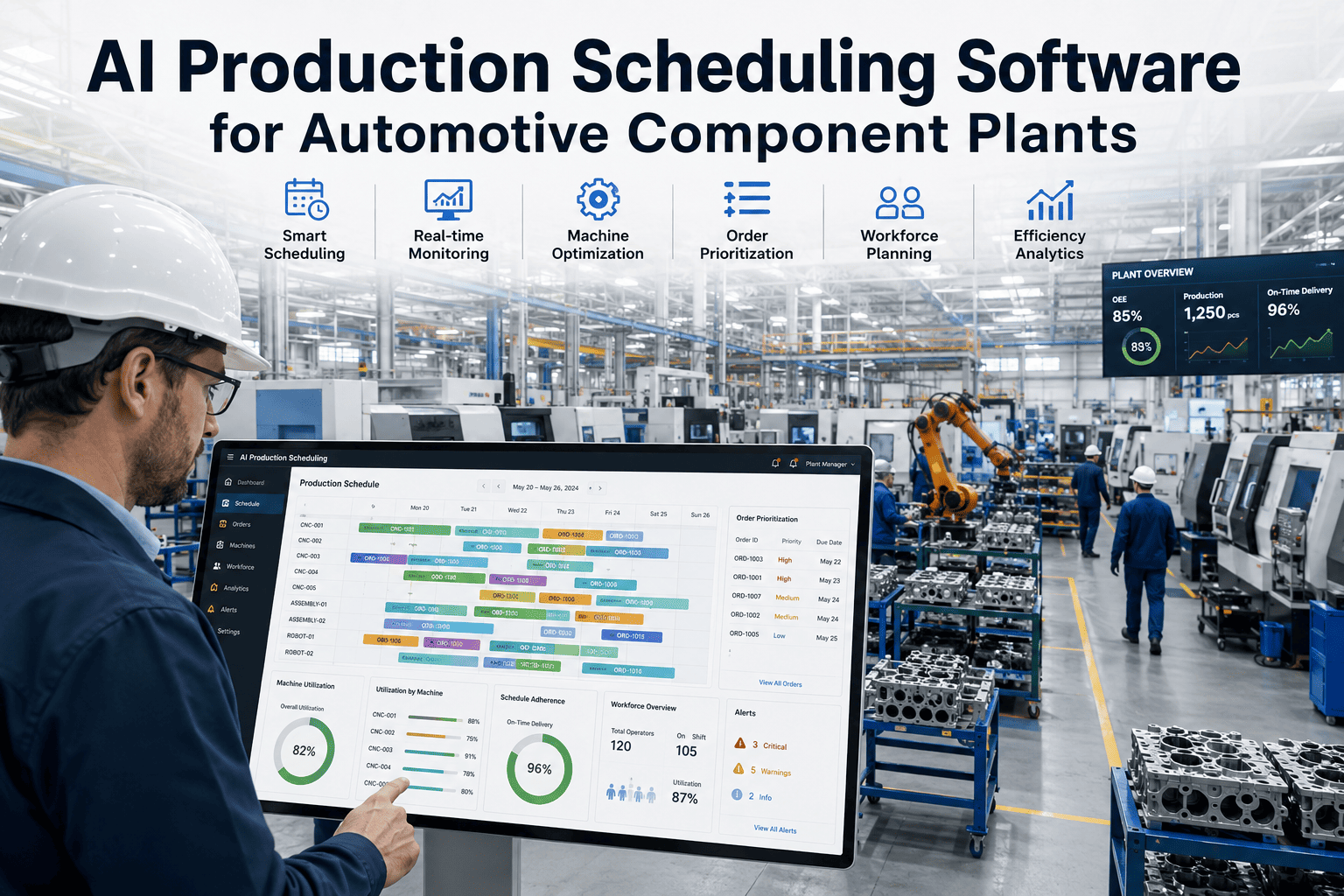
iFactory's AI-driven APS builds a realistic, constraint-aware schedule directly from your actual capacity, tooling, and labor data, so the plan your team follows is one the floor can actually execute.
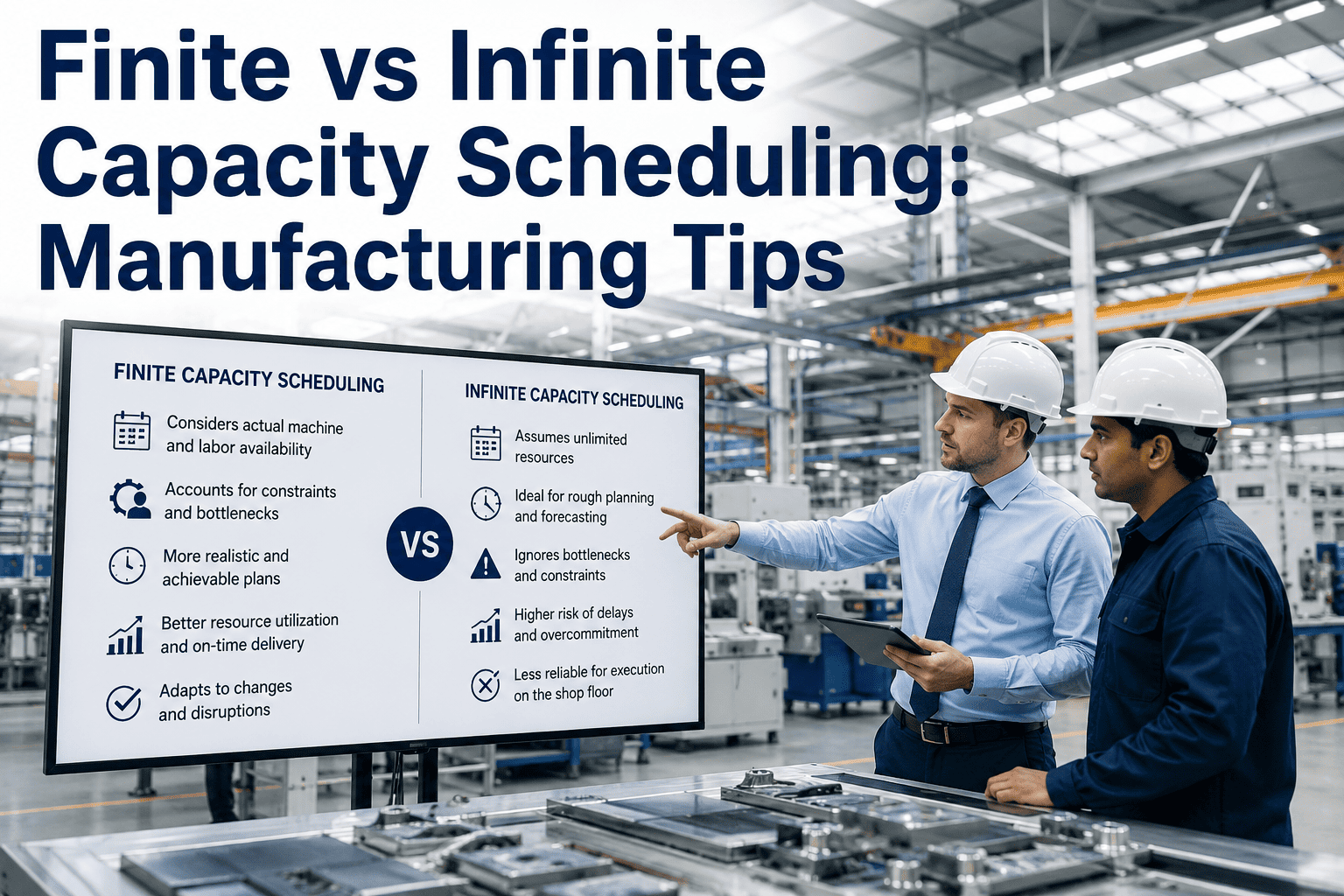
A Schedule That Ignores Real Constraints Is Just an Optimistic Guess
Standard ERP scheduling modules typically assume infinite capacity and static lead times, which is why the plan they generate rarely survives contact with the actual floor. The figures below describe the gap this creates in facilities still relying on ERP-native scheduling alone.
Six Questions to Ask Before Selecting an APS Platform
Vendor demos are built to look impressive, so evaluating an APS platform requires asking questions that get past the demo script and into how the system will actually behave on your floor.
Does it model finite capacity by default?
Confirm the system enforces real machine, labor, and tooling limits rather than defaulting to an unconstrained plan that requires manual correction after the fact.
How does it handle a mid-day disruption?
Ask to see a live rescheduling scenario, not a slide, since the speed and quality of disruption response is where most platforms actually differ.
Can priority rules be configured without custom code?
A platform requiring a developer to change scheduling logic will slow down every future adjustment your business needs to make.
What is the real integration effort with our ERP and MES?
Get a specific technical answer about data mapping, not a general assurance that integration is possible in principle.
How is planner override handled?
Confirm planners can manually adjust a proposed schedule and see the downstream impact of that override before committing to it.
What does a realistic implementation timeline look like for our complexity?
Push for a timeline based on your actual product mix and constraint complexity, not a generic best-case number from the sales team.
See the Answers to These Six Questions Applied to Your Own Floor
iFactory's AI-driven APS is built to handle real disruptions, finite capacity, and configurable priority rules without custom development. Book a demo and put it through your toughest scheduling scenario.
Rule-Based vs Constraint-Based vs AI-Driven APS Platforms
APS platforms broadly fall into three generations of capability, and understanding which generation a vendor's product belongs to helps set realistic expectations about what it can actually deliver.
| Capability | Rule-Based Scheduling | Constraint-Based APS | iFactory AI-Driven APS |
|---|---|---|---|
| Capacity Modeling | Static, manually maintained | Finite, but recalculated in batch | Finite, continuously updated live |
| Disruption Response | Manual replan required | Batch reschedule, delayed | Near real-time automated reschedule |
| Priority Logic | Fixed sequencing rules | Configurable, requires setup | Configurable and self-tuning over time |
| Typical Fit | Simple, low-variability operations | Mid-complexity discrete manufacturing | High-mix, high-disruption environments |
What a Realistic APS Rollout Looks Like
Underestimating implementation effort is the most common reason APS projects stall. iFactory structures the rollout in defined phases so expectations stay grounded from day one.
Outcomes Reported After Switching to iFactory's AI-Driven APS
These figures reflect results from facilities that migrated from ERP-native or legacy rule-based scheduling to iFactory's AI-driven APS, tracked over a minimum two-quarter period.
Common Questions From Teams Evaluating APS Platforms
Evaluate an APS Platform That Handles Disruption the Way Your Floor Actually Runs
iFactory's AI-driven APS models real capacity, applies your priority rules, and reschedules automatically when something changes. Book a demo and run it against your toughest scheduling week.