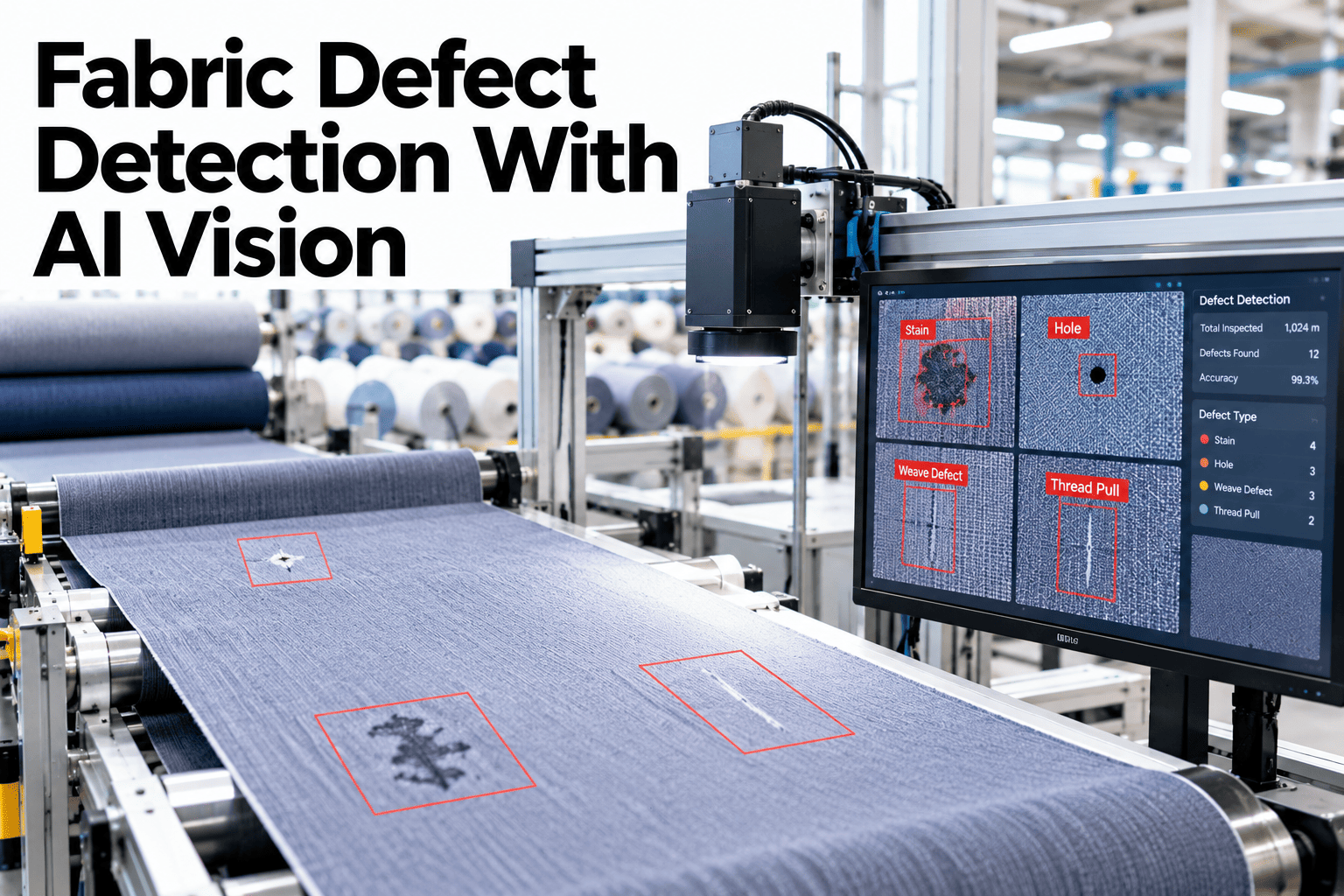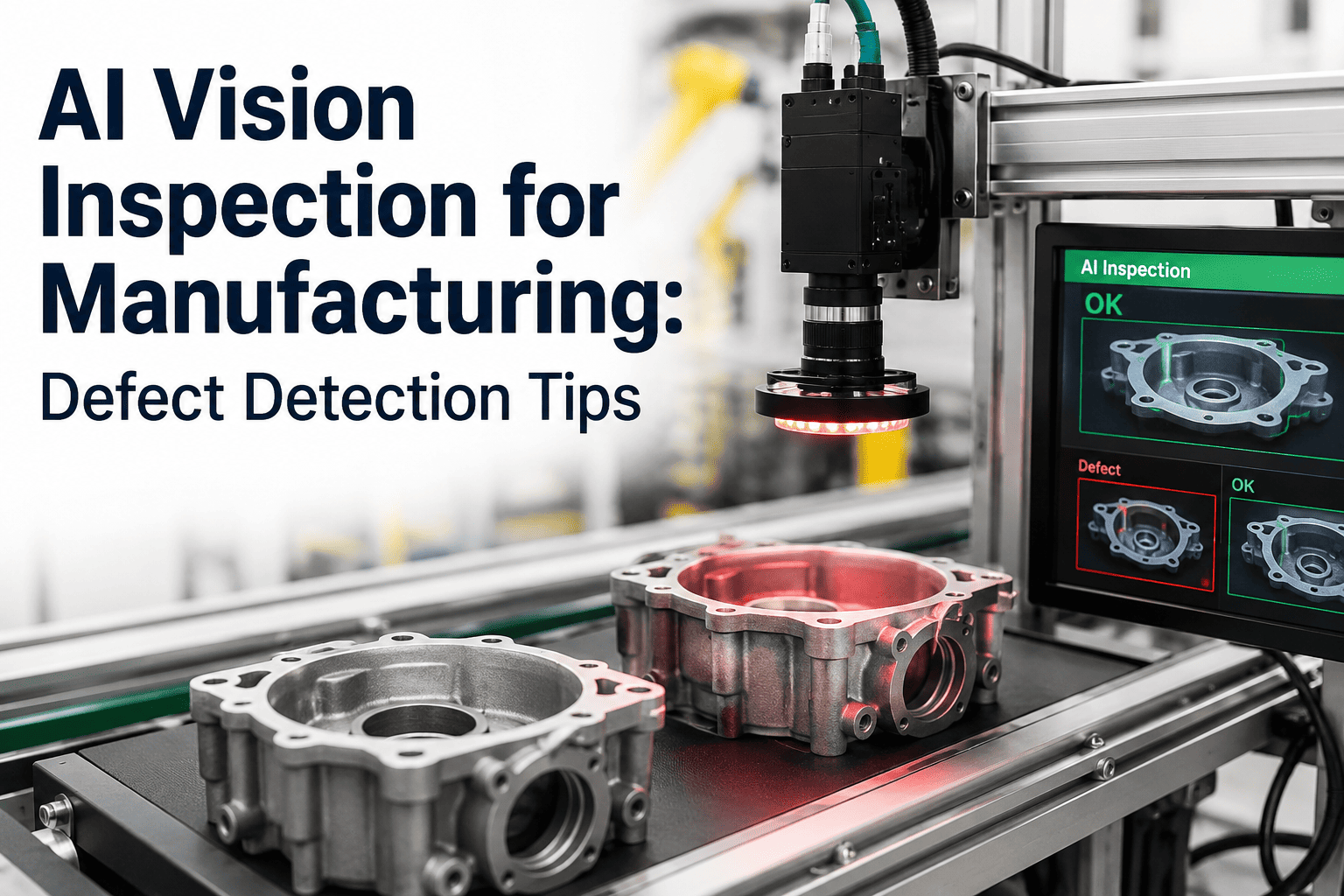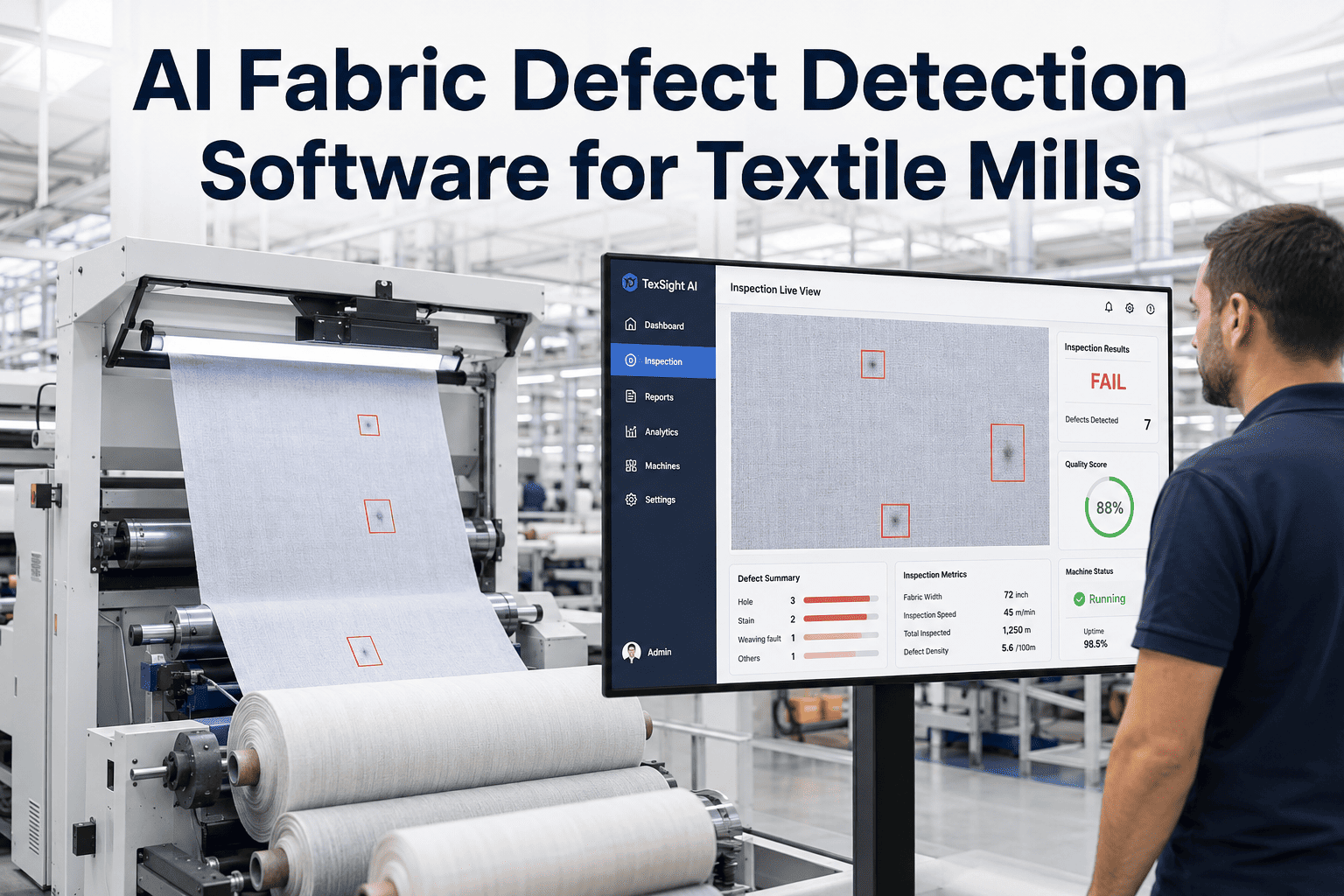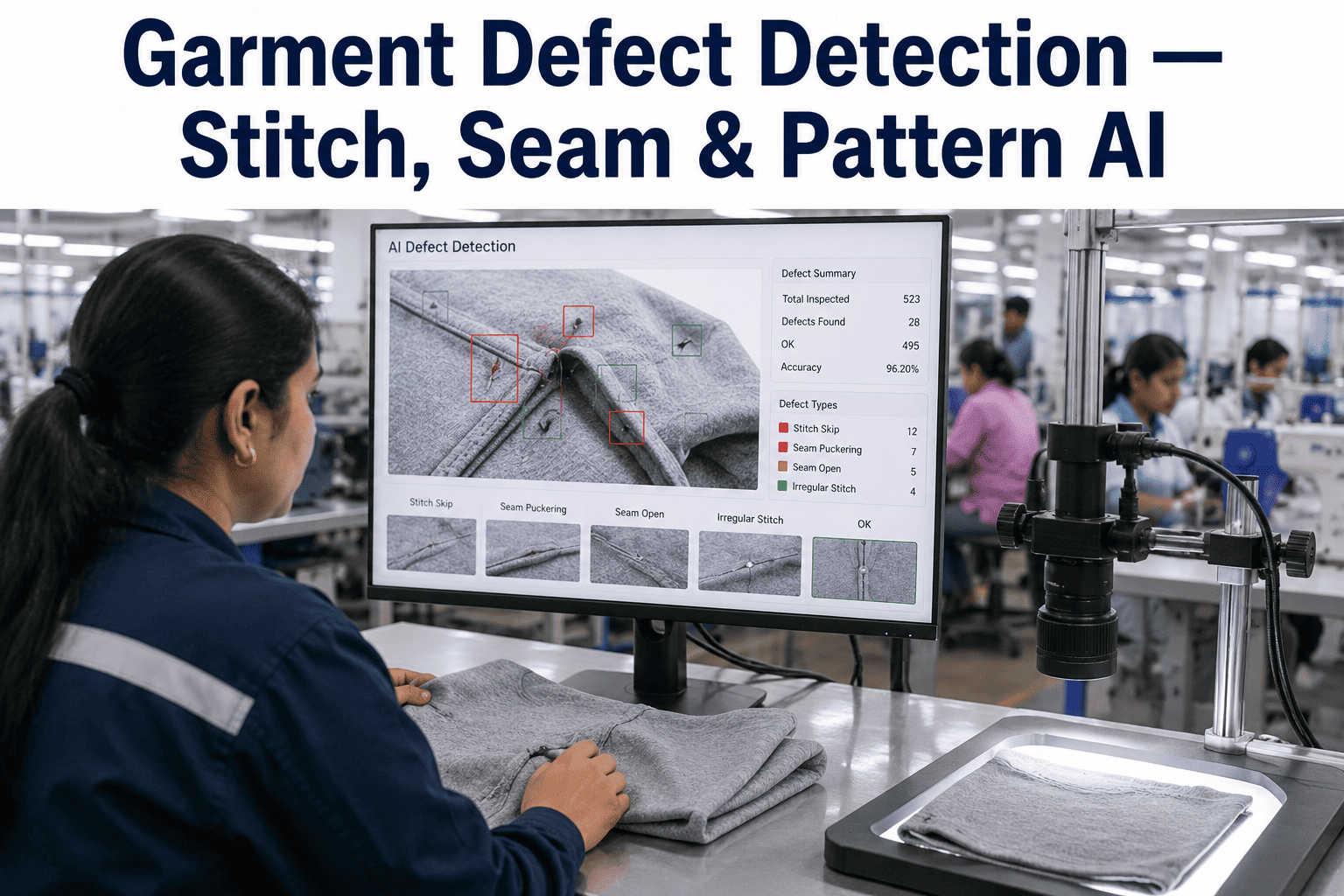
Garment defects that slip past inspection are among the most expensive quality failures in apparel manufacturing, because they rarely surface on the line — they show up at the retailer, in a customer's hands, or during a chargeback dispute weeks after the shipment has already left the factory. A single unnoticed stitch skip, seam pucker, or pattern mismatch can trigger a full carton return, an audit failure with a buying house, or a permanently damaged vendor relationship. Manual end-of-line checking catches only a fraction of what is possible, because fatigue, inconsistent lighting, and the sheer speed of modern sewing lines cause inspection accuracy to fall well before an eight-hour shift ends, letting defective garments pass straight into packing. iFactory AI's garment inspection platform uses computer vision trained specifically on stitch, seam, and pattern defects to catch what manual checking misses, screening every piece at line speed instead of sampling a percentage of output. Book a Demo to see it running on your sewing and finishing lines.
Catch Stitch, Seam and Pattern Defects Before They Ever Reach Packing
iFactory AI inspects every garment at line speed for stitch skips, seam puckering, pattern mismatches, label placement errors, and closure defects — replacing sample-based manual checking with 100 percent visual coverage.
The Hidden Cost of Garment Defects in Apparel Manufacturing
Apparel factories operate on thin margins and tight delivery windows, which makes quality escapes doubly expensive — the direct cost of the return or rework, and the schedule disruption of reworking or replacing garments after a shipment has already been booked. A typical mid-size cut-and-sew factory produces 15,000 to 40,000 garments per day across dozens of styles, and even a defect rate of one to two percent translates into hundreds of flawed pieces reaching the packing table daily. Retail buyers routinely audit incoming shipments against AQL sampling standards, and repeated failures put the entire vendor relationship at risk, not just the shipment in question. Manual inspectors, however well trained, cannot maintain consistent detection accuracy for eight to ten hours across fast-moving lines, and that inconsistency is exactly where AI vision closes the gap.
Where Defects Hide — Five Categories AI Vision Is Trained to Catch
Not every garment defect looks the same, and a detection system built for one category often misses another entirely. iFactory AI's models are trained separately on each defect family below, using thousands of labeled reference images from real production floors, so the system recognizes the specific visual signature of each failure mode rather than applying one generic pass or fail threshold.
Stitch Skips and Broken Threads
Needle skip patterns, thread breaks, and uneven stitch density are detected by analyzing seam continuity frame by frame, flagging gaps that are difficult for the human eye to catch at sewing speed under standard shop lighting.
Seam Puckering and Misalignment
Fabric tension imbalance causes puckering along seams, particularly on stretch and knit fabrics. AI vision measures seam line deviation against a reference curve to flag puckering before the garment reaches finishing.
Pattern and Print Mismatch
Stripe, plaid, and print alignment across panels is checked automatically at seam junctions, catching the mismatches that are the single most common cause of buyer rejection on patterned fabric styles.
Label and Trim Placement
Care label position, brand label orientation, and trim placement are verified against style specifications, preventing the compliance and branding errors that trigger the most costly retailer chargebacks.
Button, Zipper and Closure Function
Closure alignment, button spacing, and zipper track integrity are verified visually and cross-checked against style sheets so functional defects are caught before a garment is folded and bagged.
How AI Vision Inspection Works on a Live Sewing and Finishing Line
Deploying AI vision on a garment line does not require replacing existing equipment or stopping production for weeks of calibration. iFactory AI's inspection cameras mount at existing checkpoints — end of line, finishing table, or pre-packing — and the model is trained on your own style library before go-live.
Camera Placement and Calibration
High-resolution cameras are positioned at existing inspection points with lighting calibrated for consistent fabric texture and color capture, eliminating the shadow and glare issues that limit manual inspection accuracy.
Style-Specific Model Training
Reference images of correct and defective garments across your active styles are used to train detection models specific to your fabric types, seam constructions, and pattern requirements before floor deployment.
Real-Time Inline Screening
Every garment passing the checkpoint is screened in under a second, with flagged pieces routed to a rework station and pass rates logged automatically by style, line, and shift for supervisor review.
Continuous Model Improvement
Rework station outcomes feed back into the model, refining detection accuracy over time and adapting automatically as new styles, fabrics, and seasonal patterns move through the line.
Manual Sample Inspection vs. AI-Driven Full Coverage
The difference between sample-based manual checking and AI-driven full coverage is not a matter of degree — it is a structural change in how much of your output is actually verified before it reaches a customer.
- Typically checks 10-20% of garments produced per shift
- Detection accuracy declines measurably after four hours of continuous checking
- Pattern and print mismatches are frequently missed under standard shop lighting
- Defect data logged manually, if at all, with limited traceability by style
- Screens 100% of garments passing the checkpoint, every shift, without fatigue
- Consistent detection accuracy maintained across an entire production run
- Pattern, stitch, and seam defects flagged with automated reference comparison
- Every inspection logged automatically by style, line, shift, and defect type
Measured Outcomes from AI Inspection Deployments
The table below summarizes representative before-and-after ranges reported by apparel manufacturers after deploying AI vision inspection at packing and finishing checkpoints. Individual results vary based on fabric mix, product complexity, and prior inspection maturity.
| Defect Category | Manual Detection Rate | AI Detection Rate | Primary Value Driver |
|---|---|---|---|
| Stitch Skips | 60-70% | 95%+ | Frame-by-frame seam continuity analysis |
| Seam Puckering | 50-65% | 92%+ | Automated deviation measurement against reference curve |
| Pattern Mismatch | 55-70% | 96%+ | Panel-to-panel alignment comparison at seam junctions |
| Label/Trim Placement | 65-75% | 97%+ | Spec-based position verification |
| Closure Function | 70-80% | 94%+ | Visual alignment check against style sheet |
What Quality Managers Say After Deploying AI Garment Inspection
Before iFactory, our end-of-line team checked roughly one in five garments per shift, and we still absorbed a customer return rate that our buyers flagged twice in one season. Within the first two months of running AI inspection at our finishing table, our flagged-defect rate at packing dropped by more than half, and our rework team could see exactly which line and which style was producing the most stitch skips. That visibility changed how we scheduled machine maintenance, not just how we caught defects.
Give Every Garment the Inspection Only Your Best Checker Could Give a Sample
iFactory AI screens 100 percent of production for stitch, seam, pattern, label, and closure defects — logged automatically, at line speed, without adding headcount.
Garment Defect Detection — Frequently Asked Questions
What garment defects can AI vision inspection actually detect?
AI vision inspection is trained to detect stitch skips and broken threads, seam puckering and misalignment, pattern or print mismatches across panels, label and trim placement errors, and closure defects such as misaligned buttons or zippers. Each defect category uses a separately trained model tuned to its specific visual signature, which is why AI systems consistently outperform generic pass or fail thresholds used in older automated inspection tools. Contact Support for a full list of defect types covered for your fabric categories.
Does AI inspection slow down the sewing or finishing line?
No. Inspection cameras are placed at existing checkpoints such as the finishing table or pre-packing station, and each garment is screened in under a second as it naturally passes through. The system is designed to run at existing line speeds rather than requiring a separate inspection stop, so throughput is unaffected while coverage increases from a sampled percentage to effectively every garment produced.
How long does it take to train the AI model for our specific styles?
Initial model training typically uses reference images of correct and defective garments from your active style library, and most factories are running live detection within the first few weeks of camera installation. Because the model continues learning from rework station outcomes after go-live, detection accuracy improves further during the first full production season as more style variations are captured.
Can the system handle patterned, striped, and stretch fabrics?
Yes. Pattern and print alignment detection is one of the core defect categories the platform is built for, since stripe and plaid mismatches at seam junctions are among the most common causes of buyer rejection. Stretch and knit fabrics are supported as well, with seam deviation measurement calibrated against the specific tension characteristics of each fabric type used on your line.
How is inspection data used beyond flagging individual defects?
Every inspection is logged automatically by style, line, shift, and defect type, giving quality and production managers visibility into which machines, operators, or fabric batches are producing the most rework. This data is commonly used to schedule targeted machine maintenance, retrain specific operators, and identify fabric suppliers whose material is contributing disproportionately to seam or pattern defects. Book a Demo to see sample reporting from an active deployment.