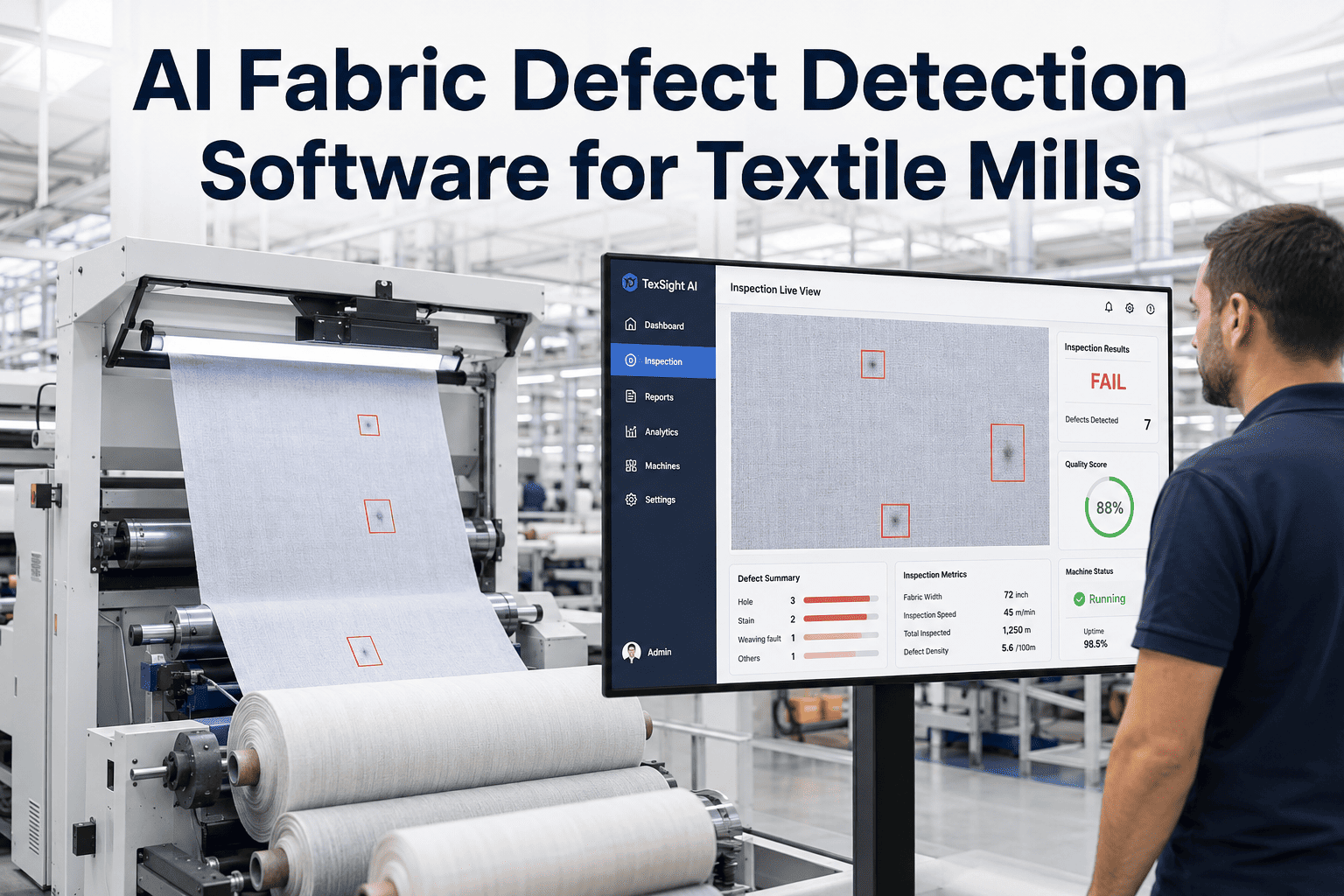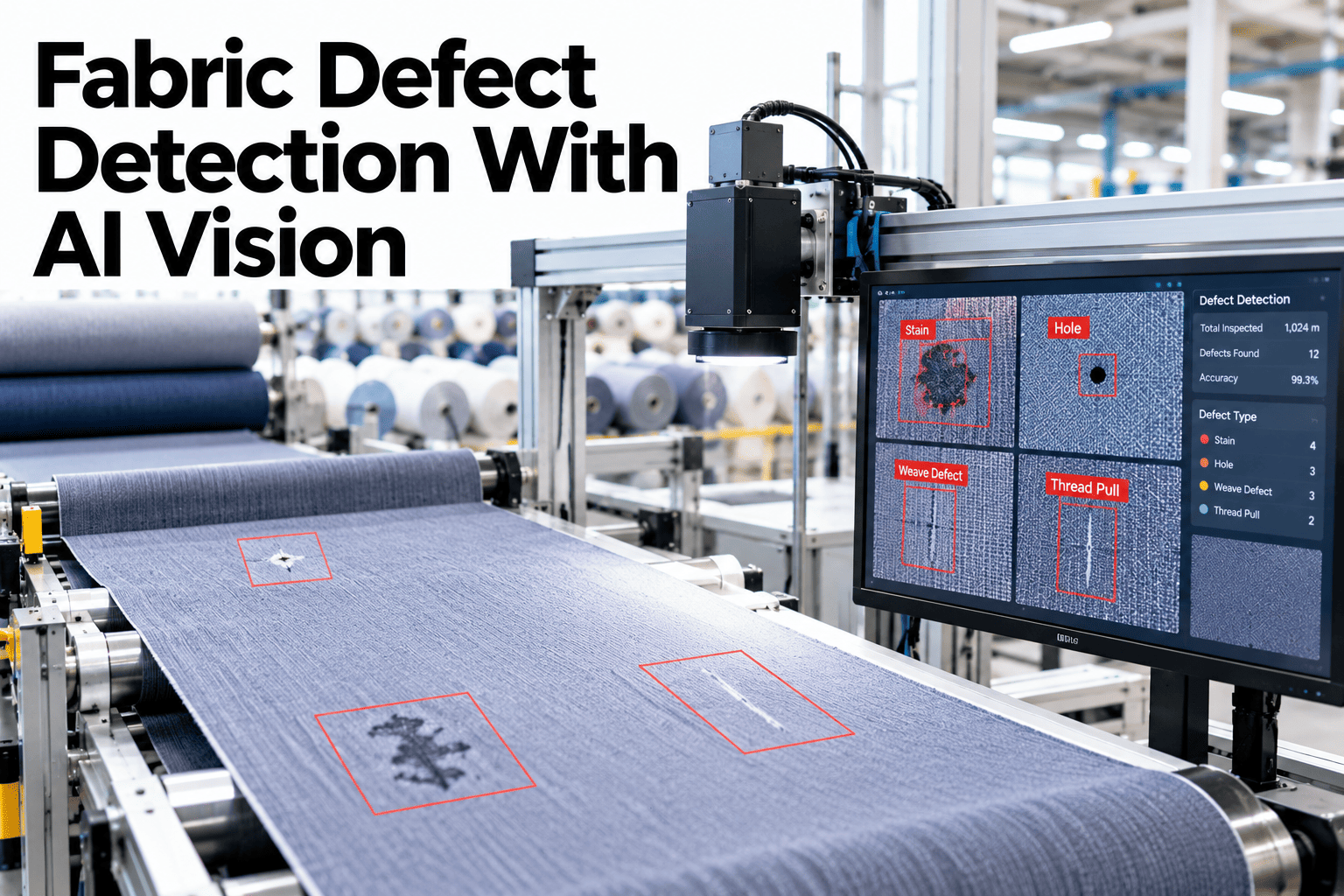
Manual fabric inspection asks an operator to spot a thin slub, a broken pick, or a stain while the fabric moves past at line speed, for hours at a stretch, without a break in concentration. Even a skilled, attentive inspector will miss a share of defects simply because sustained visual attention at that pace is genuinely difficult for anyone to hold for a full shift. AI vision inspection does not get tired, does not blink, and applies the exact same detection criteria to the last meter of fabric as it did to the first, which is why plants adopting it tend to see detection consistency improve even before accuracy numbers are compared. If you want to see how vision inspection performs against your own fabric types and defect history, you can review a sample inspection run with our team.
Catch Fabric Defects Consistently, Shift After Shift
AI vision inspection that applies the same detection criteria to every meter of fabric, line speed after line speed, without the fatigue that affects even the most skilled manual inspector.
The Defect Types Vision Inspection Is Built to Catch
Different defect types present differently to a camera system, and a well-tuned vision system is trained specifically across the categories that matter most for a given fabric type.
How the Detection Pipeline Actually Works
Detection happens continuously as fabric moves through the inspection point, with each step adding context to what the camera sees.
Manual Inspection vs AI Vision Inspection
The fabric and the defect types do not change, what changes is how consistently they get caught across a full shift.
| Factor | Manual inspection | AI vision inspection |
|---|---|---|
| Detection consistency over a shift | Declines with fatigue over time | Stays constant from start to end |
| Defect location logging | Approximate, operator-dependent | Precise, recorded automatically |
| Maximum sustainable line speed | Limited by human visual processing speed | Matches the camera and processing system's capacity |
| Defect type classification | Subject to individual operator judgment | Applied consistently against trained categories |
Manual inspection still plays a role for final confirmation and the kind of judgment calls a trained eye brings, which is why most plants run vision inspection as a layer that supports inspectors rather than replacing their judgment entirely.
Test Vision Inspection on Your Own Fabric Samples
Share samples of your common fabric types and known defect history and we will show how vision inspection performs against them.
Where Vision Inspection Fits Best on a Textile Line
Inspection station placement affects how much value vision detection actually delivers, since catching a defect earlier gives more options for what to do about it.
What iFactory Textile Specialists See Across Vision Rollouts
iFactory textile specialists who support vision inspection rollouts find that greige fabric inspection delivers the fastest payback for most mills, since catching a weave fault before dyeing avoids sinking additional cost into a defective piece.
They also note that accuracy improves meaningfully once the system has been trained on a mill's own specific fabric types and defect history, rather than relying solely on generic defect categories, which is why an initial calibration period matters for getting the best results.
What Quality Teams Ask Before Adopting Vision Inspection
Bring AI Vision Inspection to Your Fabric Line
Book a session with iFactory AI to see fabric defect detection applied to your own fabric types and line speed.