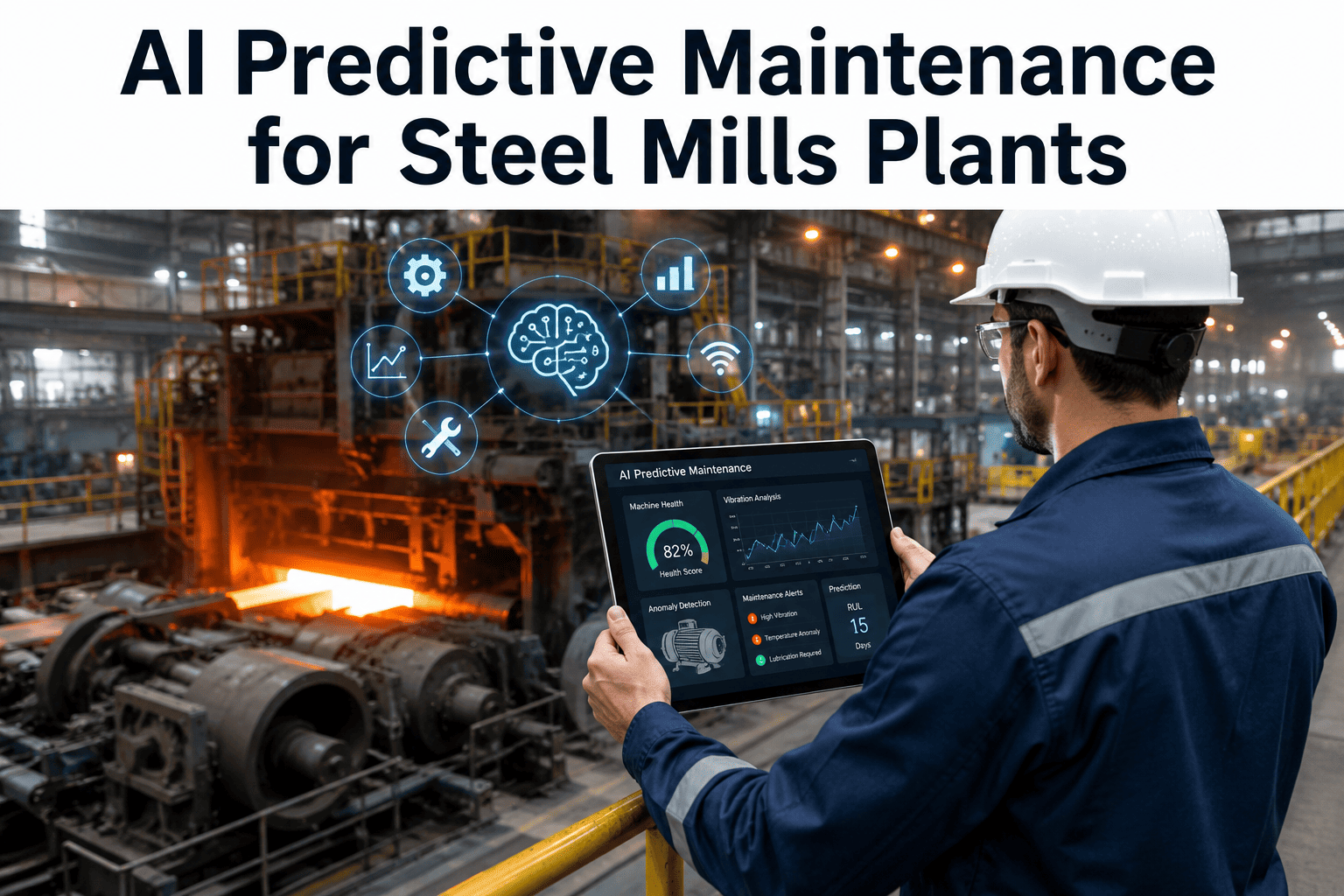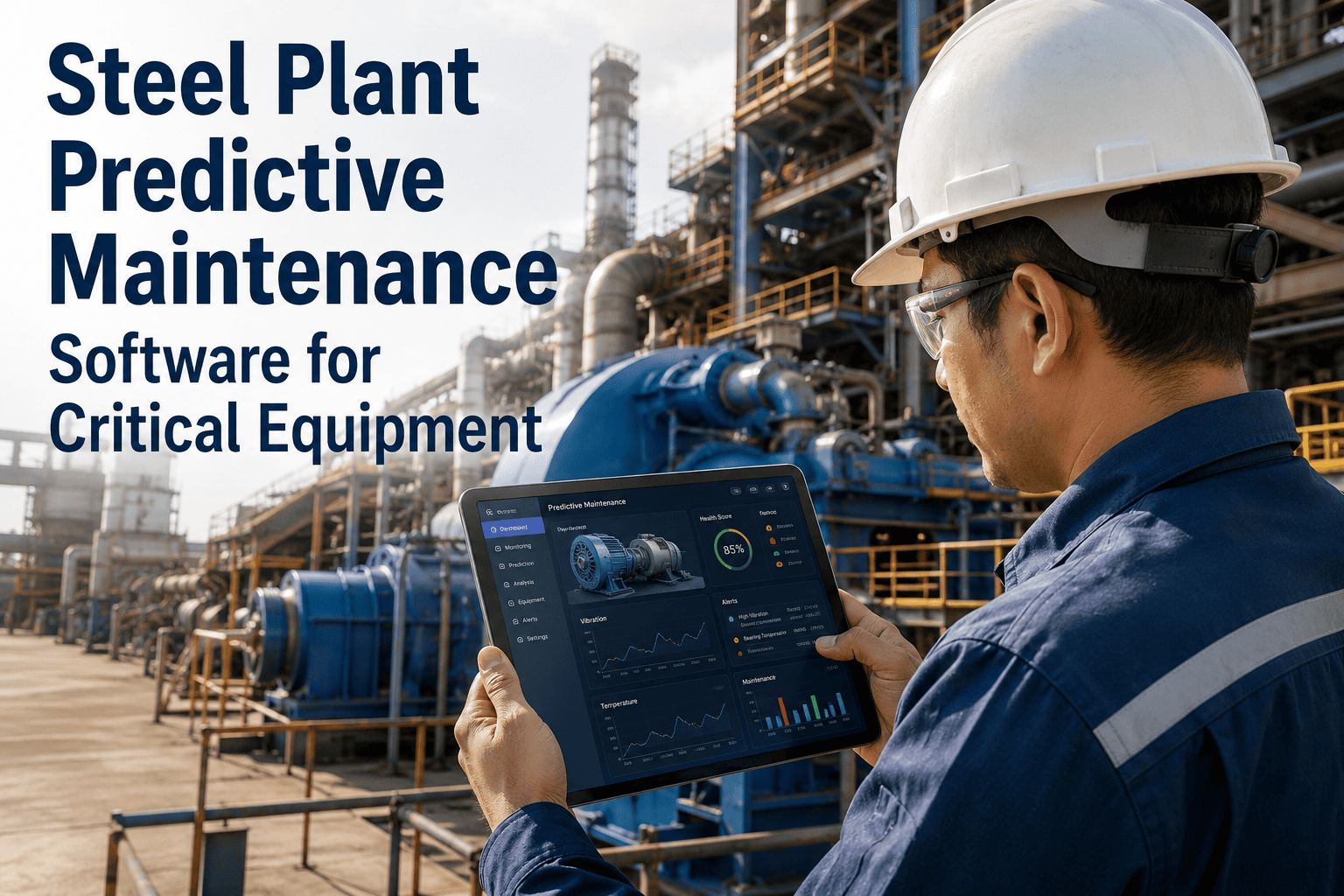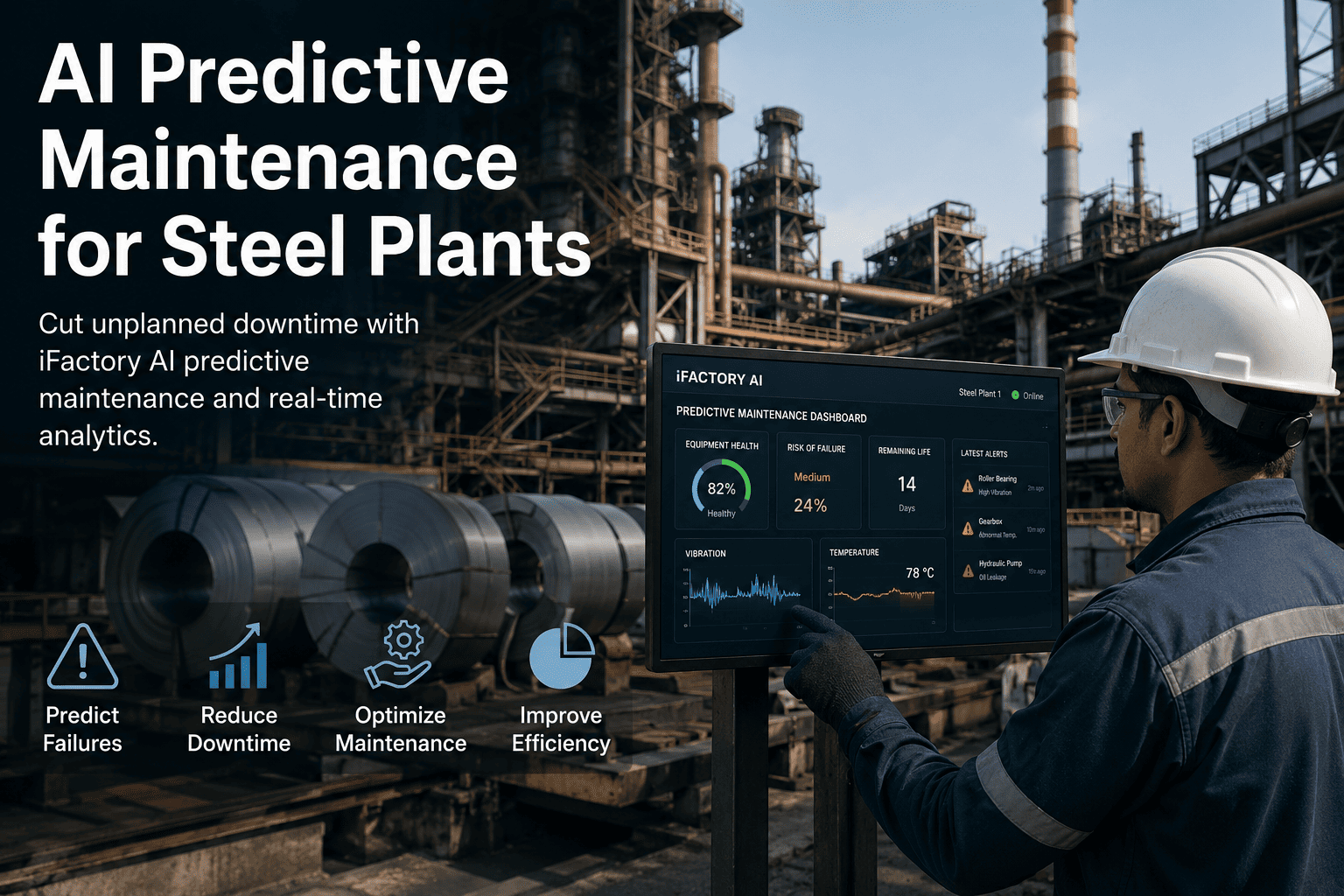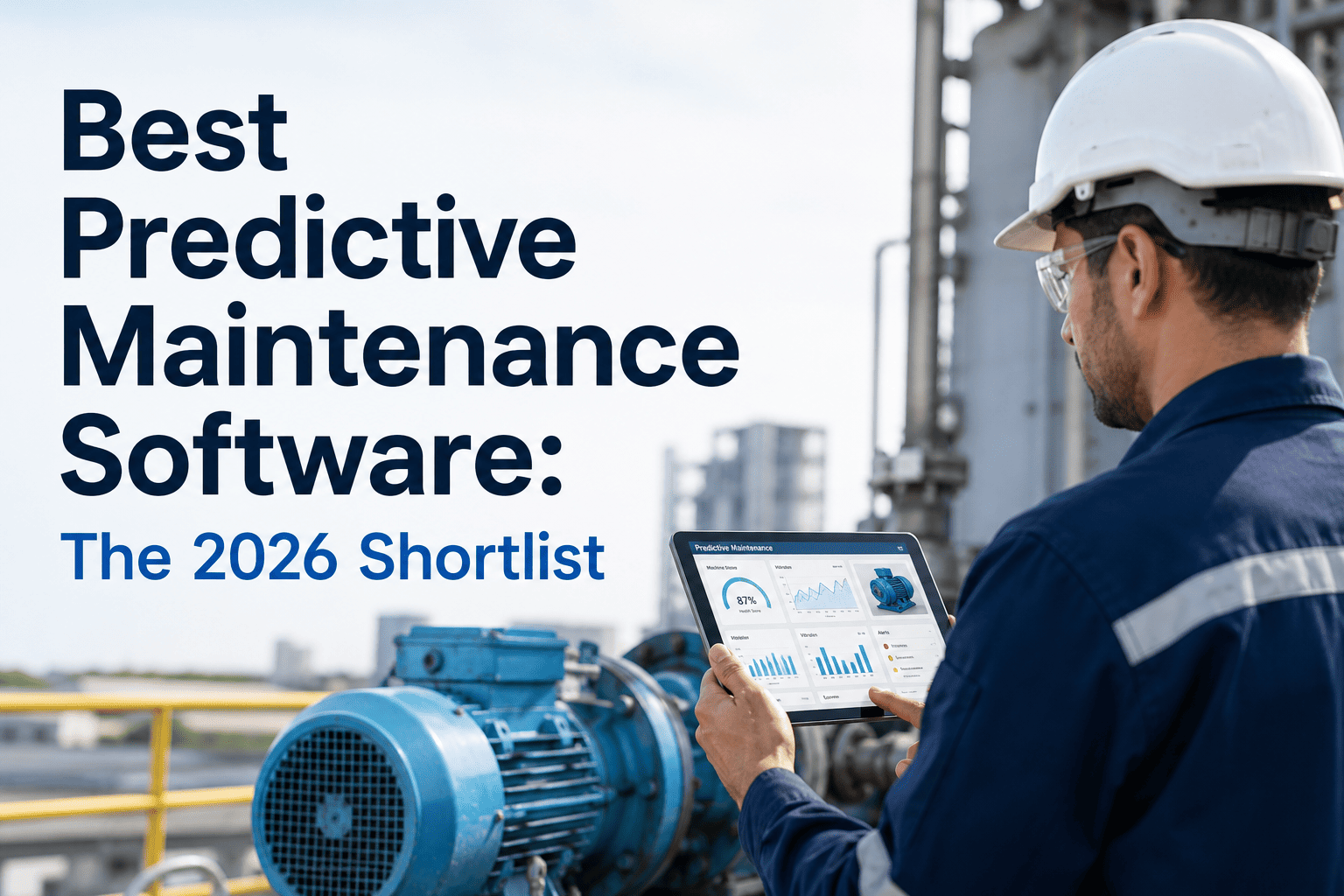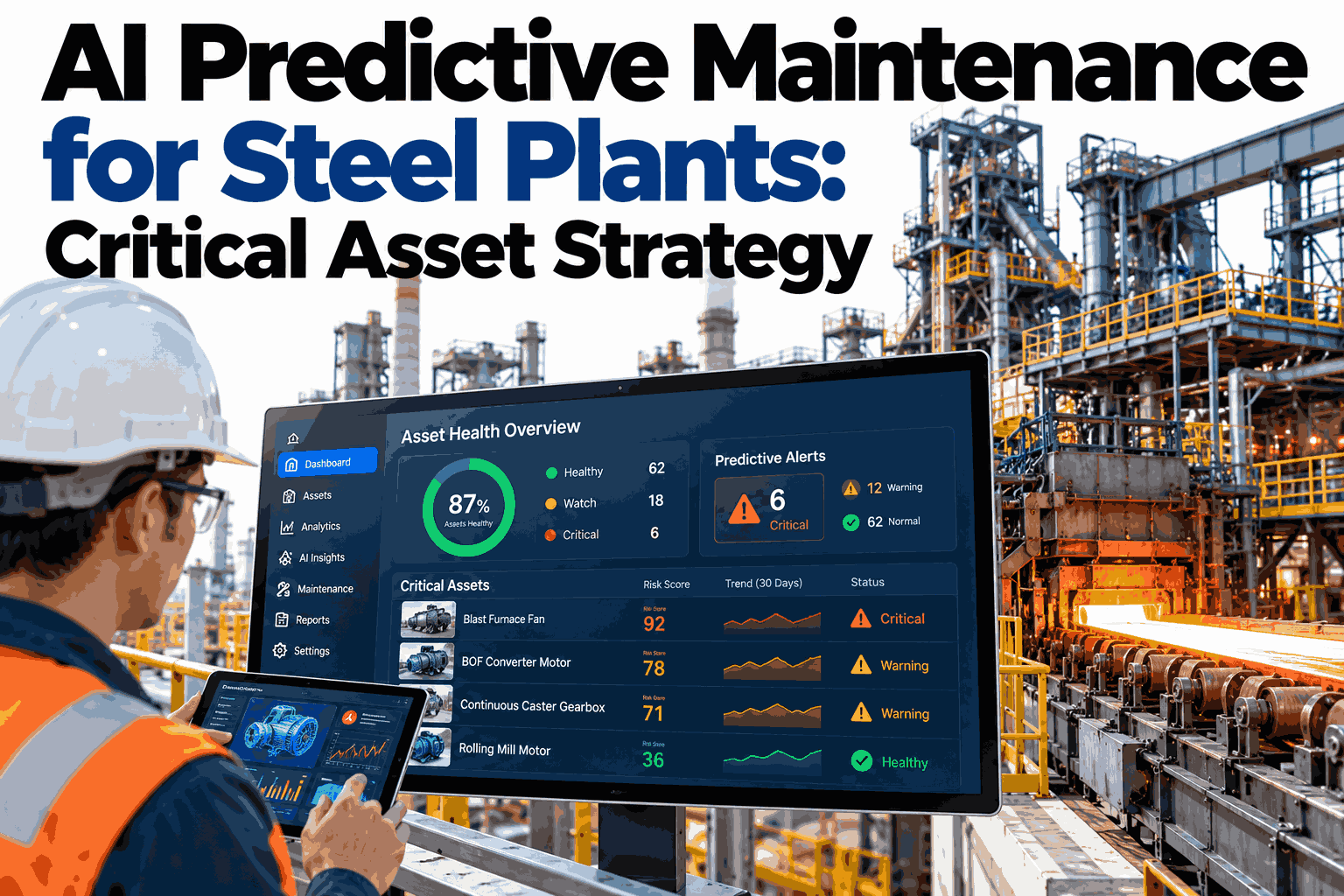
In a steel plant, one failed gearbox or crane can stop a whole line, and the cost is counted in lost tonnes, not repair hours. Yet maintenance budgets are spread thin across thousands of assets, most of which can fail without much harm. The smarter move is to find the few assets that matter most and watch those closely. This guide shows how to rank them, what signals to read, and how to begin with a critical asset walkthrough.
AI Predictive Maintenance for Steel Plants: A Critical Asset Strategy
Focus sensors and AI on the assets that can stop production, and catch their failures while there is still time to plan the repair.
Not Every Asset Deserves a Sensor
Rank by what a failure costs, not by what is easy to measure.
Rank each asset on two questions
- How likely is it to fail?
- How much does a failure hurt output, safety or cost?
Then act on the top right
- High impact and likely: monitor now
- High impact, less likely: monitor next
- Low impact: run to schedule
The Critical Assets in a Steel Plant
Each has its own warning signs.
Which Assets Sit in Your Top Right?
Bring your asset list and recent downtime log. We rank them with you and show where monitoring would add the most warning time.
How Much Warning Can AI Give?
Failure is a slope, not a cliff.
The time between "AI flags it" and "failure" is when you can order parts and plan the stop. Without it, the stop plans you.
A Strategy in Five Moves
Start narrow. Prove it. Then widen.
Rank assets
Use the impact and likelihood grid.
Check the signals
Use what PLCs, drives and meters already record.
Add sensors where blind
Only on top-ranked assets.
Set alert levels
Agree who acts, and how fast.
Review every miss
Each missed failure improves the model.
A system that cries wolf gets ignored. Tune alert levels with your crews until each alert is worth acting on.
Measuring the Results
Judge it by what stops happening.
Unplanned stops
Count on critical assets, month by month.
Warning time
Days between alert and failure.
Planned share of repairs
The sign that you have moved from reaction to planning.
How iFactory AI Protects Critical Assets
Ready to run, live in 6 to 12 weeks.
iFactory reads vibration, temperature, current and process signals from your plant, learns what normal looks like for each asset, and flags drift early. It ships as a ready server inside your network, so data stays on site. Setup, training and 24x7 remote monitoring are included. For scope and fit, contact our steel specialists.
Install and connect
Server in place, signals linked.
Learn and pilot
Baselines built on top assets.
Go live
Alerts, training, remote watch.
Frequently Asked Questions
What is predictive maintenance in a steel plant?
It means reading condition signals such as vibration and temperature to predict failures before they happen. Repairs are then planned for a quiet moment instead of forced on you. It works best on assets where a stop is costly.
Which assets should we start with?
Start with those that stop the line when they fail and show warning signs, such as mill gearboxes and crane drives. Rank them on impact and likelihood. Our team can help build your list.
Do we need a lot of new sensors?
Often not. Many signals already exist in drives, PLCs and meters. Add sensors only where an important asset is blind. This keeps cost down and lets you start with a small pilot that proves value first.
Can it work in hot, dusty mill conditions?
Yes, with sensors rated for the environment and mounted correctly. Placement matters as much as the model. We review mounting points, cable runs and heat exposure with your maintenance team before installation begins.
How do we prove the return?
Track unplanned stops and planned repair share on pilot assets before and after. Compare with the cost of past failures. A demo session shows how we set that baseline.
Plan the Stop Before It Plans You
In thirty minutes we review your critical assets, past failures and available signals, and show where early warning is most likely to pay off. You keep the notes either way.