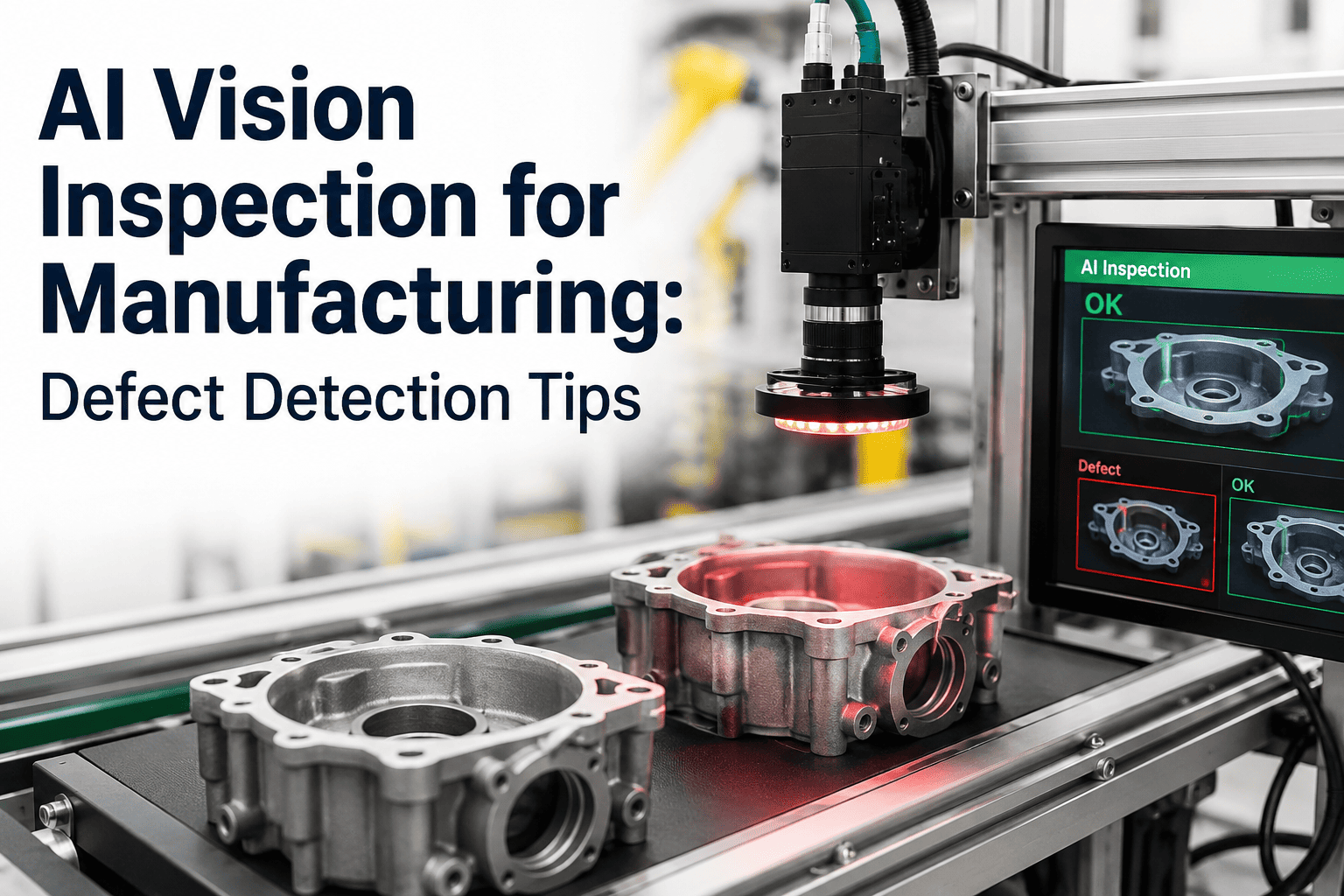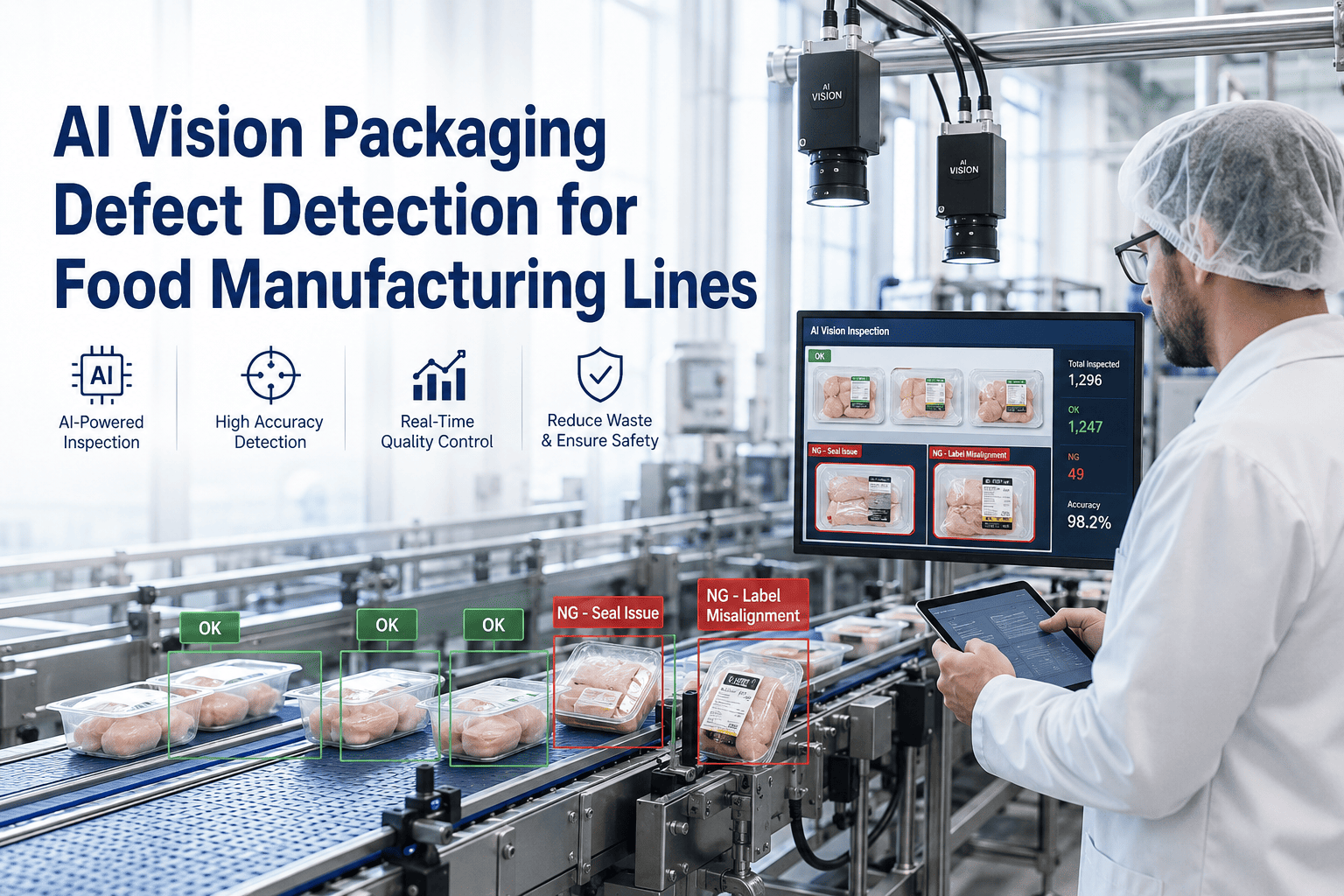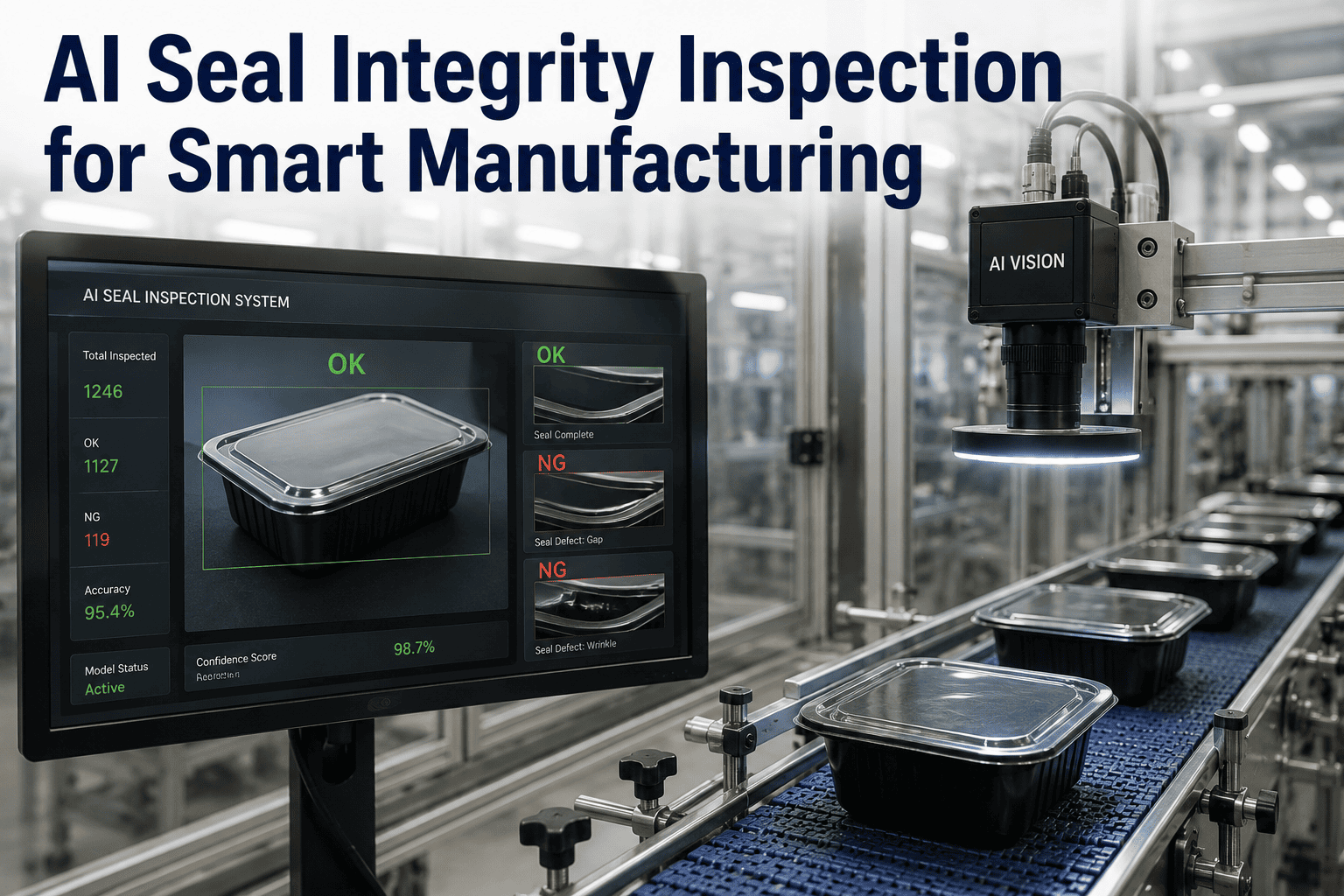
A seal that looks perfect from the top can still be leaking on the side nobody photographed. Most seal inspection stations were built to check one angle, one moment, one narrow slice of a perimeter that actually needs to be verified all the way around, and a single missed pinhole or a few millimeters of trapped product in the seal line is all it takes to turn a sealed package into a contamination risk sitting on a retailer's shelf. Food, pharma, and medical device packaging lines are under constant pressure to catch this before it ships, and that pressure is exactly why full-perimeter AI seal inspection from ifactory support exists.
Inspect the Whole Seal, Not Just the Part Facing the Camera
Package and component seals verified around their full perimeter at line speed, catching holes, trapped product, and uneven sealing surfaces before contamination risk leaves the plant.
The Seal Defects That Slip Past a Single-Angle Check
A seal fails in more ways than a top-down camera can see. Holes and pinholes can sit anywhere along the perimeter, product caught in the seal line is often only visible from a specific angle, and marring or unevenness in the sealing surface itself can be subtle enough that a single still frame from directly above misses it entirely. Regulatory pressure makes the stakes of a missed defect unusually high, since healthcare packaging faces strict scrutiny for integrity failures, food packaging has effectively zero tolerance for contamination risk, and consumer goods increasingly require tamper-evident verification as a baseline requirement rather than a nice-to-have.
Traditional rule-based vision systems struggle here because seal appearance changes dramatically based on material, sealing temperature, and ambient conditions on any given shift, and a threshold tuned for one batch of film or one temperature setting frequently misreads the next. AI-based seal inspection learns the difference between harmless cosmetic variation and a genuine integrity problem, which is precisely the distinction a fixed threshold cannot reliably make across normal production variation.
Full-Perimeter Coverage, Visualized
The reason a full-perimeter approach matters becomes obvious once the seal is laid out as a complete ring rather than a single photographed edge. Every zone around the seal carries its own risk profile, and a system that only checks one arc leaves the rest to chance.
See Full-Perimeter Inspection on Your Line
Bring known-good and known-defective seal samples from your current line. We will show exactly which zones a single-angle check would have missed.
Three Inspection Technologies, Combined for Confidence
No single imaging technique catches every seal defect type reliably on its own. iFactory combines multiple inspection technologies at the same station so a genuine defect gets confirmed from more than one signal before it is flagged, which sharply reduces the false rejection rate that a single-technique system typically carries.
Rule-Based Seal Checks vs iFactory AI Inspection
| Capability | Rule-Based Seal Check | iFactory AI Inspection |
|---|---|---|
| Coverage per package | Single fixed angle | Full 360-degree perimeter |
| Material or temperature change | Requires manual re-threshold | Learns tolerance from training data |
| Minimum defect size caught | Typically 0.5mm+ | Cuts and holes down to 0.3mm |
| False rejection on cosmetic variation | High | Reduced via multi-signal confirmation |
| Defect logging for compliance | Pass or fail flag | Full image and zone-level trace record |
What a Missed Seal Defect Actually Costs
Product spoilage from an improperly closed package is rarely discovered at the plant. It is discovered on a shelf, in a distribution center, or worse, by an end consumer, which turns a production-line quality issue into a public recall, a regulatory inquiry, or a serious safety event depending on what the package contained. Detecting a seal failure before the package leaves the facility is materially cheaper and safer than any of the alternatives, and the earlier in the production line the check happens, the smaller the batch that has to be quarantined if a systemic sealing issue is found.
Frequently Asked Questions
Verify Every Seal, Around the Full Perimeter
Bring known-good and known-defective seal samples from your current packaging line and we will show exactly what a full 360-degree inspection catches that a single-angle check does not.