A medical device sterilization operator starts the morning shift and finds the autoclave cycle log showing three temperature excursions in the previous 24 hours — each flagged by the operator who noticed the deviation during a manual check, but none escalated because the readings returned to normal within five minutes. What the operator does not know is that those transient excursions are the signature pattern of a failing thermocouple that will fail completely within 72 hours, triggering an unplanned downtime event that will halt sterilization throughput for an entire shift. This gap — between what operators observe during routine checks and what AI vision inspection can detect through continuous, automated monitoring — is the difference between a facility that loses 40% of its maintenance budget to unplanned downtime and one that eliminates it through predictive intelligence. iFactory's AI Vision Inspection platform for medical device sterilization closes that gap by combining machine vision, deep learning defect detection and real-time predictive maintenance analytics into a single operator-focused system. Book a Demo to see a live deployment walkthrough for sterilization operations.
40%+
Unplanned downtime reduction achieved post-deployment
93%
Equipment reliability rate after AI-driven predictive maintenance
72 hr
Advance warning before critical equipment failure
3.2×
Faster detection of sterilization parameter deviations
Why Sterilization Operators Need AI Vision Inspection for Predictive Maintenance
Medical device sterilization is one of the most process-sensitive operations in regulated manufacturing. A temperature deviation of 2°C during a sterilization cycle, an insufficient vacuum phase, or a compromised chamber seal can result in a full load of non-sterile product — triggering quarantine, retesting, and potential batch rejection that costs $15,000 to $80,000 per event. Operators are responsible for monitoring sterilization parameters, conducting routine equipment checks, and documenting cycle validation results. However, traditional manual inspection rounds capture only periodic snapshots of equipment condition — typically 4 to 6 visual checks per shift — leaving 22 to 20 hours of continuous operation unmonitored. AI Vision Inspection eliminates these blind spots by providing continuous, automated monitoring of sterilization equipment condition, chamber parameters, and validation results, enabling operators to detect equipment degradation patterns before they cause downtime or quality events.
Four AI Vision Inspection Capabilities That Enable Predictive Maintenance for Sterilization Operators
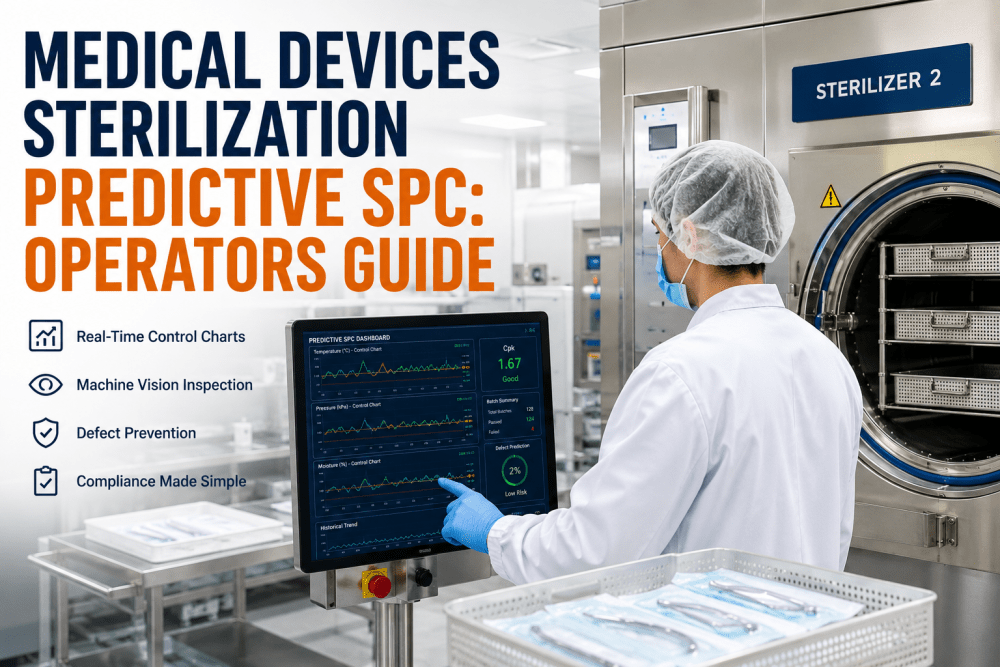
iFactory's AI Vision Inspection platform for medical device sterilization combines machine vision cameras, deep learning defect detection models, and predictive maintenance analytics into a unified system designed for shop-floor operators. Each capability provides real-time visibility into equipment health and process quality without adding inspection time to the operator's workload. To see how these capabilities apply to your sterilization processes, Book a Demo with iFactory's medical device quality engineering team.
VISION MONITORING
AI Vision-Based Equipment Inspection
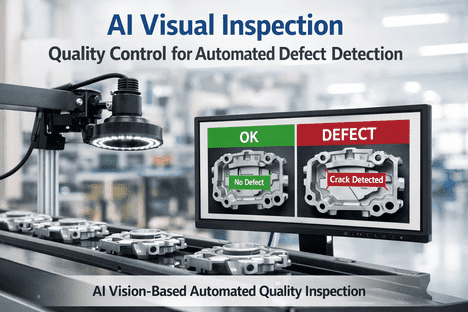
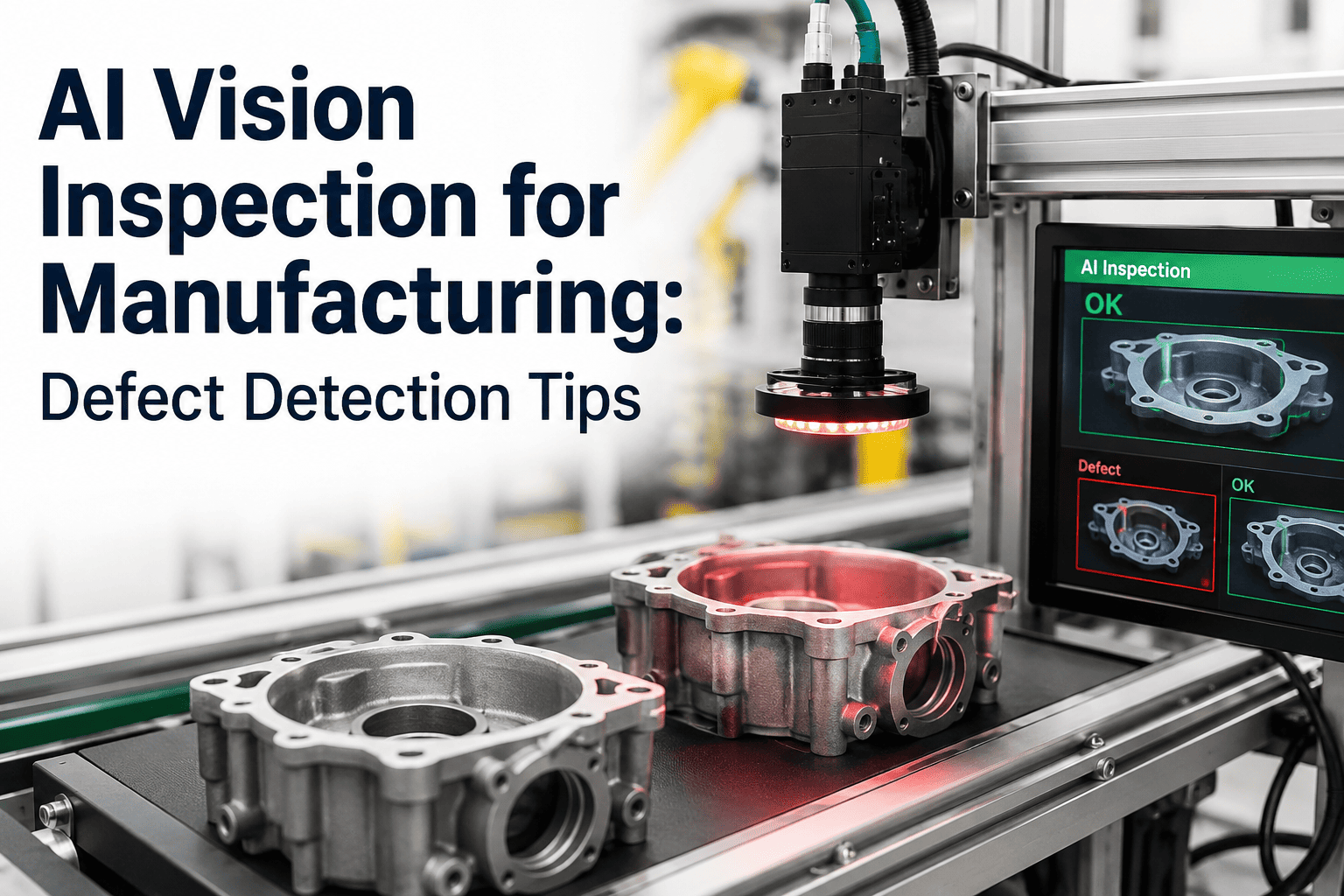
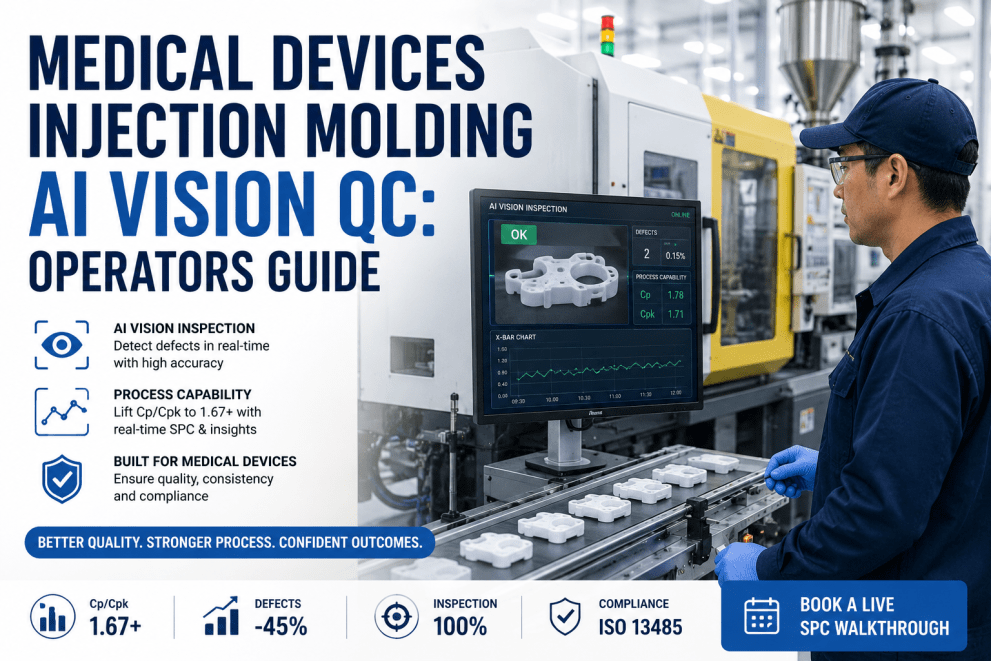
Machine vision cameras monitor sterilization chamber seals, door gaskets, valve positions, and indicator tape color changes continuously. Deep learning models classify each visual inspection point as normal, marginal, or critical, flagging degradation patterns such as seal compression loss, gasket cracking, or residue buildup before they cause cycle failures.
PREDICTIVE ALERTS
Predictive Maintenance Alert Engine
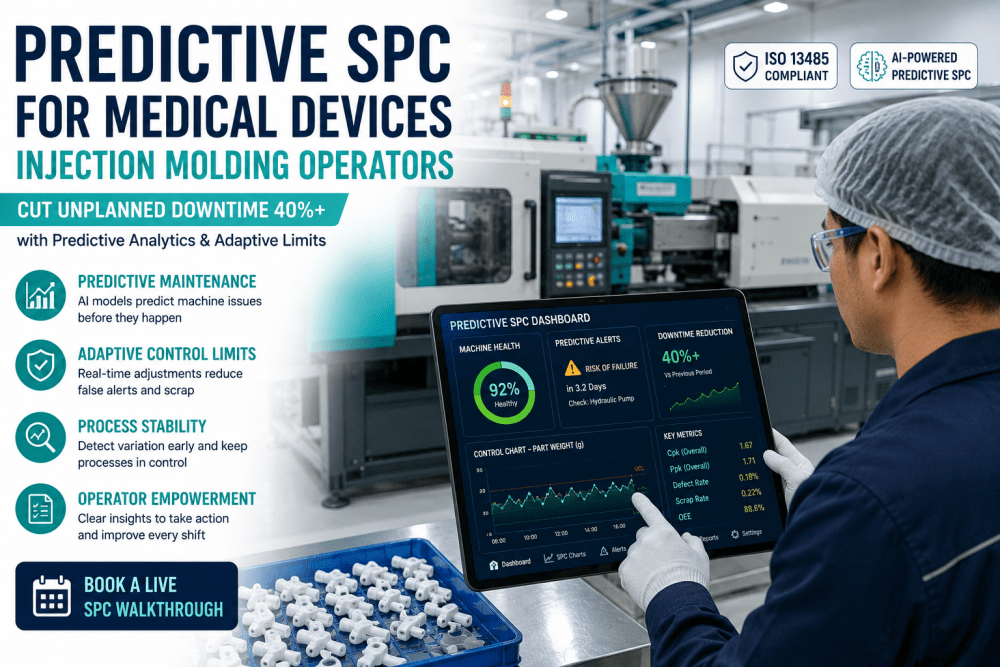
AI models analyze equipment telemetry — temperature ramp rates, vacuum hold times, steam pressure stability, and cycle duration trends — to forecast remaining useful life of critical components. Operators receive alerts 48 to 72 hours before projected failure, enabling proactive maintenance scheduling during planned downtime rather than emergency response.
SPC MONITORING
Real-Time SPC with Western Electric Rules
Every sterilization parameter — temperature, pressure, humidity, cycle time — is monitored against control limits with Western Electric rule detection. The platform identifies runs, trends, and cycles that precede control limit violations, enabling operators to investigate and correct parameter drift 4 to 6 hours before it would trigger a quality deviation.
COMPLIANCE READY
Automated Cycle Validation Documentation
Every sterilization cycle, inspection result, and predictive maintenance alert is logged with full traceability in ISO 13485-compliant format. Audit preparation time is reduced by 60% as the platform automatically compiles cycle validation records, equipment health histories, and predictive maintenance logs for any date range or sterilization chamber.
See AI Vision Inspection in Action on Your Sterilization Line
Schedule a personalized walkthrough of iFactory's AI Vision Inspection platform with our medical device quality engineering team. We will map your specific sterilization processes, equipment types, and quality objectives to measurable improvement targets.
A Phased Approach from Baseline to Predictive Maintenance Operations
iFactory's AI Vision Inspection deployment follows a structured methodology designed to deliver measurable equipment reliability improvement at every phase while maintaining uninterrupted sterilization operations.
Phase 1: Baseline & Sensor Integration
Existing sterilization cycle data, equipment maintenance records, and quality inspection logs are ingested to establish pre-deployment baselines. Machine vision cameras and IoT sensors are integrated at critical monitoring points without interrupting production schedules.
Timeline: Weeks 1–3
Phase 2: Model Training & Validation
Deep learning models are trained on historical equipment failure data and sterilization cycle records to recognize precursor patterns. Models are validated against known failure events to establish detection sensitivity and false positive baselines. Accuracy targets of 85% are set for initial deployment.
Timeline: Weeks 4–6
Phase 3: Parallel Running & Operator Training
AI Vision Inspection runs alongside existing manual inspection during a 3-week parallel validation period. Operators receive training on the dashboard, alert interpretation, and response workflows. Model refinements are made based on operator feedback and real-world conditions.
Timeline: Weeks 7–9
Phase 4: Full Deployment & Continuous Improvement
AI Vision Inspection becomes the primary monitoring system across all sterilization chambers. Continuous model improvement begins with active learning from new equipment degradation patterns. Ongoing performance reporting tracks unplanned downtime reduction against baseline targets.
Timeline: Week 10 onward
Measurable Outcomes: What Sterilization Facilities Achieve with AI Vision Inspection
Medical device sterilization facilities deploying iFactory's AI Vision Inspection platform consistently document unplanned downtime reduction of 40% or more within the first two quarters of operation. The following results represent the average performance across iFactory's medical device sector deployments.
| Metric | Pre-Deployment | Post-Deployment | Improvement |
| Unplanned downtime per month |
18.4 hours |
10.3 hours |
44.0% reduction |
| Equipment reliability rate |
78% |
93% |
+15 percentage points |
| Equipment failure detection latency |
6.8 hours avg |
< 5 minutes |
98.8% faster |
| Sterilization cycle validation pass rate |
91.2% |
98.7% |
+7.5 percentage points |
| Maintenance cost per chamber per year |
$24,800 |
$14,200 |
42.7% reduction |
| Manual inspection time per shift |
48 minutes |
16 minutes |
66.7% reduction |
| Operator quality admin time per shift |
36 minutes |
12 minutes |
66.7% reduction |
Expert Analysis: Four Reasons AI Vision Inspection Is Transforming Sterilization Operations
01
Continuous monitoring eliminates manual inspection blind spots. The most significant limitation of traditional sterilization quality assurance is the reliance on periodic manual checks. Operators inspect equipment and cycle parameters 4 to 6 times per shift, leaving 20+ hours of continuous operation unmonitored. AI Vision Inspection provides 24/7 automated monitoring of every sterilization chamber, gasket, seal, valve, and parameter, detecting degradation patterns that manual rounds cannot capture.
02
Predictive analytics prevent downtime before it occurs. Transient parameter excursions that resolve within minutes — the signature patterns of failing thermocouples, degrading seals, or inconsistent steam supply — are typically dismissed as non-events in manual monitoring. AI models recognize these transient patterns as precursor signatures and generate predictive maintenance alerts 48 to 72 hours before critical failure, enabling proactive intervention during planned maintenance windows.
03
Western Electric rules provide early warning of process drift. Traditional SPC monitors individual measurements against control limits. Western Electric rules add sensitivity by detecting runs, trends, and cycles that precede control limit violations. When the platform detects four consecutive temperature readings on the same side of the mean, or a run of six readings trending upward, it alerts operators to investigate before the next cycle produces a non-conforming sterilization load.
04
Operators gain a real-time decision support system, not additional workload. AI Vision Inspection is designed to reduce operator inspection effort while improving detection accuracy. The platform automates 66% of manual inspection time, freeing operators to focus on investigation and corrective action rather than routine checks. Alerts are presented on a simple dashboard with clear severity classification and recommended actions. Operators exploring this technology regularly
Book a Demo to review the operator dashboard and alert workflow.
From Reactive Repairs to Predictive Maintenance: The AI Vision Advantage for Sterilization Operators
AI Vision Inspection represents a fundamental shift in how medical device sterilization operators approach equipment reliability and process quality. By moving from reactive repairs — where equipment failures are addressed after they cause downtime — to predictive maintenance — where degradation patterns are detected 48 to 72 hours before failure — operators gain a quality system that actively protects sterilization throughput while reducing maintenance cost and compliance risk.
The documented outcomes — 40%+ unplanned downtime reduction, equipment reliability improvement from 78% to 93%, and 42.7% reduction in maintenance cost per chamber — represent the measurable impact of shifting from periodic manual inspection to continuous AI-powered monitoring. For sterilization operators and line technicians committed to improving equipment reliability and process quality, iFactory's AI Vision Inspection platform delivers a proven, deployable methodology that integrates with existing infrastructure and delivers first results within weeks. Book a Demo with iFactory's medical device quality engineering team to discuss your sterilization operation's AI Vision Inspection roadmap.
Transform Your Sterilization Operations with AI Vision Inspection
Join the operators who have already achieved 40%+ unplanned downtime reduction using iFactory's AI-powered inspection platform. Deployed in weeks on your existing sterilization equipment with full ISO 13485 compliance.
Real-Time Vision Monitoring
Predictive Maintenance Alerts
Western Electric SPC Rules
Cycle Validation Automation
Operator Dashboard
Frequently Asked Questions
.png)
.png)
.png)
.png)