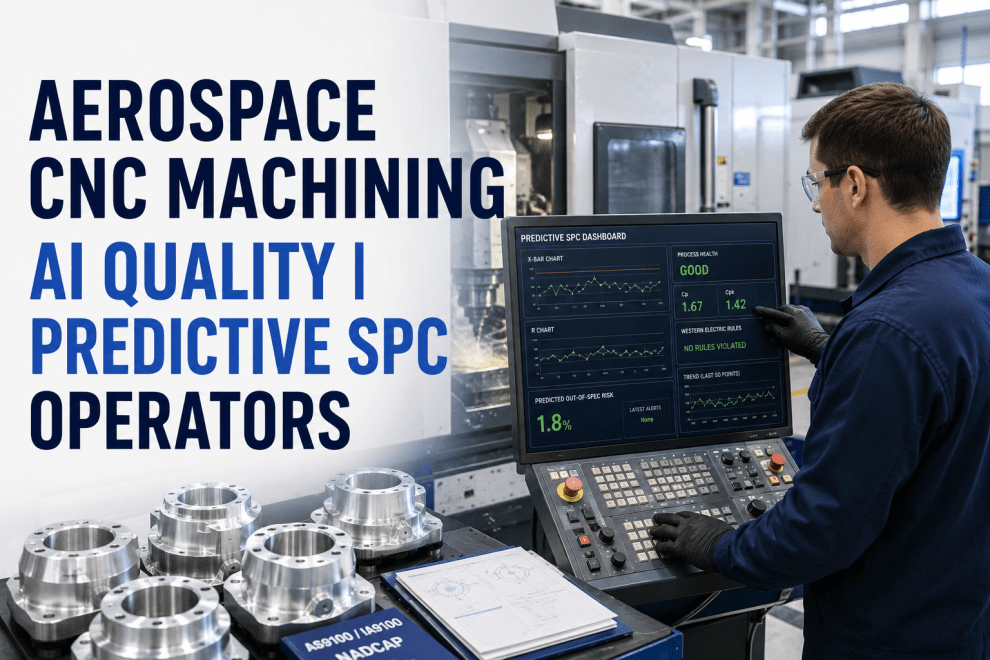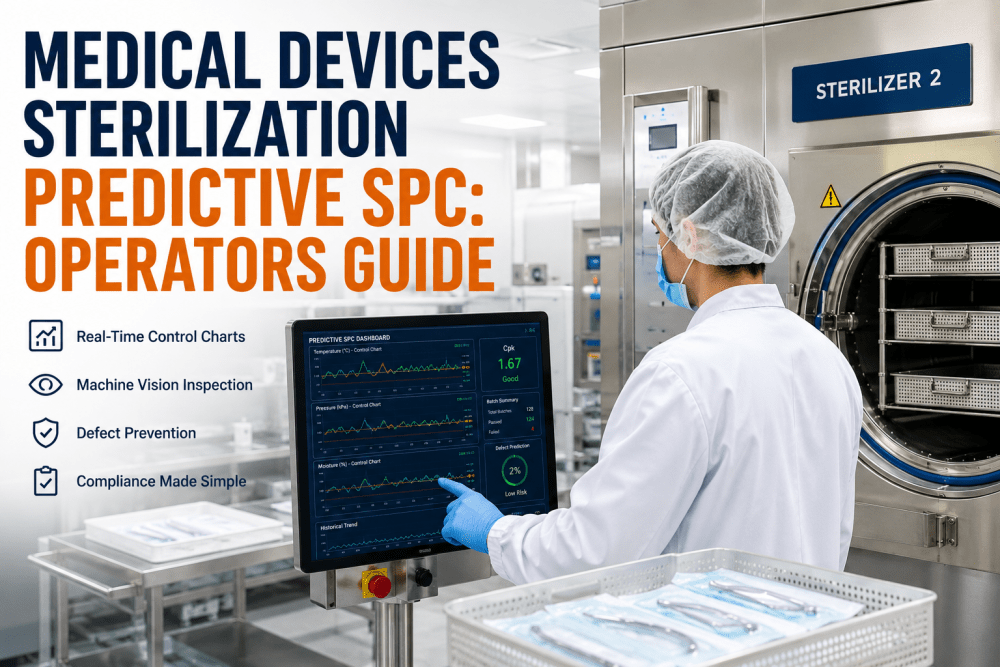
A medical device sterilization operator reviews the morning ethylene oxide cycle log and finds a parametric deviation that affected three loads before detection. Under traditional statistical process control, that deviation appears on a control chart after the batch is complete — flagged post-process, after product has moved to quarantine. The operator documents the non-conformance per ISO 13485 procedures, initiates root cause analysis, and hopes the issue is resolved before the next cycle. This gap — between when a sterilization process shifts and when that shift is detected — is the difference between a facility that accepts 3-5% deviation rates as unavoidable and one that drives defects below 0.1%. iFactory's Predictive SPC platform closes that gap.
Eliminate Sterilization Deviations with AI-Powered Predictive SPC
iFactory's Predictive SPC platform empowers sterilization operators with real-time anomaly detection, automated control charting, and predictive alerts — reducing defect rates by 30-70% while strengthening ISO 13485 compliance and reducing quality deviations.
Why Reactive Quality Control Costs Medical Device Manufacturers Millions
Sterilization is the most critical quality gate in medical device manufacturing. A single undetected deviation in ethylene oxide concentration, exposure time, temperature, or humidity can compromise an entire batch of surgical instruments, implants, or diagnostic devices — triggering product quarantine, batch disposition, customer notifications, and potential regulatory action.
Despite this criticality, most sterilization operations still rely on manual control chart review, periodic sampling, and post-process inspection. Operators collect cycle data, plot it on Shewhart control charts, and review for out-of-control conditions after the batch is complete. A 2025 industry survey of 214 medical device quality managers found that 68% of sterilization deviations were detected during final batch review rather than during the cycle itself — meaning the facility paid for reprocessing, quarantine labor, and disposition testing that could have been avoided with real-time detection.
The transition from reactive to predictive quality control in sterilization operations requires more than faster charting. It requires continuous AI-driven monitoring that can detect process shifts as they develop, correlate multi-parameter interactions that human operators cannot track manually, and alert the team before the deviation creates a non-conforming product. iFactory's Book a Demo to see how Predictive SPC delivers exactly this capability for medical device sterilization operations.
What Predictive SPC Means for Sterilization Operations
Predictive SPC applies machine learning models to real-time sterilization cycle data — temperature, pressure, EO concentration, humidity, dwell time, and chamber load configuration — to detect process shifts before they produce non-conforming product. Unlike traditional SPC, which flags out-of-control conditions after the fact, Predictive SPC identifies developing trends, multi-parameter interactions, and early-stage anomalies the moment they emerge.
| Dimension | Traditional SPC | Predictive SPC by iFactory |
|---|---|---|
| Detection timing | Post-process batch review | Real-time during active cycle |
| Monitoring scope | Single parameter per chart | Multi-parameter correlation — temp, pressure, EO, humidity simultaneously |
| Control limits | Static ±3 sigma | Adaptive limits tuned to equipment and product families |
| Alert mechanism | Chart out-of-range flag | Predictive alert with severity, root cause suggestion, and recommended action |
| Data utilization | Isolated batch records | Cross-batch trending — 12× more data points per cycle |
| Compliance output | Manual log entry | Automated ISO 13485-compliant documentation with audit trail |
For sterilization operators, the difference is immediate and measurable. Instead of reviewing control charts at the end of a shift and discovering that cycles 4 through 7 drifted outside acceptable ranges, the operator receives a real-time dashboard alert during cycle 3 that the EO concentration trend is approaching the upper control limit. The operator adjusts the gas injection parameters mid-cycle, the deviation is avoided, and the batch proceeds without interruption. That is the operational difference between reactive and predictive quality.
Six AI-Powered Capabilities That Transform Sterilization Process Control
iFactory's Predictive SPC platform combines real-time sensor integration, machine learning anomaly detection, and automated compliance documentation into a unified quality management solution purpose-built for sterilization operations.
Continuous Sterilization Cycle Surveillance
The platform ingests data from sterilizer sensors, PLCs, and SCADA systems at sub-second intervals. Every cycle parameter — temperature, pressure, EO concentration, humidity, dwell time — is monitored continuously against adaptive control limits tuned to your equipment and product specifications.
AI-Driven Deviation Classification
Machine learning models trained on your sterilization history classify every data point as normal, marginal, or critical. The models detect single-parameter excursions and multi-parameter interaction shifts that manual chart review would miss until the batch is complete.
Proactive Notification Before Deviations Occur
When the AI detects a developing trend toward out-of-spec conditions, the platform generates a predictive alert with severity classification, root cause correlation, and recommended corrective action. Alerts reach operators via dashboard, mobile push, or SMS based on escalation rules.
Cross-Batch Equipment Health Trending
All cycle data feeds into equipment health models that track parameter drift across batches, shifts, and weeks. The platform correlates sterilization performance with maintenance events, load configurations, and product families to identify developing failure modes before they cause deviations.
Automated ISO 13485 Quality Documentation
Every cycle, every alert, and every corrective action is automatically logged in an ISO 13485-compliant quality record. The platform generates batch disposition reports, deviation investigation summaries, and audit-ready documentation without manual data entry.
MES, CMMS, and QMS Integration
Predictive SPC data flows directly into iFactory's integrated MES, CMMS, and QMS modules. Detected anomalies generate quality records and work orders automatically. Sterilization cycle data is linked to production orders, equipment histories, and lot disposition records for complete traceability.
From Sterilization Cycle Start to Quality Sign-Off in Four Steps
iFactory connects to your existing sterilization equipment and quality infrastructure — no process modifications required. The platform deploys on your plant network and integrates with your current sensor and control systems.
Connect & Configure
Sterilization equipment, sensor inputs, and control limits are mapped in iFactory's configuration console. Product families, cycle recipes, and ISO 13485 quality parameters are imported from your existing QMS or configured directly in the platform.
Monitor & Analyze
The platform ingests real-time sensor data from every active sterilization cycle. AI models process each data point against adaptive control limits, multi-parameter correlations, and historical trend baselines — all within seconds of data acquisition.
Alert & Escalate
Predictive alerts are generated when the AI detects developing trends toward out-of-spec conditions. Critical alerts trigger immediate notification to sterilization operators and quality personnel. Marginal trends are logged with context for shift review.
Report & Certify
At cycle completion, the platform automatically generates an ISO 13485-compliant quality record that includes the full cycle parameter trace, any alerts generated, corrective actions taken, and batch disposition certification ready for regulatory review.
Four Reasons Predictive SPC Is Becoming the Standard for Sterilization Quality
Real-Time Detection Eliminates the Post-Process Quality Gap
The most significant structural limitation of traditional SPC in sterilization is the latency between data generation and deviation detection. Predictive SPC eliminates this latency by analyzing every data point as it is generated, classifying it against adaptive models, and generating alerts within seconds. The operator knows about a developing temperature excursion while the cycle is still running — not when the batch reaches quarantine. This real-time detection capability is the single highest-leverage intervention available to sterilization quality operations today.
Multi-Parameter Correlation Catches What Single-Chart Review Misses
Sterilization quality depends on the interaction of multiple parameters — temperature, pressure, gas concentration, humidity, and time. Traditional SPC monitors each parameter on a separate control chart, making it virtually impossible for operators to detect interaction-based deviations. Predictive SPC models analyze all parameters simultaneously, detecting correlation-based anomalies that would pass single-chart review. In one medical device facility, this multi-parameter capability identified a humidity-temperature interaction that had been causing intermittent deviations for 18 months across six different batch dispositions.
Adaptive Control Limits Reduce False Alarms While Improving Sensitivity
Traditional fixed control limits create a persistent trade-off between sensitivity and false alarm rate. Tight limits generate excessive alerts that operators learn to ignore. Wide limits miss developing process shifts until they produce non-conforming product. Predictive SPC solves this with adaptive control limits that adjust based on equipment condition, product family, and historical performance — maintaining optimal sensitivity without overwhelming operators with false alarms. Facilities using adaptive limits report 40-60% fewer nuisance alerts than with fixed-limit SPC while detecting 30% more actual process shifts.
Automated Compliance Documentation Eliminates Manual Transcription Risk
ISO 13485 requires comprehensive documentation of sterilization process control, deviation investigation, and corrective action. Manual documentation introduces transcription errors, inconsistent formatting, and delays that can compound compliance risk during audits. Predictive SPC automates the entire documentation workflow — from cycle data capture through deviation reporting to batch disposition certification. Quality managers at deployed facilities report a 70% reduction in documentation labor and zero audit findings related to incomplete sterilization records in the first year of operation.
The Cost of Reactive Sterilization Quality in a Typical Medical Device Facility
Deviation Investigation and Batch Disposition
Each sterilization deviation requiring batch disposition consumes 8-12 hours of quality engineering time, microbiological testing costs, and quarantine holding delays. At an average loaded cost of $4,200 per deviation event, facilities processing 40-60 sterilization cycles per week face annual deviation costs exceeding $200,000.
Manual Control Chart Review Labor
Sterilization operators and quality technicians spend 30-45 minutes per shift reviewing control charts, logging cycle data, and documenting SPC results. Across three shifts and 250 operating days per year, manual chart review consumes 625-940 person-hours annually — time that could be redirected to continuous improvement and root cause analysis.
Regulatory Compliance and Audit Exposure
Incomplete or inconsistent sterilization documentation is the most frequently cited observation in FDA and notified body audits. Facilities with manual SPC documentation processes face an average of 1.8 sterilization-related audit observations per cycle, each requiring corrective action response, remediation costs, and management review time.
Predictive SPC: From Quality Monitoring to Competitive Advantage
The transition from reactive to predictive quality control in medical device sterilization is not a theoretical future state — it is a deployable capability today. iFactory's Predictive SPC platform gives sterilization operators continuous, real-time visibility into every cycle parameter, automated detection of developing process shifts, and AI-driven alerts that enable intervention before deviations occur.
The defect reduction is a measurable quality outcome. The elimination of manual chart review and data transcription is an operational efficiency gain. The automated ISO 13485 compliance documentation is an audit risk reduction that compounds with every cycle. For medical device manufacturers seeking to strengthen sterilization quality, reduce deviation costs, and provide operators with tools that match the criticality of their work, Book a Demo with iFactory's quality team.
Real Answers from Sterilization Operators Adopting Predictive SPC
Stop Detecting Sterilization Deviations After the Fact.
Your sterilization operators need real-time visibility into every cycle parameter — not post-process control charts. iFactory's Predictive SPC platform gives your team the tools to detect and correct process shifts before they create non-conforming product. Deployed in 6 weeks, integrated with your existing equipment, and validated for ISO 13485 compliance.
.png)
.png)
.png)