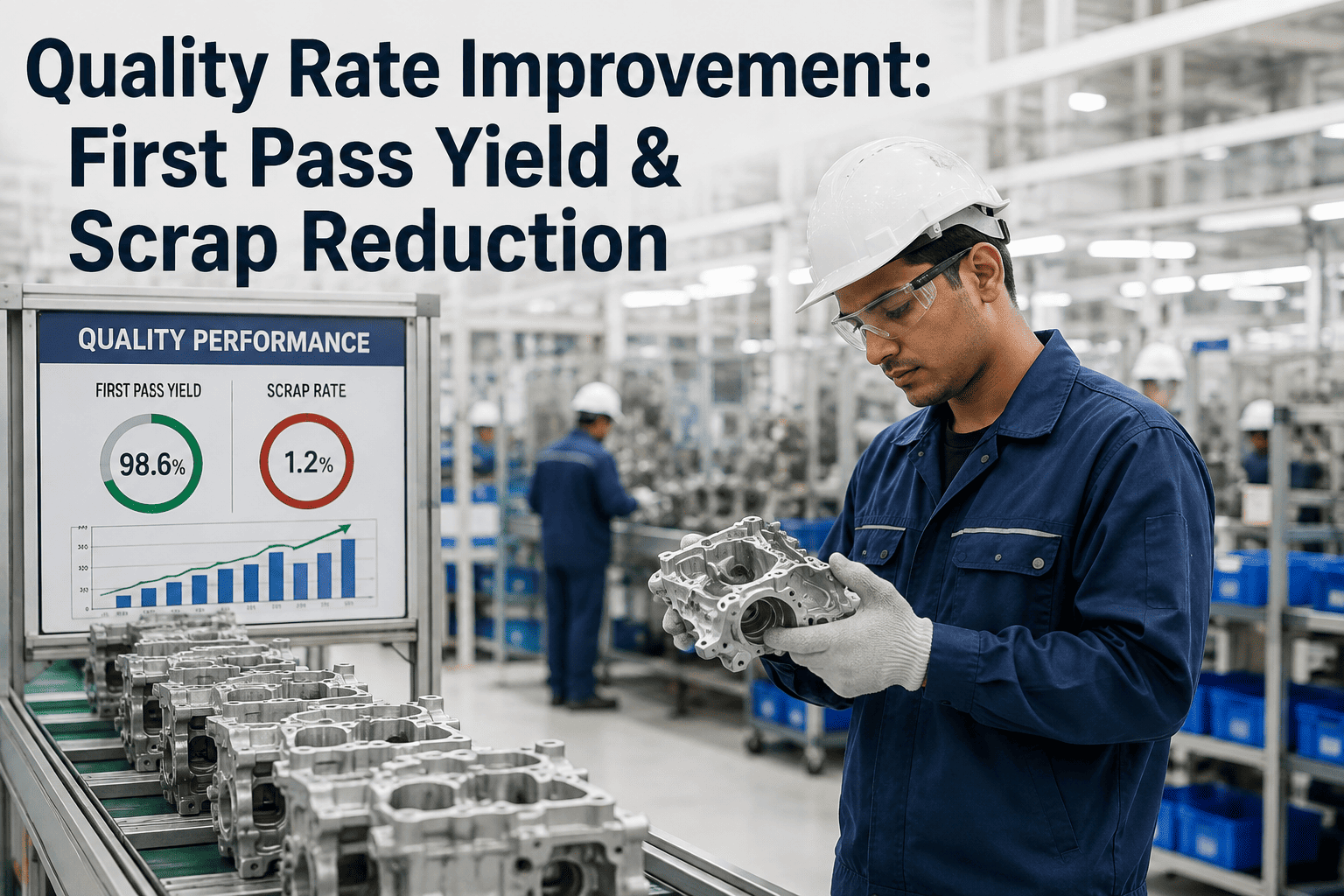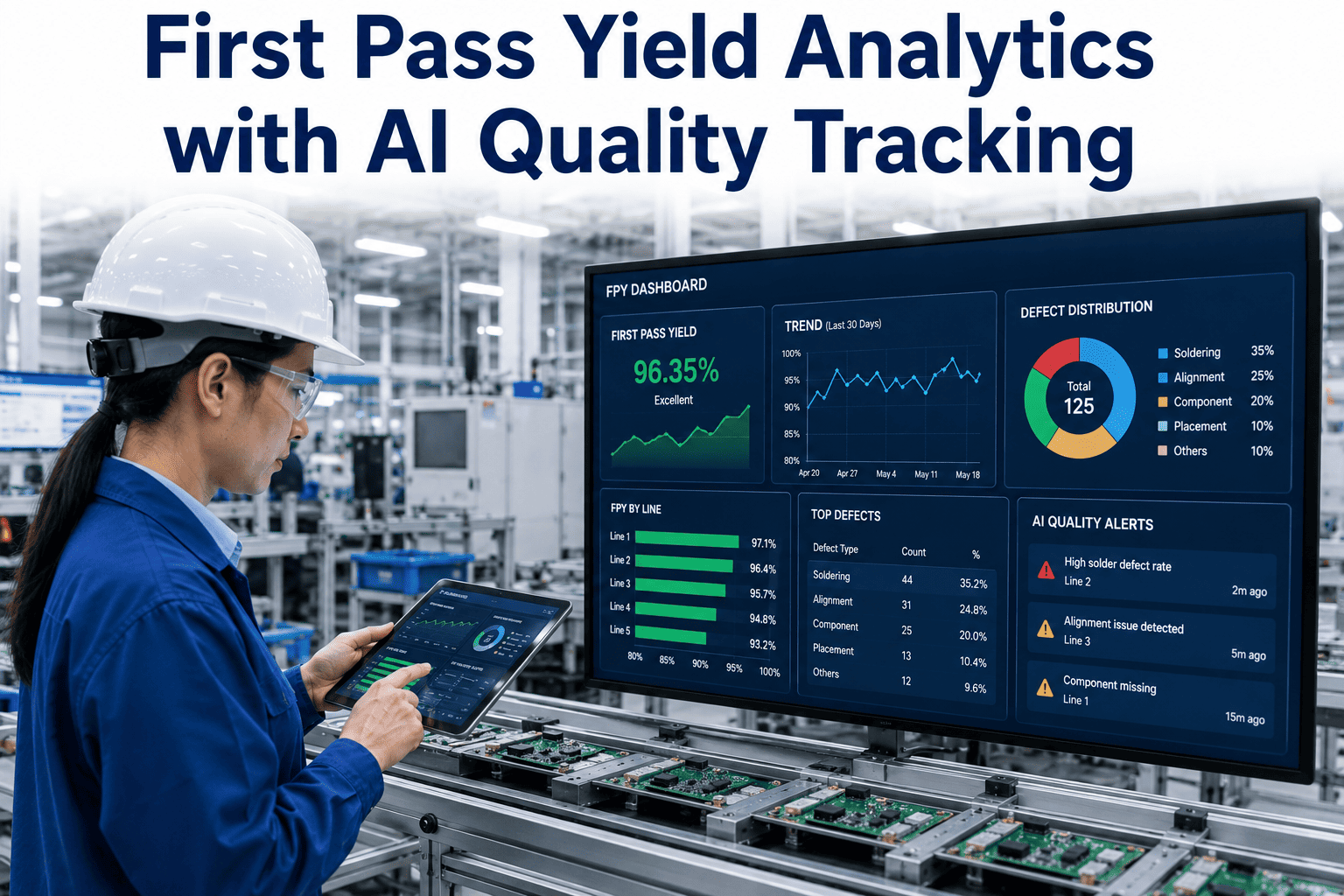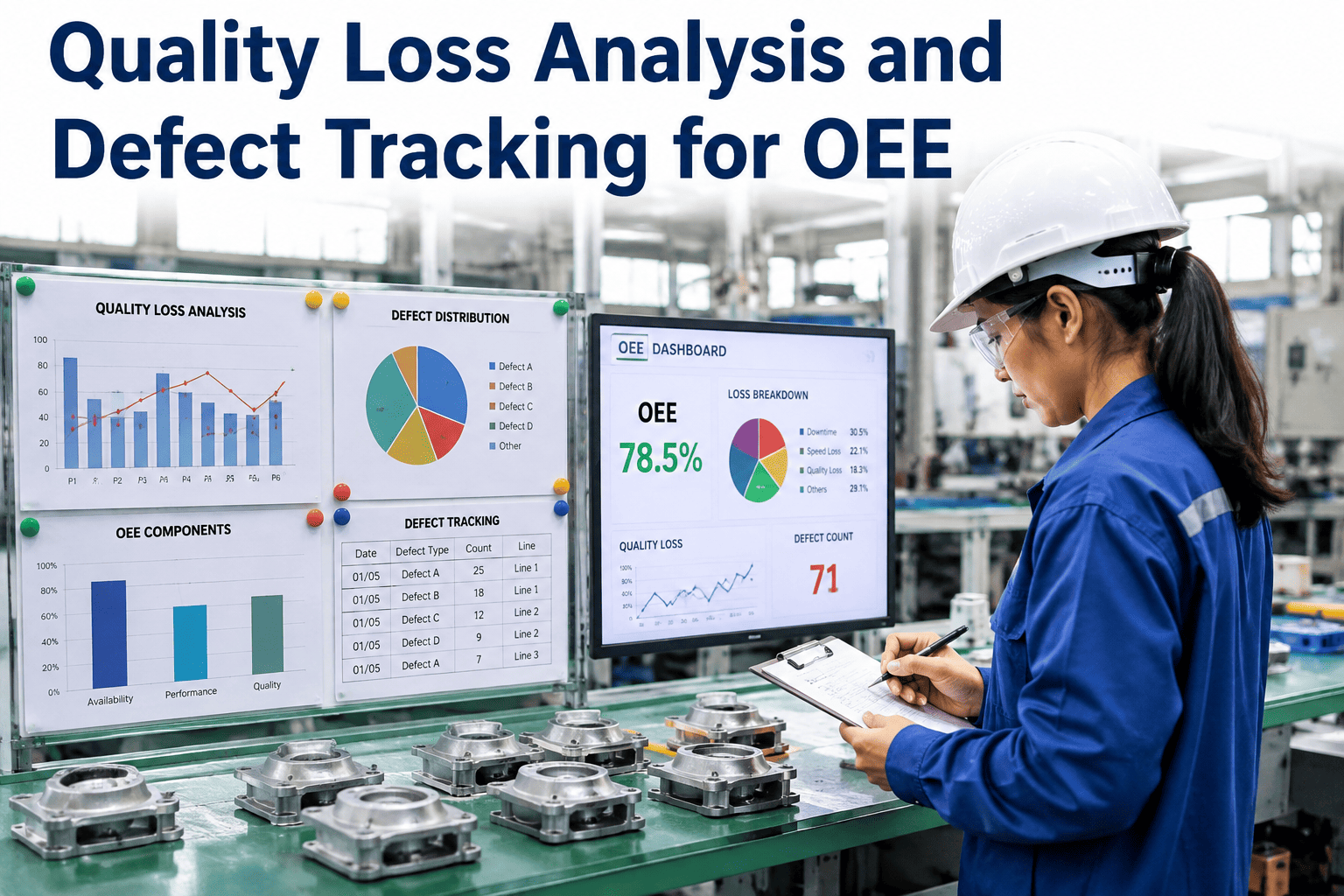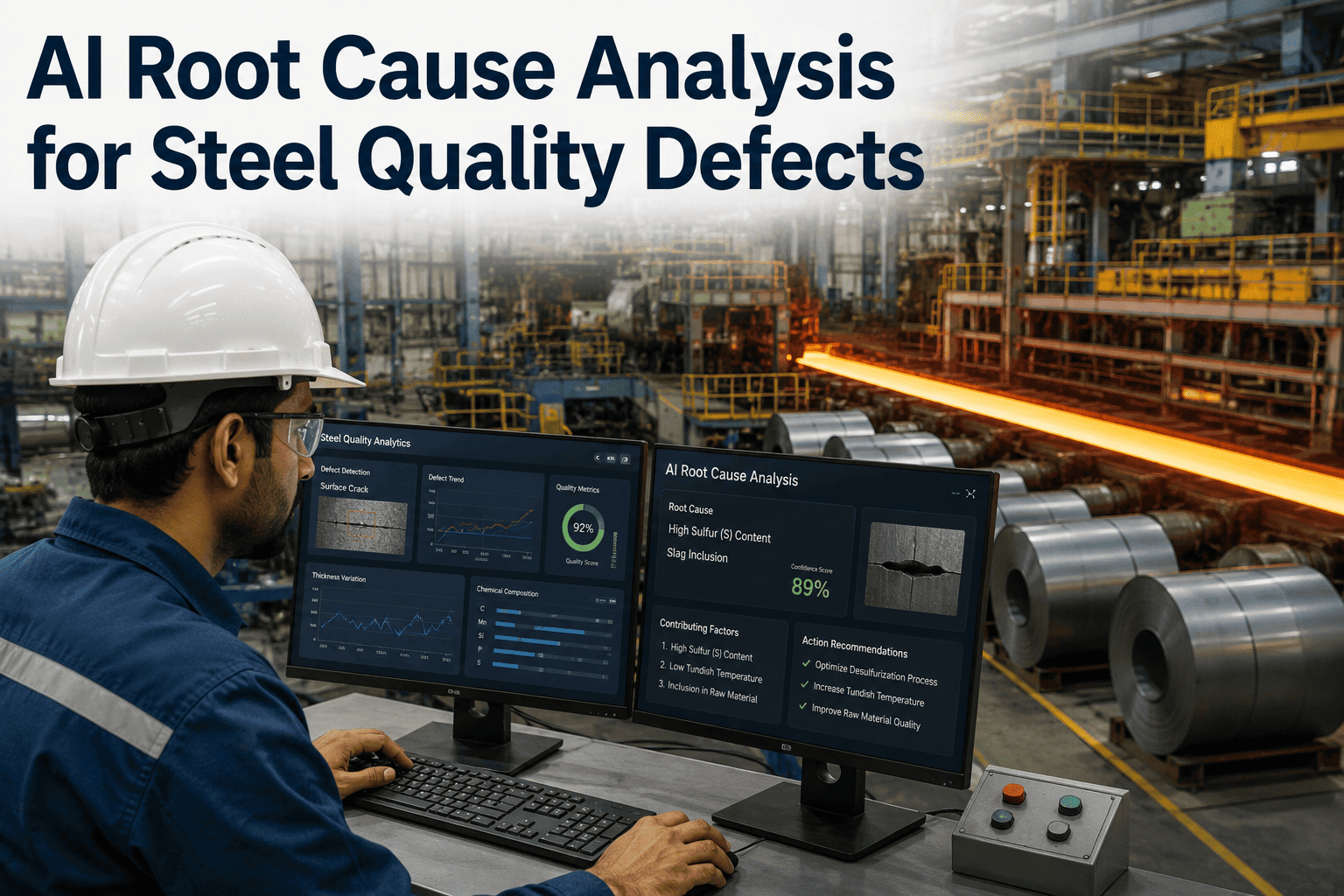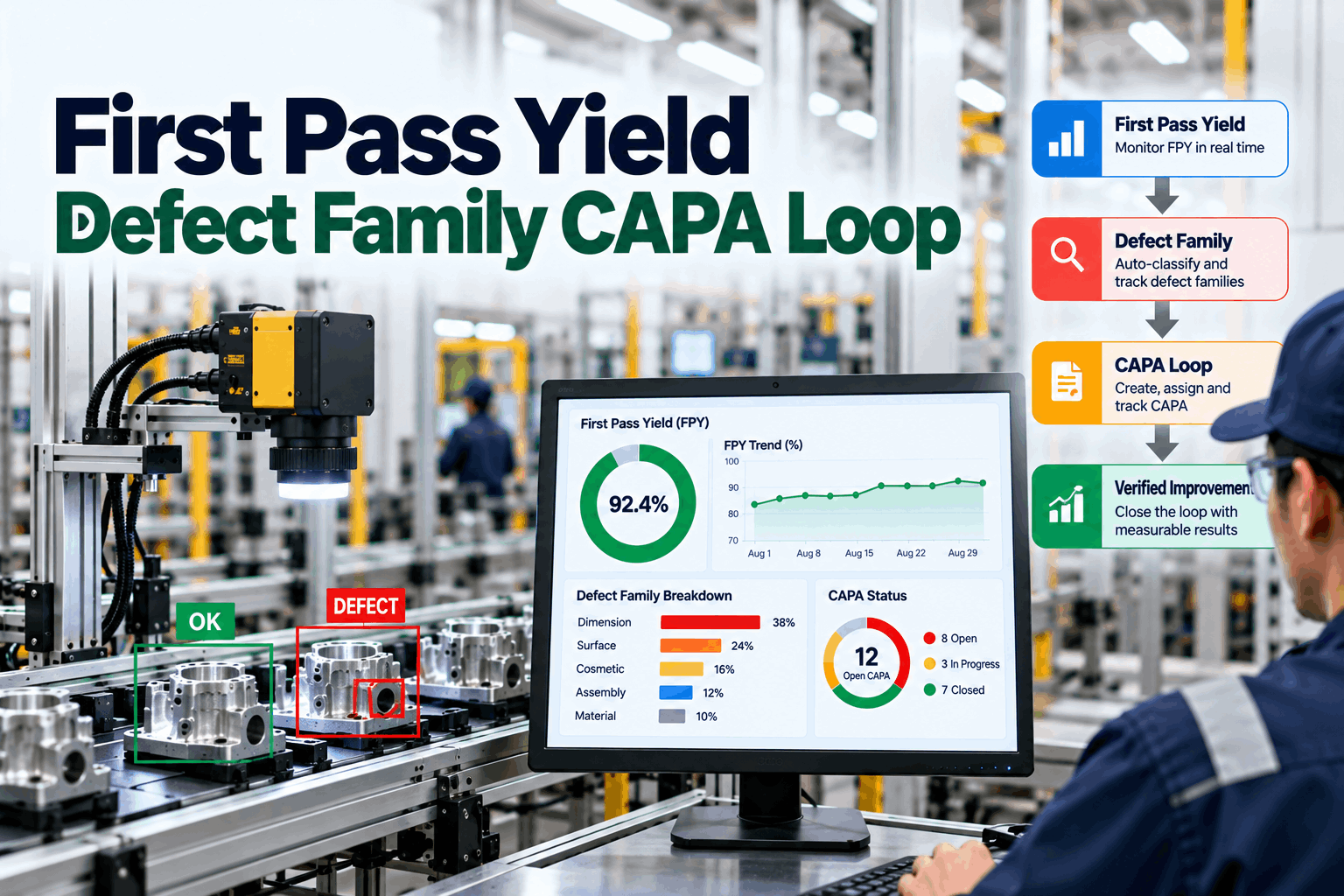
FPY drops for one SKU on Wednesday afternoon, and by Friday the plant has three theories, four spreadsheets, and no defect-family map that connects the failure signatures to the affected lots. That is the first-pass yield blind spot 2026 quality teams are finally closing — the loss is real, the reject codes exist, but nobody grouped the signatures into a defect family, traced them through genealogy, or verified that the corrective action reached the line. iFactory AI overlays your MES, QMS, historian, SPC, and genealogy stack so every FPY dip opens a defect-family evidence trail with scoped containment, a CAPA draft, verified recurrence checks, and OEE recovery review. Book a 30-minute walkthrough of FPY loss to CAPA closure.
When FPY falls for one SKU, the pain is not only the lost yield — it is the broken thread between defect evidence, genealogy, containment, CAPA, and verification.
At a Glance
Why FPY Needs Defect Families, Not Just a Trend Line
First-pass yield tells you when product is flowing through without rework, retest, or reject. But FPY alone rarely tells a quality systems leader what to do next. A downward trend may be caused by one defect family, several weak signals, or a process shift that only appears after you segment by SKU, line, shift, or material lot. That is why the defect-family layer matters. Instead of treating every reject code as a one-off, defect families group similar failures into a repeatable diagnostic structure — cosmetic damage, missing component, torque failure, label misprint, seal defect, or test failure with a common process signature.
Once those are grouped, the team can see whether FPY decline is isolated noise or a recurring quality pattern. The move is from FPY dropped to this defect family is driving the loss, and here is the evidence.
Genealogy Turns a Yield Issue Into a Traceable Scope
Genealogy is what turns a quality problem into a bounded investigation. It links the defect to lot, serial, batch, station, timestamp, material, tool, and process path. That matters because quality teams do not just need to know what failed — they need to know what else may be affected.
Which units passed through the same station before the defect appeared?
Which lot change or tool cycle coincided with the first FPY losses?
Which shift or work center saw the highest recurrence of the defect family?
Which WIP, finished goods, or shipped lots fall into the containment scope?
Containment Is Not the End of the Story
Containment protects the customer and the downstream process, but it is not the corrective action itself. It is a control while the team investigates. A strong containment step includes a clear hold boundary, affected lot or serial identification, disposition rules for WIP and finished goods, communication to quality, production, and planning, and a documented reason for the hold.
If genealogy is strong, containment can be specific. If genealogy is weak, containment becomes broad and costly. That is why the evidence link matters — it helps teams contain the risk without freezing more of the line than necessary.
iFactory groups first-pass-yield loss into defect families and walks each family from signal to verified CAPA, beside the systems you already run.
Related defect codes grouped into families so FPY loss has a clear owner.
Where units fall out of first pass across process steps, by shift and SKU.
Which lots, machines and recipes the leading defect family shares.
A reviewable CAPA draft tied to the family, plus verification status over time.
Supervisors ask where first pass went since start of shift and hear the answer.
FPY before and after the corrective action, stored with the CAPA record.
Bring one SKU and one recent FPY loss. We walk through defect-family grouping, genealogy trace, CAPA draft, verification, and OEE review — all beside your existing quality stack.
Verification — Did the Defect Family Actually Decline?
Verification of effectiveness is where many investigations succeed on paper but fail in operations. It is not enough to close a CAPA because a task was completed. The question is whether the defect family moved.
- Did the same defect family decline after the action?
- Did FPY recover for the affected SKU, line, or shift?
- Did the issue recur on another work center or material lot?
- Can containment be safely released based on the evidence?
- Are there signs the action created a new problem elsewhere?
Verification is stronger when it uses the same data family that triggered the CAPA. If the issue started in a defect-family pattern, the effectiveness check should not rely on memory or anecdote — it should rely on follow-up inspection and pattern behavior reviewed in context.
Frequently Asked Questions
Start by segmenting the FPY decline by SKU, line, shift, and process window, then group recurring reject patterns into a defect family based on shared failure signatures and evidence.
Genealogy connects each defect to lot, serial, batch, station, timestamp, and material path, which helps identify the impacted population and define a tighter, defensible hold boundary.
Include the FPY trigger, defect family, genealogy evidence, containment actions, supported root-cause hypothesis, corrective and preventive actions, and the owner and due date.
Review the defect family trend before and after the action, check FPY recovery, confirm the issue did not recur in adjacent lots or shifts, and validate that containment can be released.
Compare the quality event with rework, scrap, downtime, and micro-stoppages so you can see whether operational performance improved along with the quality metric.
The real value is not just seeing a defect. It is proving what happened, containing the right scope, learning from the CAPA, and verifying that the line actually improved.