A Gujarat cement plant's ball mill gearbox seized at 3 AM on a Saturday. The vibration signatures had been deteriorating for 18 days—bearing cage defect frequency climbing from 1.2mm/s to 4.8mm/s, temperature rising from 52°C to 68°C. But with manual quarterly inspections, no one noticed. The catastrophic failure cost ₹2.8 crores: ₹55 lakhs for emergency gearbox replacement, ₹18 lakhs for expedited shipping, plus 72 hours of lost production worth ₹2.1 crores. The mill was the plant's only grinding line—the entire operation shut down.
Gearboxes and mills represent the highest-value failure points in cement plants. A single catastrophic failure cascades through the entire production line, with downtime costs 10-15x higher than the equipment replacement alone. AI-powered condition monitoring now predicts these failures 2-4 weeks in advance with 88-92% accuracy, reducing unplanned shutdowns by 15-20%. Here's how vibration analysis and bearing monitoring are transforming maintenance for India's cement industry.
Gearbox & Mill Failure Prediction: AI Solutions for India's Cement Industry
Vibration Analysis & Bearing Monitoring | 15-20% Shutdown Reduction
The True Cost of Gearbox & Mill Failures
Why Single Failures Cost ₹1.5-3 Crores
Equipment Replacement
₹40-60LGearbox: ₹45-55L
VRM bearing: ₹30-40L
Ball mill liner: ₹25-35L
Production Loss
₹90L-2Cr48-72hr shutdown
5000 TPD @ ₹4500/tonne
Entire line stops
Emergency Services
₹15-25LExpedited parts shipping
Contractor overtime
Helicopter delivery costs
Mill gearbox failure doesn't just stop the mill—it shuts down the entire production line. Kiln can't operate without mill capacity. Raw material piles up. Finished goods inventory depletes. Customer orders delayed. The ripple effects extend 10-15 days beyond the physical repair.
Get Free Vibration Analysis for YOUR Mill/Gearbox
We'll install temporary sensors on your critical equipment and collect 2 weeks of vibration data. See current health status and predicted remaining life before committing to full deployment.
- Current vibration baseline
- Bearing condition assessment
- Predicted failure timeline
- Maintenance recommendations
- ROI projection
- Implementation roadmap
Experienced recent gearbox/mill failure? Talk to condition monitoring experts — We'll help prevent recurrence.
Four Critical Failure Modes: What AI Detects Early
Most Common Gearbox & Mill Failures
Bearing Degradation (45% of failures)
Gradual wear leads to increased clearances, heat, and eventual seizure
- Vibration amplitude increase: 0.8mm/s → 3.5mm/s over 14-21 days
- Bearing frequency harmonics (BPFO, BPFI, BSF, FTF)
- Temperature rise: +15-20°C above baseline
- High-frequency acceleration spikes (10-50kHz)
Typical Warning: 18-25 days before seizure
Gear Tooth Wear (25% of failures)
Tooth surface degradation from pitting, spalling, or contaminated lubrication
- Gear mesh frequency (GMF) amplitude increase
- Sideband frequency appearance (modulation)
- Oil debris particle count increase
- Torque fluctuations during operation
Typical Warning: 12-18 days before failure
Lubrication System Failure (20% of failures)
Oil pump malfunction, contamination, or degradation leads to rapid damage
- Oil pressure drop (flow rate correlation)
- Oil temperature abnormalities (+8-12°C)
- Viscosity changes (oil analysis integration)
- Sudden vibration amplitude jumps
Typical Warning: 5-10 days (rapid progression)
Misalignment & Imbalance (10% of failures)
Installation issues or foundation settling cause abnormal loading patterns
- 1× RPM vibration increase (imbalance signature)
- 2× RPM vibration increase (misalignment)
- Axial vibration component appearance
- Phase angle changes between measurement points
Typical Warning: 20-30 days (slow progression)
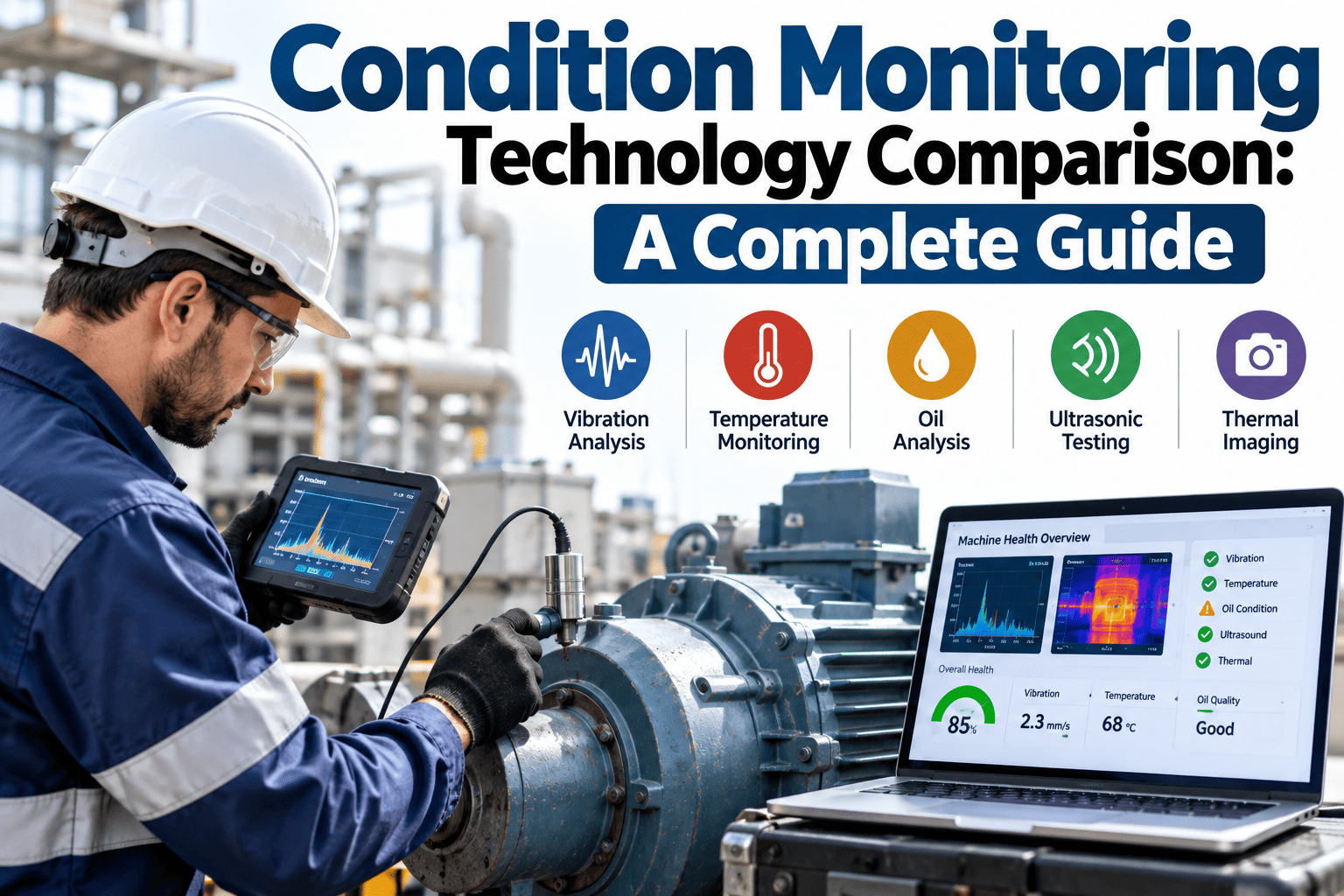
How AI Condition Monitoring Works
Three-Layer Detection System
Layer 1: Vibration Analysis
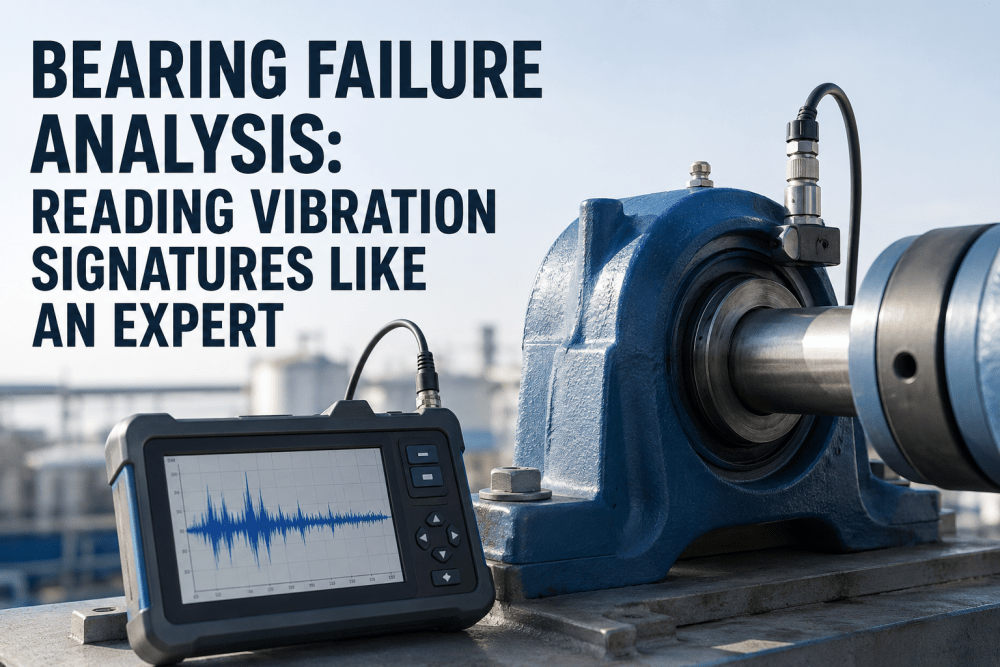
Triaxial accelerometers at bearing housings capture 0-20kHz frequencies. FFT analysis reveals bearing defect signatures 2-3 weeks before audible noise or temperature rise.
Layer 2: Thermal Monitoring
IR cameras + PT100 RTDs track temperature trends. Sudden +5°C spike = imminent failure. Gradual +15°C over 3 weeks = bearing degradation in progress.
Layer 3: Oil Analysis
Automated particle counters detect metal debris (Fe, Cu, Al) from wear. Viscosity sensors track lubricant degradation. Combined with vibration = failure root cause.
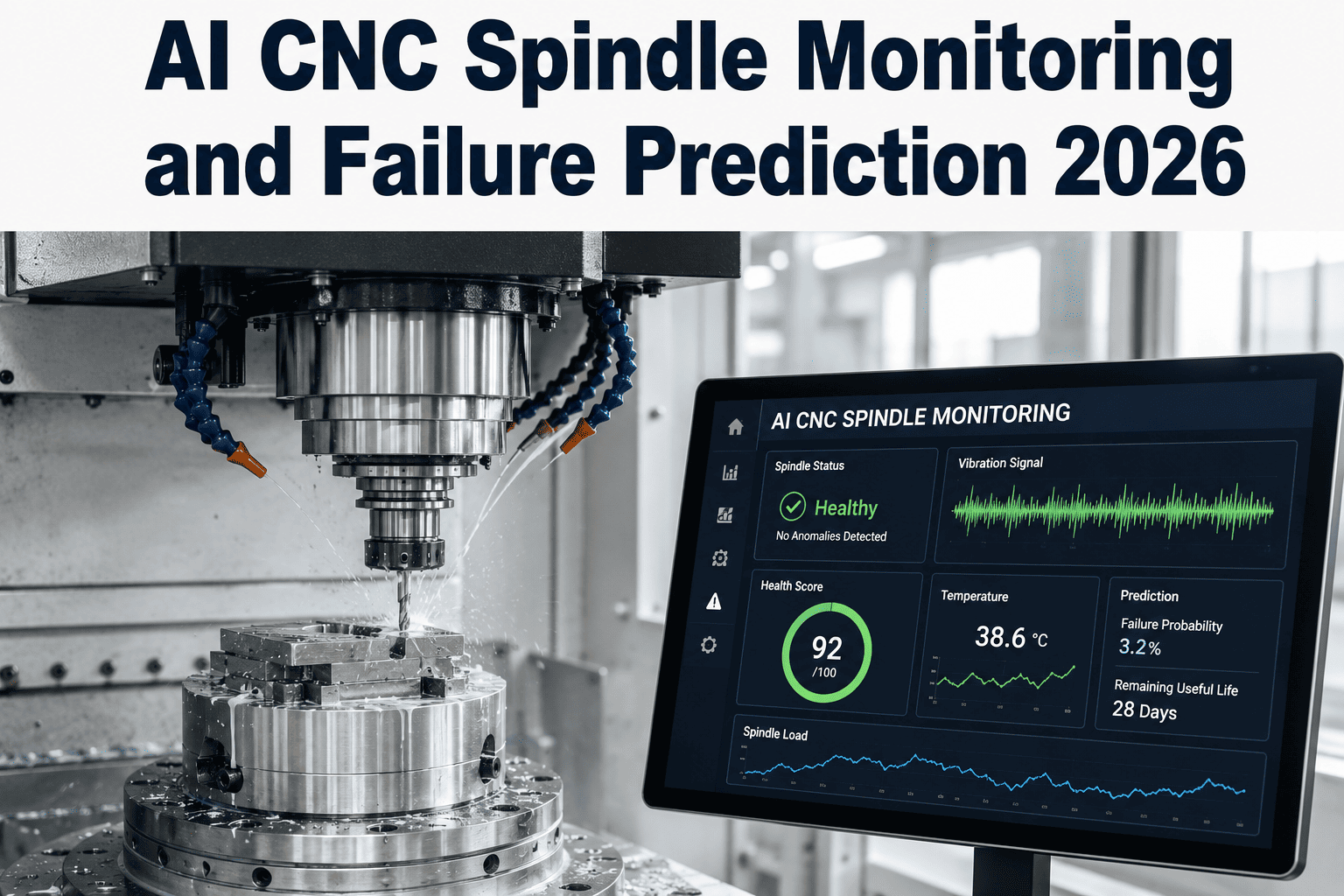
Machine learning models trained on 50+ cement plant failures learn failure progression patterns. When your gearbox shows early-stage bearing cage defect frequency (0.43× RPM) that matches historical failures, AI predicts: "18-day warning, plan shutdown in 2 weeks during scheduled maintenance window."
Real Results: Tamil Nadu Cement Plant
3500 TPD Plant - 18-Month AI Condition Monitoring
Ball Mill + VRM + 4 Gearboxes Monitored
Baseline: 5 unplanned failures (previous 18 months) | 218 hours downtime | ₹12.2 Cr production loss
- Ball mill output bearing: Predicted 19 days early, replaced during scheduled shutdown
- VRM gearbox pinion: Predicted 23 days early, avoided ₹2.8 Cr emergency
- Coal mill drive motor: Rotor imbalance detected 16 days early, rebalanced in-place
- Cement mill gearbox: Lubrication issue caught 8 days early, pump replaced
Watch Live Vibration Analysis Demo
See AI detect bearing defects in real-time from actual cement plant data. Watch frequency spectrum analysis identify failure signatures invisible to human operators.
Implementation: 45-Day Deployment
From Sensors to Predictions
Week 1-2: Sensor Installation
Install triaxial accelerometers on all critical bearing points (typically 12-16 sensors per mill/gearbox). Add temperature sensors and oil analysis ports. No production shutdown required.
Week 3-4: Baseline Collection
Collect 2-3 weeks of "healthy" vibration signatures during normal operation. AI learns your equipment's unique characteristics—every gearbox has different fingerprints.
Week 5-6: Model Training
Train ML models on your baseline + historical failure data from 50+ similar cement plants. Calibrate alarm thresholds to minimize false positives while catching all real failures.
Week 7+: Live Monitoring
System goes live with 24/7 monitoring. Maintenance teams receive alerts 2-4 weeks before failures, enabling planned interventions during scheduled shutdowns instead of emergency stops.
ROI Breakdown: Investment vs Value
Financial Case (3500 TPD Plant)
Total Investment
₹42 LakhsSensors (₹18L) + Edge computing (₹12L) + Software (₹8L) + Installation (₹4L)
Annual Value Delivered
₹6.8 CroresPrevented 3 failures @ ₹2.1 Cr each + reduced maintenance costs ₹25L
Net ROI (Year 1)
1,519%₹6.38 Cr net value ÷ ₹42L investment. Payback in <1 month of preventing single failure.
- Planned maintenance scheduling: Coordinate shutdowns, order parts in advance, use regular labor
- Inventory optimization: Stock only needed spares based on predicted failures (₹15-25L working capital release)
- Extended equipment life: Catch problems early = less collateral damage = longer asset life
- Insurance benefits: Some insurers reduce premiums 8-12% for plants with condition monitoring
Want ROI calculated for your specific equipment? Get custom analysis — We'll show exact value based on your failure history.
Gearbox & Mill Monitoring Takeaways
- Single catastrophic failure costs ₹1.5-3 Cr when accounting for equipment + downtime + emergency services
- 18-25 day warning lead time is typical for bearing failures—plenty of time for planned intervention
- 88-92% prediction accuracy when combining vibration, temperature, and oil analysis with AI
- 45-day deployment from sensor installation to live predictions—no long IT projects
- 1,500%+ ROI typical for plants experiencing 2-3 major failures annually
- Most failures are gradual—AI catches subtle early signatures that quarterly inspections miss
Prevent Catastrophic Gearbox & Mill Failures
Free pilot: We'll monitor your most critical equipment for 30 days and show you exactly what we can predict.
See your current condition and predicted failure timeline before full deployment.