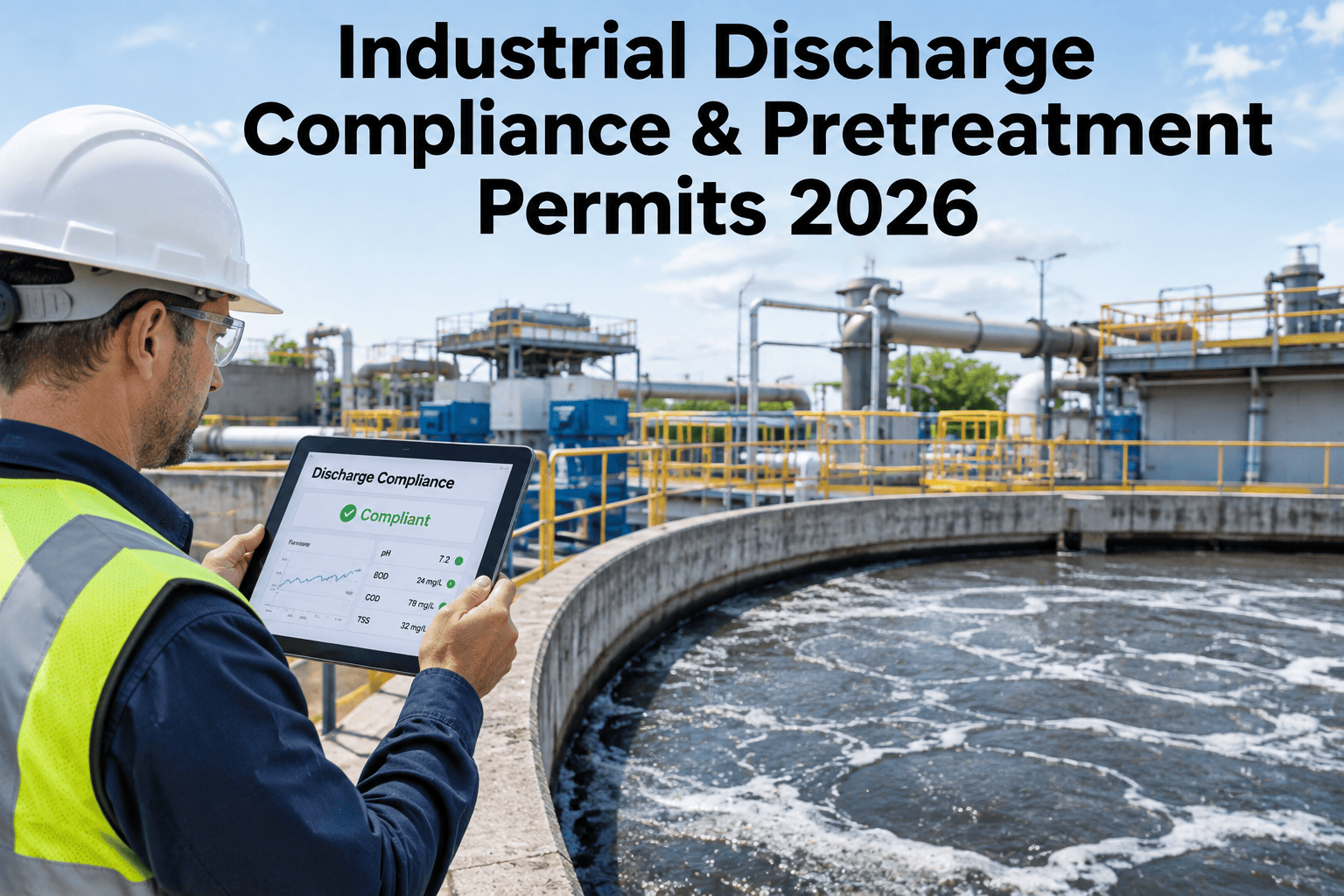
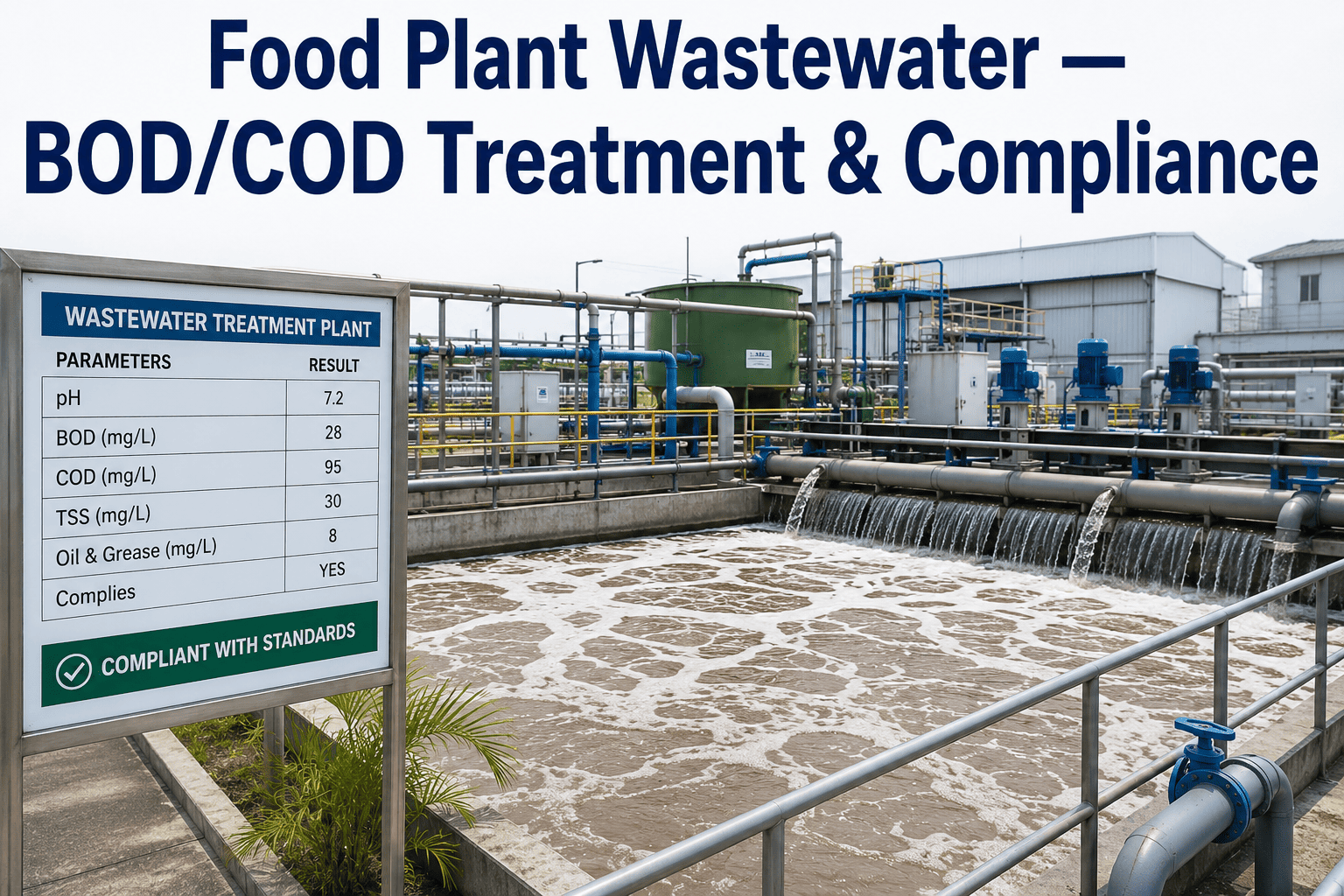
A single exceedance report to a local pretreatment authority can trigger follow-up sampling, a corrective action order, and a public enforcement record that stays searchable for years. Industrial discharge compliance under the Clean Water Act's NPDES pretreatment program is built on self-monitoring: the facility samples its own outfall, submits its own Discharge Monitoring Reports, and is expected to catch a limit violation before the regulator does. Civil penalties for NPDES violations can run up to roughly $64,618 per day per violation under current EPA Clean Water Act penalty figures (EPA Clean Water Act Civil Penalties, 2026 reference), and a facility can be well within its numeric limits yet still face six-figure exposure over a late report or an unproduceable sampling record. iFactory, an on-premise AI platform with safety and compliance reporting built in, helps environmental teams keep monitoring, sampling, and reporting data in one auditable place. Teams that want to see how their current discharge monitoring workflow holds up under inspection can review a pretreatment compliance setup with our team.
Industrial Discharge Compliance · Pretreatment, 2026
Self-Monitoring Means You Catch the Exceedance Before the Regulator Does
iFactory AI keeps sampling schedules, discharge monitoring reports, and permit limits in one system, so a facility can prove compliance on demand rather than reconstruct it under deadline pressure.
Permit limitMonitoring resultExceedance zone
What a pretreatment permit covers
Direct Discharge and Indirect Discharge Are Regulated Differently
A facility discharging directly to a river, lake, or coastal water needs its own NPDES permit under 40 CFR Part 122. A facility discharging to a municipal treatment plant instead falls under that plant's industrial pretreatment program, following local limits set by the POTW (EPA / 40 CFR Part 403, 2026).
| Discharge type | Permit authority | Reporting form |
|---|
| Direct discharge | EPA or delegated state agency, individual NPDES permit | Monthly or quarterly Discharge Monitoring Reports |
| Indirect discharge (to a POTW) | Local pretreatment program, following federal categorical standards | Self-monitoring reports to the POTW |
| Stormwater discharge | State-issued general permit (for example, an industrial stormwater general permit) | Sampling under the facility's pollution control plan |
Where exceedances actually come from
Most Enforcement Actions Are Not About the Chemistry
Late DMR submission
A report filed after the deadline is treated as a reporting violation, independent of whether the sample passed.
Missed sampling event
A skipped scheduled sample is itself a compliance gap, whatever the surrounding results show.
Unproduceable records
An inspector asking for a sampling log that cannot be found counts against the facility regardless of actual discharge quality.
True numeric exceedance
A sample result above the permitted limit for a specific pollutant, triggering the formal exceedance process.
The exceedance response
Five Steps Once a Sample Comes Back Over Limit
1
Confirm the result
Re-sample where the permit allows, to rule out a lab or sampling error before escalating.
2
Notify within the required window
Most permits set a strict notification deadline — often 24 hours — once an exceedance is confirmed.
3
Identify the source
Trace the exceedance back to the process, batch, or upset condition that caused it.
4
Document corrective action
Record what changed in the process to prevent the same exceedance recurring.
5
Increase monitoring frequency
Regulators often require closer sampling for a period following a confirmed exceedance.
See Where Your Monitoring Records Would Hold Up Under Inspection
Share your current sampling schedule and recent DMRs, and iFactory AI will walk through where the records are strong and where a gap could become a finding.
Manual vs tracked
Spreadsheet Sampling Logs Versus a Connected Record
Spreadsheet-based tracking
Sampling dates tracked by memory or a shared calendar
DMR assembled manually each reporting period
Historical records scattered across folders and inboxes
iFactory AI compliance record
Sampling schedule triggers automatic reminders
DMR data pulled from logged results directly
Full history retrievable in seconds during an inspection
Expert review
What an Environmental Manager Checks First
Most enforcement exposure in pretreatment programs comes from process gaps — a late report, a missed sample — not from the underlying water chemistry itself.
Verdict
Strong when sampling, reporting, and corrective-action records all live in one retrievable system.
Watch for
A facility that is well within its numeric limits but cannot produce the sampling log an inspector asks for on the spot.
Do next
Pull your last four quarters of DMRs and confirm every scheduled sample has a matching, retrievable lab result.
Frequently asked questions
What Facilities Ask About Discharge Compliance
What is the maximum civil penalty for an NPDES violation?
Civil penalties for Clean Water Act NPDES violations can reach roughly $64,618 per day per violation under current EPA penalty figures, independent of whether the underlying discharge caused actual environmental harm (EPA Clean Water Act Civil Penalties reference, 2026).
Review your exposure with our team.
Do we need an NPDES permit if we discharge to a municipal sewer, not a river?
How quickly must an exceedance be reported?
Notification windows are set by the specific permit and are often as tight as 24 hours from confirmation, so the exact requirement should be checked against your own permit language.
Confirm your notification requirements.
Can a facility be penalized even if it never exceeded a numeric limit?
Yes — late Discharge Monitoring Reports, missed sampling events, and unproduceable records are enforceable on their own, separate from whether any sample ever exceeded a permit limit.
Ask support how to close reporting gaps.
How often do NPDES permits get renewed, and does that change our limits?
Individual NPDES permits are typically renewed every five years, and renewal can bring revised limits based on updated water quality standards or facility changes.
Discuss your upcoming renewal cycle.
Catch the exceedance before the regulator does
Put Your Sampling and Reporting Records in One Place
Book a session with iFactory AI to see how a connected monitoring record would hold up against your next inspection.
{"@context":"https://schema.org","@type":"FAQPage","mainEntity":[
{"@type":"Question","name":"What is the maximum civil penalty for an NPDES violation?","acceptedAnswer":{"@type":"Answer","text":"Civil penalties for Clean Water Act NPDES violations can reach roughly $64,618 per day per violation under current EPA penalty figures."}},
{"@type":"Question","name":"Do we need an NPDES permit if we discharge to a municipal sewer, not a river?","acceptedAnswer":{"@type":"Answer","text":"Indirect dischargers to a POTW fall under that plant's industrial pretreatment program rather than needing an individual NPDES permit."}},
{"@type":"Question","name":"How quickly must an exceedance be reported?","acceptedAnswer":{"@type":"Answer","text":"Notification windows are set by the specific permit and are often as tight as 24 hours from confirmation."}},
{"@type":"Question","name":"Can a facility be penalized even if it never exceeded a numeric limit?","acceptedAnswer":{"@type":"Answer","text":"Yes, late Discharge Monitoring Reports, missed sampling events, and unproduceable records are enforceable on their own."}},
{"@type":"Question","name":"How often do NPDES permits get renewed, and does that change our limits?","acceptedAnswer":{"@type":"Answer","text":"Individual NPDES permits are typically renewed every five years, and renewal can bring revised limits."}}
]}