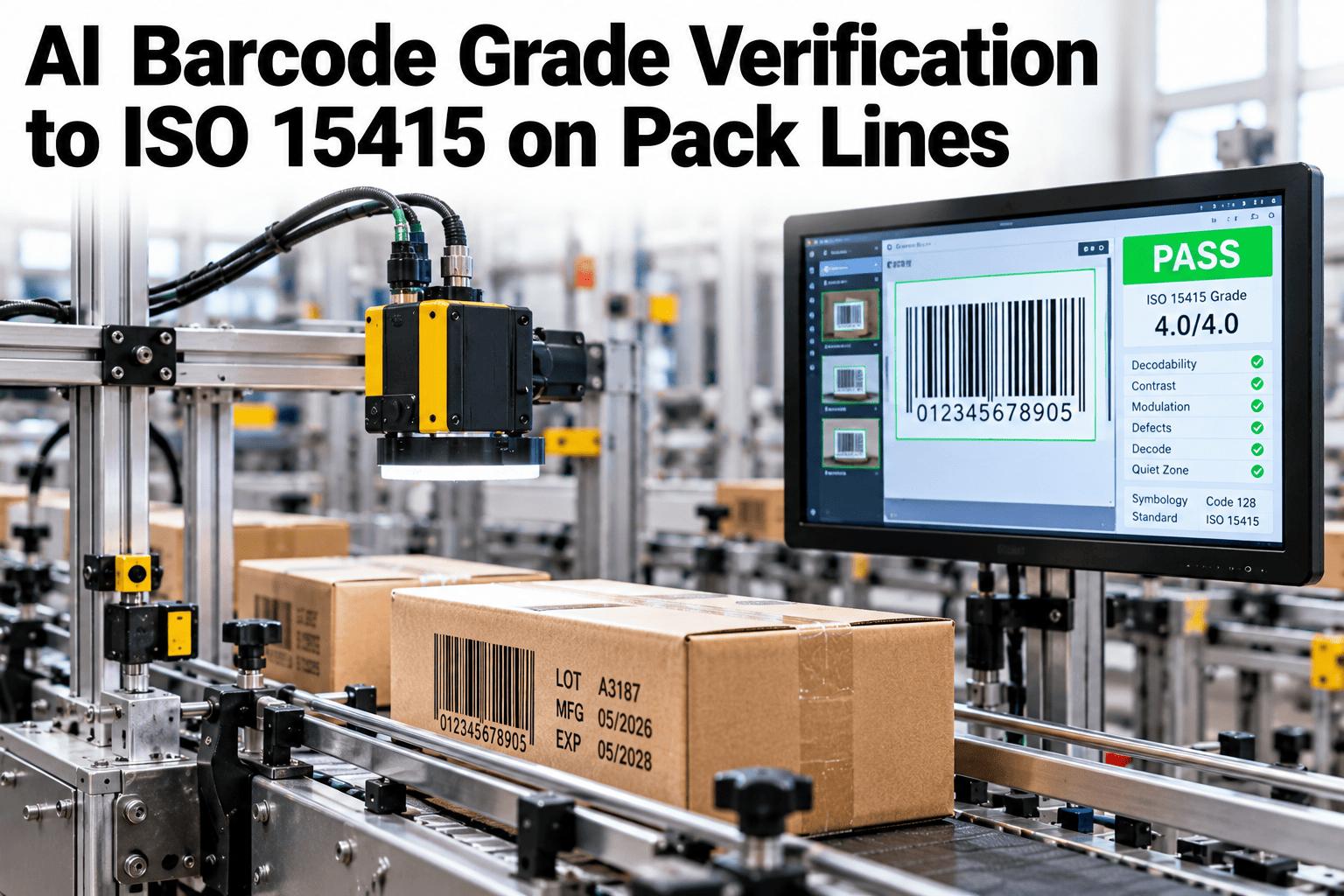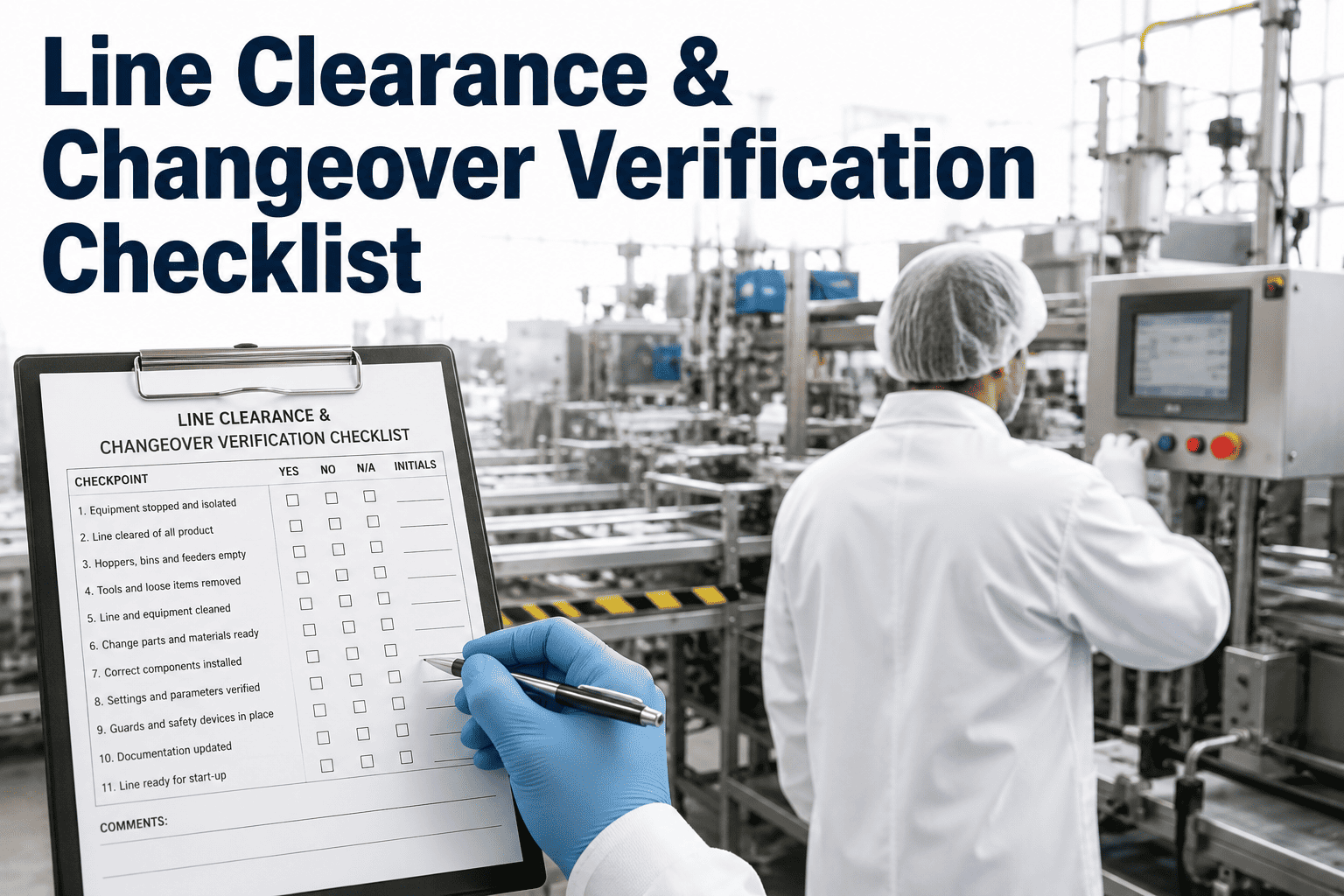
A single leftover label from the previous batch is all it takes to trigger a recall, and it happens more often than most quality teams like to admit. Line clearance is supposed to catch exactly that kind of leftover material before a new product or batch starts running, but a verbal "looks clear to me" from a rushed operator is not verification, it is a guess. Digital line clearance checklists fix that gap with photo verification, barcode scanning, and a supervisor sign-off that cannot be skipped before the next batch begins. Quality leaders who want changeovers verified properly every time can book a demo to see the workflow.
LINE CLEARANCE · CHANGEOVER VERIFICATION · 2026
No Batch Starts Until the Line Is Actually Clear
Photo verification, barcode scanning, and mandatory supervisor sign-off before every product or batch changeover, so cross-contamination and mix-ups get caught before they leave the line.
VERBAL CLEARANCE
Looks Clear to Me
No photo record of the empty line
Leftover labels caught only by chance
Sign-off recorded after the fact, if at all
DIGITAL CLEARANCE
Verified Before Start
Timestamped photos of every clearance point
Barcode scan confirms correct new material
Supervisor sign-off required before batch starts
Why Verbal Line Clearance Keeps Failing
Line clearance sits at one of the highest-risk moments in any production process, the transition between one product or batch and the next, yet it is often handled with the least rigor of any quality step. An operator walks the line, glances at obvious surfaces, and tells a supervisor it is clear, and that verbal confirmation becomes the entire record. There is no photo showing what the line actually looked like, no scan confirming the new material matches the batch record, and no independent check beyond the same person who just finished running the previous batch.
This matters most in industries where cross-contamination carries real consequences, such as allergen changeovers in food production or product mix-ups in pharmaceutical packaging, where a single overlooked component can trigger a recall that costs far more than the minutes a proper digital clearance process would have taken.
There is also a pattern investigators see repeatedly after a contamination event, which is that the operator who signed off on clearance genuinely believed the line was clear. A missed component is rarely the result of dishonesty, it is the result of a fast visual sweep under time pressure, checking the obvious surfaces while a leftover label sits inside a fold in the conveyor guarding or a small component rolls into a gap between machine sections that nobody thinks to check during a routine glance.
Why Defined Clearance Points Matter More Than a General Sweep
The difference between an effective clearance process and an ineffective one usually comes down to specificity. A checklist item that says "confirm line is clear" leaves the operator to decide what counts as clear, which inevitably means different operators check different things depending on their own experience and what has caused problems for them personally in the past. A checklist that instead names each specific clearance point, the infeed conveyor, the labeling station, the reject bin, the overhead guarding, gives every operator the same defined scope regardless of their individual habits.
This specificity becomes even more valuable when paired with photo requirements at each named point, since a photo forces the operator to actually look closely enough to frame the shot, which tends to surface issues a quick glance would miss entirely. Quality teams that have implemented point-by-point photo verification consistently report catching leftover material at a noticeably higher rate than they did under a general sweep, simply because the act of photographing each area changes how carefully it gets inspected.
PHOTO-VERIFIED CLEARANCE
Replace Verbal Sign-Off With Proof
See how photo verification and barcode scanning turn line clearance into an evidenced step, not a guess.
What a Verified Clearance Process Checks
| Clearance Point | Verification Method | Who Confirms |
|---|---|---|
| Line surfaces and guides | Timestamped photo of empty line | Operator |
| Leftover labels or packaging | Visual sweep plus photo evidence | Operator |
| New material identity | Barcode scan against batch record | System |
| Allergen or ingredient risk | Cross-check against changeover matrix | Quality lead |
| Final release to run | Digital sign-off after all checks pass | Supervisor |
How Clearance Moves From Old Batch to New
1
Clear the Line
Operator removes all previous batch material and photographs each defined clearance point.
2
Scan New Material
Barcode scan confirms the incoming material matches the scheduled batch record exactly.
3
Flag Any Mismatch
A scan or photo that does not match expected criteria blocks the changeover automatically.
4
Supervisor Releases the Run
Only after every check passes can a supervisor digitally sign off to start the new batch.
How Clearance Data Connects to Broader Quality Trends
Individual clearance records are useful on their own for proving a specific batch was properly verified, but the accumulated data across many changeovers tends to reveal patterns that no single record could show. A quality team reviewing clearance history across several months might notice that a particular line consistently takes longer to clear than others, which often points to a physical design issue such as hard-to-access guarding rather than an operator performance problem. That kind of insight only becomes visible once clearance data exists in a searchable, structured format rather than scattered across individual paper forms.
This same data also strengthens supplier and material change discussions, since a clear record of how often a particular material or packaging format has been involved in a failed clearance check gives quality teams concrete evidence to bring to a conversation about switching suppliers or adjusting specifications, rather than relying on anecdotal impressions from the floor.
What Quality Teams Are Saying
Before this, clearance was whatever the operator remembered to check. Now every changeover has a photo trail and a scan record, and when an auditor asks to see proof for a specific batch from three months ago, we can actually pull it up in under a minute.
Quality Assurance Manager, Packaged Foods Plant
Frequently Asked Questions
How does barcode scanning prevent a product mix-up?
Every material or component scheduled for a batch has an expected barcode tied to the batch record in the system, so when an operator scans the actual material being loaded onto the line, the system checks it against what should be there and blocks the changeover immediately if there is a mismatch. This catches situations a visual check alone would miss, such as two very similar-looking packaging rolls or ingredient totes that differ only in a batch code or allergen formulation. The scan result is logged permanently against the batch record, so if a question ever arises later about which specific material was used, the answer is a documented fact rather than a recollection.
Is this only relevant for food and pharmaceutical lines?
While allergen and GMP-driven industries have the strictest regulatory reasons to verify clearance, any manufacturer switching between products, colors, or specifications on a shared line benefits from proof that the previous run is fully cleared, since contamination or mix-up risk exists anywhere shared equipment runs different products, including electronics, cosmetics, and general consumer goods manufacturing.
What happens if a clearance photo shows leftover material?
The checklist flags the clearance point as failed and prevents the operator from proceeding to the next step until a corrective photo confirms the area has actually been cleared, and the original failed photo remains attached to the batch record permanently as documentation that the issue was caught and resolved before production started rather than discovered afterward. Some plants also use these failed-then-corrected records to identify recurring problem areas, since a clearance point that fails repeatedly across multiple changeovers often points to a design or process issue worth addressing directly rather than continuing to catch and fix the same problem every time.
Can supervisors review clearance records remotely during an audit?
Yes, every clearance record including photos, scan results, and sign-off timestamps is stored centrally and searchable by batch, date, or line, so a quality manager preparing for an audit can pull complete documentation for any past changeover without needing physical access to the plant floor. Teams can review reporting options through support.
How long does it take to set up line clearance checks for a new line?
A single line with a defined clearance matrix is typically configured and live within two to three weeks, with most of that time spent mapping exact clearance points and material barcodes rather than technical setup. Plant leaders can book a demo to see how quickly a specific line could go live.
Building a Clearance Matrix That Actually Fits Your Lines
Every product line has a different set of realistic contamination risks depending on what it produces and what it switches between, which means a generic clearance checklist copied from another facility rarely fits well. Building an effective clearance matrix starts with reviewing past near-misses and actual contamination events, if any exist, to identify exactly where material has historically gotten missed, then working backward from those specific failure points to define the clearance checklist rather than starting from a blank template and guessing at likely risks.
It is also worth involving the operators who run the changeovers daily in building the matrix, since they often know from direct experience exactly where leftover material tends to hide, information that rarely makes it into a formal incident report because it gets caught before it becomes a genuine problem. A clearance matrix built with that frontline knowledge tends to hold up far better in practice than one designed entirely by a quality team working from a generic industry template.
LINE CLEARANCE · CHANGEOVER VERIFICATION
Verify Every Changeover Before It Starts
Move from verbal sign-off to photo-verified, barcode-checked line clearance on every batch.