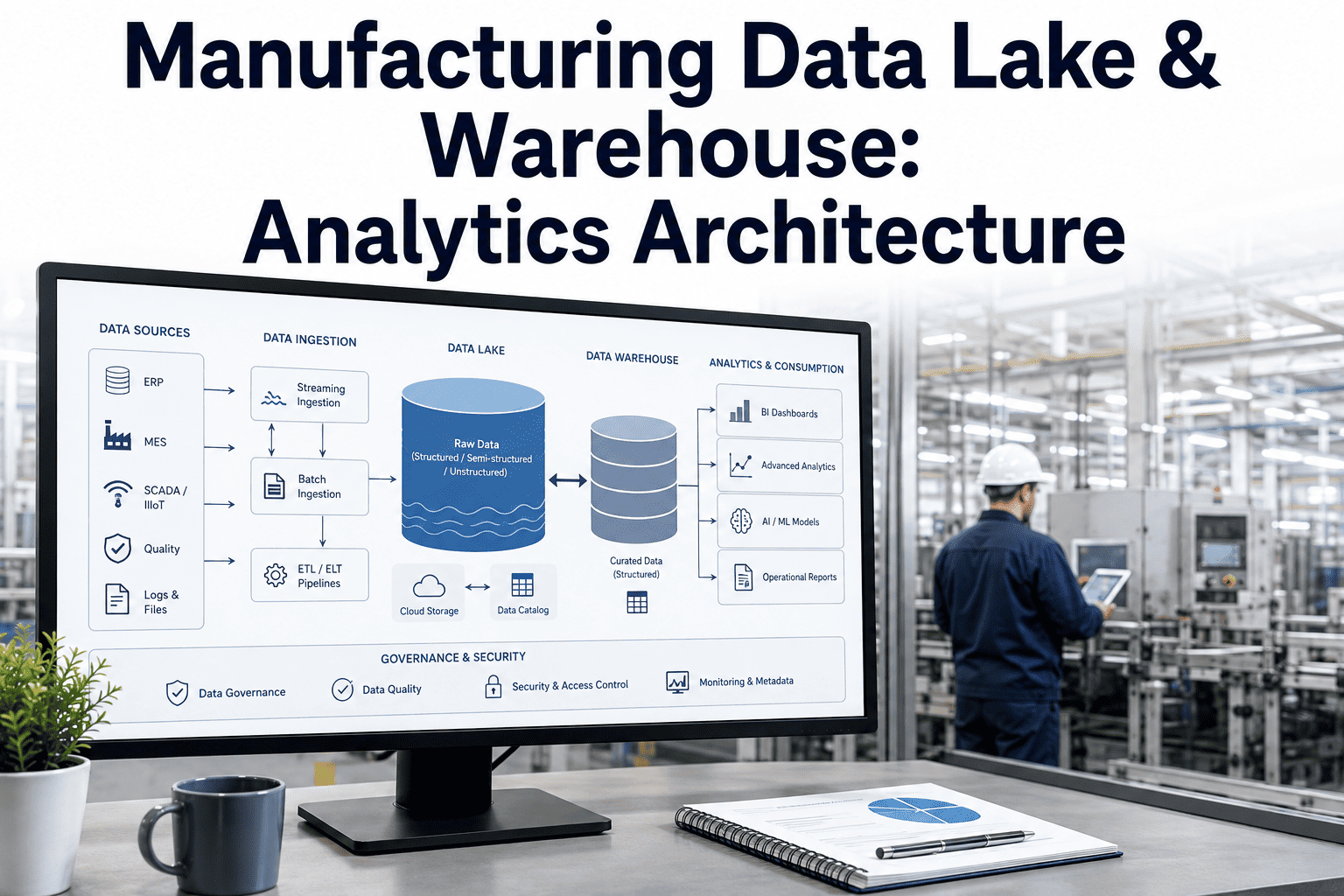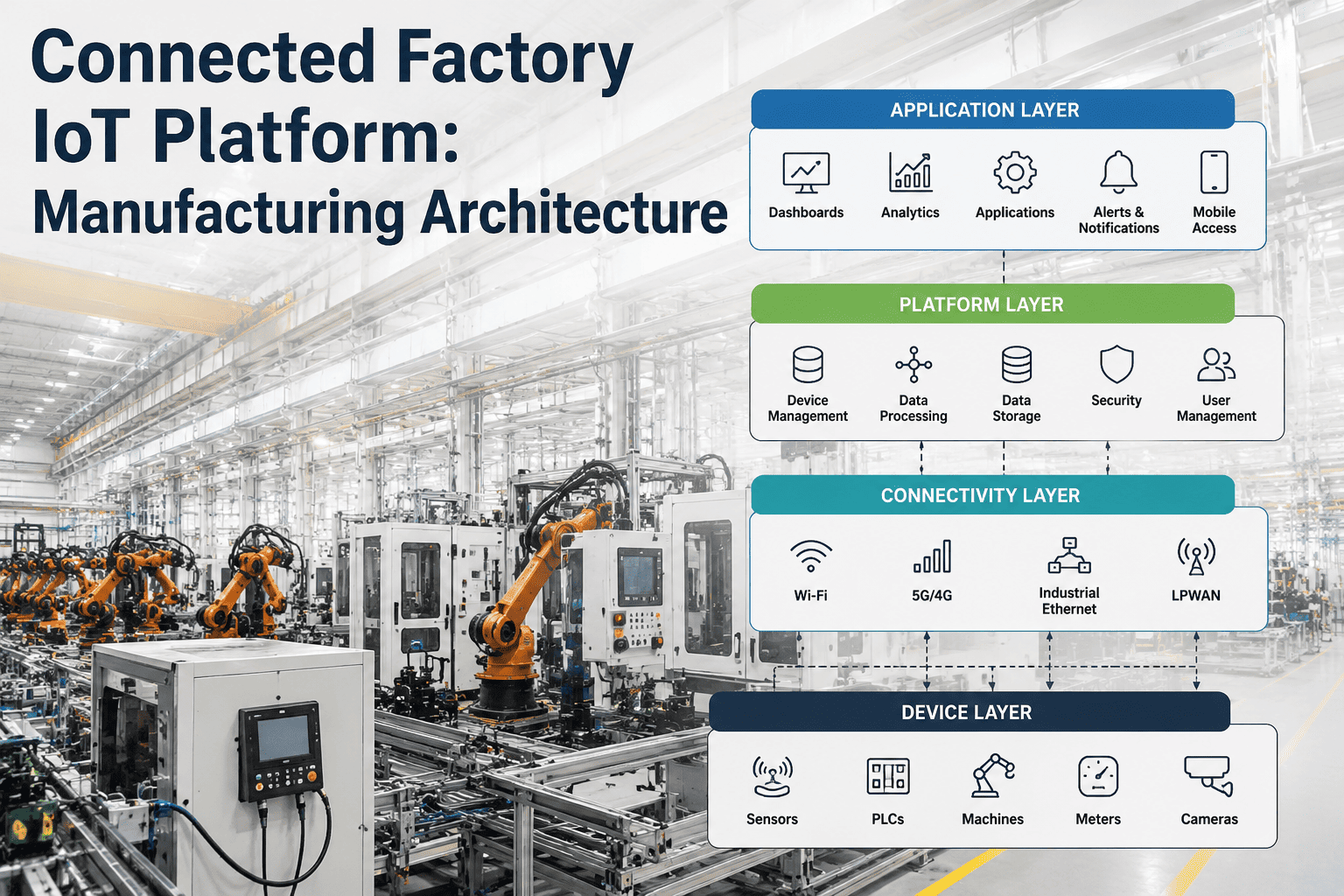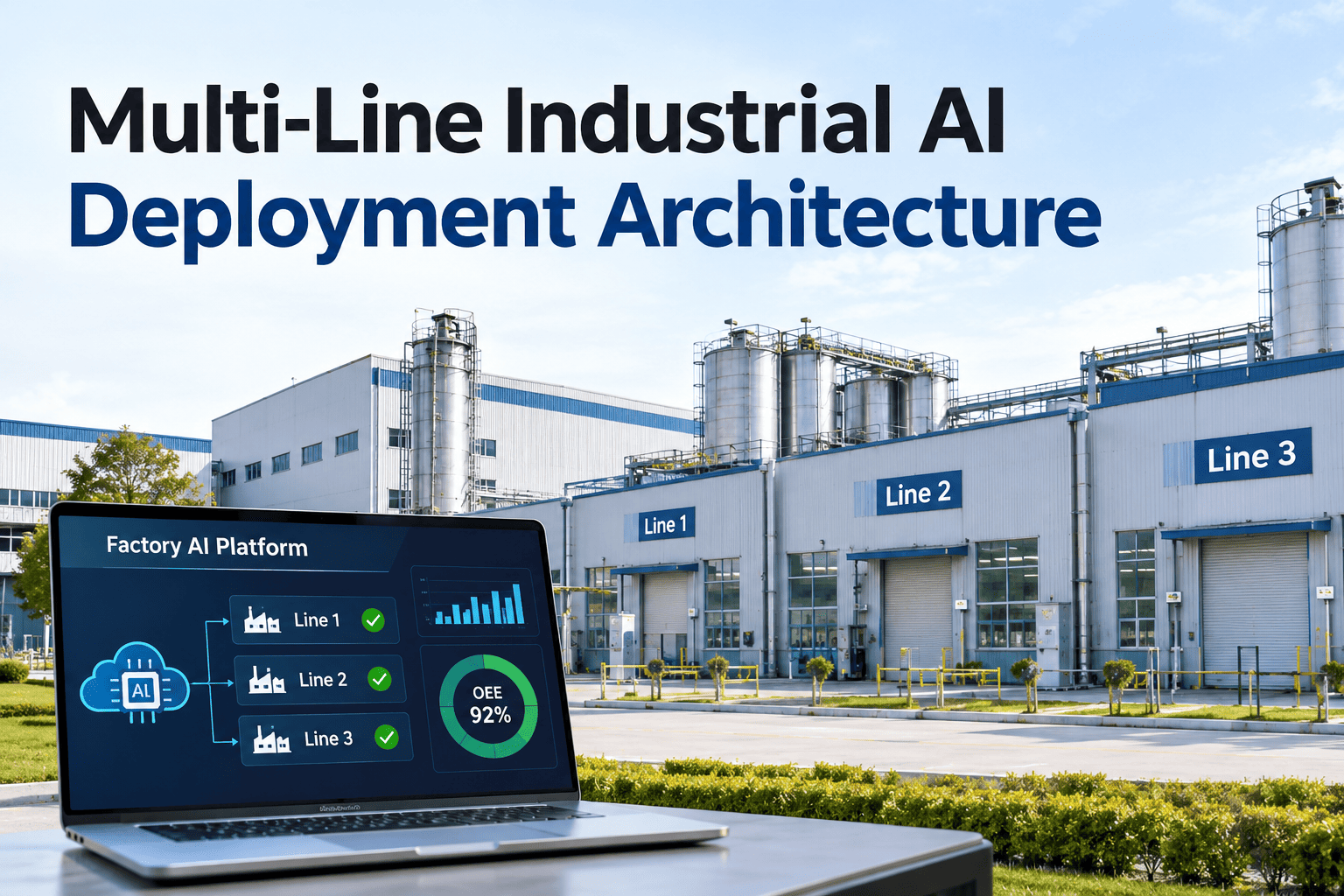
Deploying AI on a single production line is an experiment. Deploying it across ten lines is an architecture decision. The difference matters because a single-line AI deployment that works well can be undone at scale by inconsistent data models, duplicate model management, incompatible integration approaches on different lines, and no shared governance layer. Plants that have expanded AI line by line without an architecture plan frequently end up with eight or ten isolated AI instances, each requiring separate maintenance, each using slightly different field names for the same variable, and none able to compare performance across lines because the data is not structured the same way. iFactory AI, an on-premise AI platform for industrial manufacturing, is designed to standardise data, models, integrations, monitoring, security, and governance across multiple production lines from the outset — so the tenth line deployment costs a fraction of the first, and cross-line analytics are possible from day one of multi-line operation. Teams designing a multi-line AI programme can review a multi-line architecture design with iFactory AI's engineering team.
Design an Industrial AI Architecture That Scales Consistently Across Every Production Line
iFactory AI standardises data schemas, model templates, integration patterns, monitoring dashboards, security controls, and governance policies across multiple production lines — so each new line deploys faster and operates on shared infrastructure.
Why Multi-Line AI Architecture Requires Upfront Design
The natural path of industrial AI expansion — start with one line, prove value, expand to the next — produces fragmented architectures when each line is added without a shared design. The cost of fragmentation compounds at scale: more maintenance effort, no cross-line comparison, inconsistent governance, and eventual costly rearchitecture when the plant wants unified reporting.
The Five Architecture Decisions That Determine Multi-Line AI Success
Five architectural choices, made before the second line is deployed, determine whether the multi-line programme will scale cleanly or accumulate technical debt with each addition.
Design Your Multi-Line AI Architecture Before the Second Line, Not After the Fifth
iFactory AI's engineering team will design a shared multi-line architecture — data schema, model templates, integration patterns, governance, and security — that makes every new line faster and cheaper to deploy than the last.
Cross-Line Analytics: What Becomes Possible at Scale
The business case for standardised multi-line AI architecture is not just operational efficiency — it is the analytics that become possible only when all lines speak the same data language. These capabilities are unavailable in a fragmented line-by-line deployment.
Frequently Asked Questions
Can a single iFactory AI server support multiple production lines simultaneously?
Yes. iFactory AI's on-premise NVIDIA GPU server is designed for multi-line deployments. A standard deployment handles 5–10 lines depending on the number of monitored assets, model complexity, and data volume per line. For large plants with 15+ lines, iFactory AI supports a distributed architecture with multiple servers sharing a common data schema and governance layer. The engineering team designs the hardware specification based on the plant's total monitored asset count and desired model complexity during the architecture phase. Review the hardware specification for your planned multi-line deployment scope.
How long does it take to add a new production line to an existing iFactory AI deployment?
With a standardised integration pattern library and model templates from the first deployment, adding a new line of the same type typically takes 2–4 weeks — compared to 6–12 weeks for the first line. The savings come from: reusing the data schema (no schema design), deploying from integration templates (no protocol-level engineering for repeat asset types), and instantiating model templates (no model architecture design). Lines with new PLC types or new process configurations require the first-line effort for those specific new elements, while reusing everything that matches the existing template library. Ask the support team for typical deployment timelines for lines similar to your existing configuration.
How is per-line data kept separate when all lines share one platform?
iFactory AI uses per-line data namespacing — all data is stored in a shared schema but tagged with the line identifier at every level. A technician on Line 3 sees only Line 3's data in their interface; a production manager can see all lines in a comparative view. Access control at the line level means a Line 3 operator cannot access Line 1 work orders or model outputs. The shared schema enables cross-line analytics for authorised management roles while maintaining operational separation for line-level users. Review the per-line access control configuration in a multi-line walkthrough.
What happens to the multi-line deployment if one line undergoes a major change while others continue?
Line-level changes — a machine replacement, speed increase, or new product introduction on one line — affect only that line's models and do not require any intervention on other lines. The model recalibration workflow runs at the line level; the shared schema and governance layer are unaffected. The only scenario that affects the whole platform is a schema change — adding a new field that all lines should populate. These are managed through the platform's schema versioning process and deployed to all lines simultaneously. Ask about the schema versioning and change management process for multi-line deployments.
How is model governance managed across multiple lines without becoming a full-time role?
iFactory AI's centralised model monitoring surfaces drift alerts, recalibration recommendations, and performance summaries for all lines in a single governance dashboard. The engineering team reviews this dashboard in a weekly session — typically 1–2 hours — rather than checking each line separately. Automated drift detection means the team responds to alerts rather than proactively investigating each model. For a 10-line deployment with 3–5 models per line, most plants allocate 4–6 hours per week to model governance across all lines combined. Review the governance dashboard for a multi-line deployment in a walkthrough.
Scale Industrial AI Across Every Line — With One Architecture, One Platform, One Governance Layer
iFactory AI deploys on-premise with a standardised multi-line architecture — shared data schema, model templates, integration patterns, and governance — so every new line is faster and cheaper than the last.