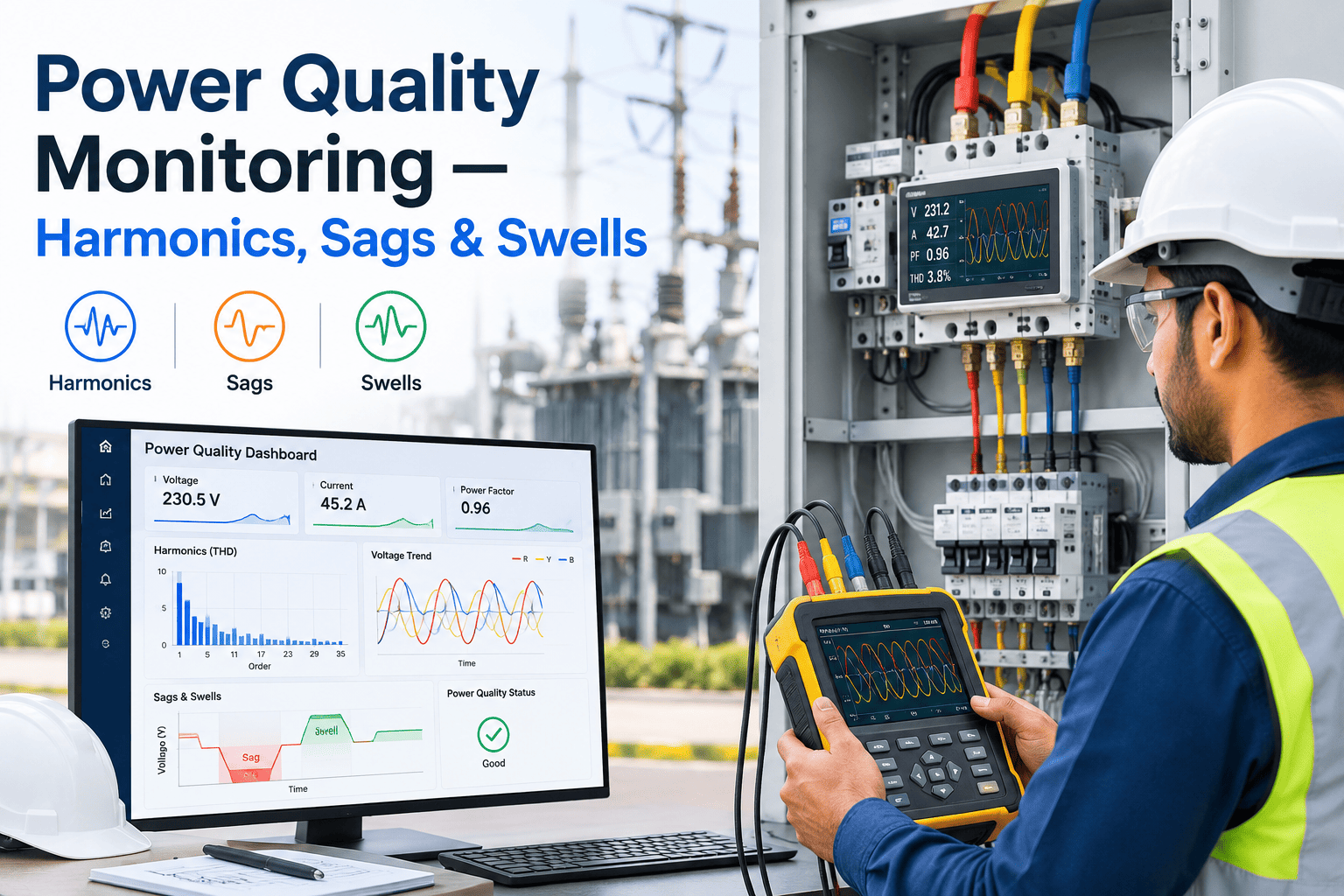
Power quality problems rarely announce themselves the way a full outage does. Instead, they show up as a VFD that trips intermittently, a servo drive that faults for no obvious reason, or a utility bill with a power factor penalty line item nobody can quite explain. Harmonic distortion from variable frequency drives, voltage sags from grid switching events, and transient swells during storms all quietly degrade equipment life and process stability long before anyone connects the dots back to the electrical supply. A structured power quality monitoring program turns those mystery faults into a diagnosable, fixable problem. iFactory's energy monitoring platform extends into power quality tracking alongside consumption data, and you can book a demo to see how the two connect.
The Electrical Problems Damaging Your Equipment Right Now
Harmonics, sags, swells, and power factor penalties quietly cost manufacturing plants in equipment life and utility fees. Here's how to monitor and fix them.
The Four Power Quality Problems That Matter Most
Power quality covers a wide range of electrical phenomena, but in manufacturing plants a handful of issues account for the vast majority of equipment damage and process disruption.
Harmonic Distortion
VFDs, servo drives, and other non-linear loads inject harmonic currents back into the electrical system, causing overheating in transformers and motors, and nuisance tripping of protective devices that were sized for clean sinusoidal current.
Voltage Sags
Brief drops in voltage, often caused by grid switching events or large motor starts elsewhere on the utility feeder, can cause sensitive equipment like PLCs and drives to fault or reset without any visible cause on the plant floor.
Voltage Swells
Momentary voltage increases, frequently tied to storm activity or capacitor switching, stress insulation and can shorten the operating life of electronic equipment even when they don't cause an immediate, visible failure.
Poor Power Factor
Inductive loads like motors and older lighting draw reactive power that utilities often penalize directly on the bill, a cost that a properly sized capacitor bank or active correction can substantially reduce.
Diagnosing vs. Guessing: A Monitoring Approach
Without continuous monitoring, most plants troubleshoot power quality issues reactively, chasing symptoms after a fault occurs rather than catching the underlying condition before it causes damage. A structured monitoring program changes that dynamic.
Install Meters at Key Distribution Points
Placing power quality analyzers at main switchgear and at feeders serving VFD-heavy areas captures the data needed to correlate faults with specific electrical events.
Correlate Events With Equipment Faults
Timestamping power quality events alongside equipment fault logs turns a mysterious intermittent trip into a clearly diagnosed sag or harmonic issue with a specific cause.
Track THD Trends by Feeder
Rising total harmonic distortion on a specific feeder over weeks or months signals a developing problem, often tied to newly added VFD load, before it triggers a hard failure.
Monitor Power Factor Continuously
Continuous power factor tracking catches capacitor bank failures or load changes that push you toward a penalty threshold before the utility bill reveals the surprise.
Stop Chasing Mystery Faults
Continuous power quality monitoring turns intermittent, unexplained equipment trips into a diagnosable, fixable electrical issue.
Common Fixes and What They Address
| Issue | Common Fix | Typical Result |
|---|---|---|
| High harmonic distortion | Line reactors or active filters | THD reduced below equipment risk threshold |
| Frequent voltage sags | Ride-through UPS on critical control loads | Fewer unplanned PLC and drive faults |
| Poor power factor | Capacitor bank or active correction | Reduced or eliminated utility penalty |
| Voltage swells | Surge protection at panel level | Extended equipment insulation life |
Frequently Asked Questions
How do we know if power quality is causing our equipment faults?
The clearest signal is a pattern of intermittent faults that don't correlate with any obvious mechanical or process cause, especially if multiple pieces of equipment on the same electrical feeder fault around the same time. Installing a power quality analyzer for even a two to three week trial period is usually enough to confirm or rule out an electrical root cause. Book a demo to discuss a diagnostic trial.
Is power factor correction worth it if we don't see a penalty on our bill yet?
Some utilities bill power factor penalties as a separate line item while others bury the cost inside a demand charge structure that isn't obviously labeled, so it's worth reviewing your tariff structure specifically rather than assuming there's no cost. Even without an explicit penalty, poor power factor increases current draw and associated losses throughout your electrical distribution system.
Can VFDs be configured to reduce the harmonics they generate?
Many modern VFDs support harmonic mitigation options at the drive level, such as built-in DC link chokes, though older or lower-cost drives often lack this capability and require external line reactors or filters instead. A power quality assessment will identify which specific drives are the largest harmonic contributors so mitigation spending targets the right equipment first.
How long does a power quality monitoring installation take?
Installing analyzers at key distribution points typically takes a day or two per panel, depending on access and whether the work needs to happen during a planned outage. Continuous cloud-connected monitoring can be reporting useful trend data within the first week of installation. Contact support for a site-specific installation estimate.
Does power quality monitoring integrate with our existing energy dashboards?
Yes, power quality metrics can sit alongside consumption and demand data in the same dashboard, giving your maintenance and energy teams a single view rather than separate systems that never get cross-referenced during troubleshooting.
See What's Really Happening on Your Electrical System
Continuous power quality monitoring that connects directly to your energy data, so problems get diagnosed instead of guessed at.



.jpeg)
