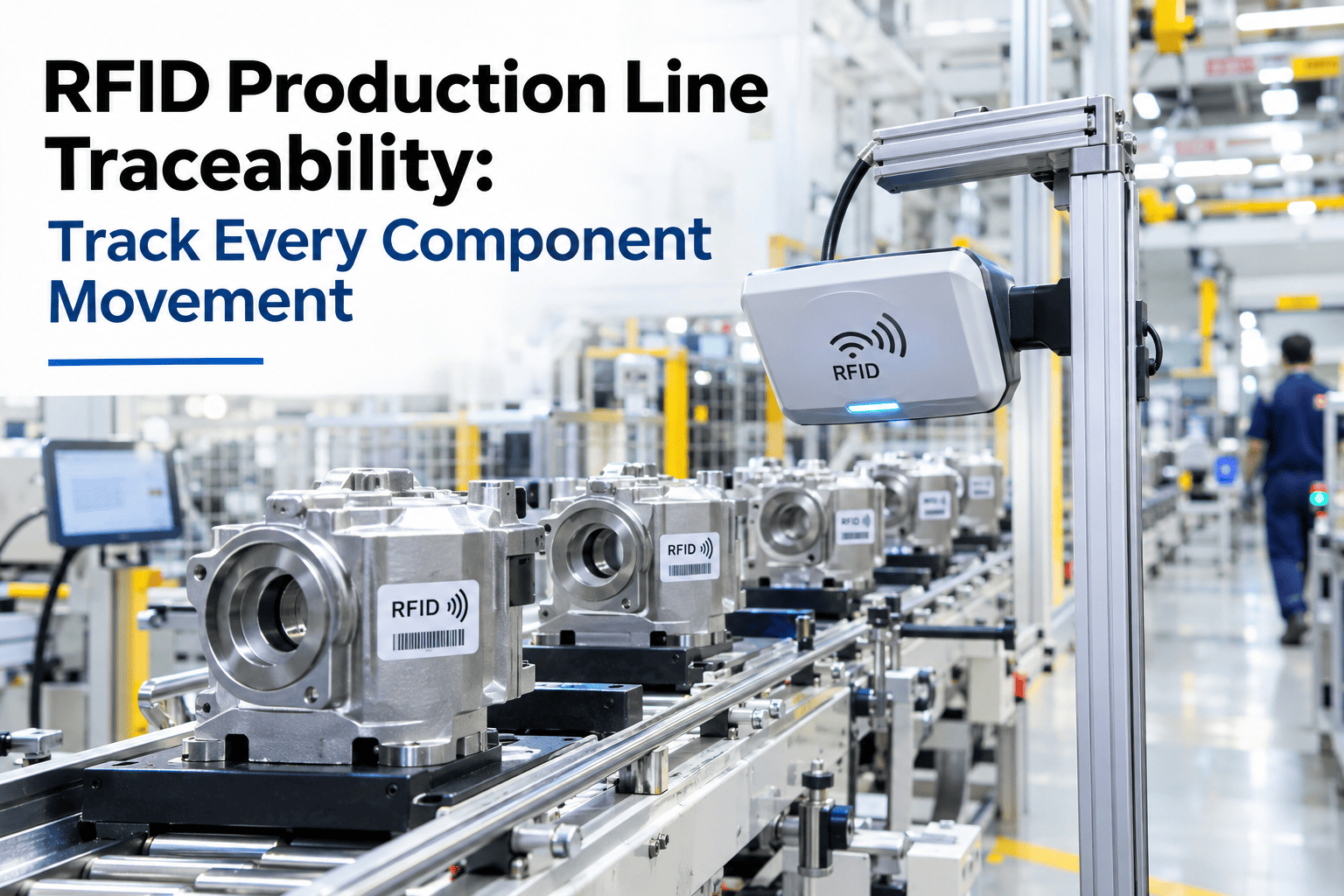
RFID production line traceability tracks every component as it moves between stations, buffers, work orders and finished goods by reading a tag at each handoff, so the full history of any unit can be rebuilt in seconds. It replaces the paper trail and manual scans that leave gaps exactly where traceability matters most. The RFID market is projected to reach USD 40.96 billion by 2035, with Asia Pacific growing fastest on work-in-progress monitoring and supply chain management (SNS Insider, 2026). iFactory, an on-premise AI platform for smart manufacturing, links tag reads to orders, assets and quality records, and teams can see a component traced across their own stations in a short session.
RFID & Traceability · Production Line
Every Component Leaves a Trail You Can Read Back
iFactory AI turns RFID reads into a live map of component movement, from goods-in to finished goods.
One tag, six reads, one complete history.
The definition
What Is RFID Production Line Traceability?
It is the use of radio-frequency tags and readers to record where each component, container or unit is, and when it moved. Each read becomes an event linked to a station, a work order and a time.
Manual or paper tracking
Staff scan or write at chosen moments
Gaps when people are busy
History rebuilt from memory
RFID tracking
Tags read automatically at each handoff
No extra action for the operator
History available on demand
Traditional systems depend on a worker placing a card or scanning a label, which is a discrete action that can be skipped (CSSI Technologies, 2026).
The case
Why Is Component Tracking Still a Gap on Most Lines?
Because the moments that matter, such as a part leaving a buffer or a lot being swapped, are the moments people are busiest.
USD 40.96B
projected RFID market by 2035 (SNS Insider, 2026)
5.78%
CAGR of auto-ID and labeling solutions, 2025 to 2031 (market research, 2026)
Weeks
typical age of a stock discrepancy by the time a cycle count finds it (AssetVue, 2026)
Real-time reads shrink that delay from weeks to seconds. To see where your own handoffs lose visibility, ask our team for a read point review.
See One Component Followed From Dock to Dispatch
Share a product structure and your station list. iFactory AI will show where tag reads belong and what each would record.
Read points
Where Should RFID Readers Be Placed on a Production Line?
Place readers at handoffs, not everywhere. Six read points cover most lines.
Goods-in
Lot and quantity received.
Station entry
Component arrives at the work center.
Buffer
Items enter and leave queues.
Station exit
Operation is complete.
Packing
Units grouped into cases.
Dispatch
Finished goods leave the plant.
Each added reader costs money, so start where a lost component hurts most. For a placement plan, review reader locations with our specialists.
Genealogy
What Does a Production Genealogy Look Like?
Genealogy links a finished unit back to the lots and stations that made it. This example is illustrative.
Finished case F-8812
Assembly A-301 · Station B · Work order WO-5520
Component lot C-77 · Supplier lot 2291 · Goods-in 06:12
Component lot C-81 · Supplier lot 2305 · Goods-in 06:14
Sub-assembly A-290 · Station A · Work order WO-5519
If lot C-81 is recalled, the same tree shows every case it reached.
The event record
What Does One Tag Read Record?
| Field | Example | Why It Matters |
| Tag ID |
E200 3412 77 |
Identifies the item or container |
| Time |
06:14:22 |
Orders events into a history |
| Reader and location |
Reader 4, Station B entry |
Shows where it was |
| Work order |
WO-5520 |
Links the item to a job |
| Quantity or status |
24 pieces, in process |
Supports WIP counts |
Four fields are enough to rebuild movement. Everything else adds context. To see events on a live view, ask support for a sample event feed.
WIP visibility
How Does RFID Show Work in Progress Across Stages?
Counting tagged items at each stage gives a live picture of where work is waiting. The bars show an illustrative count of units in each stage.
A growing buffer shows the bottleneck without anyone walking the floor.
Reliability
What Affects RFID Read Reliability on a Factory Floor?
Metal and liquids
Reflect or absorb signals, so use tags designed for metal and test near liquids.
Tag mounting
Place tags where they stay clean, undamaged and in reader view.
Read range
Tune power and antenna position to read the intended item only.
Duplicate reads
Filter repeats so one item is not counted twice.
Returnable containers
Tag the container once and link contents at fill time.
Pilot readers in real conditions before a wide rollout. For a pilot plan, plan a read test with our team.
The rollout
How Do You Roll Out RFID Traceability Step by Step?
1
Pick one product line
Choose a line with recalls, rework or lost WIP as pain points.
2
Choose tags and readers
Match types to materials, distances and environment.
3
Link reads to orders
Connect events to work orders and asset records.
4
Run beside the old method
Compare for a few weeks, then retire manual scans.
5
Scale to other lines
Reuse the tag standard and event model.
iFactory is delivered on an on-premise NVIDIA server, live in 6–12 weeks, with integration, training and 24×7 remote monitoring in scope.
Who benefits
Which Teams Gain From Component Tracking?
Quality
Finds every unit touched by a faulty lot within minutes, so recalls stay narrow and targeted.
Production
Sees queues and starved stations live, and stops hunting for missing kits and containers.
Maintenance
Knows which tooling and returnable containers are where, and how often each is used.
Customer service
Answers a delivery or origin question from the record instead of a phone round.
One tag record serves all four teams, which removes the argument over whose spreadsheet is right. To see the views each team would use, ask support about role-based traceability views.
First 90 days
What Does a Realistic First 90 Days Look Like?
Days 1–30
Map the product flow, choose read points and test tags on real parts.
Days 31–60
Install readers on one line, link reads to work orders and run alongside manual scans.
Days 61–90
Switch off duplicate manual steps, track genealogy coverage and plan the next line.
Key terms
Which Terms Should Teams Share?
RFID tag
A chip and antenna that stores an identifier.
Reader
A device that reads tags in range.
Read event
One record of a tag seen at a place and time.
Genealogy
The history linking a unit to its parts and steps.
WIP
Work in progress, items partly made.
Lot
A group of items made or received together.
Expert review
Using RFID Traceability Responsibly
Holds up
Tag reads at defined handoffs, linked to work orders, are an established way to build traceability and WIP visibility.
Verify
Read rates in your real environment, tag durability and that events are tied to the right work order.
Avoid
Tagging everything at once. Start with the components where a gap costs most.
Questions
Frequently Asked Questions
What is RFID production line traceability?
It is tracking each component or unit with RFID tags read at stations, buffers and dispatch, so its full movement history is recorded automatically. It supports recalls, audits and WIP control.
See a traced component on your line.
How is RFID different from barcode tracking?
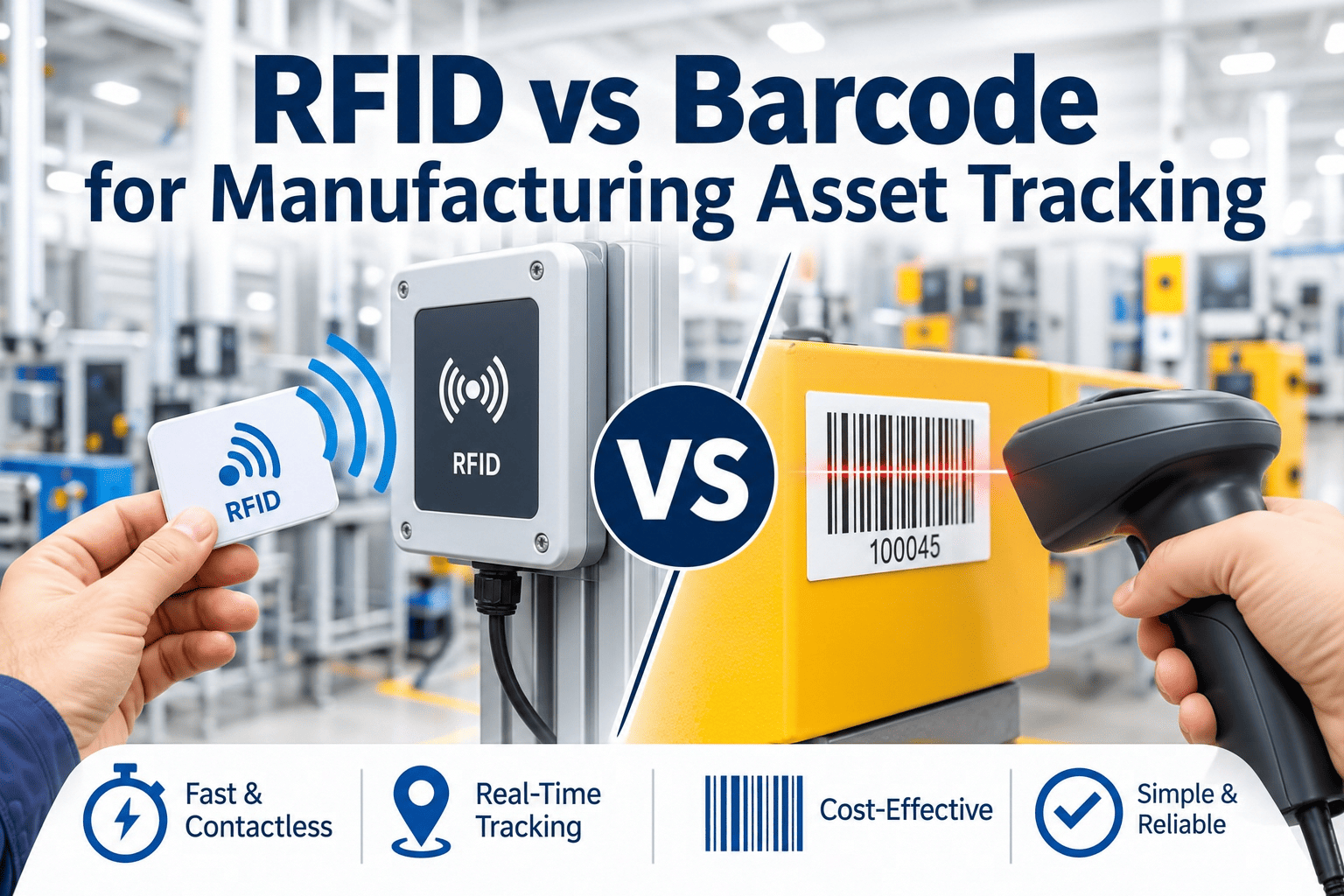
Barcodes need a person to scan each label, while RFID reads tags automatically without line of sight. That removes missed scans at busy handoffs.
Ask which fits your products.
Does RFID work around metal and liquids?
It can, with tags designed for metal and careful antenna placement, but it must be tested in your own conditions. A small pilot proves read rates early.
Plan a read test with our team.
Can RFID data link to quality and maintenance records?
Does the data stay in our plant?
Know Where Every Component Is, Always
Book a session to see iFactory AI link RFID reads to orders, assets and quality across your line.