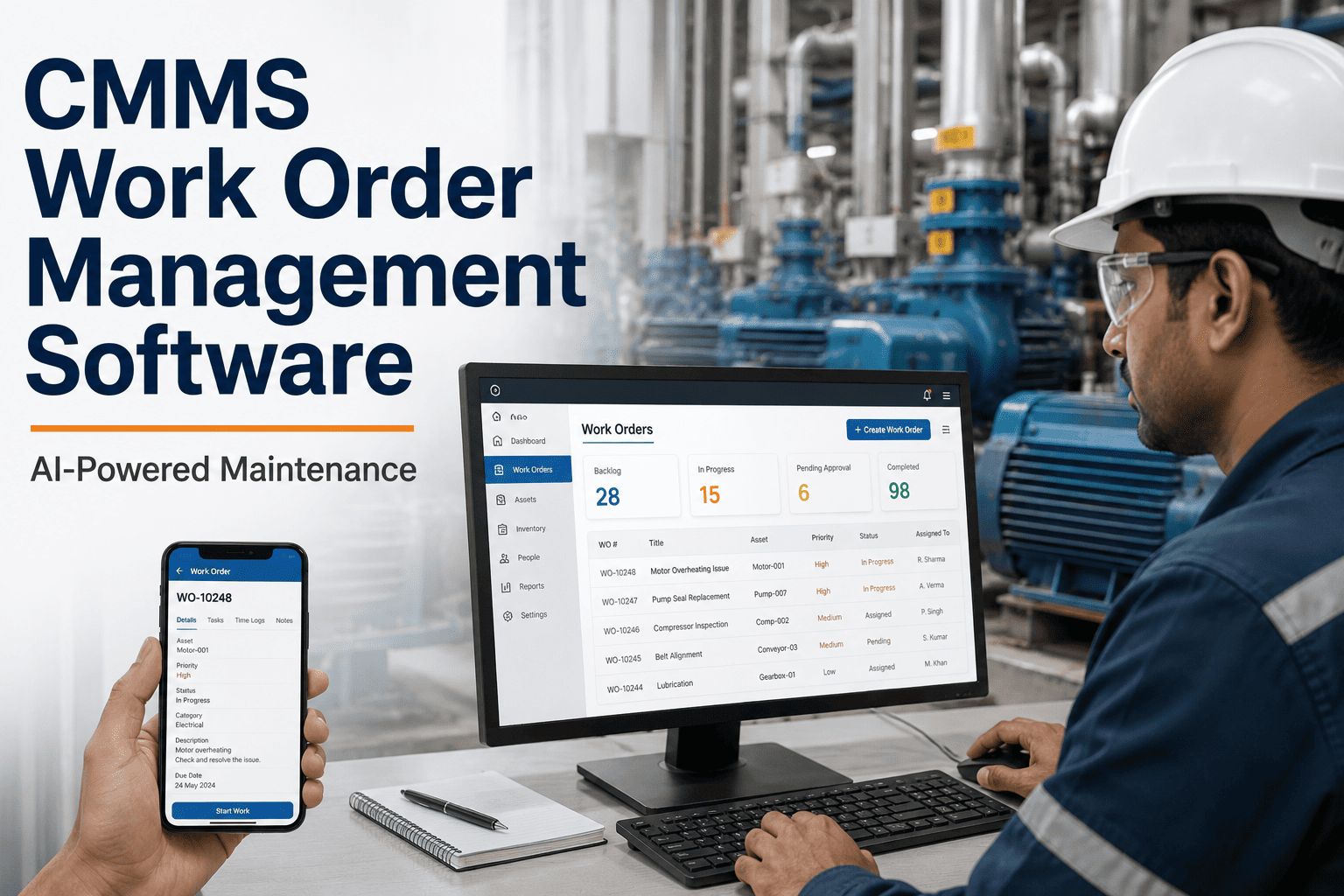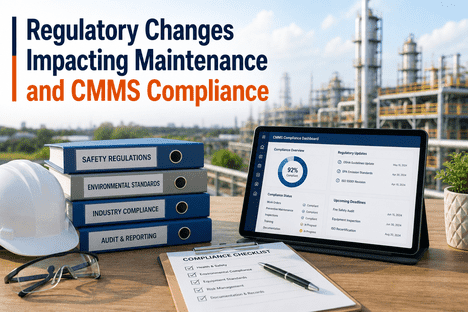
A mid-sized food and beverage manufacturer operating across three integrated processing lines — each anchored by pasteurizers, CIP-dependent conveyance systems, filling equipment, and automated packaging stations — was absorbing more than $930,000 annually in maintenance costs driven by reactive equipment failures, missed sanitation cycles, and chronic compliance documentation gaps. Thirty-seven unplanned downtime events in a single operating year disrupted thermal processing profiles, triggered product holds, and exposed the facility to FSMA audit risk from incomplete corrective action records and unverified CCP maintenance logs. After deploying ifactory's AI-driven CMMS platform — integrating real-time condition monitoring, automated compliance documentation, sanitation scheduling, and AI vision inspection across all three lines — the facility reduced equipment failures by 54%, eliminated audit-critical documentation gaps entirely, and delivered $762,000 in documented first-year operational and compliance impact. Book a Demo to see how this outcome maps to your food or beverage processing environment.
Client Background
The facility produces ambient-shelf, chilled, and frozen formats across three fully integrated processing lines at a single production site. Each line operates 20 hours daily across two shifts, with a four-hour maintenance and sanitation window per 24-hour cycle. Core processing equipment includes HTST pasteurizers, CIP-cleaned conveyance and transfer systems, rotary filling and capping units, and automated checkweigher and seal integrity stations — all operating under continuous thermal, mechanical, and sanitation stress that accelerates equipment wear and amplifies compliance exposure. Prior to the ifactory deployment, the facility maintained no sensor-based condition monitoring infrastructure. Maintenance decisions were calendar-driven, FSMA preventive control documentation was compiled manually from paper records, and sanitation scheduling was tracked in spreadsheets disconnected from work order execution. Book a Demo to see how the platform maps to your production line configuration.
The Compliance and Reliability Challenge
In food and beverage manufacturing, maintenance is not purely an operations function — it is a food safety function. Every unplanned equipment failure is a potential contamination event. Every missed sanitation cycle is a potential FSMA audit finding. Every maintenance activity completed without verifiable documentation is a compliance gap waiting to surface during an FDA inspection or SQF certification audit. The FDA Food Safety Modernization Act, FSMA Rule 204 (effective January 2026), HACCP prerequisite programs, and GFSI-benchmarked standards including SQF, BRC, and FSSC 22000 all carry direct maintenance documentation obligations that a general-purpose CMMS deployed without food-safety-specific configuration cannot reliably satisfy.
The Solution: ifactory AI-Driven CMMS for Food & Beverage Compliance
The facility deployed ifactory's AI-driven CMMS platform across all three production lines — establishing continuous condition monitoring on pasteurizers, fillers, CIP systems, and conveyance equipment through a non-invasive sensor network integrated with existing PLC and SCADA infrastructure. Alongside predictive analytics, the platform activated automated compliance documentation workflows, digital sanitation scheduling linked to work order execution, allergen changeover verification, calibration expiry tracking, and AI vision camera inspection across food-contact surfaces and safety zones. The result was a unified maintenance and compliance platform that managed equipment reliability and regulatory documentation simultaneously — from the same system, in real time.
- Continuous vibration, thermal, and motor current analysis across pasteurizers, fillers, and CIP pump assemblies
- Bearing degradation and drive component wear signatures detected 14–21 days before failure threshold
- Condition-based work order generation replacing calendar-driven PM cycles across all monitored assets
- Automated preventive control maintenance records linked to HACCP CCP equipment categories
- Corrective action logs generated at point of work order completion — not reconstructed from paper after the fact
- Audit-ready export of maintenance records, CCP deviations, and equipment histories in FDA-compatible formats
- CIP and COP sanitation schedules integrated directly into the work order queue — not maintained in separate spreadsheets
- Digital sign-off at sanitation completion linked to line release authorization workflows
- Allergen changeover verification documentation captured at execution, with no manual reconstruction required
- Continuous automated visual inspection across food-contact surfaces, equipment seals, and safety zones
- Crack, corrosion, leak, and surface defect detection with 99%+ accuracy — feeding findings directly into the work order queue
- PPE compliance and restricted-zone monitoring generating real-time safety alerts without dedicated inspection labor
- Calibration expiry tracking for checkweighers, metal detectors, thermometers, and pressure gauges across all lines
- Automated alert on approaching calibration expiry with configurable lead time for procurement and scheduling
- Line restart authorization blocked when calibration has lapsed — preventing GFSI non-conformance from expired instruments
- Real-time OEE tracking per line with availability, performance, and quality decomposition by equipment category
- Downtime root cause attribution linking failure events to specific asset fault signatures and production conditions
- Rolling 30/60/90-day failure risk projections enabling forward maintenance scheduling aligned to production calendar
Implementation Approach
Deployment followed a structured eight-week sequence designed to maintain full production continuity across all three lines during sensor installation and platform activation. ifactory engineers completed sensor installation during scheduled four-hour maintenance and sanitation windows — requiring zero production line interruption. Compliance documentation workflows were configured against the facility's existing HACCP plan and SQF certification scope during weeks three and four, enabling audit-ready record generation from day one of full platform activation.
Vibration sensors, thermal imaging units, and motor current monitors installed across all critical equipment on all three lines during scheduled sanitation windows — with zero production interruption. API connections established between the ifactory platform and existing PLC and SCADA infrastructure, enabling real-time process parameter ingestion alongside sensor telemetry. Historical maintenance records, calibration certificates, and prior work order data migrated to establish component age and replacement history context for each monitored asset.
HACCP preventive control categories mapped to corresponding equipment assets — linking CCP-relevant maintenance work orders to automated compliance record generation. Sanitation schedules migrated from spreadsheets into the ifactory work order queue, with allergen changeover and CIP verification workflows configured and tested against the facility's SQF documentation requirements. Simultaneously, AI condition models were calibrated against three weeks of continuous sensor data — establishing facility-specific operating envelopes for fault detection across all monitored equipment types.
AI vision cameras commissioned across food-contact surface inspection zones, equipment seal areas, and personnel safety zones. Predictive alert thresholds activated across all monitored assets, with alert routing configured to maintenance team mobile devices and integrated work order creation. Calibration tracking for all measurement instruments configured with expiry alerts and line-restart hard stops. Eight assets identified during baseline calibration as showing early-stage degradation were addressed through planned interventions — with zero unplanned failures occurring among monitored equipment from week six onward.
By month three, the facility operated entirely on condition-based maintenance scheduling with automated compliance documentation generation across all three lines. AI models had accumulated sufficient fault progression data to generate 18–21 day advance warning windows on bearing and drive component degradation. Audit preparation time for the SQF re-certification review — previously requiring two weeks of manual record compilation — was reduced to a single-day export from the ifactory compliance dashboard.
Results After Full Deployment
The transition from calendar-based reactive maintenance and manual compliance documentation to AI-driven condition monitoring and automated regulatory record generation delivered measurable improvements across equipment reliability, production uptime, compliance audit readiness, and product yield — totaling $762,000 in documented first-year financial and operational impact.
Performance Summary
| Metric | Before | After | Improvement |
|---|---|---|---|
| Annual Equipment Failures | 37 events | 17 events | −54% Reduction |
| Unplanned Downtime (Hours) | 189 hours | 70 hours | −63% (−119 hrs) |
| Annual Maintenance Cost | $930K | $548K | −41% ($382K Saved) |
| Mid-Process Failure Events | 16 events | 2 events | −88% Reduction |
| Product Waste from Failures | $127K annually | ~$15K | −88% ($112K Recovered) |
| FSMA Compliance Documentation Gaps | Systematic gaps | Zero gaps | 100% Auto-Generated |
| SQF Audit Preparation Time | 2 weeks manual | 1-day export | −93% Preparation Time |
| Predictive Alert Lead Time | None — reactive | 18–21 days avg. | From 0 to 21 Days |
| Total First-Year Financial Impact | Baseline | $762K+ | Across 3 Value Streams |
Key Benefits and Business Impact
The deployment delivered value that extended beyond direct maintenance cost reduction — transforming how the facility manages equipment risk, regulatory compliance, product quality, and production capacity across all three lines simultaneously.
Continuous vibration, thermal, and motor current monitoring across pasteurizers, fillers, and CIP systems converted 20 annual failure events from reactive breakdowns into planned maintenance interventions — eliminating emergency repair costs and the compounding compliance exposure of mid-process equipment failures during active thermal or filling operations.
Automated preventive control maintenance records linked to HACCP CCP equipment categories, corrective action logs generated at point of work order completion, and SQF audit export reduced certification preparation from two weeks of manual compilation to a single-day platform output — eliminating the documentation gap risk that had created persistent FSMA and SQF exposure.
Moving CIP and COP sanitation schedules from disconnected spreadsheets into the ifactory work order queue — with digital sign-off linked to line release authorization and allergen changeover verification captured at execution — closed the systematic gap between sanitation completion and compliance documentation that had existed under the prior manual model.
AI vision cameras deployed across food-contact surfaces, equipment seal inspection zones, and safety areas detect cracks, corrosion, surface defects, and leaks with 99%+ accuracy — feeding findings directly into the work order queue and reducing manual inspection labor by up to 80% while providing continuous coverage that scheduled visual inspection cannot replicate.
Near-elimination of equipment failures during active pasteurization, filling, and sealing operations protected HACCP critical control point compliance — recovering $112,000 in annual product yield value and eliminating the downstream supply chain disruption created by product holds, batch disposal, and emergency production rescheduling.
Maintenance cost reduction ($382K), production capacity recovery value ($268K), and product yield improvement ($112K) combined to deliver $762,000 in documented first-year financial impact — without modifying any existing processing equipment, replacing any control infrastructure, or adding operational headcount to the maintenance or quality teams.